You don't know him at all, apart from a short anecdotal incident, where even OP does not portray him in a bad light.
That's very unfair imo. The majority of people I know in academia don't fit this profile at all. There is obviously disappointing stuff happening, but people generally still are working/teaching in good faith.
It depends on university. On mine, most professors just see it as a job, something that one must endure until it's over. And when you bring to attention that what they're lecturing is incorrect or not proven they don't really care, again not all, but most, at least on my university. Just today I reminded the professor that there is a difference between a theory and hypothesis, their response was that they don't know if the theories they're teaching were tested or proven, but they are teaching this because that's what's written in the book...
That made me really sad, it's already hard to stay motivated to not leave the university because you need a certificate of a higher education to be taken seriously, but such behaviour from professors makes it even harder.
I've already expressed my worries to those in control of courses and they say that they understand but can't do much to change things because the curriculum that we have was accepted by the government.
Here in Slovenia people that work in the universities are paid by the government regardless of how happy or unhappy the students are, which is probably the reason for the situation in which we are...
How our universities work is that as a researcher a part of your duty to the university is teaching students. Unfortunately, fields of research and study subjects in most cases aren't aligned. Nobody will be researching basic subjects that must be taught to the students, and on the other hand a very specialized field of research might not be taught to anything but a small post-graduate course. This means that often professors will end up teaching an undergraduate course that has next to nothing to do with their field of study. In the end, someone must be teaching those introductory courses and for some subjects being taught the university might not have any professional researchers at all.
Professors are researchers first and teachers second. This is most likely the reason why it appears that teaching is "something that one must endure until it's over". Your professor might be a brilliant world-class researcher in their field and they pursue it with passion, but they might be teaching e.g. linear algebra to undergraduates twice a week based on "what's written in the book" to keep their job. As it turns out, teaching and research are quite different skills and they often don't coincide. When they do, you get some really amazing professors and I'm sure you have some on your course as well.
It's not a perfect system, but I've spent enough time in foreign universities where research staff was on-the-hook all the time and liable to get fired if students weren't happy with them. It's such a constantly stressful environment that I was amazed that people managed to do any kind of research at all. In the end, it's a trade-off. You can't have a university without either top-end research or teaching and we might have chosen a slightly different trade-off between these two than the countries you seem to look up to.
Anyway, I hope I've given you a new way to look at things and I hope you will stay at your university for more than just to get the "take me seriously" papers.
That's a general truth. You make it sound like people choose academia to somehow cheat the system and profit from free student's work or whatever. Make a real case for you thesis then.
Being suspicious of those who voluntarily become academics is odd.
Your work stands on the work of countless academic researchers and you run around "What did academia EVER do for us?" - the Monty Python sketch about Romans comes to mind.
If any of IT projects came from academia to the market, it's only because certain people were picked up by businesses that were onto something already.
> ... I ended up ... neither a zero-day ...
> Realizing everyone in the class would fail, the professor changed the grade of this project to only account for 30% of the grade.
> I ... disregarding the rest of the busy work for the class.
It sounds like OP could not find a zero day (old_grade=0) and did not do any other homework (new_grade=0), therefore should have received max(0, 0), but received a C.
Things are much better these days, but there is still much inherent complexity in a project like Firefox.
At first glance, this sounds terrible. But when compared to software projects of comparable size, Firefox is hardly unique. Compare to compiling Chromium for example, or even the Linux kernel.
Linux is almost trivially easy, only slightly harder than the usual configure && make and has very few dependencies.
Firefox is pretty painful but it's doable with a decent amount of care and bandwidth.
Chromium is a fairly typical google project where the recommended first step to building it is to become a google employee but some alternative workarounds are also available if that's not practical.
At some point I started wondering if indeed I'd get the fix in faster by starting to practice whiteboard interviews.
For what it's worth, this is how it work's if you're a Google employee too.
https://chromium.googlesource.com/chromium/src/+/master/docs...
[1]: https://techgage.com/wp-content/uploads/2019/11/Compile-Perf...
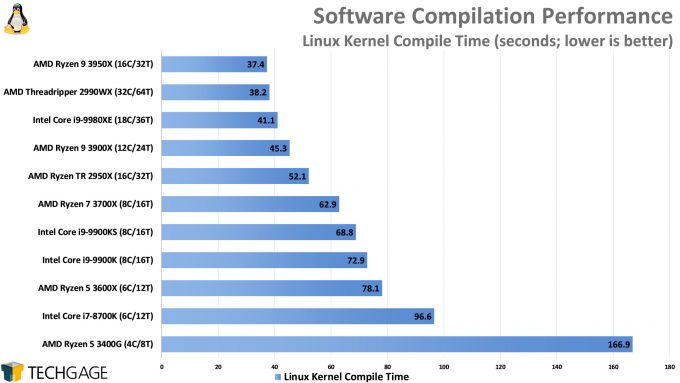
At one of the FAANG I previously worked at, it took an hour to compile JavaScript.
Them are their users most likely are the #1 source of build documentation, bug reports and fixes in OSS
Trying to compile Firefox was already a challenge. That, and each compile took an hour. IIRC, Firefox is built on some esoteric architecture / design pattern that's definitely beyond the scope of design patterns undergraduate students are familiar with.
By the end of the term, no one discovered a 0-day, unsurprising considering half the class didn't even try. There were 90 students in the class, and I ended up being the only person to produce a JS payload that would crash Firefox in one of the newer HTML5 libraries. It's neither a zero-day or exciting or profitable vulnerability though.
Realizing everyone in the class would fail, the professor changed the grade of this project to only account for 30% of the grade. I spent most of my time on this project while disregarding the rest of the busy work for the class. In the end, I got a C grade while my peers who didn't even attempt to tackle this project received higher grades.