I actually tend to assume websites like HN are the NSA or at least the NSA have read access to their databases. Maybe it's my tinfoil hat tendencies but instead of giving them the benefit of the doubt I would rather not give them any data I don't mind the NSA having.
> Everyone has read access to HN
No, not to their databases as OP is discussing. It would be definitely a crime if any of us had that info as it would imply we broke in and stole it - but OP is suggesting that they assume NSA already has it (a potentially paranoid but also reasonably fair thing to do, IMO).
From a personnel standpoint, isn't Thiel on the board of HN/YC and doesn't Thiel have basically uncountable NSA/CIA/etc connections? I'm not saying Thiel has anything to do with HN's security - but clearly, saying HN's databases might be accessed by someone like CIA (while a board member of YC is active in sales & partnerships to CIA etc) isn't that crazy.
He is not.
None of us know how many points your comment has, or if you have an email address on file, or how many times you visited HN today, or what IP you're using, etc. But all of those things are in the HN database(s) I'm sure!
I'll go out on a limb and predict that my HN internet points score is not a signal of interest to NSA selection criteria.
Social voting data is a rather sizable and useful dataset for surveillance agencies. HN has a high concentration of current-high-impact and future-high-impact individuals and is therefore a reasonably interesting trove of information.
I realize all this is indeed tinfoil-hat-ish stuff. But I'd be shocked in NSA/CIA/FBI etc was disinterested in online social voting habits of users.
Also, you latched on to a single example I gave. HN may have your email address privately (if you gave it to them) and they also have your IP/access logs. This is all stuff that they save but is not publicly available information.
I'm sure there's more as well. It's not just "internet points" and reducing the discussion down to simply dismissing a single one of my thoughts isn't going to get us anywhere.
I'm pretty certain there's nothing the NSA doesn't already have. See the Swowden gifts on MUSCULAR[1] the better-known PRISM[2], and XKEYSCORE[3]. There are other relevant programs, but I don't have my notes on that stuff with me at the moment.
Anyway, I won't argue about how much the NSA values internet scores. Let's just say I can imagine a targeted extortion campaign against a specific individual using such inputs, but I can't see how the Great Hoover would use them as any sort of actionable signal.
[1] http://apps.washingtonpost.com/g/page/world/how-the-nsas-mus...
[2] https://en.wikipedia.org/wiki/PRISM_%28surveillance_program%...
But you can't calculate the 'score' without knowing who those people are, when they voted, and what else they voted on too. The score is a summary generated from lots of information. It's not just some number that carries no value.
(And if you don't, APTs, will assign one to you....)
No communication channel can be guaranteed to be 100% secure in the broad sense, i.e. even One-Time Pads can be stolen, recipients of messages can be watched to see what they’re up to, etc.
Users of Tor should assume that the whole channel (not just the Tor part) can be compromised by a willing and capable adversary, and take additional precautions if they feel it’s necessary, e.g. “tradecraft” https://en.m.wikipedia.org/wiki/Tradecraft
Conversely, if you're engaging in illegal online behavior from your home IP, intermittently running a TOR exit node could be a useful mechanism for creating plausible deniability.
I think this also specifically refers to exit nodes, no ? Running an intermediate relay should be fine as you'll only be shuffling encrypted tor traffic to other relays.
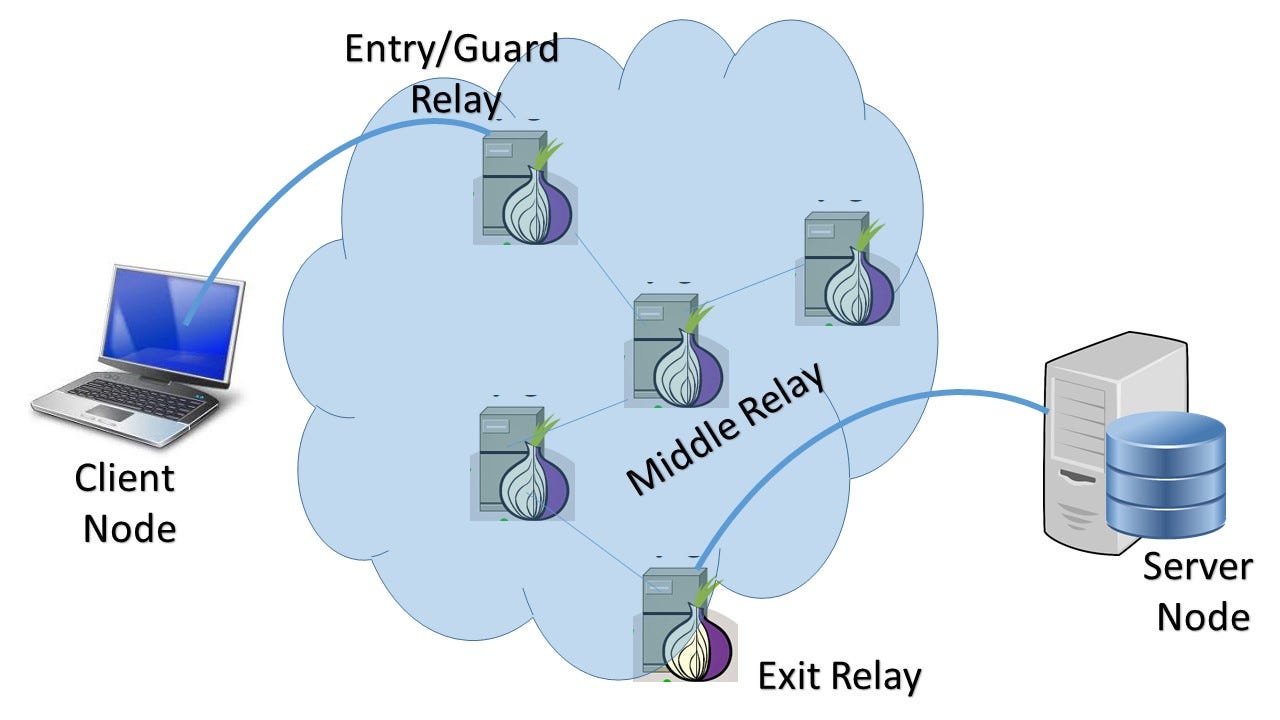
Being a Tor relay you participate in a public proxy network, so you automatically run risk that someone will harvest your IP address for whatever reason, e.g., lists for companies trying to prevent browsing via tor, etc.
Well, I've only linked to communities listed by the Tor Project itself.
Otherwise, the same way you would check whether HN or your local tea store is the NSA. You do your own research, run your own risk analysis, and if you want to stay sane, by default you give people the benefit of the doubt.
Generally, it's best not to run Tor relays from home as services will start to blacklist your IP as a proxy.
If you are going to be an exit node, then you should inform yourself about he legal challenges you might face, since you don't know what people will access with your IP address.
https://blog.torproject.org/tips-running-exit-node
https://www.eff.org/torchallenge/faq.html
Being an entry or middle-level node is less of a problem but some uncertainties remain, so this depends on your local laws.