Technological comfort just disguises it all.
I think always-on Internet devices both exposed latent difficulties in home/working life that already existed for many and amplified those same vulnerabilities. You can observe a single person on their phone for 8 hours a day and call it "problematic usage", but this alone does not give enough information about what underlying forces drive so much usage. If it's boredom, then why are they bored all the time? If it's stress, then where does so much stress originate from?
The introduction of smartphones has raised the stakes since a huge number of people are now confronted with the same problem in a highly talked-about way, some of which could have been activated by latent mental vulnerability that may not have been brought to light in a past age. And sometimes this does result in a discussion of sometimes completely unrelated personal issues, but by their nature I would imagine not many would be willing to open up about them in public, compared to complaints about social media. Problems related to tech get a lot of social advocacy, but I find it hard to imagine a national "organization for adults abused by <type of guardian>". What is there to advocate for when the issue at hand already opened and shut itself decades ago and the people involved are either dead or incapable of admitting fault? Not to mention that the causes for each trauma are wildly diverse, and sometimes there is not enough information to be able to find a concrete meaning in the events at all?
Sadly, even regulation of technology seems to be a workable issue compared to that of preventing future abuse. Each upbringing is distinct, and most effort seems to be put towards recovering from abuse long in the past knowing that (when dealing with certain personality types) there will never be hope for reconciliation. Knowing how intractable a problem intergenerational trauma is is enough to make me lean antinatalist at times, even though I say I am recovering.
I think there are patterns to abuse regardless of the cause. Abuse is essentially addiction to control or anger (the seven deadly sins are all forms of addiction). The patterns I can see give me hope that it is entirely possible to stop the cycle.
That's an interesting formulation. I have someone in my family who could be described by these words.
Is this your own description or does this come from somewhere?
Frankly, abuse and childhood trauma has always been a staple of human history. Even in the Bible, so at least a few thousand years ago, physical punishment against children is described. Sexual abuse was rampant as well, the Quran documents marriages at age 9. Wars and all the horrors that came with them were all too common - Europe only got actually peaceful after WW2.
Just ask in your own family if you still got really really old people left alive... they will all report from some uncle, aunt or godknowswhat that just went loony. Or tell horror stories about rape, beatings, bullying...
Nothing is new, the only thing that is new is that abuse gets called out and, at least in some cases, perps get punished.
Less fighting, more opportunity, more food, more clean water, less disease than ever.
What we do have now is 24 hour news and social media screaming how bad it is so we watch ads.
I also observed things only getting worse in my life. So I really don't buy this narrative that things keep getting better. IMO, the only people who think things got better are billionaires and multi-millionaires; of course it got better for them but it didn't get better for the average-luck person. For the average ambitious person who worked hard to improve their situation, things got MUCH worse; there are all these artificial barriers preventing them from succeeding, depriving them of opportunities and then constant gaslighting to blame them for systemic issues (including their own failure to thrive). Low birth rates, high rates of depression, high rates of homelessness, high suicide rates speak for themselves.
The fact that it all gets covered up by social media echo chambers to the extent that some people think life got better, makes it MUCH, MUCH worse, not better. People just don't seem to notice the tent cities, the increased immigration (due to worsening conditions in poor countries), the political division (again, driven by poverty).
Of course maybe your grandma like my grandma ignored all the cases of people that had abjectly terrible lives back then because that wouldnt fit her world view of 'make the present the past again'. Birthrates dropped in the US long before we were born. Homelessness was very high in the US before the postwar 'irregularity'.
All those poor countries are still richer than ever historically, it's just that first world nations are that much better.
Just stop the billionaires from sucking up everything and it's not really too bad at all.
Bad and shocking headlines click way better than positive ones, negative feedback is occupying our attention more than positive feedback, we perceive losses way more important than gains, we perceive losses as way more impactful than gains of the same degree, etc.
I am 100% sure trauma can and does affect the negativity aspect of our thinking in a big way. But I do not think that negative thinking overtopping positive thinking is limited to trauma sufferers
And things that add to entropy are favored by nature, undoing human labor & endeavor. Related?
Humans all being generally in a state of cognitive decline doesn’t make sense from an evolutionary perspective because natural selection will weed out degraded cognitive performance. So most people won’t be in this state. Anecdotally, you likely don’t see all your friends in cognitive decline so likely most of them don’t have a negative bias.
So your conclusion is likely to not be true. In fact I’m being generous here. Your conclusion is startling and obviously wrong both from a scientific perspective and an anecdotal one.
In fact the logic from this experiment and additionally many many other psychological studies points to the opposite. Humans naturally have a positive bias for things. People lie to themselves to stay sane.
Anecdotally what I observed is people don’t like to be told they are wrong. They don’t like to be told they are fat and overweight slobs. Additionally stupid people by all objective standards exist but practically every culture on earth has rules about directly calling someone a dumbass even if it’s the truth.
Like this is not a minor thing if I violate these positive cognitive biases with hard truths it will indeed cause a visceral and possibly violent reaction from most people who want to maintain that positive cognitive bias.
For example racial equality. Black people in America are in general taller and stronger than say Asians. It’s a general truth. You can’t deny this. Strength and height has an obvious genetic basis putting equality from a physical standpoint to be untrue. It is objective reality that genetics makes Asians weaker and smaller than black people in America.
So genetics effects things like size between races, it even effects things like size between species… black people are bigger than mouses. But you know what else? it affects intelligence between species. So mice genetically are less intelligent than black people and also black people are genetically more intelligent than fish. So what am I getting at here?
Genetics affects hair color, physicality, height, skin color between races. Genetics also effects intelligence between species (you are more intelligent than a squirrel) but by some black magic this narrow area of intelligence between races say Asians and black people… it doesn’t exist. Does this make sense to you? Is this logical? Genetics changes literally everything between species and races but it just tip toes around intelligence leaving it completely equal? Is all intelligence really just from the environment when everything else isn’t?
I mean at the very least the logic points to something that can be debated and discussed but this is not an open topic because it violates our cognitive biases.
Some of you are thinking you’re above it. Like you see what I’m getting at and you think you can escape the positive bias. I assure you that you can’t escape it, likely you’re only able to escape it because you’re not black. If you were black there’s no way what I said is acceptable.
But I’m Asian. How come I can accept the fact that I’m shorter and weaker than black people? Maybe it’s because height is too obvious of a metric that we can’t escape it and intelligence isn’t as obvious in the sense that I can’t just look at someone and know how smart he is.
But let’s avoid the off topic tangent here about racial intelligence and get back to my point. I know this post will be attacked but this was not my intention. I need to trigger a visceral reaction in order for people to realize how powerful positive cognitive bias is. That’s my point. It is frighteningly powerful and it’s also frighteningly evident but mass delusion causes us to be blind to it. Seriously don’t start a debate on racial intelligence. Stick to the point: positive cognitive bias.
Humans as a species that viscerally and violently bias in the cognitively positive direction.
Parent poster could not be more wrong. We are delusional and we lie to ourselves to shield ourselves from the horrors of the real world. It is so powerful that we will resort to attacks and even violence to maintain our cognitively positive delusions.
The current observed gap is much smaller than gains than have been observed within racial communities over time as a result of environmental changes.
So… no. You don’t have a lot of credible evidence for what you claim is a delusion to doubt. And even the observed effect size disregarding confounding effects is less than individual variation.
Realistically Both are factors.
>The current observed gap is much smaller than gains than have been observed within racial communities over time as a result of environmental changes.
Yes environment is a factor but given a prime environment to foster intelligence, you can see that among races there are still differences in intelligence.
Additionally the logic is inescapable. If genetics is what causes something like down syndrome then of course it can cause the opposite of down syndrome.
>So… no. You don’t have a lot of credible evidence for what you claim is a delusion to doubt. And even the observed effect size disregarding confounding effects is less than individual variation.
Either way can you stick to the main topic. Tired of this off tangent bs. The intelligence thing was just an example.
You cannot. And the smoking gun is, again, that we have seen massive rises in intelligence scores within racial subgroups over time correlating with environmental changes that are much larger than current spreads and still unevenly distributed.
Obviously a starving, stressed out person is going to have a much lower IQ score then someone who is happy and well fed. You think because that obvious fact is true it completely eliminates genetics? No.
This is what I'm talking about. The mass delusion. The positive cognitive bias. You grasp for evidence that supports the conclusion you want.
The claim is not that genetics has nothing to do with intelligence. The claim is that race is a material, important driver of intelligence. There is no rigorous evidence of this.
Please read what I wrote and respond to what I wrote and don’t make random assumptions.
I don’t give a shit if you believe yourself to be part of the (immaterially) superior race.
It's not about race, it's about facts. Like I said in another comment, Jewish people have the highest measurable average IQ, and they are "White".
I think you should walk away. You brought racism into the conversation while I'm just arguing facts. I never made a claim asians were "superior" and I'm NOT from an asian country with the highest IQ either.
There is strong statistical evidence that no race has a material intellectual advantage over each other. If it existed, it would be obvious in studies. It doesn’t exist. Therefore any differences that do exist must be trivially small.
Why do you need to insult people and call them stupid? Just stand by your arguments if they were strong. You resort to this because you got nothing. Racist prick. Per your other comment, If anything you're the type of person who deserves to be shot, not Charlie. As much of an ass hole Charlie is, he doesn't resort to outright insults.
>There is strong statistical evidence that no race has a material intellectual advantage over each other. If it existed, it would be obvious in studies. It doesn’t exist. Therefore any differences that do exist must be trivially small.
Bro. You need to get with the program and understand the topic we are talking about. You're completely out of it and what you said is wrong. There is STRONG statistical evidence of different intelligence between races. Extremely strong. IQs well past the 95% confidence interval. Every expert on the face of the earth agrees with this. You'd be a fucking idiot if you didn't agree. The topic HAS already descended into the nuances here.
Focus, Einstein, this isn’t rocket science... I said it multiple times is that we don't know the "cause" of this difference. There are differences in IQ with race but we don't know if race itself is what caused the difference in intelligence. Common sense says it is a FACTOR that caused it ALONG with environment as different races live in different environments.
Materially it doesn't matter. Despite the cause the outcome is that difference races correlate with different levels of intelligence. China, and literally every first world Asian country and European country has superior IQ levels that are rising in the face of declining IQ levels in the US. Does it matter what's causing it? Not as much as the outcome.
If we see huge variation in intelligence scores intra group, that strongly suggests that there are social/cultural/environmental factors in play driving a large part of this.
It may be true that some racial backgrounds offer an advantage; but there is no evidence to suggest that this advantage is materially large relative to many of the social structural drivers that are obvious.
The subtext of the claim is not that a statistically significant effect exists. It’s that there is a big important difference in intelligence across races intrinsically derived from genetics. And there’s no compelling evidence to support that.
Correlation does not equal causation. Variation in genetics in a group can realistically be a factor as well. Three probable possibilities here: Only environment, Only genetics, both genetics and environment. Common sense says it's both genetics and environment.
>It may be true that some racial backgrounds offer an advantage; but there is no evidence to suggest that this advantage is materially large relative to many of the social structural drivers that are obvious.
I never commented how large this advantage was relative to the social driver. I agree with you... the social structure likely the greater driver. But the genetic driver is not insignificant.
>The subtext of the claim is not that a statistically significant effect exists. It’s that there is a big important difference in intelligence across races intrinsically derived from genetics. And there’s no compelling evidence to support that.
There is evidence. But there is huge political debate and attacks around the evidence. There are many studies that study IQ among races independent of environment and many of those studies show there is a statistically significant difference. Those studies suffer from the replication crisis, but so do all conflicting studies within psychology as well.
1. Minnesota Transracial Adoption Study • Design: Black, biracial, and White infants adopted into White, middle-class families in Minnesota. • Findings: • As children, Black and biracial adoptees scored well above national Black averages — strong evidence of environmental uplift. • By adolescence, average scores diverged again: White adoptees ≈106, biracial ≈99, Black adoptees ≈89. • Critiques: • Equalizing family SES ≠ equalizing peer environment, discrimination, or racial identity stress. • Some adoptees were placed later or under selective conditions. • Attrition and different test batteries complicate comparisons. • Counters: • Even within the same families, mean differences persisted into adolescence, suggesting environment raises averages but doesn’t fully eliminate gaps in this design. • The pattern is consistent across multiple test batteries and waves. • Even environmental theorists acknowledge this is the hardest case for their position.
Citation: Scarr & Weinberg (1976, Intelligence); Weinberg, Scarr & Waldman (1992, Intelligence).
⸻
2. Texas Adoption Project • Design: Hundreds of adoptees reared in middle-class homes; IQs of both biological and adoptive parents measured. • Findings: • Adoptees’ IQs resembled biological parents more than adoptive parents, showing strong heritability. • At the same time, adoption into advantaged homes raised average scores. • Critiques: • Sample was mostly White, so not directly a race-gap study. • Possible selective placement inflated genetic resemblance. • Counters: • Demonstrates the principle: environment lifts the whole distribution, but genetic differences remain visible within the same rearing context. • Longitudinal data show both genetic and environmental effects over time.
Citation: Horn, Loehlin & Willerman (1979, Behavior Genetics); Loehlin, Horn & Willerman (1989, Personality and Individual Differences).
⸻
3. SES-Controlled Large-Scale Datasets • Design: National longitudinal samples (e.g., NLSY/AFQT, NAEP) where Black and White individuals are compared after matching or controlling for parental education, income, and related SES variables. • Findings: • Gaps shrink substantially but often do not vanish. Residuals of ~0.5 SD (7–10 IQ points) remain in some analyses. • Critiques: • SES controls are incomplete — they don’t capture school quality, wealth, neighborhood safety, health disparities, toxin exposure, or cumulative disadvantage. • Gaps have narrowed markedly over decades, inconsistent with a fixed genetic explanation. • Counters: • Residuals are real and cannot be dismissed; they represent variance unexplained by measured SES. • Long-term trend data (e.g., NAEP) show that policy, resources, and social changes can close much of the gap.
Citation: Herrnstein & Murray (1994, The Bell Curve); Neal (2006, Handbook of the Economics of Education); Reardon, Kalogrides & Shores (2019, American Journal of Sociology); NAEP Long-Term Trend Data.
⸻
4. Smaller Adoption and Foster Care Studies • Design: Transracial adoption in Britain and Europe; biracial children reared in Japan. • Findings: • Minority adoptees gained substantially over national averages. • In some cases, their averages remained slightly below White adoptees in the same homes. • Critiques: • Small sample sizes, often nonrandom placements, and institutional rearing environments complicate conclusions. • Counters: • Consistency across multiple settings shows substantial environmental effects; where gaps persist, they tend to be smaller than national averages.
Citation: Tizard (1972, Race); Tizard & Phoenix (1974, New Society); Eyferth (1961, Archiv für die gesamte Psychologie); Nakao & Treas (1994, Social Science Research).
⸻
The Bigger Picture • Persistent Gaps: Some adoption studies and large-scale SES-controlled datasets show that residual group differences remain even under attempts to equalize rearing conditions. • Critiques: These designs don’t fully equalize environment — schooling, peer context, health, and discrimination are all hard to control. • Counters: The fact that residuals persist shows we cannot dismiss genetic explanations entirely. At the same time, environmental levers (education, health, toxins, nutrition, early interventions) have been shown repeatedly to narrow or close most of the gap.
ChatGPT wrote this according to my specifications.
This is a utter lie: https://news.ycombinator.com/newsguidelines.html
If you're going to continue lying to my face, don't bother talking to me.
>If your uncertainty was whether we could set up dueling ChatGPT sessions: we very definitely can.
I posted sources here and had chatgpt summarize the sources simply because I don't have time to do a research session just for a thread like this. I'm sure you don't have time to do an actual research session either, so your welcome to do the same.
My opinions and analysis of the summaries are my own.
You also have the freedom to leave the conversation as well. Frankly your initial bullshit lie has left a bad taste in my mouth and I'm caring less and less about continueing this conversation.
https://hn.algolia.com/?dateRange=all&page=0&prefix=false&qu...
https://hn.algolia.com/?dateRange=all&page=0&prefix=false&qu...
This would be the fault of the moderators for not directly putting it in the rules if that was the case.
Though I doubt they'd be ok with this entire thread as it's heated and the topic is flamewar-like even though I tried to direct it in a different direction initially. It already went off the rails with the other guy once he told me I was dumb and trying to establish race superiority among asians. Too late. I think I'll get warned or banned.
Anyway, I'm not disguising the content human generated. Additionally All I'm doing is asking the LLM to cite and summarize citations which you asked for. Manually finding those citations are tedious.
My opinions and thoughts are still human written and not AI generated.
What I find incredulous is that you have some problem with content that's AI generated even if it's actually true and even it's just flat summaries of citations. Like I told the LLM to find specific resources and summarize studies I have already seen so you don't have to go through the entire paper and you have a huge problem with that? Fine. You can just refuse to engage. Commenting on it is also "against the rules" per your link: https://news.ycombinator.com/item?id=44808351
I mean if you want you can flag my post and vote it down. I think it's extreme and an ass hole move so I don't do that to people I have different opinions with. It's up to you.
I literally said to you that chatGPT is JUST citations. My comments are my own, you can respond to my comments can you not? What if I used AI to spell check and repair grammar? End of the world and you can't respond? Are people so against AI that they lose all common sense?
>"Please don't post AI-generated comments, or any generated comments" seems pretty clear to me.
Did he say please don't post AI-generated citations? Is he referring to the entire post or all comments? Why not make it an official rule on the rules page. What does Dang say about this? Seems unclear. I think you're just being deliberate.
Bro. You don't need to respond if you don't want to. My citations are still there. You asked for it, you got it. You don't like it? I'm not going to manually do what chatgpt ALREADY did so conversation is over if you don't want to continue.
Good thing I used AI to assist me. I knew you'd leave. Mainly because there's really no solid evidence so a lot of this will go in circles. Good day sir.
Common sense says nothing about the weight of these factors nor does it say anything about “genetics” being archetypally delineated by race. Genetics for sure plays a role in intelligence.
You are appealing to non cognizance as a premise to support your biases. But that’s… dumb.
You are welcome to point to specific studies if you wish but the general consensus is that there is no statistical evidence of what you’re claiming to be obvious.
Most studies that attempt to normalize against socio cultural features recognize that it’s basically impossible to do. That’s why the best available premise is that since we broadly observe huge gains in population intelligence based on economic development within racial groups; it is most likely that economic and cultural differences occupy the lions share of any observable difference between racial groups currently as they’re all in different places.
Common sense says many things about genetics. In fact it’s the basis behind my entire premise which you didn’t even address. Genetics plays a role in the physicality and even temperament of a race (testosterone is measurably different across races). What black magic makes intelligence the only factor that is independent of race? Common sense says it’s a factor.
Common sense also says environment is the greater factor. If a person lacks practice or education vs. a person who practices math puzzles everyday. Obviously that is the bigger causal factor by common sense.
Both are factors by common sense. Environment is the bigger factor also by common sense but by that same reasoning genetics is not insignificant. The best way to put it is that environment influences IQ but genetics influences potential.
Why appeal to common sense? Because there’s lack of solid causal evidence. Evidence exists, but the replication crisis and the lack of causal experimentation makes all the tests not as solid as the correlative tests.
The stupidest thing here is that we are not in disagreement on what the evidence points too. It’s just I’m able to rely on induction and logic to predict conclusions where scientific evidence is lacking while you’re entire model of the world is essentially “if the science doesn’t exist then it must not be true“
If the science doesn’t exist, it means it’s unknown. I hope this was educational for you.
I’ll point to some resources when I have time. Im currently not able to cite them atm.
Does genetics influence intelligence? Yes. Does genetics influence race? Yes.
Does that mean that race is a _material_ driver of differences in intelligence? No. That just doesn’t follow at all. Every difference between groups is statistically significant at some obscene sample size but the claim in question here is about whether it is _material_ and important. That is not at all clear. Nor is intelligence the only thing that this applies to. There’s a basically infinite list of human traits, competencies, and capabilities for which race-affiliated genetic advantages alone is pointlessly small in terms of effect.
The word I used is “significant”which I will specify here as a different mean value.
It applies because among top countries of different races with extremely high wealth, gdp and education standards there are clear differences in IQ. You can still attribute this to environment but it starts to lean towards genetics once you match wealthy countries.
None of this is solid but neither is your conclusion that genetics doesn’t influence racial intelligence in any significant way. If your conclusion is “we don’t know” then my counter is common sense and evidence suggests otherwise.
> The word I used is “significant”which I will specify here as a different mean value.
There are statistically significant differences between any two populations where randomness is included provided your sample size is big enough. Your thinking here is novice and misinformed. If an effect size is immaterial and unimportant then it definitionally does not matter. You win no points for saying HA! Technically there is an immaterial advantage for Asians! If it’s immaterial, it doesn’t matter.
> It applies because among top countries of different races with extremely high wealth, gdp and education standards there are clear differences in IQ. You can still attribute this to environment but it starts to lean towards genetics once you match wealthy countries.
Wealth is one of many things that matters. It’s not the only thing. As I have said before, culture is a huge one.
> None of this is solid but neither is your conclusion that genetics doesn’t influence racial intelligence in any significant way. If your conclusion is “we don’t know” then my counter is common sense and evidence suggests otherwise.
You need to learn how to interpret statistical effect sizes. The basic 101 conclusion of failure to reject null hypotheses is that you cannot conclude that population A is different from population B. But “different” doesn’t mean much. The important takeaway is much rather that there’s no evidence of a strong effect size showing that one race is materially intrinsically smarter than another. If there were a big gap, it would be visible in available statistics. It’s not, so we can largely conclude that there’s no material difference.
You’re talking a big talk about people being biased by trying to be equitable but ultimately you’re just saying “well I can’t provide it but my common sense biases say my race must be superior, even if it’s by a meaninglessly small margin”. Yeah, ok buddy. Take a lap.
Immaterial and unimportant are words with nebulous definitions. Something you think is important may not be important to me or anyone else. Also this isn't about winning points. Nobody cares about "points" here.
What you're likely referring to is something called confidence intervals and if confidence intervals overlap that could be one criterion someone personally chooses to be important. But you have to know confidence intervals exist on a gradient. Are you 100% confident? If that's the case the interval extends to infinite and all measurements are not "important" or "material".
What we do know is that there are gaps between groups where the IQ points exceed confidence intervals of 95%. But that's an arbitrary number. It's just a number for when someone wants to be "really" confident and it's normalized to be around 10 points.
For the US and China, the gap is about 7 points and that's an 83% confidence interval. Now you can call that "immaterial" if you want that's your call.
>Wealth is one of many things that matters. It’s not the only thing. As I have said before, culture is a huge one.
I never said wealth is the only thing that matters. Wealth, education, culture and even pollution levels matter. In fact they are all correlated and influence one another.
More wealth creates cultures that increase IQ and vice versa.
>You need to learn how to interpret statistical effect sizes. The basic 101 conclusion of failure to reject null hypotheses is that you cannot conclude that population A is different from population B. But “different” doesn’t mean much. The important takeaway is much rather that there’s no evidence of a strong effect size showing that one race is materially intrinsically smarter than another. If there were a big gap, it would be visible in available statistics. It’s not, so we can largely conclude that there’s no material difference.
Bro. I know statistics. There are MEASURABLE average differences between IQ for different groups and individuals AND races. Statistics doesn't actually come to any 100% conclusion. It just leaves you with fuzzy probabilities and you choose the amount of rigor you want. If you want 100% confidence then the confidence intervals extend to infinite which basically is another way of saying: "In reality, statistics and science CANNOT prove anything or conclude anything to be true"
For black people and non-black people living in the US there is a gap and that gap exceeds the 95% confidence interval of 10 points. It is 15 points which is the STD. There is a "statistically significant" difference here according to the arbitrary 95% percent rigor that's common. The question here is causality. What causes the gap. Causality is a whole different ball game and it is EVEN HARDER to verify causality with any level of confidence. In fact in the medical world the only way we can establish causality is by putting peoples lives and health at risk. We have to in actuality give people chemical medicines that put peoples health at risk. We even have to do placebo control trials where we LIE to people about giving them medicine.
There is NOTHING definitive about your stance or my stance, but given anecdotal evidence and common sense my stance is much more likely. We know genetics influences intelligence AND we know genetics influences differences between race and we see differences in intelligence between races... the conclusion is therefore quite likely to be that there are differences in intelligence among races.
>You’re talking a big talk about people being biased by trying to be equitable but ultimately you’re just saying “well I can’t provide it but my common sense biases say my race must be superior, even if it’s by a meaninglessly small margin”. Yeah, ok buddy. Take a lap.
My race must be superior? My race didn't enslave black people. Fuck you. Do you want to know what race actually has the highest measurable IQ? It's a sub group among white people. Jewish people.
You know what? Your last comment was utter fucking bullshit. I don't want to talk to your racist white supremacist ass.
And to be clear, IQ itself is very much inheritable. But the _variation_ in IQ in a population is not explained by genetics.
https://www.scribbr.de/wp-content/uploads/2023/01/Normal-dis...
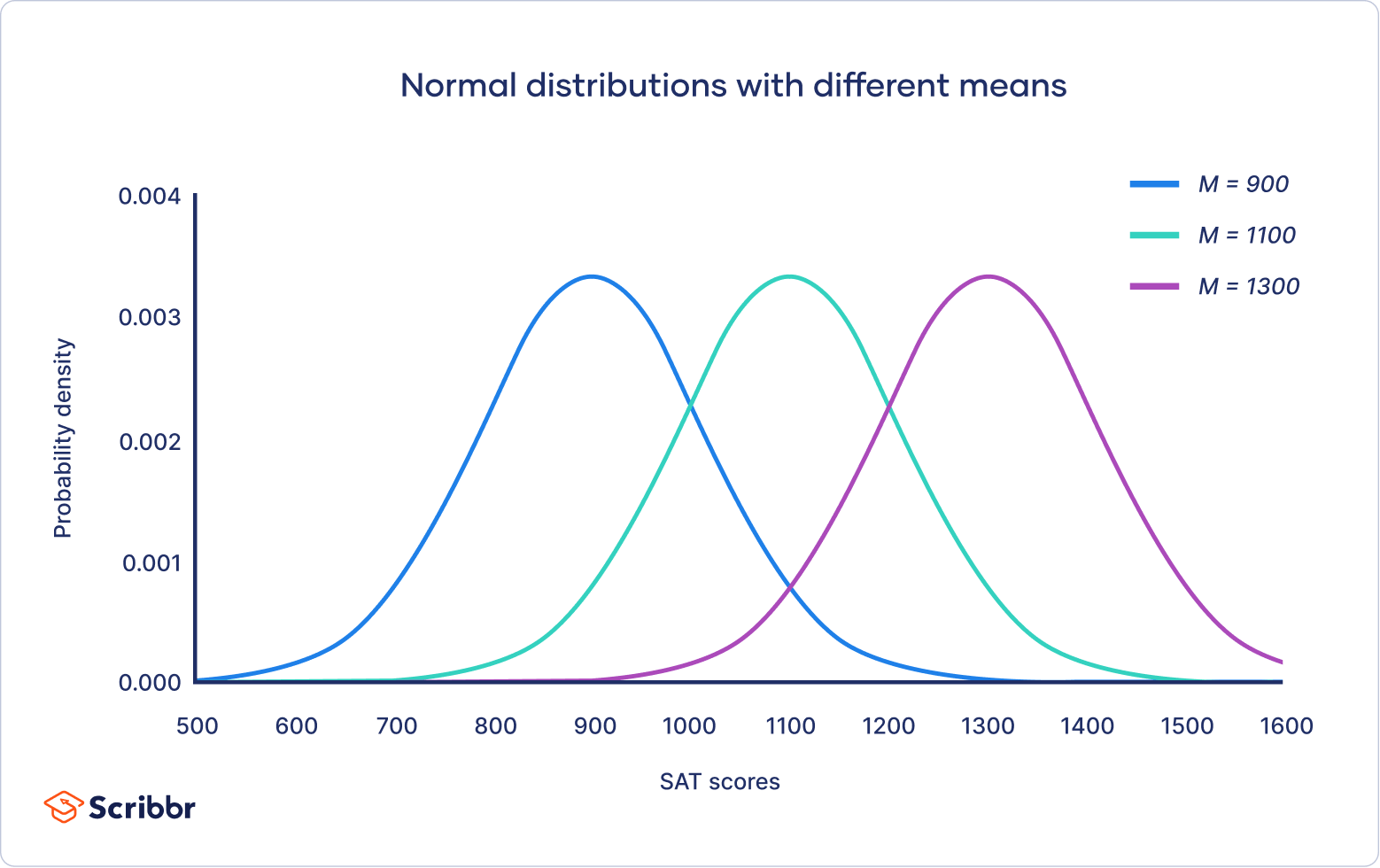
So yes you can very much find black people who are smarter than Asians and vice versa but the generality (aka the mean, aka the center of the bell curve) will be different for races.
>But the _variation_ in IQ in a population is not explained by genetics.
This is not proven to be true. The most likely explanation is that variation in a population can be explained by both environment and genetics.
People forget that nature only optimizes for sexual reproduction and that’s pretty much it
In this case for example, it doesn’t really give a shit about your psychological well being or shaving years off your life because of some negative thought pattern
If being on your toes, anxious, paranoid, and always looking over your shoulder keeps you alive and making babies - then as far as the developer that nature is, it’s a feature not a bug
Common misunderstanding.
Evolution optimizes for system success. Not individual gene propagation. Genomes are not agents with individual goals.
Many species, but especially social animals, have numerous behaviors and traits designed to prompt communal success rather than individual survival and reproduction
Even saying it optimizes for system success is an oversimplification it just depends how far down the rabbit hole you want to go
My only intention was to communicate and stress that we aren’t “designed” in the way a lot of people think
But thanks for the clarification
Perhaps this translates into a tendency to dwell on the negatives of a situation rather than the potential benefits?
OTOH the human mind seems to fail in common ways when old age and dementia sets in, perhaps with no benefit, so this may just be one of those things. Old people tend to have bad joints. News at 11.