News for hackers. Stuff that matters.
Re:But good sir, what is electricity? by movpasd on Sunday February 23, 2025 @09:13AM (#43149359)
A point not mentioned by the article: the electrons in a metal at room temperature are already moving very quickly due to their thermal energy (at the order of 100km/s) — much faster than the speeds quoted in the article, which is what's called the "drift velocity".

This thermal motion is essentially random, and the electrons constantly scatter off the nuclei every which way, so it cancels out and doesn't create a net current.

So, it's less than the electrons gently move under the influence of an electric field, and more that it introduced a slight bias in the existing thermal motion.

E: To clarify in case it may have been unclear, this is unrelated to the speed of propagation of the electric field, which as the article says is the speed of light.

Re:But good sir, what is electricity? by tzs on Sunday February 23, 2025 @11:10AM (#43150311)
It probably should be noted that the reason the drift velocity is so much lower than velocity due to thermal motion is that electrons cannot move very far before they collide with an atom which changes their direction.

The mean distance they move in a copper wire between collisions is about 0.00000004 meters. At 100 km/s it would take 0.4 picoseconds to travel that distance.

Re:But good sir, what is electricity? by vlovich123 on Sunday February 23, 2025 @02:04PM (#43152070)
> electrons cannot move very far before they collide with an atom which changes their direction

And yet we know it’s mostly just empty space. I’m assuming it’s more because of the electromagnic force being particularly strong at those scales rather than a straight up “collision” right?

Re:But good sir, what is electricity? by hosteur on Sunday February 23, 2025 @04:09PM (#43153245)
When does anything really touch?
Re:But good sir, what is electricity? by cuttothechase on Sunday February 23, 2025 @06:48PM (#43154368)
never!
Re:But good sir, what is electricity? by BobbyTables2 on Sunday February 23, 2025 @07:05PM (#43154474)
So all atoms are married?
Re:But good sir, what is electricity? by alex_young on Sunday February 23, 2025 @10:50PM (#43155670)
Virtual particles are. Usually they wind up touching though, which always destroys both of them.
Re:But good sir, what is electricity? by silentguy on Tuesday February 25, 2025 @02:46PM (#43176401)
depends on your definition of touch.
Re:But good sir, what is electricity? by bavell on Sunday February 23, 2025 @02:47PM (#43152523)
Isn't a straight up physical "collision" just a strong interaction between the electromagnetic field of multiple particles?
Re:But good sir, what is electricity? by vlovich123 on Sunday February 23, 2025 @06:19PM (#43154198)
I believe particle colliders really overcome the forces and have the particles touch and annihilate. But sure, at our level it’s all normal low energy electromagnetic stuff and nothing every really touches anything else.
Re:But good sir, what is electricity? by Filligree on Sunday February 23, 2025 @08:27PM (#43154979)
I would really argue that "electromagnetic stuff" is what "touches" means in the first place.

Atoms aren't really empty. They're electron clouds with an extremely dense core of protons and neutrons, but the electron clouds are what we care about.

Re:But good sir, what is electricity? by vlovich123 on Monday February 24, 2025 @12:02AM (#43155970)
I think that’s just arguing over the imprecision of language. Are we referring to the human sense which is the electromagnetic field or are we referring to the abstract mathematical concept of whether two line segments touch which is what the particle accelerator does or matter/antimatter. Both definitions are valid imho.
Re:But good sir, what is electricity? by tsimionescu on Monday February 24, 2025 @01:49AM (#43156504)
I think it's really hard to define this fully. The most relevant parts are probably the Pauli exclusion principle (which prevents two fermions from occupying the same point in space if they are otherwise identical), and the size of elementary particles (which, as far as we can tell, is 0). Overall this means that you can get two fermions arbitrarily close, but not to overlapping positions. Since they have no know dimension, they can't "touch" unless they are completely overlapping, and since they can't overlap, and since the electromagnetic repulsion increases rapidly as you get closer and closer together, I think the parent poster is right - regardless of inertia, they will always have some kind of electromagnetic interaction that will change their course or nature before actually "touching".

To add a bit of a complication, if two particles that have mass, even one as tiny as the electron, come closer together than some minimum, general relativity predicts that they would collapse into a (really really tiny) black hole. Of course, we don't know how and if general relativity really works at this level, so the relevance of this is unclear.

Re:But good sir, what is electricity? by TheOtherHobbes on Monday February 24, 2025 @06:27AM (#43158302)
No, it's just different field interactions. None of this is tangible in the way that billiard balls are tangible. With particle physics there are no "things" that can "touch" - just different events in different particle fields which are more or less likely at different energies and spatial separations.

You can even take it up a level and say that interaction events are the only things that really exist. That's more or less what Copenhagen QM boils down to. It is not at all a given that "particles" even exist between interactions.

Intuition insists that if something happens here and something apparently related happens over there and you can move here and there around to make a line or curve, then something physical is moving between here and there.

But actually - no. Not necessarily. All you have are ghost traces of an apparent chain of causality. And you can play with those traces experimentally to make them do incredibly weird shit in very surprising ways.

Re:But good sir, what is electricity? by andrewflnr on Sunday February 23, 2025 @06:23PM (#43154225)
> mostly just empty space

I'm so tired of this. If atoms are "empty space", then there's no such thing as non-empty space, which makes the concept meaningless. Electron clouds have all the properties we want from non-empty space, mainly excluding other objects made of non-empty space, so let's just admit that's what non-empty space is and move past this pseudo-profound silliness.

Re:But good sir, what is electricity? by TeMPOraL on Sunday February 23, 2025 @07:49PM (#43154751)
I don't know how established this is, but I'm partial to the "vacuum is elastic, non-linear medium, and particles are waves trapped in the non-linearity - self-confining energy" hypothesis. IANAPhysicist, but this really seems to make a lot of sense and is quite elegant:

https://www.youtube.com/watch?v=tMP5Pbx8I4s

And with this, there's no empty space in atoms, as the vacuum perturbations from each particle spread out to infinity, so inside the atom there's more energy in those perturbations than outside - the space is less empty inside than outside.

Re:But good sir, what is electricity? by hoseja on Monday February 24, 2025 @07:46AM (#43158905)
But what is the nature of the "perturbations"? Relativistically self-interacting knots/manifolds? Can you take the elastic medium and fold it onto itself (through higher dimensions?) in a manner similar to (but not the same as) a microscopic black hole to stabilize it into a particle?

Either I'm going schizo or I should read some real books on the subject.

Re:But good sir, what is electricity? by TeMPOraL on Monday February 24, 2025 @05:08PM (#43165502)
Apparently they're just the same stuff that light is - i.e. presumably this: https://en.wikipedia.org/wiki/Vacuum#Quantum_mechanics

As I understand it, the idea in the video is that if vacuum can be seen as non-linear elastic medium, then with the right functions for elasticity and stress, you can create conditions where EM waves at high enough frequency will hit the "sweet spot", a local minimum, where the energy gets confined in space by those non-linear properties, and can't leave without supplying additional energy. And such confined energy seems to behave like you'd expect particles to.

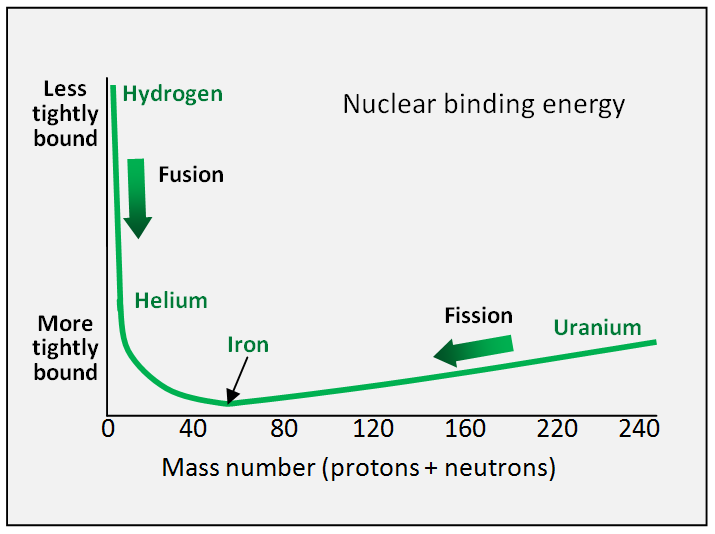
Again, I am not a physicist, so I'm probably wrong in understanding what half of the words I used above mean. But I do understand the idea of multiple forces creating semi-stable states that are "energy traps". For instance, the balance between electric repulsion vs. attraction from strong nuclear force is what defines how tightly bound is the nucleus of any given atom (aka. the "nuclear binding energy"). The nucleus can't expand or split apart, nor can it contract, unless you supply additional energy. When you do - say, you hit a large atom with high-speed neutrons to break past strong force attraction, or smash two small nuclei together at high speeds to overcome electric repulsion, the other force takes over resulting in a rather spectacular release of energy[0] as matter finds new stable configuration.

So I feel the idea here is similar, but with stress and elasticity in place of strong and electric forces - if there's enough energy propagating through some space, the wave gets trapped in a spatially-confined region instead of dispersing into the medium.

--

[0] - https://www.marketbusinessnews.com/wp-content/uploads/2014/0...
Re:But good sir, what is electricity? by thereisnospork on Sunday February 23, 2025 @06:37PM (#43154305)
Ye olde Rutherford experiment nicely illustrates the points of 'yes it is all empty space' and why that is both non-obvious and profound. Nothing pseudo about it.
Re:But good sir, what is electricity? by andrewflnr on Sunday February 23, 2025 @06:55PM (#43154403)
That's a defensible perspective, I guess, but the fact remains that you don't fall through your chair, and that's all we really want from a description of "solid" matter. Turns out your chair behaves weirdly when you shoot alpha particles through it, but your bottom isn't made of alpha particles, so what does that prove as far as solidity goes? I suppose it proves that solidity is a non-fundamental property of matter, and that is profound, but that doesn't mean we need to change the name. It just seems like a semantic cul-de-sac to me.
Re:But good sir, what is electricity? by BobbyTables2 on Sunday February 23, 2025 @07:03PM (#43154464)
I think of it more like a pincushion. A needle will go right into it with very little resistance. One’s hand or fingertip — not so much.
Re:But good sir, what is electricity? by andrewflnr on Sunday February 23, 2025 @07:50PM (#43154761)
Right. And no one confuses a pincushion for empty space. They just also don't confuse it with adamantium.
Re:But good sir, what is electricity? by vlovich123 on Monday February 24, 2025 @12:07AM (#43155992)
You can sit on a pincushion filled very densely with needles equally well as a solid wooden chair. Yet the needles clearly have more space between them than a solid block of wood. Your personal inability to penetrate or see into that space doesn’t mean the space isn’t there. Indeed, how do you know if there’s a microscopic crack? You look at photons reflecting and amplify them into your optical range. How do we know whether or not there’s space in the atom range? We use an electron microscope. It’s still a microscope - a tool to objectively pierce the physical realm in ways that you can’t with your own sense.
Re:But good sir, what is electricity? by andrewflnr on Monday February 24, 2025 @03:41AM (#43157147)
None of that, even to the extent it's true, makes a lick of difference to my point. You definitely don't need to lecture me about how scientific instruments supply info my biological senses can't. I know how subatomic particles work. I'm trying to make a point about obfuscatory terminology.
Re:But good sir, what is electricity? by MalbertKerman on Monday February 24, 2025 @09:52AM (#43160237)
> Ye olde Rutherford experiment nicely illustrates the points of 'yes it is all empty space'

No, it does not. It illustrates that the portion of an atom that strongly scatters alpha particles occupies a small fraction of the atom's volume. Asserting that alpha particle scattering is the only correct definition of the threshold between emptiness and non-emptiness is an awfully strange position to take.

When interacting with other electrons at energy scales relevant to human life, i.e. maybe ten electron volts and down, an electron cloud is somewhere between solid (core electrons especially in heavy atoms) and squishy (valence electrons). Give a rock the ol' "I refute it thus!" and your toes will report that that rock's electrons are quite competently occupying their space.

Ask an alpha particle at nuclear energy scales a million times greater, and that electron cloud is like a swarm of gnats to a speeding car. The electrons only interact with the alpha electromagnetically, and it takes another object that interacts through the strong nuclear force to really bother a nucleus (most of the time).

Ask a neutrino, and it will tell you that all the nuclei in the Sun are but a wisp of fog.

This is a good example of how approximations valid in one regime fail in another but are not therefore useless. Rutherford's experiment reveals that there is more going on with matter than what can be probed by fingers and microscopes and chemical reactions, but it in no way invalidates those other observations.

Re:But good sir, what is electricity? by Galatians4_16 on Sunday February 23, 2025 @10:52PM (#43155680)
Ever heard of the Casimir Effect?
Re:But good sir, what is electricity? by Terr_ on Sunday February 23, 2025 @02:42PM (#43152472)
That reminds me of something interesting about biological cells. The molecules in that thick stew might be bouncing around at 20-250 miles per hour, depending on their size.
Re:But good sir, what is electricity? by mr_toad on Sunday February 23, 2025 @02:53PM (#43152596)
What’s really mind blowing is how fast the gluons inside the protons inside those molecules are moving.
Re:But good sir, what is electricity? by sebmellen on Sunday February 23, 2025 @05:43PM (#43153934)
How fast are those moving?
Re:But good sir, what is electricity? by itishappy on Sunday February 23, 2025 @06:10PM (#43154135)
Speed of light.
Re:But good sir, what is electricity? by emmelaich on Sunday February 23, 2025 @08:46PM (#43155066)
That's really fast.
Re:But good sir, what is electricity? by TeMPOraL on Sunday February 23, 2025 @07:40PM (#43154696)
More importantly, this means that any given molecule will, in a very short time, bump into almost every other molecule in the cell. Thus, the answer to the question, how does protein X find fuel, or resource Y, or a protein Z it needs? Simple: it doesn't - it eventually just bumps into it. Similarly, in simple cells, there may be no need to transport stuff from place to place - chemical diffusion is fast enough!
Re:But good sir, what is electricity? by Retric on Sunday February 23, 2025 @08:44PM (#43155059)
Meanwhile larger cells massively benefit by speeding up those processes. So there exists lot of structures to group and or transport where different molecules are.

https://en.wikipedia.org/wiki/Golgi_apparatus

Similarly, organelles group related process together. So for example DNA related proteins are in a nucleus not inefficiently bouncing off the cell wall.

Which helps explain why mitochondria were so beneficial. Keeping a bunch of related machinery all tightly clustered together it makes more efficient use of each individual protein and can quickly replace anything that gets damaged. ATP however can diffuse through the cell just fine because so many processes use it that extra copies isn’t a major issue.

Re:But good sir, what is electricity? by pkoird on Sunday February 23, 2025 @10:42AM (#43150032)
Just to clarify, the high speed at which electrons generally move around in metal is called "Fermi velocity". Like you said, since it's random, on average it cancels out to 0. When applying an electric field, the electrons achieve a non-zero average velocity which is called the "drift velocity".
Re:But good sir, what is electricity? by movpasd on Monday February 24, 2025 @05:27AM (#43157935)
I hadn't heard of the term "Fermi velocity", but if it is the classical velocity derived from the Fermi energy, that should only be a lower bound on the average speed of the electrons in the metal.

That said, I don't remember the orders of magnitude here, the relevant question being how cold "room temperature" is with respect to the Fermi level -- a quick Google suggests quite cold, in which case the Fermi velocity should be a very good approximation.

In which case, it's interesting to realise that the motion of the electron gas comes mainly from Pauli exclusion rather than thermal noise! It's not a result I would have expected.

Re:But good sir, what is electricity? by sfn42 on Sunday February 23, 2025 @09:55AM (#43149672)
Is this related to how some materials become superconductors at low temperature? Does the slowing down of this electron flux improve the material's ability to conduct electricity or is there some other mechanism at play?
Re:But good sir, what is electricity? by khold_stare on Sunday February 23, 2025 @10:18AM (#43149846)
Superconductivity is fascinating. I don't know how people were able to come up with the explanations. Crudely, the reduced temperature means less jiggling of the metal lattice. This in turn makes it possible for the nuclei to be pushed around by electrons to form essentially sound waves (phonons) in the lattice (think of the lattice compressing and expanding due to interplay with electrons). At a certain temperature and therefore a certain frequency of lattice oscillation, electrons pair up to form "Cooper pairs" - they move in concert due to the lattice movement. What's crazy is that cooper pairs become a sort of pseudoparticle, and their quantum behaviour is different to regular electrons. Cooper pairs have integer spin (as opposed to half-integer spin), so they no longer obey the Pauli exclusion principle and all the electrons in the entire material basically form one giant condensate that extends through the whole material and can all occupy the same lowest energy quantum state.
Re:But good sir, what is electricity? by jaybrendansmith on Sunday February 23, 2025 @10:51AM (#43150117)
That is the BEST explanation of superconductivity I have ever heard.
Re:But good sir, what is electricity? by khold_stare on Sunday February 23, 2025 @01:33PM (#43151771)
Thanks for the kind words! For anyone curious to dive deeper into the crazyness that is quantum mechanics I can highly recommend a few resources:

- Sean M Carroll's work, in particular his Biggest Ideas in the Universe books: https://www.preposterousuniverse.com/biggestideas/

- Artur Ekert, basically the father of Quantum Cryptography has an amazing course for free on youtube: https://www.youtube.com/@ArturEkert . It's a very precise and understandable explanation of quantum computing, and some of the math that is involved with quantum mechanics.

- If you have hours to spare, watch Richard Behiel's videos on Youtube. He's like the 3Blue1Brown of Quantum Physics. His latest video on superconductivity and the Higgs Field is almost 5 hours long (!!!) https://youtu.be/DkH1citHtgs?si=-yQNYDu9TlTpE1A0 . It builds on his other videos, so I'd recommend starting at the beginning.

Re:But good sir, what is electricity? by mncharity on Sunday February 23, 2025 @02:32PM (#43152366)
> all the electrons in the entire material basically form one giant condensate

Very not my field, but perhaps that's "all the paired electrons"? Brief ai-ing (do we have a verb yet?) suggests only some small fraction of conduction electrons form pairs, let alone all the rest.

Re:But good sir, what is electricity? by genewitch on Sunday February 23, 2025 @02:51PM (#43152570)
"Slop pass"?
Re:But good sir, what is electricity? by itishappy on Sunday February 23, 2025 @06:30PM (#43154262)
Only Cooper pairs can condensate, but in a superconducting material at the critical temperature Cooper pairs account for nearly all free electrons.
Re:But good sir, what is electricity? by cyberax on Sunday February 23, 2025 @05:46PM (#43153963)
Another way to put it: Cooper pairs become _bound_ objects. And so their energy levels are quantized, and to excite them, you need to apply more energy than is available from the thermal motion of atoms in a superconductor.

This doesn't happen with unpaired free electrons because their energy spectrum is pretty close to continuous.

Re:But good sir, what is electricity? by bigger_cheese on Sunday February 23, 2025 @08:26PM (#43154964)
My background is material's science so there might be another meaning physicists use that I'm not familiar with but my very simplified understanding/explanation of Phonons are that they are vibrations within a crystal lattice. These vibrations exists at all temperatures above absolute zero, so I don't think it is accurate to say phonons form due to reduced temperature.
Re:But good sir, what is electricity? by the-mitr on Monday February 24, 2025 @12:45AM (#43156157)
Similar to superconductors, there are superinsulators, which have an infinite resistance so that no electric current passes through. The phenomenon of superinsulation can be regarded as an exact dual to superconductivity.

https://en.wikipedia.org/wiki/Superinsulator

Re:But good sir, what is electricity? by movpasd on Sunday February 23, 2025 @10:20AM (#43149858)
Electrons are actually delocalised in a metal: rather than point particles bouncing around the nuclei like a pinball, they're more like waves that ripple and diffract around them. This means that to good approximation, the electrons pass right through each other. Because of this, I don't expect the electron motion to affect resistance much.

What definitely affects resistance is the vibration of the nuclei lattice, in which thermal energy is also stored. This vibration makes the electrons more likely to scatter. This means even in a non-superconducting metal, resistivity drops as you get colder.

The special thing about superconductors is that there's a temperature where the resistivity suddenly drops to zero. (If you look up "superconductivity resistance against temperature", you'll see some graphs showing what I mean.)

I don't know exactly the details of why this happens, but it has something to do with Cooper pairs. Electrons in these states are also sensitive to being knocked out and bumped up to regular conducting states by thermal noise.

Re:But good sir, what is electricity? by Nimitz14 on Sunday February 23, 2025 @09:46AM (#43149590)
This feels like a very nice intuition to have thank you for explaining!
Re:But good sir, what is electricity? by cogman10 on Sunday February 23, 2025 @12:47PM (#43151331)
> which as the article says is the speed of light.

This is pedantic because there's practically no difference. But just to be pedantic, it's not the speed of light and I'd argue it's not usually even close to the speed of light. In communications we are talking about anywhere from 60% to 80% the speed of light through most mediums.

Re:But good sir, what is electricity? by burnerthrow008 on Sunday February 23, 2025 @02:06PM (#43152088)
To be even more pedantic, it is 60-80% of the speed of light through vacuum. Because the speed of light in those media is 60-80% of the speed of light in vacuum.
Re:But good sir, what is electricity? by immibis on Sunday February 23, 2025 @02:26PM (#43152289)
To be even less pedantic, it's really fast and basically instant.
Re:But good sir, what is electricity? by sulam on Monday February 24, 2025 @06:53AM (#43158499)
If it was instant we wouldn’t have latency and the three generals problem would be somewhat trivial (ordering would be mildly interesting in an algorithmic sense, but practically meaningless).
Re:But good sir, what is electricity? by fsckboy on Monday February 24, 2025 @11:57AM (#43161821)
we were hungry so we decided to discuss this philosophically over a pasta lunch, but we deadlocked with our forks and that dispute kept us from our main topic
Re:But good sir, what is electricity? by mannyv on Monday February 24, 2025 @12:40PM (#43162424)
For most use cases that's true. But for a surprisingly large number of use cases that's not true at all.

I was thinking of using a high-frequency trading example, but here's a case that's a bit more normal: stadium concert audio for a live band. Stadiums are big enough that you need to deal with latency issues for audio, because the back of the venue will get its audio a bit later than the front of the venue (assuming the sound is wired so the board is in the front of the floor and no adjustments are made). That is obviously disconcerting to the audience. Adjustments usually are made to handle this problem.

Re:But good sir, what is electricity? by sightbroke on Sunday February 23, 2025 @01:32PM (#43151746)
Confused. Are you saying that, if we took a light bulb (off) and a metal rod (0 charge) beside on another.

Then were somehow able to turn the light bulb on and apply a charge to the that rod at the same time. While also having a detector that can sense a photon and a change in electric field some equal distance away from the bulb and rod.

Then the photon (from the bulb) would reach our detector before the detection of the change in electric field (from the rod)?

Let's suppose the medium is just plain air, and not particularly humid.

Re:But good sir, what is electricity? by j5155 on Sunday February 23, 2025 @01:41PM (#43151849)
Yes. As a more common example, fiber optic cabling is known to transmit information significantly faster then copper.
Re:But good sir, what is electricity? by chongli on Sunday February 23, 2025 @02:06PM (#43152082)
The speed of fibre optic cabling has more to do with signal integrity and bandwidth than any difference in propagation delay. In fact, in some cases a signal can travel faster on a copper wire (0.8c) than it can through an optical fibre (0.6c).
Re:But good sir, what is electricity? by sightbroke on Sunday February 23, 2025 @01:53PM (#43151962)
I am sorry if my experimental setup was not clear.

Copper is clearly a different medium than fiber optic.

That is why I stipulated a single medium for the experiment.

Re:But good sir, what is electricity? by panxyh on Sunday February 23, 2025 @01:38PM (#43151812)
Yes. What's confusing there?
Re:But good sir, what is electricity? by sightbroke on Sunday February 23, 2025 @01:58PM (#43152016)
u/cogman10 comment reads to me as if they are saying that EM radiation and light travel at different speeds.
Re:But good sir, what is electricity? by Tuna-Fish on Sunday February 23, 2025 @02:41PM (#43152456)
They travel at the same speed, in the same medium. c is the speed of light in a vacuum, all EM radiation travels slower in any other medium.

The complicating factor here is that when you have electricity flowing in a wire, the fields are generally mostly outside the conductor, not in it. That is, the signal propagation delay depends more in what you are using as an insulator around wire than the material of the wire. This has had practical consequences in the past; if you replace the insulating jacket of one wire in a twisted pair with a slightly different material, on long runs it will ruin your signal.

Re:But good sir, what is electricity? by mr_toad on Sunday February 23, 2025 @03:19PM (#43152834)
EM radiation, whether radio or visible light is photons, and photons only have one speed. However, electrical conduction is the movement of electrons, not photons.
Re:But good sir, what is electricity? by Tuna-Fish on Sunday February 23, 2025 @06:32PM (#43154276)
> EM radiation, whether radio or visible light is photons

Is the only part that's not wrong in your post.

Photons only have one speed in empty space. They slow down when traveling through any medium other than vacuum.

> However, electrical conduction is the movement of electrons, not photons.

Electrons move because they influence each other through their fields, which are transmitted by photons. Electrical conduction happens at the speed of the fields, not at the speed of the electrons. When you push one more electron into one side of a conductor, an electron flows out the other side when the fields reach the other side, not when the electron does.

(As an analogy, consider a rubber hose full of steel balls. When you slowly push an additional ball in from one side, another ball starts to fall out of the other side as you push the first ball in, perceptually instantenously⁰, regardless of the speed you are pushing the new ball in.

(0): After a delay of (length of tube)/(speed of sound in steel)

Re:But good sir, what is electricity? by tatjam on Monday February 24, 2025 @04:25AM (#43157468)
I'm not a physicist, but as far as I know, outside of general relativity electromagnetic perturbations always travel at the speed of light (i.e. to affirm that photons always travel at c is correct).

It's only after the fields interact with electrical charges (atoms and their electrons for example) that a secondary field is induced as these charges begin to oscillate. This field will add over the original field, "shielding" an external observer from the original oscillation and apparently slowing down the propagation of electromagnetic waves.

There's a very good video by 3Blue1BRown that explains this kind of weird concept way better than I could: https://www.youtube.com/watch?v=KTzGBJPuJwM

Re:But good sir, what is electricity? by Spivak on Sunday February 23, 2025 @01:38PM (#43151809)
Yes, you can see one of the best people do a demonstration of it https://m.youtube.com/watch?v=2Vrhk5OjBP8

It's close enough to c that you should just use c but it can be observed that it's less.

Re:But good sir, what is electricity? by sightbroke on Sunday February 23, 2025 @01:56PM (#43151997)
https://en.wikipedia.org/wiki/Electromagnetic_radiation

"In a vacuum, electromagnetic waves travel at the speed of light, commonly denoted c."

I would expect that in air, that the photon from the light source and the perturbance of the electric field from the charge to reach the detector at the same time.

Re:But good sir, what is electricity? by mr_toad on Sunday February 23, 2025 @03:25PM (#43152889)
Yes, essentially.

The perturbation of the electrical field causes EM radiation (radio), which moves at the speed of light.

Re:But good sir, what is electricity? by tsimionescu on Monday February 24, 2025 @02:13AM (#43156641)
It moves at the same speed as light (it is light), but not at the "speed of light" (c). Light/EM waves move slower than c in air (and much slower than c in a copper wire).
Re:But good sir, what is electricity? by B1FF_PSUVM on Sunday February 23, 2025 @04:52PM (#43153567)
Correct, you're detecting electromagnetic fields in the same medium.
Re:But good sir, what is electricity? by tsimionescu on Monday February 24, 2025 @02:09AM (#43156616)
No, the two would arrive at the same time. What the poster above was saying is that the speed of EM propagating through copper is much lower than c, which is the speed of EM in a vacuum.

Overall the picture is like this:

- massless particles like photons travel at speed c in empty space, in a straight line

- massive particles like electrons travel at a speed slightly less than c even in empty space, in a straight line

- inside a medium, any particle traveling in a straight line will quickly bounce off/be absorbed and re-emitted in a new direction because of some field given off by another particle; so, the average speed at which particles actually traverse through the material is lower than c. How low depends on properties of the medium, mainly how dense it is; for copper and most metals commonly used in electronics, this varies between 60-80% of c.

- When applying a potential difference to a metal wire, the electrons which normally are moving at speeds very close to c in the empty space between atoms in random directions (amounting to an overall speed of 0 along the wire) will start collectively moving in the direction of the potential difference (towards the positive node), at a very low average speed called "drift speed"; this is caused by their normally completely random bounces now being biased in the direction of the electric field;

- However, the current in the wire (the EM radiation) moves extremely fast along the wire, at the same speed that light moves (on average) through the wire. You can think of this as being caused by photons (since EM waves are photons) moving much more easily than electrons through the wire, simply because they don't have a charge of their own and so don't get caught so easily by other atoms as electrons do.

So you have 5 speeds relevant to this: the speed of light/photons/EM waves in vacuum (c), the speed of an electron in vacuum (very close to c), the average speed of all electrons in a metal wire without any electric potential (0), the average speed of all electrons in a metal wire with an electric potential (drift velocity, very small), and the speed of EM waves in a wire (60-80% of c in typical conductors).

Edit: one more note that complicates this picture, but the EM waves in a charged wire don't really move inside the wire, or not entirely - they move mostly around the wire - which means that their actual speed depends not (just) on the material from which the wire is made, but also the insulation outside the wire. That is, the EM field will propagate a different fraction of c for a copper wire than for an aluminum wire; but also for a copper wire wrapped in plastic versus one exposed directly in the air.

Re:But good sir, what is electricity? by fransje26 on Monday February 24, 2025 @04:44AM (#43157620)
So if I understand this correctly, the information is moving along the wire, at a speed between 60 to 100% of c.

This brings me to a Veritasium video of a few years back that I didn't quite understand at the time. [1]

The claim being made was that if you connected a light bulb to a switch, with 300'000 km of wire left and right, and if the switch and the light bulb were 1 m away, the light would turn on in 1/c seconds.

But this would imply that the information travel is not along the wires, but straight from the switch to the light bulb?

[1] https://www.youtube.com/watch?v=bHIhgxav9LY

Re:But good sir, what is electricity? by Linosaurus on Monday February 24, 2025 @06:19AM (#43158242)
Iirc I thought they were a bit disingenuous.

In theory the change in electric field will induce a small current in the other wire, and their magical science lamp turns on at any non-zero electricity. Whether the wires are connected or not at the far end doesn’t matter.

They never clarified how strong the other current would be.

Re:But good sir, what is electricity? by tsimionescu on Monday February 24, 2025 @07:22AM (#43158711)
Information is a bit weird as a way to put it, but it may be correct. Still, in case this is very intentional wording, the information about the electrical circuit being lit up will (that is, any photon emitted at the moment and location that the voltage appeared, such as hitting a switch to close a circuit) still travels at c in all directions. It's only the (main) electric current that travels at 60-80% of c and along the wire.

Also, the phenomenon being discussed in the Veritasium video is slightly different, and that video sort of mixes up two things to make things more mysterious.

The simple explanation for what is going on in the video is that whenever you have a voltage change in a circuit, such as closing it with a switch, you get a tiny bit of radio waves being emitted radially outwards from that point out *.

In the Veritasium experiment, with a very precise measurement tool, they could detect the tiny radio pulse emitted by the switch at the moment it was closed, far before the main current reached the same point moving along the long wires.

The other thing he was mixing this up with is the Poynting vector, which is a mathematical object that represents the direction along which power (as in, worl, the thing you measure in Watts, not the actual current which you'd measure in Amperes) propagates in an electrical circuit. It's not clear at all that the Poyinting vector is a meaningful aspect of reality and not just some mathematical tool. It does happen to coincide with the direction that the radio waves propagate as described earlier, so some physicists do like to interpret it as a deeper, physically real, thing that is related, but you can just as easily ignore it.

Note that when I say that it's "not real", this is similar to how I would describe the Lagrangian and Hamiltonian of a classical mechanics system. It's an extremely useful mathematical tool and it predicts the behavior of the system perfectly well, and is mathematically equivalent to Newton's laws of motion. But while the laws of motion describe real direct aspects of reality, such as objects having mass and momentum, the Lagrangian doesn't really represent an actual thing in physical reality.

The above comes with a gigantic caveat: in QM, the Lagrangian and Hamiltonian correspond to the wave function, which is, to the best of our current understanding, the real underlying thing behind reality, with particles and waves and things localized being the artifical objects we introduce merely for convenience.

* This is normally completely negligible for DC current, but for AC current, where the current switches direction all the time, a relatively high amount of radio waves get generated radically put from the wires along their whole direction. This can lead to problems such as AC power lines causing significant radio interference. This is also normally described as "parasitic", since the power those waves carry is lost from the transmission line, which is designed to carry as much as possible of the power generated at the source towards the destination.

Re:But good sir, what is electricity? by lenkite on Sunday February 23, 2025 @03:25PM (#43152891)
Btw, Grok explained the point you brought up rather well. I am personally finding AI to be better at explaining concepts than writing code with imaginary API calls.

"Random Motion: Even without current, electrons are jiggling around at high speeds (~10⁶ m/s at room temperature) due to thermal energy. The electric field just adds a slight bias to this chaotic motion, resulting in the net drift."

Re:But good sir, what is electricity? by whatshisface on Sunday February 23, 2025 @05:31PM (#43153856)
The difference is that if you ask it to write code, you'll find its mistakes, but if you ask it to explain neutron stars, you won't.
Re:But good sir, what is electricity? by andrekandre on Sunday February 23, 2025 @07:51PM (#43154769)
interestingly this is also true with most popular internet/youtube personalities...
Re:But good sir, what is electricity? by UncleMeat on Monday February 24, 2025 @07:42AM (#43158872)
Another good reason why we don't consider "watched a bunch of youtube videos" to be a credentialed education.
Re:But good sir, what is electricity? by codelion on Sunday February 23, 2025 @05:58PM (#43154050)
that's a really helpful clarification about drift velocity vs. thermal motion... it's easy to get those mixed up. the analogy i always think of is a crowded dance floor - everyone's moving fast, but not really going anywhere until there's a general push in one direction.
Re:But good sir, what is electricity? by veunes on Monday February 24, 2025 @04:50AM (#43157660)
Kind of like a chotic crowd suddenly leaning slightly in one direction rather than an orderly march
Re:But good sir, what is electricity? by fsckboy on Monday February 24, 2025 @11:54AM (#43161770)
>electrons constantly scatter off the nuclei every which way, so it cancels out and doesn't create a net current

no, not because it's every which way.

it doesn't create net current because if, randomly, net charge moves in some direction, the resultant electric field will put pressure on the random movement to bring it back to equilibrium, 0.