For now - and only in part of the country. Most of the newest models can output 100% of their rating down to something like -5ºF -- they're easy enough to oversize as well, so if your 99% heating load is e.g. 48,000BTU, a 60,000BTU heat pump that's only outputting 80% of rated BTUs due to the extreme cold can still cover the full design load.
Here's the spec sheet for the newer Mitsubishi hyper heat models - 87º output at -4ºF and 76% output at -13ºF -- very few places in the states ever get that cold: https://static.appliancesconnection.com/attachments/D5bf5709...
http://4.bp.blogspot.com/-tdK_AMaZ9pg/Vb51WrvPDhI/AAAAAAAAD5...
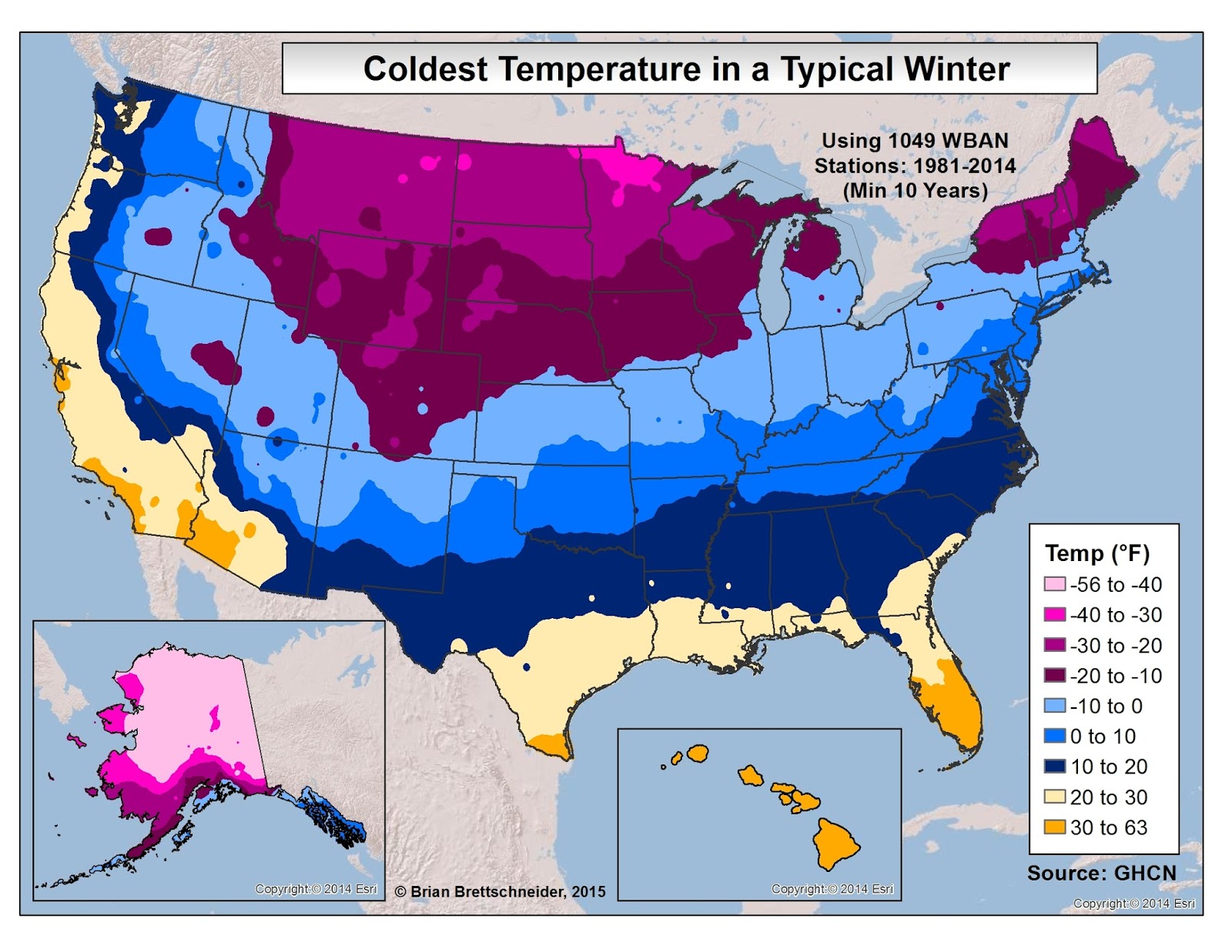
Which is quite a lot of the country.
Light blue is a typical Winter low point in the -10°F to 0°F, which means you will see -15°F or lower often enough to worry about it.
https://www.energystar.gov/ia/partners/bldrs_lenders_raters/...
Though heat pumps are unique in that they produce less heat as the colder it gets - A few hours of -15º every few years shouldn't be the primary consideration in spec'ing a system that still produces 75% of its heat in that worse case.
I live in that blue area and ran through all of the math and considerations recently - I pulled the hourly temperature data for 6 years. Of the 94,000 data points in that period, a total of 26 hours were below -5º: https://imgur.com/a/P7A3kan
> Our modeling finds that even if Focus incentivizes 800,000 heat pumps with electric resistance backup (10 times the number of heat pumps as it did furnaces in the past four years), the state will still be able to meet its electricity demand with currently operating power plants, even on the coldest days. Depending on the efficiency of the heat pump, in-state winter generation capacity would still exceed peak demand by 1,400–4,300 MW on the coldest day.
https://rmi.org/three-questions-wisconsinites-are-asking-abo...
One of the states in the article is Oregon too, where I have family that just a few weeks ago lost electricity for 4 days, but were able to use an electric generator to keep the air handler going and gas to heat the the house and cook.
I fear heat pump only heat will fail exactly when I most need it not to.
She had to get a hotel room for the night because she wasn’t comfortable sleeping with the gas fireplace on.
⸻
1. I would guess that thermostats also powered by electricity not working would add to the complication.
Natural gas is just a very convenient and very dense source of energy when you need it most.
We have an (almost[1]) all electric house. A year ago we lost power for six days. Last spring we had a generator installed. Over the summer we lost grid power for five days but the generator worked flawlessly the entire time.
I don't like having gas for a number of reasons and if the grid was more reliable we would never have bothered, but, for us, it's just so much more reliable.
[1]: We have two HVAC systems that service different sides of our duplex-ish house. One side is a ground source heat pump, the other is a 95% efficient gas furnace.
Oddly enough, it tends to snow when it's cold. Even rain can a problem since the nature of a heap pump means the unit is cooler than the surroundings.
So often for a few nights of the year, the alleged "heat pump" actually just falls back to electric heating.
The thermostat just sees the resistive heaters as another phase, so I have three phases, and if it doesn't see a temp rise within a certain time of calling for phase 1/2, then it goes to phase 3. Mine also has support for an external temperature probe, that can skip 1/2 if it is already too cold.
I also have other ways to make heat if I have a prolonged electrical outage, but outside of maintenance, I've not used that.
I converted my garage into my office by adding a mini split AC/heat pump. The garage walls, door, and attic are insulated - but it's still a garage, which means that it's not nearly as well insulated as a regular room in a house.
The unit is 18k BTUs, which is quite oversized for the size of the garage. I made this choice because the heat pump BTUs are significantly less than cooling BTUs. This is definitely obvious, experientally - the unit can make my garage uncomfortably cold even in the peak of summer.
But even though this unit is supposedly rated for operation in temps down to about -20F, when winter gets really cold, it struggles to keep the space warm. Once the temps are below about 20F or so, I usually add a space heater to the mix, which, combined with warm clothes, makes working out here at least tolerable.
He said 2.9 coefficient of efficiency average over a heating season for him - https://youtu.be/7J52mDjZzto?t=1522
On older homes, with much worse insulation, this would immediately be a problem.
Heat pumps are great, but they absolutely need some kind of emergency heat back up.
No, that's just not functional. "Less efficient" means consuming more joules of electricity but still providing the required function.
> Heat pumps are great, but they absolutely need some kind of emergency heat back up.
They include it. You were sold an inadequate pump for your situation.
Are your 70 and 80 switched? What you describe doesn't sound like it needs any addition.
If your locale gets life threateningly cold though, I’d feel more comfortable with a furnace because of the fewer moving parts. Burn gas, get heat, dead simple.
It's a high-efficiency one with a control board (Nobody can convince me FCS isn't Fire Control System) and a separate draft motor.
One of the vacuum sensors went out and the furnace couldn't prove it was safe to run, so it would turn on the draft motor, suspect a clog, and then shut it back off.
An easy fix but not as simple as lighting a Bunsen burner. And I haven't seen the electrical cord for it, I'm not sure how I would hook it to a generator if I lost power. The water heater oddly enough is battery-powered, so I guess I could just fill the tub with hot water.
(And maybe a rocket stove combined with a heat storage hypocaust.)
https://solar.lowtechmagazine.com/2017/03/heat-storage-hypoc...
Because for the scandinavians reading the thread and with the "It works in my country", US house build quality, in my experience, is even worse than UK houses build quality (and that's a pretty low bar).
Uh, you still need a furnace (though it could be electric) if you live somewhere that ever really gets cold, right?
[edit] I mean, seeing it presented as a furnace replacement is weird to me. I’ve always seen it sold as an air conditioner replacement that also happens to heat (with weird characteristics that often confuse people—they’ll think their heat is broken, because the air coming out is only kinda warm, not very-warm like furnace heat) when it’s not really cold out.