It may not be the best thing in the world to be an "excellent sheep," but perhaps it's better than being a lone ram.
From what I understand, the on-the-ground management work after acquisition is outsourced to specialized executives with whom the firm has a relationship. They can bring expertise in a specific industry, and the deal structure pays them with large performance incentives.
Transactional staff are typically a minority of PE branded employees. There is a stable of executives to pick from. But underneath them, operational staff (who may also be drawn from transactional) who aren’t in on the upside typically come via the fund. They will work in a fund office, have fund swag, but work on operational reporting, portfolio surveillance, refinancing and cap structure management, et cetera.
Not on the ground. But providing that service from away. Most commonly, the CFO’s “staff” will be associates. They build the same models and doll up the same decks. Same for communicating portfolio health to LPs. That’s a reporting function.
They are also the reason that partnerships still thrive. A couple of years ago I was talking with this (big law) partner at a dinner, and we came in on the topic around partnership - and he just said it straight: The competition / rat race towards partnership is 100% skewed to the firms advantage. They get dozens of highly motivated, highly competent professionals competing against each others to prove their worth. They'll be on call 24/7/365 to show that they're worthy of partnership. Even if they become partners, most won't be rainmakers - and many would have made the same amount of money if they struck out on their own, opening a small boutique firm.
Prestige is a powerful motivator.
I know this to be true because I've seen so many people given BS titles instead of raises and be happy about it as if they got something of real value.
But I don't understand it at all. Apparently, I lack the "prestige" gene.
Because rarely the person is ever the actual head.
In retail/hospitality/many other customer facing positions, manager is also just someone who gets paid a salary in exchange for being on call and working 60+ hour weeks while shortstaffed.
Others may overvalue prestige.
Or maybe there are hidden benefits to it that are hard to buy (social status).
Sometimes prestige does it, too, e.g. when you're hired to a better position on a next job, due to your prestigious title, a part in a famous project, etc.
As I thought, that company died, firing 100s of folks before the end.
It's been a few years, but a former colleague who took that job, managed to land an impressive title at my previous employer, above my level at the time... I have since left that company (unrelated), moved to a startup, and couldn't be happier.
My opinion is that titles don't matter. At all.
Compensation does matter, but you have to also value your happiness and factor that as well.
https://www.theatlantic.com/ideas/archive/2023/06/us-societa...
As much as I like the idea of PE scum putting their own necks into the guillotines, though, I'm skeptical of whether this theory really works.
Pre-revolutionary France didn’t have too many petit nobles because they were dumb — those folks were a legacy of a bygone era. Today technology is rendering while swaths of products, business and industry irrelevant.
Populist movements at their core are driven by fear. What are they afraid of? They know that what do they and where they live is redundant. We won’t see change until there’s a calamity.
Surely this it the same in tech. Most employees of FAANG companies could do something in a small company but the big company is just more prestigious and less risky. Every small business is like this now, doctors offices, restaurants, stores are all chains.
It's the opposite.
At a FAANG they won't have to be on-call 24x7x365 and will get great salary and publicly tradable stock but at a small startup they will have to be on call 24x7x365 for "ESOPS" that is so skewed in the favour of the startup and the founders and VCs that they get the double whammy of slaving at much lower salary where they have the ESOP bone in front of them dangling from a thin thread.
I mean it can't get more ridiculous than this that you have to pay and then pay taxes for something you can't do jackshit with it, and if you get fired you have the "opportunity" to pay a company that just fired you and pay taxes again on something that's not even paper money and that too within few weeks to few months.
Most of the time, startup equity is funny money. Especially for the rank and file.
It seems that as a whole, when people choose the Big-X route, they tend to make fewer inventions and publish fewer papers and their inventions and papers get cited less.
So, in theory, by going to work in Big-Tech, you're choosing greater comfort and prestige, while reducing your overall impact on the world, while the startup route holds much more expected impact, but a much higher likelihood of reduced financial comfort.
There's a part of me that thinks that nations that encourage hoarding talent would be less successful than those that encourage innovation, and therefore, I wonder if we need some sort of innovation grant (i.e.: for every successful patent application/company registration/etc. that is NOT fraudulent, the submitter gets 24 months of financial support at the median income level, so they can chase that dream)
And the other dirty secret is: you'll still be on call 24/7/365, sleep on the couch in your office, and not know your family, even after you make partner.
The rat race/grind doesn't stop in Big Law. You grind to be considered for partner, and you think maybe once you get there you get to boss around a bunch of associates and take a breather. But no, that's not how it works.
You'll be paid 7-figures (maybe, if you're a book partner and not a work partner) but you'll still be just as miserable and overworked as your past associate self.
Having seen the industry up close I now advise people to run as far away as you can in the opposite direction if you're ever tempted by a big law legal career. It is nearly-exclusively the home of absolutely broken people who'll be remembered for keeling over in the break room after pulling the tenth all-nighter in a row.
boom-bust cycles enable capital to buy everything in the bust period. every thing.
legal entities keep shifting to join news tax avoidance tricks. it's not a static game.
Out of curiosity, what happens to the busted capital in this toy model?
Banking used to be a boring, low paying profession. PE was basically non-existent. The whole of banking and Private Equity fire machine has been fed by 2 factors that were absent ~50 years ago:
1) ultralow interest rates for extended periods of time 2) de-risking of hubris via bailouts (most recent case: SVB). 3) Regulation creep. If you look at the industries where PEs are investing heavily, its not where competition is fiercest, but instead they look for captive markets, particularly those with licensing requirements (Like healthcare). Its easier to buy into a company when competition is not likely to show up organically next door.
If you take that secret sauce off the dish, you can't quite cook the stuff that we have going on today.
Banking used to be populated with lots of jobs that require compliance and attention to rules, but not necessarily intelligence. Success was defined as being one of the 200 VPs at a regional bank and chilling at the club.
https://www.athenahealth.com/knowledge-hub/sites/insight/fil...

And universities
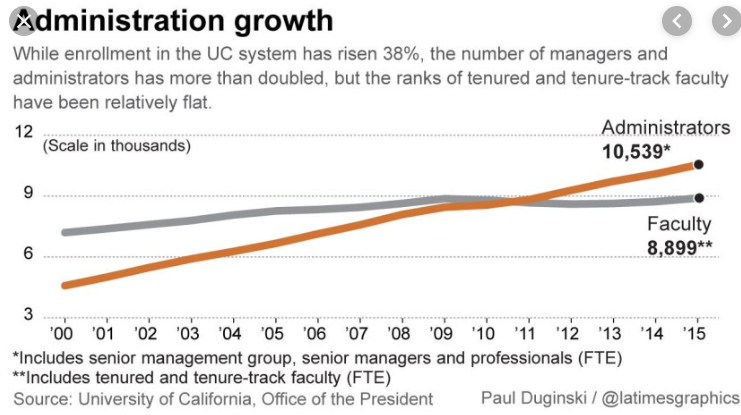
Private Equity partners become board members of the squired companies, some time CEOs, but they don't manage day to day activities of the squired companies.
You can check a company like Francisco Partners which one of the biggest PE firms now. They have another company called Francisco Partners Consulting which helps with the management. The partners are too specialized to become middle managers in the squired companies.
AdLibs is fun. How about: Developing and React.
Banking was great. Everyone–from liberal arts to engineering majors–could putz around for years in a pre-defined and prestigious path with moderately above-market pay and the potential to become rich. (Most don't.) It was also a field that could absorb a lot of grunt work, because most of what these folks did was format PowerPoints and populate Excel templates.
After the GFC, bulge-bracket finance became less prestigious right when technology lowered the industry's hunger for grunts. Silicon Valley took up some slack, but at least until the pandemic hiring boom, there was a modicum of technical gating factors.
The entire time, corporate and industrial America needed administration. But working at a chemical plant in Baton Rouge isn't sexy. You know what is sexy? Working for KKR.
So KKR's partners buy the plant, hire the college grad, give them a few weeks' training and "deploy" them to Baton Rouge. That will be their "project" for years. There are perks: they get to fly in from a city, for instance. But overall, the partners can acquire this labor cheaper than their portolio companies. (Ask anyone who isn't a partner at a private equity firm what they do, and it's on a spectrum between administrative assistance and middle management in a random business.) It's what consulting did in another era, re-branded for what young people willing to take less pay and power predict their peers and parents find prestigious (and what they consider safe).