The legitimate role of copyright is to encourage artists to allow public access to their works. Without some form of protection, a lot of work would never be available to most people because keeping it hidden will become the only protection artists have.
>a lot of work would never be available to most people
This is the situation right now because of copyright.I don't see why it would be worse without
> This is the situation right now [...]
There are several argument getting mixed up right now:
1) No copyright is better than the current copyright system (your argument)
2) Some copyright is better than no copyright. (the argument you responded to)
Point 1 does not negate point 2. I wouldn't be suprised if some of the best books I've read wouldn't have been produced except for copyright.
Right now some artists can afford to dedicate a significant amount of their time to creating art, because they are compensated for it. If copyright did not exist, even the "starving artists" would have to spend more of their time and effort in non-creative jobs, and thus have less time and energy to create art.
How could an author afford to write if selling a single copy of their work gives the buyer the ability to legally copy the work and distribute it for free or for a lower price? Why would a publisher, say O'Reilly Media, pay an author to write a technical book if anyone could just drive the price of the book down to zero (or to the cost of distribution)? I pay $500/yr for 'Reilly Online because I get more than $500/yr worth of value from it, but if someone took all that content and distributed it as conveniently at a much lower price, I would probably stay with O'Reilly for a while, but as the price rose, the rate of new content decreased, and the reliability of the interactive services fell, I'd probably give up and switch to the content-thief platform until the content was too stale.
So yes, I agree -- copyright law as it exists now is harmful and needs changing. But that doesn't mean that the concept of copyright is a bad one.
copyright does not change that in any way, it would still be private without copyright - what am i missing?
> Without some form of protection, a lot of work would never be available to most people because keeping it hidden will become the only protection artists have.
Wu Tang had a bunch of listening sessions where people could listen to the record with headphones for a price. They could not record what they were listening to. It's like a concert, but no one can make bootleg recordings of it (okay, maybe with hearing aids).
In the early days of the telephone there were similar ways to listen to operas and concerts remotely through a headset.
If copyright didn't exist, musical artists and visual artists would be incentivized to release public snippets of their work to generate interest, and then only showcase the whole thing in private without the ability to reproduce. I can only imagine what radio would turn into.
Most musicians monetize through performance after selling copies. While there are some jobs for spec music, it's not enough to support all of the musicians who are currently making a living off of their music.
If I build a house, do I have ownership of it? Or should I allow someone to walk in, change the locks, repaint one of the rooms, and rent it out for their own profit without paying for it?
Artists create new things. That's the job.
There's a certainly a case to be made against parasitic rent-seeking which sweats existing resources for profit. But you're not going to have your "renaissance of art, science and culture" if the people working on it full-time aren't getting paid.
Mostly these arguments come down to "I want something for free so why I should pay for it?" and "I don't understand what these people do, it seems pretty replaceable and trivial, so it can't be worth anything."
It's classic management-think. It's exactly why so many jobs, including many elements of software development, are hugely undervalued, and why so many people have to work in harsh and aggressively inhumane environments.
Similar to how going viral with a new mobile game as an indie dev means you will almost immediately be cloned and pushed out by King et. al., removing copyright protections would mean that only the largest and wealthiest artists' and corporations' versions of art dominate the market. Creating something truly new and interesting would become simply a donation of that idea to the powers that be.
The main problem with copyright isn't it's existence, it's that technology has allowed the wielding of it to become too quickly and brutally applied a la youtube's automated DMCA system.
But copyright as it exists now does not protect or benefit the "little guy" or indie artists.
There have been many many instances of big record labels or game producers ripping of small artists and I have yet to see 1 (one) instance of a small artist going against $bigcorp and winning.
Copyright is broken; it only protects those already moneyed and in power and savagely attacks small artists, destroys the basis of creativity (sampling) and blocks access to vital research.
It must be abolished.
On a human scale, this might just be the artist's family who supported the artist during life (think: a partner whose full-time job provided funding and health benefits while the other sweated it out in a studio) who relied on their income during life. Or the foundation might collect royalties to pay the staff who assisted with the work (essentially co-creating it) per contracts established at the time of its creation.
“Murder of popular musicians and artists up 1000% this year… news at 11”
Joking aside, if I am the artist, shouldn’t I be able to give those rights to my children to provide for them after I’m gone? I agree with the spirit of what you’re saying but I think a reasonable threshold after death is appropriate (20 years maybe instead of 70?)
The question is to what time threshold does society need to pay for police/courts/lawyers to enforce copyright law such that people are sufficiently incentivized to create whatever.
For example, if copyright law were 10 years from date of creation, would we see too little in the way of creativity? Would singers still sing and writers still write and artists still paint/draw/whatever?
I can see a viewpoint proposing 10, 15, even 20 years, but 100+ years is beyond the pale. That is just a handout from taxpayers to people that own the copyrights.
After that, it is not “exploitation”, it is using something in the public domain.
No they will just wait for the timer to tick away and monopolize on a community that someone else spent years building. Just because you change the law in your thought experiment for it to be legal doesn’t make it not exploitative. If we legalize slavery you can’t just say, “well its no longer exploitative, its the law”
And yes, if it is good, people will jump on it. Evidence being that HBO did not wait 170 years to start making game of thrones. They saw a story they could sell, so they paid the author to make it. If they did not, another media maker could and would have. Warner brothers did not wait until Harry Potter copyrights expire. I am sure other media makers were bidding for Harry Potter rights too.
Of course, Martin and Rowling have been paid less if copyright was 10 years. But would they have written the stories if they earned $10M instead of $100M or $1B or whatever they earned? I would err on the side of yes.
> There have been many many instances of big record labels or game producers ripping of small artists and I have yet to see 1 (one) instance of a small artist going against $bigcorp and winning.
So your solution to small artists getting ripped off is to take away all the rights those small artists now enjoy, so they get ripped off harder and faster by "those already moneyed and in power"?
Ok then.
> Copyright is broken; it only protects those already moneyed and in power and savagely attacks small artists, destroys the basis of creativity (sampling) and blocks access to vital research.
> It must be abolished.
That's foolish radicalism. Progress doesn't happen by over-reacting to some problem and abolishing the whole system. In all but a few rare cases, it happens by reforming things to solve the specific problems while preserving the other benefits. Copyright isn't one of those rare cases.
Yes. Those "rights" are not free. They have an immense cost to society. If we want to collectively support artists we can do so without stifling creativity.
Fully agreed, and I would drastically curtail it. But complete abolition is throwing the baby out with the bathwater, ignoring the problem copyright was established to solve in the first place.
I have yet to see 1 (one) instance of a small artist going against $bigcorp and winning
Just did, in this very news story. It's happened on multiple occasions, it's just that such cases are weighed on their individual facts and don't lead to any change in the basic idea. Of course, big corporations always have a starting advantage because they can hire expensive legal teams and weigh down their opponents, but this is a general flaw in the adversarial litigation culture of the UK/US which is unabashedly pro-capitalist.
Maintaining copy quality and providing a single point of contact for censorship?
You probably mean some other goal people gave it by the end of the Modern Age.
Yes it does and I'm a plaintiff's attorney that works in copyright and patent for small-time artists and inventors. You could not be more wrong.
I have obtained settlements for my clients from some of the biggest media corporations in the US. You have NO IDEA what you are talking about.
You do not have to file suit to assert a copyright. You just need the authority to file that suit, in order to have a meaningful threat from which an infringer (especially a large media company) will settle.
If this is too hard for you to believe, I'm not sure what to tell you but to spend more time in the real world, and less on whatever media you are reading to engender these thoughts.
Copyright doesn’t mitigate this risk, for if it did, it would do the same thing for the example you cite in the second paragraph. (Software and game assets are also protected by copyright. . .)
Without copyright, what would corporation/famous artist ‘own’?
I disagree. The main problem with copyright is its existence. It cannot be logically explained as anything other than microslavery.
If we think the world is a better place with microslavery, than that's an honest debate to have. But the current debate simply is not honest.
Stephan Kinsella (a patent lawyer who is against IP) is the best thinker on the subject currently, IMO.
Owned? Without copyright?
it enforces the existence of a market of royalties dues. https://en.wikipedia.org/wiki/Royalty_payment
I agree, the digital technology changed things so much that it no longer makes any sense. but tell it you the king of the UK? (or some other country with "kqweeng")
consider that there are amazing things, right now in human existence that will exist, but do not at this moment. money fundamentally is about resource allocation. such things are less likely to be discovered without incentive. money is part of that incentive (though not the only thing).
the problem is that copyright has become too overzealous and too long lasting. ideally imho it would be exponentially decaying in length based on use, or exponentially expensive to keep an exclusive right to. or perhaps right of first refusal around anyone who wants to use it being able to bid for the opportunity. there are many improvements that could be made, yes.
in my view copyright should be use it or lose it. I do agree with your sentiment in that many people hold copyright to things that they are not actually using.
It serves an additional purpose with respect to takedowns of private material (such as revenge porn). Using that would obviate the purpose in the first place.
But yes, if something was available for purchase earlier, it should still be available later (and not just on the second-hand market).
To be more concrete, imaging two arrangements of light in a fiber; one is ~20GB of randomly generated noise and the other encodes instructions that a Nintendo Switch can interpret and present as the Zelda game Tears of the Kingdom. The random noise arrangement is much, much, much (!) cheaper to create than the TotK arrangement, which took 5 years of labor from a massive team to create, but people seem to like the TotK arrangement a lot more, and I don't know if it would have been possible to get that much labor allocated to arranging those bits without some technology that enables an entity to finance the labor and hopefully recover more than their costs (that technology being a legal construct that grants the entity entity exclusive ownership of the right to distribute TotK-arranged bits).
It seems like the photographer here is pretty happy about her copyright.
I love SCI-FI thinking about a world without copyright or patent protections, to wonder what it would be like for humanity after a couple centuries. But I can't help but feel artists not getting credit for their work, would at least hurt them on the individual level.
So it is either:
Use public domain works
Use the artists work but ask for permission or pay license
Change the laws on copyright length. (how many lawyers can you pay for?)
Wait for the work to enter in the public domain (unlikely anyone will do this for any work made today)
https://cdn.arstechnica.net/wp-content/uploads/2018/12/Steam...
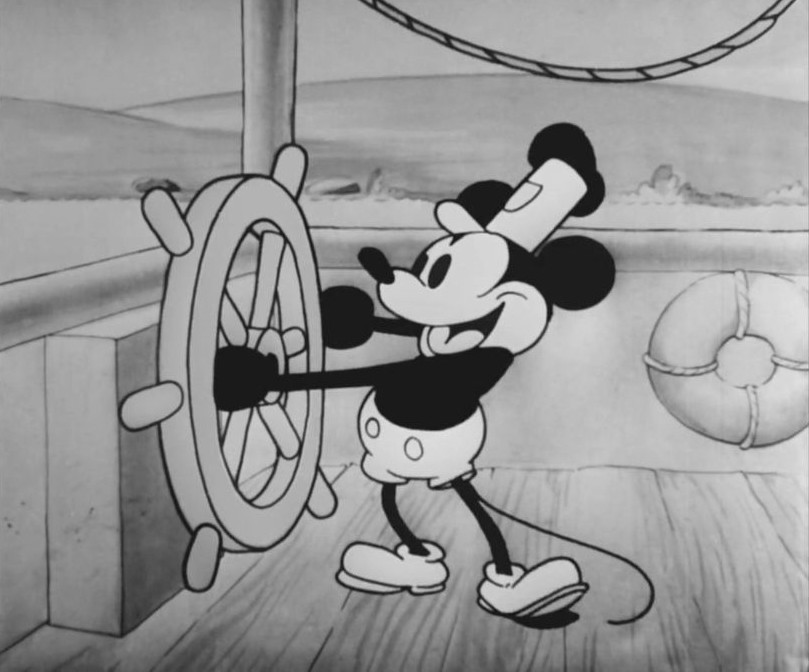
But not this one.
https://cdn.arstechnica.net/wp-content/uploads/2019/01/Stand...
One thing that struck me was that both sides in that debate agreed that the current copyright/patent system was not in very good shape. That's one nuance that I think can get lost in these discussions — somebody says "copyright can be good" and is met with the retort "look at how bad our system is right now" without allowing for the possibility that we could have a better system, rather than outright abolishing it.
Anyway, I think there are good points on both sides; you seem to be more on the absolutist side (fair enough), but you might enjoy watching it.
I get that my position here is considered extreme, but then again the nuanced one is much harder to express in a couple of sentences.
A lifetime of being denied access to science or art on the grounds of copyright has made me cynical.
To me it's just a classist defense barrier - keep the lower class from getting education and art to keep the class system intact. Copyright is just one method that has been corrupted to this purpose.
Separate corporate owned copyright and personal copyright. Personal has 14 years with option to pay to extend twice (7 years each time manually). Corp starts at 7 years with option to extend like personal.
Little guy has time enough to profit, corp had more budget for advertising than personal so needs less time for profit. Everyone else can enjoy within a reasonable time.
What do you mean by this? People have better access to information now via the internet more than ever. In theory the absolute access could still be low, but the outcomes from online learning from free sources are very impressive. People can train themselves for free and make a ton of money from it.
I think a big problem with the current system, is that (on the whole) it adopts fundamentally the same rules for completely different categories of things – such as novels and computer software.
The term of "life of author plus 70 years" was justified with reference to authors of literature, music, etc. Whether or not it is justified in that context, that was the context used to justify it. It is very questionable whether it makes sense when applied to software.
A good place to start might be with changing the rules just for software. I'd say a reasonable copyright term for software should be a small number of decades (10 or 20 or 30). Source code escrow should be mandatory, with the escrowed source code being automatically released to the public upon copyright expiration. Publication of the source code should be allowed as an alternative to escrow, so open source projects aren't burdened with it.
> No abolishing it has a better chance of killing it going forward
Radical proposals rarely succeed. Proposals for incremental reforms face an uphill battle against powerful vested interests, but the odds against radical proposals are a lot higher.
It seems to me that history is showing the opposite. It’s easier than ever, thanks to technology, to make original movies, songs, etc. But demand for specific creations is more concentrated than ever.
Of all of the types of property, copyright seems to me the least offensive. It’s not like the dirt I built my house on, which is finite, and which which I had no hand in creating. There is an infinite amount of original works, all you need to do is make your own.
Here’s one that happened because the source works weren’t indefinitely protected (ironically, what Disney wanted for their own derived works.)
Thence T. H. White, thence Mary Stewart, thence Marion Bradley (an otherwise wretched person), thence that terrible Sam Neill vehicle, thence. . .
All of this to say there’s a flaw in your logic: financial incentives are not the only reason people create new things. Financial incentives in fact destroy other artistic incentives, and so we already lack the works that would have been created in their absence. The proof of this is the graveyard of Netflix series canceled in the second season.
(P.S.: Ah, here, in the acknowledgements to _The Mists of Avalon_: "Finally, I must express loving gratitude to my husband, Walter Breen, who said, at a crucial moment in my career, that it was time to stop playing it safe by writing potboilers, and provided financial support so that I could do so. . ." A potboiler is a book written to cater to the popular taste, so that the writer might earn a living.)
There has been a recent tidal wave of "remixes" of the original work. TV shows, graphic novels, etc. My read: A lot of it is very good, very few new ideas are being created, and a lot of money is being made. It's hard to argue this counts toward anything like a "renaissance."
The fundamental argument for copyright is that creators of certain works should able to earn a living based on those ideas; it turns something abstract into "property," thus granting property rights to a class of things that wouldn't otherwise have such rights. This allows people to become professional "idea creators."
The problem to be solved with abolishing copyright, of course, is the problem of funding "idea creators." This doesn't seem to be something most opponents of copyright have solutions to.
In the case of something like Anne of Green Gables, once the "property" is no longer exclusive to someone, it is much, much, much harder to generate an income from that property. Imagine building a house, but not having control over who enters it. Same idea. Maybe people shouldn't have long-term property rights at all? Who knows? That's starting to sound like communism or something.
It's not quite the same idea. When you build a house for yourself, the implicit assumption is that you can't use it the same way if there's someone else in there. Put in a crowd and it's unuseable. On the other hand, multiple people can use a creative work simultaneously without noticing each other. If anything, it can make the experience richer.
Your simile holds if you're not creating something with the goal of extracting value from using it, but with the goal of extracting money from others for using it.
Which leads me to the conclusion that abolishing copyright would stop people creating things for sale (second scenario), but would not influence those who create for its own sake (first sccenario).
Of course it influences those who create for its own sake. "Creators" are people who need money on a fundamental level, to pay for food, shelter, etc. If you make it impossible for them to earn a living from being creative, you're limiting such creativity to those who are otherwise independently wealthy. In other words, you're making it harder for the less-well-off to actually be creative.
There's also a ton of original fiction and art for cheap, existing within the realm of copyright but outside of the "IP titans" of Disney, etc.
What more renaissance do you want? The ability to put Spiderman in even more stuff? (Shit, even this already exists!)
EDIT: downvoted, but seriously: I can spend 10 bucks a month on Spotify today and get an order of magnitude more variety and depth of non-major-label music - ON DEMAND - than I could've gotten thirty years ago for practically any amount of money.
Entrepreneur literally means 'bringer between' which describes the traditional mode of trade perfectly - I prefer to go to a farmer's market and buy 10 different kinds of food there than visit 10 individual farms. But as entrepreneurship moves toward exclusive distribution agreements and other contractual infrastructure, it devolves into rent-seeking.
(Copyright-aside, myself not having time to manage direct relationships with hundreds of musicians/bands is a good reason we still need the Spotifys of the world, though. And again, yesterday's middlemen were even more restrictive.)
But I'm still really just waiting for someone in the "copyright is ruining culture" camp to tell me what exactly they want that isn't being catered to today, that is blocked by copyright? (In the US - internationally distribution systems have a lot of roadblocks so the answer becomes "access to certain pieces of foreign content at all")
I slightly disagree, in that record labels had one great virtue despite their faults: they'd give promising artists an advance and help them network with producers, graphic artists and so on. Most musicians today need to invest a lot of time in being their own recording engineers and so on just to make out of the gate. The big labels were notoriously predatory, but smaller labels did and continue to provide a lot of value to artists.
Originally copyright and patent terms were effectively identical. Western societies allowed them to slowly diverge, like proverbial frogs being boiled. How could we undo this mistake?
- No copyright on derivative works mean I can finally make my 'fan fiction' Top Gun movie. - No copyright on actual works themselves, mean's I can be streaming Top Gun for free to the world. (only bandwidth/server costs)
Copyright terms are way too long, but who's going to spend big money on production when you potentially get to sell ONE copy before it's 'free' for someone else to distribute (sell) to the rest of the world?
Imagine the renaissance of art, science and culture we would have if we abolished copyright tomorrow. We have the technology. Please get rid of it.
What redeeming quality does copyright have in light of the intellectual damage and huge amount of unnessecary bureaucracy it causes?