At that point, the entire production and marketing of the major car companies shifted towards SUV form factors, since they didn't count against their fuel mileage standards. Now, the behemoths are the norm, but what is really selling is the "Crossover", which is in fact indistinguishable from the old station wagon format.
Yes, this thing won't likely do well when run over by an F150 or Yukon. Which is why standards should be set such that the larger vehicles are not such a hazard to pedestrians, cyclists, and smaller cars (eliminating the front "wall" would be a start). It's likely you can do just fine with a station-wagon/crossover format, although this is obviously small for a bunch of kids and dogs. No car is not made for every purpose, and I wonder why the mere existence of this thing seems to annoy you so much?
The actual solution to this short trips problem is better mass transit and cycling infrastructure, with cars reserved for highway travel and other long trips or cargo hauling. Good pre-car suburban neighborhoods existed on a network of walking and electric streetcars. That is the future of urban design, not cars designed for Oompa Loompas.
Exclude people who never have multiple kids, and those you have yet to have kids or whose kids have left home and large vehicles simply don’t fit most people’s lifestyles.
Which is why pickup trucks can be so popular cars just don’t have many passengers on average.
Where I live they mostly drive enormous, 4-door "pickup trucks" which can seat 5 grown adults very comfortably. While it's not quite a 7-passenger full-sized SUV, I just want to make sure you're picturing the most popular size and shape of truck when you think about pickups :D
The breakdown is somewhat vague but Regular, Extended, Crew, Quad are noticeably different cab sizes.
At the other end 3rd row pickups are coming…
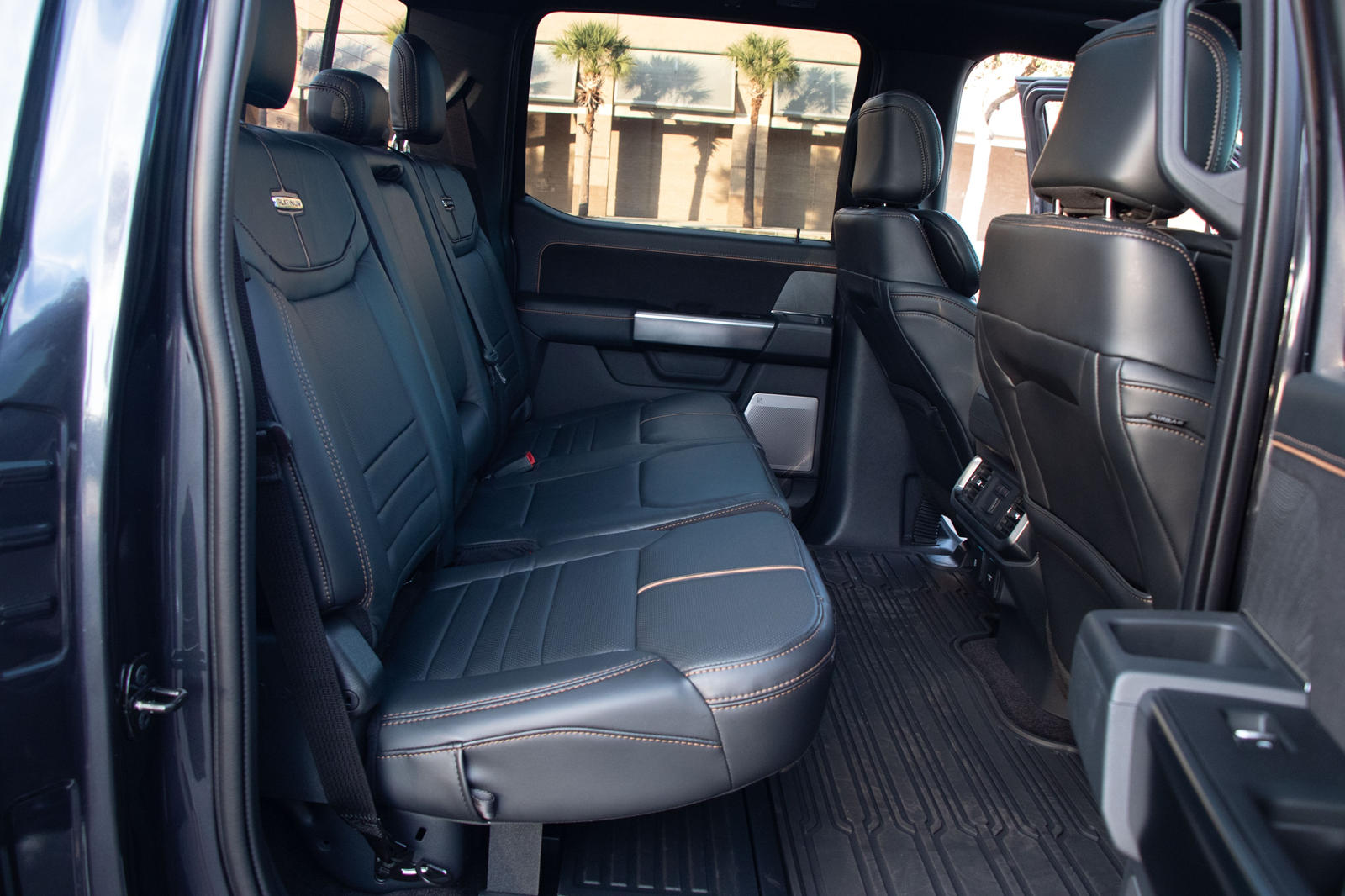
Something like a $65,000 truck. LOL
Eh... we have to thank CAFE for SUVization of the world... the stupid trend is slowly trickling over the pond and it's getting more and more annoying... I do hope that either US will fix CAFE or UE will regulate to have smaller cars (usually hatchback is enough and wagon for bigger families)... or ideally both.
That being said, I'm sure these cars will see some adoption in dense/regulated historic neighborhoods. Manhattan has had tolling debates for the last decade - on current trajectory I'd expect lower manhattan to be restricted access by the end of the decade.
Don't buy a small car, don't walk, don't bike, don't use a scooter, because everyone else is driving large vehicles. Awesome.
Agreed, there's a place for all forms of transit. I think the argument that the parent commenter was making was that we already have the density in many places for vehicles of this type make sense for residents, but the barrier is that road infrastructure is built to prioritize larger vehicles, making these vehicles unsafe.
In places where safe infrastructure exists, families frequently plan their lives differently, and I know many (with the means to choose freely) who get by with carshare, good transit, cargo bikes, etc...
The viable solutions are 100% to encourage the kind of alternatives you listed to give people meaningful tools to decrease overall single family car use of any kind.
I read their comment as encouraging city-specific measures. They specifically reference "urban living", "human-scale living", or slowing down vehicles for "in-town trips". I agree that use-cases exist for larger vehicles, as even in the densest city centers delivery vehicles continue to need access. IMO larger vehicles need not be the vehicles we optimize for, or even allow at all times, in city centers, where such vehicles aren't needed by most residents.
> [...] 100% to encourage the kind of alternatives you listed to decrease overall single family car use, not try to force everyone to change car designs [...]
Honestly I'm thinking of this more like a large cargo bike, and less like a car. It's like a Canta (https://en.wikipedia.org/wiki/Canta_(vehicle)) in the Netherlands. It's not meant to serve the same purpose as today's cars, and we probably both agree it would feel unsafe to drive one amongst fast-moving traffic. It fills a gap in the transportation spectrum that's well-suited to certain areas, and I believe we should devote more infrastructure to vehicles which match the needs of an area, which I don't believe is always full-sized passenger vehicles.
Meanwhile, cargo bike sales are climbing steadily.
I’m not arguing that the US style suburb is the best we can do, but you’re not going to come up with anything better that really sticks without understanding why it’s built the way it is.
For people who don’t have kids I don’t feel like I can even explain it to you. Nothing can prepare you. You have to experience it.
It’s also important to note that not all cities are kid friendly. Some are places I’d never allow a kid to go, with open air psychiatric hospitals on the street and people passed out everywhere on drugs. Of course this is a different problem that has more to do with incompetence and corruption in government and non-profits.
A 30mph crash entails order(s) of magnitude less force. Could look like a tram. Smaller seats with less padding become practical.
If we do decide we need a second car as the kids get older, this is _exactly_ what I want. No gas stations. Super easy parking. Low capex and opex. Awesome on all fronts. (But as a second car.)
You're supposed to buy a second car just for long trips? Even if you live in a dense city, America is inescapably huge and requires highway travel unless you never want to leave your neighborhood. We don't have a functioning passenger rail network like China etc.
Even if this were remotely feasible, which it's not, this kind of tiny car is a total death trap for your family when everyone else is driving large vehicles. I would love to see a crash test video of this against an F-150.
Finally, let's say you do live in a city and you are already a two car household. Try telling your wife that she has to buy this ugly toy-sized car that she looks ridiculous in while you get to drive a Tesla or Rivian. Like it or not, cars are lifestyle status symbols where the aesthetics matter.