I mean, why can't we have a viking Black Panther and put Wakanda near Iceland?
> The real problem is getting upset over the skin color of the actors and actresses playing fairies
No one is upset for that, I, as Italian, am upset that some writer thinks that Collodi's story needed to be changed in ways that add nothing to it and also betray what he clearly wrote with his own hands.
The pale white skin is a well known proxy for ethereal/angelic beings, they are not white people, they are otherworldly magical creatures, made like that.
There were a lot more places where they could have added diversity, they decided to go for the most obviously controversial one.
In European and European derived culture...
What did you intend this statement to contribute?
So watching a Disney movie, I’m not watching an Italian movie featuring an Italian story, just watching Disney.
I’m watching a common fable. And in that case, I really don’t see why everyone HAS to be white.
Not asking to change the original Italian book here. But the reality of Disney as a global storyteller is that it became a lot more than an Italian story.
Yep, that is the problem.
USA is both pushing diversity and inclusiveness everywhere they can, while also using other cultures because "they don't know where things come from"
Which is cultural appropriation according to modern standards and it's neither inclusive nor helps diversity, it actually crushes it and make all the debates about recognizing the cultural differences as they exists look like white people complaining over minutia, or, even worse, racists that do not want women of color in movies or shows.
When It's actually the opposite, I want to see black people stories, not just black people participating in white people stories where they are not originally mentioned.
I love the contrast between being woke ("Be inclusive and represent all people") and being woke ("Taking another cultures history and erasing the cultural aspects of it, making it all white, is bad") on display here.
But Disney is not making culture, they are making entertainment for making money.
Tolkien is culture, Amazon's rings of power is not.
EDIT: sorry, misread your comment, no, not only in European cultures, it's consistent across the cultures throughout history.
White is the light, first men loved light and hated dark, in darkness lure grave dangers.
For example in African mythologies fairies are white too, pearl white to be precise.
Funny. Culture is almost everything. If we like it or not, if it's high or low culture, that's a huge discussion. But for sure the TV series is culture.
* * *
Cool link! True, the association with light is strong, universally.
Actually, there was also the social class factor in any culture where tanning is highly visible: aristocrats vs everyone else, who had to work outside. No tan = upper class.
Fair enough, point taken.
I should have phrased it better.
Let's put it this way: Tolkien was an intellectual and a Linguistic Professor, his works have cultural relevance, he was trying to write the new British mythology from the POV of a scholar, he wasn't thinking about writing a best seller to get rich.
Conversely, I love the Terminator, but Terminator has no cultural relevance, it is popular culture or pop culture, it lives among us, yes, but the reason why it exists is entertaining people that go to the movies.
This works so well because theatre is a practice. Any play, even if it's performed once by one company (surely the mode for plays) is of the ages. Merry is black in your stage adaptation of the Fellowship, you say? Of course he is, everyone knew Isaac was going to get that role, he's a natural for it.
Cinema is a product, not a practice or a process. Like it or not, it makes a single, definitive statement about a story. It's fair to dislike it when those choices differ dramatically from those made by the author, including in matters of appearance.
If you think rabid fans won't be put off by 'trivial' things like an eye color mismatch, think again. You singling out skin color is your special pleading, reflecting your interests. I reject it. It is one of many aspects of casting in film which differs from the stage, for good reason.
It's the intentional woke fuckery, just so the studio can talk about racist manbabies or whatever, that is toxic. They're trying to start this very review-brigading as an excuse for however bad the show turns out. If it tanks they blame the ratings, not the material.
I don't know why this fixation with the colour of the skin.
I was merely pointing out that they changed a character, one that was very distinctly described, that obviously would be at the center of flamed debates and cause uproar.
My understanding is that the more people talk about the movie, the less Disney need to spend in marketing it.
Of course best actor for the role, but the studio never put it that way, so they are to blame IMO.
Also, I mean, the blue fairy is called blue (it's actually turquoise in Italian) because she has long turquoise hair.
The new fairy is bald.
Kinda provocative, does it make for a more compelling story or is it for attention grab?
We'll see when the movie comes out.
Obviously for RoP, Amazon is hoping to avoid the WoT review mess.
It's not just about "best" in acting abilities alone (as if those can be taken in abstract regardless of the story), but best in fitting the character and the role.
So you're kind of making the parent's point.
https://effectiviology.com/principle-of-charity/
https://www.lesswrong.com/tag/steelmanning
I'd rather not assume people are card carrying KKK racists, if nothing they said necessitates that...
Isn't part of the problem that there are no such stories for those who were stolen from their culture and made to work by force, kept uneducated on purpose, and weren't given the opportunity to build stories of their own?
A lot of Afro American don't speak their original language anymore, they don't know the folklore, the religions, the customs, might not even know where they came from, it's all been forgotten and erased, they're raised American now.
I feel this is where inclusivity matters, if you're raised American, but aren't, and all movies and stories exclude you, it just reminds you that you're still treated differently.
I'm definitely not very educated on Afro American stories, so maybe I'm wrong here, I just thought this is possible, it can be easy for colonized nations and enslaved people to lose their culture as they are forcefully assimilated, so decades later of this it's hard for them to make movies about what maybe is forgotten even to them.
Absolutely, I recognize I might just be unaware, and that's probably because they're not made into big budget movies and very much should be. I'd also love to see that. And to be clear, I'm in 100% agreement that I want to see and think there should be a lot more of their stories represented and made into big productions.
What I wonder though is how much those stories are a part of the average Afro American active culture. Do they grow up reading those books too, or they do so reading Tolkien instead?
If the experience of an Afro American child is Marvel Comics, Disney movies, and Tolkien stories, and you continue to exclude them from the characters, it just seems wrong.
I also wonder if there are a lot that aren't slave stories or racial tension stories.
And finally I wonder if the stories would always be diverse, logically they'd all include white people, since Afro American heritage now is American life, a life in a place of diverse people from many race.
And maybe this is my point as well, if you write fantasy, but your experience is American, why wouldn't you include people of all color in your story? But if you did, you'd one hundred percent get some folks come out and say that fantasy stories are European inspired and should only have white people in them. That if a person has an Irish accent they can't be of black skin, and what does that make of black people in Ireland right now?
Btw this is an interesting read: https://www.google.com/amp/s/amp.theguardian.com/books/2021/...
I read Tolkien, because my mother was a nerd, and shared her love of sci-fi/fantasy with me. I presume she got her exposure to sci-fi/fantasy at university (graduated 1973), despite attending an HBCU. I really do wonder who introduced her to Tolkien.... I can't say I've ever consumed any "high fantasy"-like stories of African origin.
>>>If the experience of an Afro American child is Marvel Comics, Disney movies, and Tolkien stories, and you continue to exclude them from the characters, it just seems wrong.
This is a bizarre line of thought that has really only emerged in the past ~15 years or so, IMO. Growing up, I never once looked at Sean Connery as James Bond and thought "I can't relate to this guy because his skin is too light." My favorite Marvel character in the early 90s wasn't Blade or Black Panther, it was Cable.
All of this cultural squabbling is the fault of a loud demographic of predominantly-young, emotionally-immature, college-brainwashed intersectionalists, deep in a the Hollyweird bubble. We have members of the black community who are critical of this nonsense, but they are often marginalized by the mainstream. JustSomeGuy on YouTube (a black guy from Chicago) shits all over the "woke" LOTR community: https://www.youtube.com/watch?v=Zy089HU5Ksc
Also Eric D. July ( https://www.youtube.com/watch?v=jhFvd5vkB8o ) who calls out modern "diversity" characters as "tokenized": they're not actually black/minority characters, they're just the exact same white characters with a lazy skin-color/sexual orientation change. That's why Eric July went and created his own entirely-new comic book universe, which pre-sold $3M+ dollars of comics in just a few weeks. Almost no coverage from mainstream comic websites, and discussion of his success is banned on the major comic sub-Reddits.
>>>And maybe this is my point as well, if you write fantasy, but your experience is American, why wouldn't you include people of all color in your story? But if you did, you'd one hundred percent get some folks come out and say that fantasy stories are European inspired and should only have white people in them.
I think this is a strawman. I've never heard such criticism for Game of Thrones. My understanding is Westeros is based on the War of the Roses period in England, but the world is still built with other regions and non-white cultures (Dothraki = obvious not-Mongolians, etc...). But if they had cast Wesley Snipes as Eddard Stark, there would be a rightful uproar.
I've got some follow up questions if you don't mind.
I understand you don't have issues with stories where there are no black characters. And I totally get that, I don't mind stories where there are no white characters, so the reverse seems true as well.
But my question is, do you mind if there were simply no big budget movies or TV shows to ever be centered around black American characters, or portray black American culture in any way?
Do you feel it's okay to have a large ethnic population and continue to exclusively produce content with only white people and historically white culture in them?
I think those are strange questions, because they aren't the situation we have in America. We have plenty of entertainment content focused on the black experience. Friday franchise, Shaft franchise, Undercover Brother, Black Dynamite, all those terrible Tyler Perry movies, even some of the classic blaxploitation films such as Coffy (Pam Grier in her prime, 1973) are solid entertainment. So I wouldn't prefer that this stuff not exist.
>>>Do you feel it's okay to have a large ethnic population and continue to exclusively produce content with only white people and historically white culture in them?
Why deprive all the non-white people of their agency? If a non-white culture wants content that better communicates their lived experience, they should produce it themselves. Japan does it. India does it. Those cultures rightly recognize that they don't need some goofy Americans with gender studies degrees to write their stories for them. Stop outsourcing your culture to people who hate you ( https://www.youtube.com/watch?v=rt9MKUsKqHk ).
The amazing thing we are seeing lately is the decentralization of content production; people are realizing that they don't have to rely on the weirdos in Hollywood to produce culture for them.
This means the content created by independents needs to stand on its own merits though, it can't coast to success on established star power or well-refined CGI content mills: it needs genuinely good storytelling, compelling characters, innovative but affordable visuals, etc.... And this is where a TON of the current-generation BIPOC/LGBT/whatever content falls flat on its face: it fucking sucks. You have mediocre creators trying to separate the buying public from their money by brow-beating people with "if you don't buy my product you're a racist!". The backlash to such tactics was predictable and IMO well-deserved.
We might be better off looking at African storytellers to write uniquely-"black" scifi: http://theblerdgurl.com/comics/the-rise-of-african-comics/
Historically, in the US, they were not allowed to produce it themselves. So many decades went by where they were in fact deprived of their agency.
Not only that, but they were deprived of political, financial and economic agency as well, which means today, they are generally less wealthy, since they missed on decades of opportunities for wealth accumulation.
So in order to produce it themselves today, capital is required, especially if we're talking about big budget production.
The woke argument is that, it seems that some effort from white investors should be made to invest some of their capital to non-white artists, as retribution for all those years where they had their agency taken away.
That's different than the corporatist take, which is simply to appear progressive by checking some diversity boxes in order to get more sales, or protect their brand from backlash or bad press. I reckon that, and it's possible LOTR is of this kind of attempt.
So my question is, do you feel this retribution maybe actually comes with a hidden price? White capital somehow can compromise the work and have clauses that hurt the creative output and maybe ends up making the content worse. Do you feel it isn't necessary? Or do you feel it's a good thing that should help support and kickstart better quality non-white content?
By the way, as I understand, this capital doesn't need to come straight up as budget for a movie production, though it can, but I think it can also be as scholarship, financial aid, talent programs, etc. which can all focus more on non-white artists. It can also be done simply by opening up more roles for non-white artists, which does imply that some characters which maybe were meant to be white or which had non-specified gender/race needs to be made non-white, in order to create more job opportunities for non-white actors for example.
> And this is where a TON of the current-generation BIPOC/LGBT/whatever content falls flat on its face: it fucking sucks.
Does it suck any more/less than similar non BIPOC/LGBT content though? I personally don't feel like it does. I feel there's a similar likelihood of content sucking, no matter if it's trying for diversity, is promoting or made by BIPOC/LGBT or if it isn't. The only difference is there's simply more non-BIPOC/LGBT content being made, so it ends up there's more good content that make it past all the crap.
If for any 10 movies, only 1 is actually good, you'd need a lot more attempt at BIPOC/LGPT movies to get some good ones no?
Currently white capital availability is gatekept by socio-political ideology. If you aren't toeing the party line, your endeavors will not be subsidized. So definitely the type of content produced/amplified will be compromised as a consequence.
>>>but I think it can also be as scholarship, financial aid, talent programs, etc. which can all focus more on non-white artists.
The reality is that this subsidizes mediocrity, and we all suffer as a consequence. Blind meritocracy is preferred, IMO. I'll admit this is much harder to get correct with a subjective field such as creative works/art, compared to something like the military or engineering.
>>> in order to create more job opportunities for non-white actors for example
To what end? Is the objective for the labor ratio of content creators to match the demographic breakdown (i.e. black people should be 15% of comic writers and movie creators)? Why aren't we putting as much effort into balancing other career fields, for example, addressing the massive gender disparity in coal mining (~96% males)? We're not equalizing the parts of the economy that are unpleasant, only the prestigious ones (cultural and economic influence). Why?
>>>Does it suck any more/less than similar non BIPOC/LGBT content though? I personally don't feel like it does.
"90% of everything is crap". IMO the difference is that garbage-tier content from straight white men doesn't get signal-boosted the same way. Perfect example, Bruce Willis movies: https://www.youtube.com/watch?v=cd1eNS9HtXo . This crap gets shipped overseas for a profit, but almost nobody in the US knows or cares about this low-budget trash, despite the formerly A-List star involved.
https://bleedingcool.com/comics/how-do-you-do-fellow-kids-me...
https://boundingintocomics.com/2020/11/30/dc-comics-introduc...
^If these were crowdfunded from the LGBT community, that might make some sense. But they are showcased content from titans in their industry. Why are businesses greenlighting content like this and expecting a positive ROI? Who is doing their market analysis, because this content doesn't move units. And if they aren't expecting to make money on these product lines, then what is their real goal?
>>>If for any 10 movies, only 1 is actually good, you'd need a lot more attempt at BIPOC/LGPT movies to get some good ones no?
I mean....sure. All I'm saying is that it should grow organically, from within the relevant community, with no external subsidy, funding, handouts, or signal-boosting. The 2nd and 3rd order effects of such are worse than doing nothing, IMO. Good discussion and valid thought-provoking questions, I'm gonna peace out.
You are undoubtedly better qualified to have an opinion on such matters than I am, but the article I linked to above suggests your view is not shared by all with strong ties to their African heritage.
Presumably also Ira Aldridge as King Lear.
What's especially funny about this is that your criteria disqualifies Shakespearean theater in the time of Shakespeare.
"In film and television, the audition is called a screen test, and it is filmed so that the casting director or director can see how the actor appears on screen."
> disqualifies Shakespearean theater in the time of Shakespeare
Ira Aldridge was born a couple centuries later than Shakespeare's King Lear.
Theater and movies are different media, if you wanna put up a play about Matrix you need actors that are able to act and to fight like in the movie, which I guess are not that many.
If you're shooting a movie, you simply hire stunt doubles.
Cinema is a fiction, it's not a live performance.
Most of the times main actors are there because they are popular and help the movie promotion.
It's a bit more complicated than that.
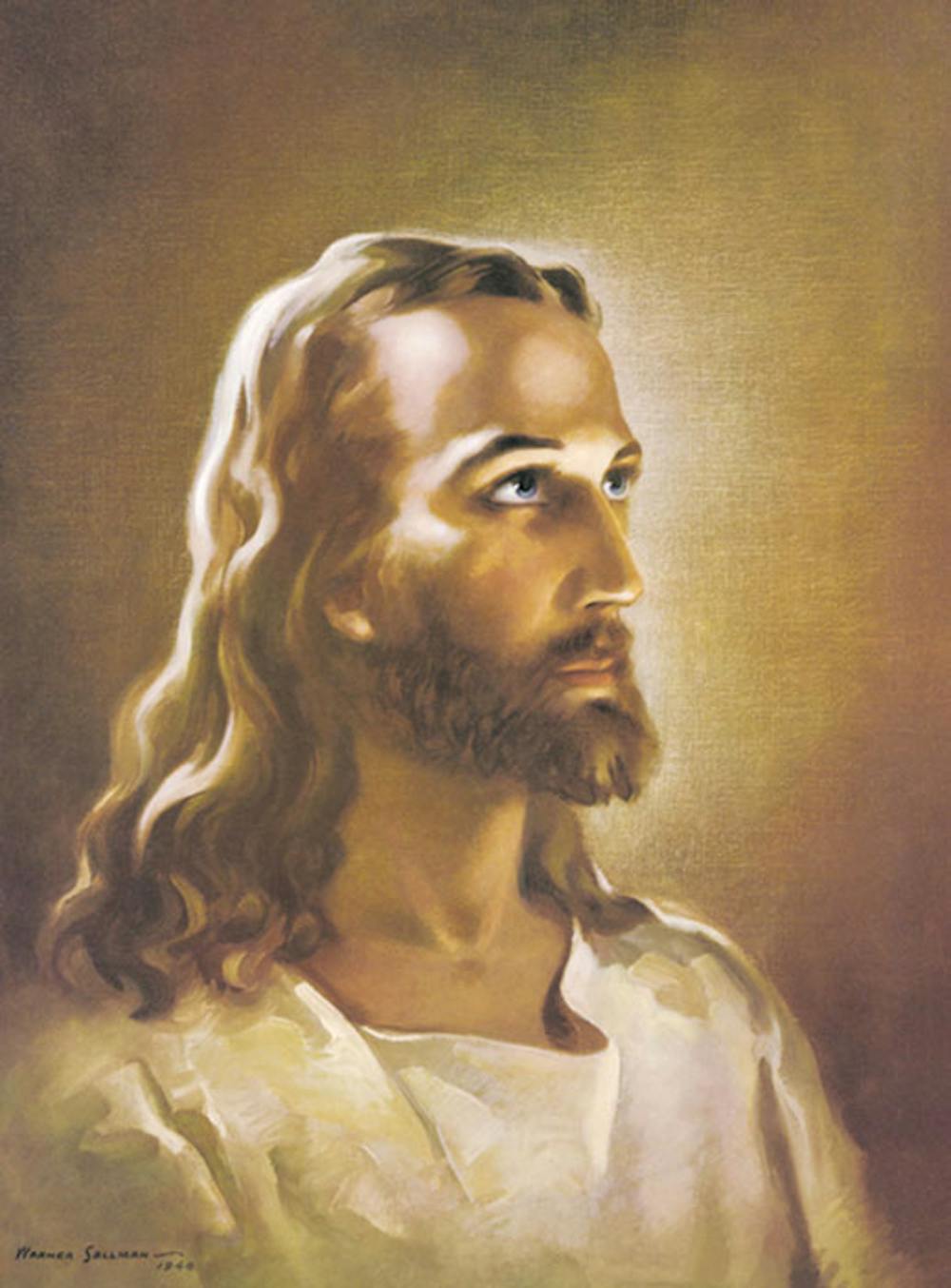
In most of the paintings you'll find Jesus has a darker skin tone (and hair)
Then in 1940 Warner Sallman’s created the popular light-eyed, light-haired Christ [1], Sallman worked for advertising and marketed the picture worldwide.
[1] https://images.theconversation.com/files/346421/original/fil...
I haven't seen "Hamilton", but from what I've read it has little or no mention of slavery. When you don't have slavery in a story set in that era the character's race usually isn't important for the role so the actor's race doesn't matter.
Regardless, the criteria above about actors needing to match their characters in every detail is risibly ahistorical and unmoored from any principle of film or theater; it's pure applesauce, rationalization pretending at erudition.
To not target a performance with accent, race, mores, values, language would be most dull indeed. And no human tales would spread past a homogeneous population.
And there's literally zero reason to insist that Collodi's description is the only way a fairy character can be portrayed in a staged version of his book.
The real problem is getting upset over the skin color of the actors and actresses playing fairies (or stormtroopers or elves or angels or for that matter any fantastical role, which is rooted in escapism and alternate realities.)