"Canada is an endangered species protection wildlife reserve park for dinosaur telecoms"
It's a travesty that the government is actually going to let Shaw and Rogers merge to even further concentrate power in the hands of a few families and reduce market competition.
The regulatory environment Canadian telcos operate in is completely captured.
In my neighborhood, I have one effective ISP, that is the cable company (who offers phone+internet+cable), the other is an old-school phone company who offers DSL (with bonded DSL, up to 12mbit). I thought that I could get a slow DSL connection to back up my cable, but no, there's some neighborhood line concentrator that means I can't get DSL at any speed.
So I really have only one ISP to "choose" from. (well, in theory I could get Starlink, but my area is still waitlisted, as is Verizon 5G home internet)
Same for banks in Canada. It’s unbelievable what they do and get away with.
And airlines. Rather, Airline.
I believe there’s a cultural element here: Canadians are more risk adverse and place a higher value on “established” companies and brands. This influences consumer behavior and legislation (Canadians don’t seem to care about laws that make it hard or impossible for market entrants).
Now I have little doubt that if foreign providers were allowed in Canada that Verizon or AT&T would be able to setup reasonable competition in short order.
I expected more uptake since it would have been a better deal for most Canadians in those urban centers, but I think there's a subtle bias against taking these kinds of risks.
I think had they focused on southern Ontario or BC and expanded from there rather than aiming to hit the all the big metros first they might have done better.
IIRC Wind was offering unlimited plans at 50% the price of a mediocre plan on major providers. You could have hours of roaming calls and still come out ahead (and this is in the edge case, where you happen to go camping that month). Most things being equal, Canadians broadly prefer to pay more to have a sure thing. It’s not a bad instinct, but it has consequences to how industry is shaped in the long term.
Not ... exactly. But effectively, yes.
A combination of a tiny population (5.1 millions) and a long way from nowhere (roughly 3,200 km / 2,000 mi from Sydney).
Australia and Canada already have issues from their own small scale (and vast land areas). NZ takes it up a notch.
I would dispute this one, only because in addition to Air Canada (fleet size 312), Westjet does exist (fleet size 162). And the other regional airlines offer (-ed, prepandemic) some price/service competition. Comparisons to the US aren't as useful with airlines as with some other industries due to population differences.
Edit: and the union Pearson Express made the main airport a lot more accessible
Canadian banks are so bad that they actually make the service and fees with a USD checking account with all the normal features at Wells Fargo look good.
I think it has to do with the fact that historically much of Canada's lands/provinces were literally just land owned by very massive British crown corporations. Massive corporations are baked into the history of Canada as a political entity.
There is no such thing as a "British Crown Corporation."
Crown Corporations are a Canadian thing.
I lived in Canada for 30 years and now live in the Scotland. CalMac and Scottish Water are not "Crown Corporations," but are nevertheless owned and controlled by the Scottish Ministers. This is contrast to BC Ferries, ICBC, and BC Hydro which are Crown Corporations.
In the UK there is something called the Crown Estate, which is somethint again different.
Crown land is owned by the Canadian Crown; the monarchy owns all crown land officially. It's administered by a split across federal and provincial jurisdictions.
No, Crown Land is controlled by the provinces. No, the Canadian monarchy does not own crown land. The Crown owns crown land. Essentially The Crown in Canada is its own legal entity and instrument for the purposes of administration of public lands. The Crown Estates of England and Scotland are something different again, and the Crown Estate owns things like tidal lands and actual real property.
There is Federal Crown Land, but that is almost completely in the northern territories. This is down to Canada's constitutional makeup because provinces control resources.
The Federal government can expropriate land from the provinces when it has a reason to do so like for military bases.
Here is a link that shows Canada Lands. The white area are Provincial Lands.
https://clss.nrcan-rncan.gc.ca/data-donnees/sgb-maps-dag-car...

(From what i understand. IANAL)
HBC lands were surrendered to the British government in 1868 ahead of confederation.
Resource administration is a constitutional power that provinces administrator.
The area in white in the below map are not Canada Lands which makes them Provincial Lands, ie Provincial Crown Lands.
https://clss.nrcan-rncan.gc.ca/data-donnees/sgb-maps-dag-car...
Crown Land is land owned and administered by the provinces. Crown Land can be licenced for many uses and sometimes it can be purchased.
Also, Provincial Parks are not Crown Land.
If you talked about "crown corporations", or "Regina vs." (for criminal cases) no one would associate that with Elizabeth II. "Crown" and anything like that basically just means government.
Canadians see the Canadian Royal Family as nothing more than a figurehead of the state.
I am a Canadian and I have studied British and North American History extensively.
TD has more US than Canadian branches.
But Rogers, Bell, Telus? Nobody has heard of them ex-Canada unless they’re an ex-resident with bad memories.
But it’s also true that over the years, TD has had to merge systems and make changes. They’ve been operating in the US for about two decades now. So they’ve had time to merge and continue growing by merging companies in the US.
It’s true though. They aren’t entirely integrated across borders the way other companies might be. The plans and cards they offer in the US are a much better value than those in Canada, too.
At least a few years ago that wasn't possible.
It's probably the density and income levels that make it worth putting out the infrastructure
Unlimited (international!) roaming and everything isn't that expensive (Only about 100$) compared to whatever insane amount I'd be paying if I had some ripoff, under 5 gigabyte or whatever pittance data capped Canadian phone plan for no reason. I also maintain a Central American phone plan that doesn't cost me very much either (2$ every 3 months just to keep the number outside of the country and receive SMS/use chat apps basically, but I don't do roaming when out of that region - When in the region, I spend maybe 20$ a month).
Since the Rogers website is down (Great sales strategy!) I can refer anyone curious to a portion of their menu from some image I found; [1] 95$CAD (500MB until you hit overage) + 60$ for 'roam like home' (no mention of data, canadians still use SMS way too widely), and then probably more to up that data cap with no guarantee that applies to roaming? Yeah, no thanks! Oh yeah, the cops just install malware on your shit with reckless abandon, too. [2] I see no reason to consider Canadian nationality as anything but a nice passport at this point.
[1] https://cdn.mobilesyrup.com/wp-content/uploads/2018/05/roger...
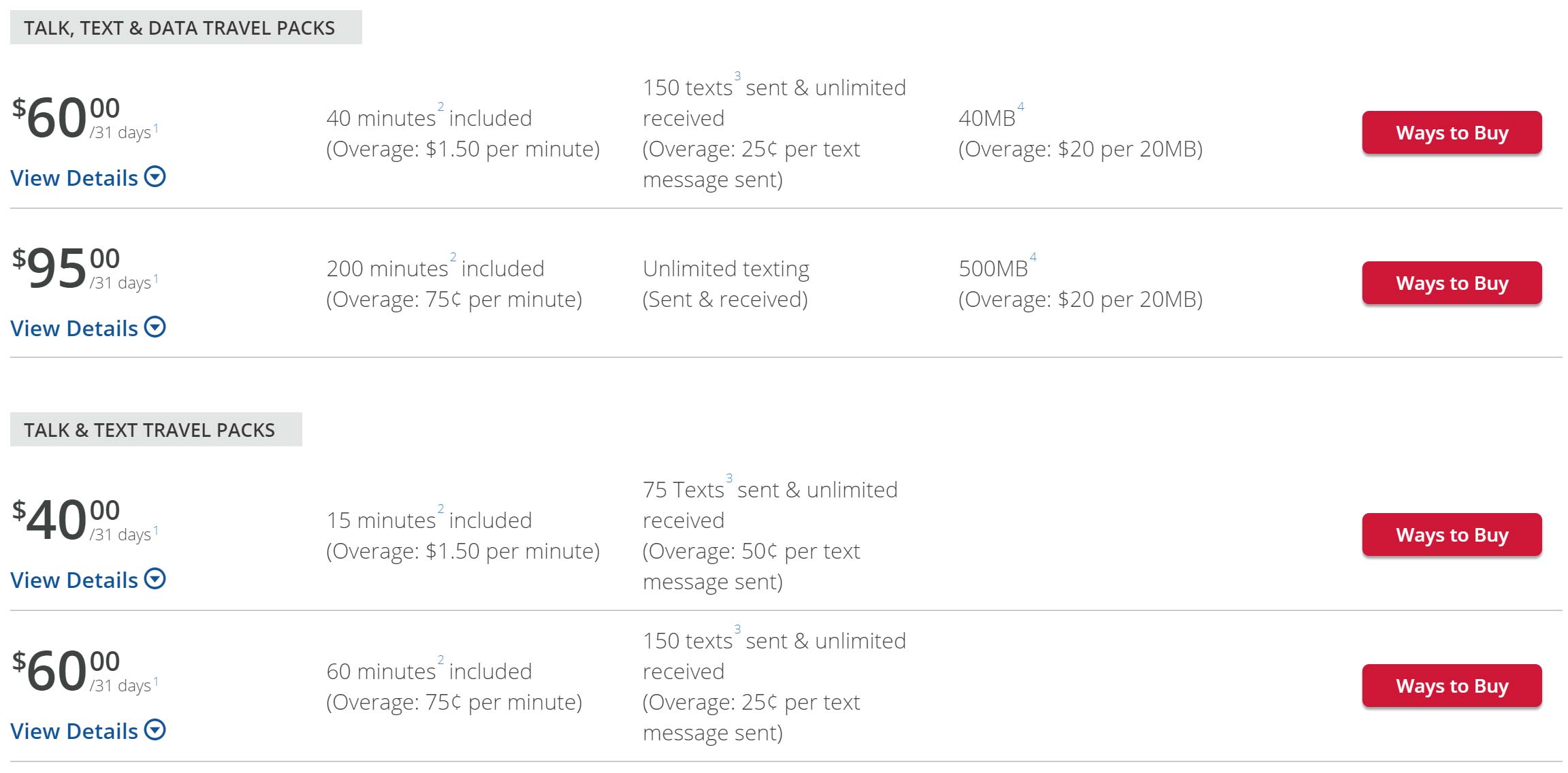
[2] https://www.theguardian.com/world/2022/jul/07/canada-police-...
Like what are you even paying roaming for if they pull stuff like that? Is there any acknowledgement that some of us are actually abroad most of the time?
That they can get away with this false advertising astounds me to this day.
I do a lot of my work off of a mobile hotspot so I'm not tied to an office or home. I try to make the most of what's paid for and it goes very far.
I think that if you're getting a decent price it's probably just customer retention at that price point. If they're ripping anyone off widely at the prices I saw, it's new customers... Immigrants etc, pretty nasty.
I dropped TV and a landline a long time ago, and use cell (google-fi/t-mobile).
The annoying thing is all the spam mail I get from spectrum to bundle all the above for much lower than I'm paying now for an introductory rate. I don't want to play that game but it kills me what I could be saving for at least 6 months to a year.
Google have tried to enter the FTTH market thinking there must be opportunities to innovate and reduce the cost to consumers. But even they have struggled due to the complexities of deploying fiber in the existing built environment...
Is there any place in the world that can claim to have a diverse, competitive Telco market?
Or you could put the fox in charge of the hen house and end up in Australia's situation, where local monopolist Telstra owns the phone network and is supposed to play nicely with its competitors.
a) last mile dark fiber network operated by local public utility district which is also the electrical grid operator, and rents access to the fiber to 3rd party ISPs
b) local cable tv operator, legacy coax operator, often docsis3 cablemodem
c) local ILEC/POTS phone company that may or may not have overbuilt its last mile copper/DSL service with its own singlemode fiber and 1Gbps GPON service.
for primarily mobile phone carriers like rogers, there's an effective RF planning limit of around four major LTE/3GPP technology based operators in any given geographical area.
USA used to have 4 with sprint until the tmobile/sprint acquisition.
and its not clear how individuals are being handed out rights to say run a casino in canada.
if you took a look at canada's corruption, you will be shocked. we don't quite live in a first world even though we like to tell ourselves all of the government officials/servants are honest.
after all the canadian embassy staff in Hong Kong happily handed out PR residency to hardcore organized criminal groups in exchange for various luxuries and perks. when a staff tried to expose it, he was quickly removed and media began to attack him.
its not only that but you see NGO's championing for racist white supremacy linked groups who vandalize Chinatown in Vancouver and with a large chunk of locals who feel that they are "being overrun by a certain ethnic group" eat that up and the same populist individuals get elected again and again. then my tax goes towards those interest while none for me because i'm 'privileged'
in the long run, I see this system breaking down, if not already. Canada no longer feels like a country but some feudalistic interest group driven, poorly run corportation.
so glad i dont have to pay taxes here. the savings and currency difference allowed me to create jobs in another part of the world. there was a time where I hoped things would get better and I could be creating jobs locally.
i just regret wasting my youth in canada and west coast. canada is a bubble and lot of us are moving capital/jobs out of it.
why contribute to a country that just sees you as an ATM to transfer payments to others who blame everyone but themselves and constantly wanting hand outs?
im done with canada and im warning anybody who still attach romantic outlooks, especially in heavily marketed cities like vancouver.
There are 5 different mobile providers in Singapore: Singtel, Starhub, M1, MyRepublic, ViewQwest and WhizComms.
Many of them also do fiber broadband. Some government body owns the infrastructure and the providers provide the connection to the internet. There are 5 providers as well.
I was paying $50/month for 1GB fiber and I paid more since I did a shorter term plan. If you buy in for 2 years, it's can be $35/month.
And this is in a country of 5.5M people.
BT/Openreach has control of about 80% of the backhaul/trunk connectivity.
Hence you have a very competitive market landscape in the UK. There are at least 5 major national retail players using various wholesale products (BT, VM, TalkTalk, Sky, Vodafone), plus dozens of altnets offering FTTH on totally seperate fibre infrastructure have started (Hyperoptic, Cityfibre, GNetworks, Community Fibre).
In my flat in London I have access to 4 seperate FTTH networks (with completely different infrastructure) - Openreach FTTH, VM DOCSIS, Hyperoptic FTTB and Community Fibre FTTH. The market works here, prices are low and there are very few data caps.
Yip, things in London are quite different than the rest of the UK.
While Openreach has to allow access to other providers to its infrastructure, most infrastructure is owned and controlled by BT.
If you want FTTP, the underlying service is still BT Openreach. Openreach is very profitable.
At my previous employer it cost us £30K to have BT put in 3000m of fibre that took them 1 afternoon, then it cost £1K a month for a 30Mbs service.
BT owns provides the vast majority of broadband service in the UK and it is somewhat disingenuous to claim BT is on an equal footing as Hyperoptic, VM, or Community Fibre.
TT and Sky use BT OR infra, and EE, Plusnet, and BT Retail are all owned by the BT Group.
The telecom market in the UK is very consolidated and controlled by BT.
If you have a new-build flat in a major UK city you probably have a similar decent choice but the rest of the housing stock (the majority by far) is stuck with BT/Virgin.
VM can be ok or can be congested depending on the area. BT FTTH doesn't suffer from congestion issues (nor does the FTTC).
Check https://bidb.uk/ for more information. It collates all the altnets and planned roadworks into one dashboard.
That is just not true. BT consumer FTTC is contended up to 40 to 1--that is you are sharing your backhaul with upto 40 of your neighbours. I am assuming that their FTTH services are the same.
Not always. There are many altnets now (cityfibre etc).
> TT and Sky use BT OR infra, and EE, Plusnet, and BT Retail are all owned by the BT Group.
TalkTalk also use cityfibre.
> The telecom market in the UK is very consolidated and controlled by BT.
If you mean physical infrastrure, yes it is (though changing rapidly). Consumer level pricing is competitive though and the services are reliable in the large. It is a different planet compared to the US and especially Canada.
They have no presence outside the country - they are so bloated and inefficient they couldn't compete - but they are omnipresent here.
There are lots of people who depend on Rogers for home Internet, home phone, mobile phone, TV, and home security, not to mention business services that consumers also depend on, like the payment networks that are down.
Plus their media properties, which probably come in useful when the government starts to think about allowing more competition or decreasing the taxpayer money being funneled to them.