Misleading people was never the intent.
We just wanted to share our story and give a little more "human" touch to our about-us page by sharing the journey.
Title was amended.
Have a good week-end HN!
Selling a double digit % of the company to investors and then calling it bootstrapped while promoting it here is hard to defend.
So in essence, if you consider that bootstrapping is building a business without external funding, you're correct.
But to me, bootstrapping VS "VC road" is much more nuanced than this.
Going the VC road forces you to have crazy growth and raise more round because the VC model only works if they fund unicorn 1 time out of 100(0).
TinySeed works even if they fund 8/7 figures businesses, and this was our goal. We had no money when we began (we went through most of our savings during our first venture), no family to raise an angel round and this solution was perfect for us.
The amount of money we got was nothing near what we could have had raising traditional money, but it allowed us to stay independent and grow at our own pace.
"Our standard terms are for 10-12% equity."
The moment you give equity in exchange for money no matter whether its tinyseed or whatever, you are not bootstrapping. Your financial risk is lower because you don't have to pay this money back if your company fails. That is not called bootstrapping.
I bootstrapped with my own money AND some smaller loans which I am fully liable to pay off with a personal guarantee. If my business goes down, I am personally liable. That is bootstrapping.
Money is so sensitive! A Google millionaire bootstrapping on surveillance savings or a doctor taking favorable loans for starting a practice is different from say a college grad bootstrapping on no savings. Most SaaS is especially hard as there is typically no real revenue for ~years, compared to say B2B where each customer can easily pay for .5-5 people. So if operational expenses come from revenue, including sales/marketing/r&d, bravo.
For pre-revenue... that's tougher. For a tech startup, consulting/services, SBIR, (lax) corporate day jobs, etc. all give ways to split between the startup and work without risking your nest egg. For b2b, I now like the model of well-paying design partners that you hustle to land before you take the full leap. But some people are rich, or comfortable with the risk/reward, or all sorts of other things, and go with personal guarantees. Pretty sure that's what I did with our first business credit card. In all cases, bravo to anyone who pushes to sustainable growth, it can be a life changer deal for both the company and the individuals, whatever financial path they pushed through.
Why? I also own my own business (an LLC somewhere in Europe), but if it goes down, I am not personally liable, at all (unless it's due to gross negligence established by a court case).
His comment included the fact the he took out loans with a "personal guarantee".
When you're a small business starting out with no assets (like factories, equipment, etc) -- which means no collateral, or no business revenue... the banks won't provide so-called "business loans" unless there's a personal guarantee.
Therefore, if the business fails and the company is shut down, the founder is still financially on the hook to pay back the loans. (Barring drastic options like filing personal bankruptcy.)
Instead of contrasting Bootstrap VS Crazy-VC-Mode, it's more suitable to compare two different things. One is if you're bootstrapped or not, and if you're not, are you doing Tiny-VC-Mode or Crazy-VC-Mode? In this case you chose not to be bootstrapped, and are doing the Tiny-VC-Mode.
It's great that going Tiny-VC-Mode allowed you to grow at your speed and still remain independent, much better than the Crazy-VC-Mode usually allows. But if we start calling that "bootstrapped", then where does the line go for what is bootstrapping a business or not. The meaning would have to change from "Without any outside money" to "With a little bit of outside money, but still independent" which says something else.
Edit: Another way to see it: You still bootstrapped the early stages of the company, up until the point where you accepted outside investments. So according to you post, you joined TinySeed in May 2020, which your graph under "Slowly reaching $10k MRR" (https://d33wubrfki0l68.cloudfront.net/e1ea487c1823d29fb55da4...) show to be right around $5K MRR. So what you bootstrapped was up until "$60000 ARR", but after that you were no longer bootstrapped as TinySeed provided capital to you.
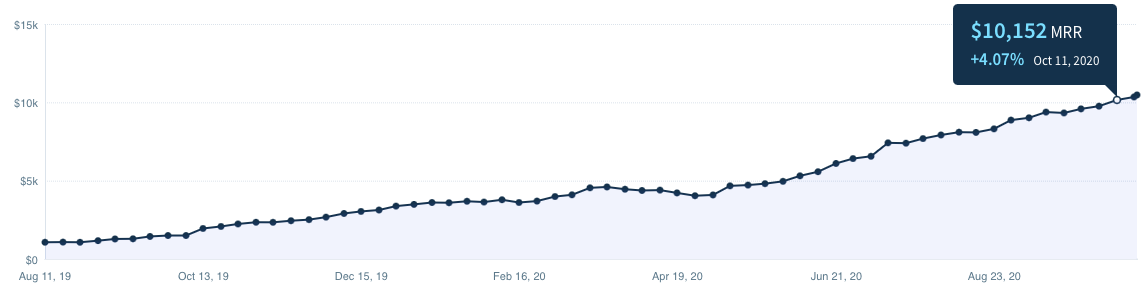
There's nothing bad/wrong about how you did it, but it's not bootstrapping. Saying it is makes it confusing for newbies which means they're more likely to be taken advantage of by VCs that realize they can market themselves as a "bootstrapper fund."
This is why Rob Walling (co-founder of TinySeed) likes to use the term "fundstrapped". There are a lot more funding options out there that do not come with the narrow pathway associated with typical venture funding.
Bootstrap is a word with a specific meaning. It is not a spectrum it is a specific state of a spectrum.
It sounds like ScrapeBee has more bootstraping elements than VC elements. It's a hybrid. Less VC pressures but still some.
There's no good reason to change the definition of this. The disparagement is trying to co-opt a term that shouldn't be co-opted. If the headline was how we built a 1M ARR business from seed funding it'd be a very compelling article still. Now the sourness comes from trying to redefine a term that has very concrete meaning without providing strong justification for doing so.
They came from Tinyseed, why wouldn't they use "fundstrapped?" Because it doesn't sound as cool, and they know VCs aren't cool as far as the independence denoted by the term "bootstrapped" goes.
That doesn't mean it actually is one though.
And actually muddying what terms mean is the unhelpful part.
My exact point. It's just wordplay.
With TinySeed's round at "$120k for the first founder, $60k for the second, and $40k for the third" (https://tinyseed.com/program#program-faq) this is very much along those lines.
If one further gatekeeps the label with "but the founders need to invest this personally or it doesn't count..." that restricts the label to a very small segment of privileged individuals. And in a world where there's a (false) narrative of a "bootstrapped or VC backed" binary, that gatekeeping reinforces the notion that less privileged founders have no choice but to go the VC route or do nothing at all. I would hazard a guess that great ideas and great societal impacts have been lost as a result of this framing.
But when YC invested $120k for 7% equity, we typically didn't call all those startups like Dropbox/AirBNB etc "bootstrapped companies". And $180k for 2 founders is more than YC's previous terms.
>If one further gatekeeps the label with
It's unfair to call it "gatekeeping" rather than a case of confusing many readers with a headline that flips the meaning of "bootstrapping".
The meaning of which has been well established, both inside tech circles and outside, to mean starting a business without raising any outside capital.
Why do we want to suddenly stretch the meaning of bootstrap? The compelling story here would have been "how we created a SaaS business with 1M ARR with only seed funding", and I'd still have read it. That is something worth being proud of, why is bootstrap better?
Because VCs increase the risk that a company will turn to shit.
It would be best to explain this. Like I mentioned, why not plainly explain that they did all this with just seed money? That's a really amazing accomplishment in and of itself, and nuance is something that can be explained.
Not to mention, trying to stretch the meaning here is trying to glob a positive onto something that didn't earn it by fitting the definition. Again, why try to obfuscate the truth? Be proud of your background if you think you can be proud of it. Nothing wrong with that.
Just don't try and redefine something that already has concrete meaning. That's nearly the same thing, in my mind, as lying.
Bootstrapping is your ability to come up with money on your own or through loans etc which you are liable to pay back. If you don't you could lose your home. Investors don't come for your home when you lose their money.
$120k USD is a lot of money for many international startups.
10-20 years ago it was also a lot of money for US startups to receive early in their journey.
So this definition is pretty pointless.
> If one further gatekeeps the label with "but the founders need to invest this personally or it doesn't count..." that restricts the label to a very small segment of privileged individuals.
People for which $120k is money that people around them can just invest are a very small segment of priviliged individuals.
Another point: tinyseed also offers mentorship. From the FAQ:
> I don’t need the money, is TinySeed worth it just for the mentorship?
> Short answer: yes.
This message is not to knock on the people behind ScrapingBee. Bootstrapped or not, they have built a very profitable business, that's impressive and deserves praise. I just think calling it "bootstrapped" is not correct.
100% agree with you.
More importantly we should probably define what a "startup" is. No one seems to agree on a definition there.
“How we got to $1mm ARR with only a tiny seed round”.
Reading an article and immediately recognizing inconsistencies is an instant turn-off for me, and I assume many other readers. I don’t see what you think you’re gaining by being misleading with the headline.
Once again another thread where no one seems to agree on what constitutes venture capital and what a startup is.
By definition - you took a minority investment. Bootstrapping, colloquially, means you have not funded your company with any equity or capital that could be converted to equity.
btw - you got attention by saying you were bootstrapped and since this is just marketing material then kudos to you for the good marketing.
Sure. But don't try and redefine what bootstrap means.
It means building your company without requiring any professional investors and without modifying your cap table.
You've done neither.
There’s always someone putting money into getting a new business up and running (bootstrapping is not free). Whether that small amount of money comes from the founder’s pocket, family/friends, or an angel investor - the money to pay your AWS bill and other basic services has to come from somewhere.
Bootstrapping is an operational mentality IMO.
So my partner started a business during COVID. We don't have rich family/friends or know any angel investors and so we paid for costs by selling things, using savings and maxing out credit cards.
No outside money. No modification to a cap table (not that it exists).
I see your point though. There is "pure 100% bootstrapped" and "mostly bootstrapped, but not completely". IMO it's a spectrum. Just like the term "startup" - it's a spectrum, no binary definition.
No spectrum. No complications. No twisting of words. Very simple.
If we are taking things to the extreme, I could argue that Visa/Mastercard is your investor considering you maxed out your credit cards, you’re spending someone else’s money by doing that. And just like convertible notes or debt financing, you’ll have to pay it back. Convertible notes typically provide the option for the investor to demand cash repayment after a certain amount of time has elapsed, same as your credit card company.
These silly semantics are why I think it’s more practical to define bootstrapping as an operational philosophy/mindset rather than a strict binary financial definition.
Maybe look at it in a different situation. Imagine someone punched you in the face and when you confront them about it they saying that you're holding to silly semantics about what it means or does not mean to get punched in the face.
If you'd say "How we grew our business without traditional VCs" that'd be an excellent title. What you describe in your comment here sounds like an interesting alternative approach.
But the way it's introduced looks like an article about how a 25 year old bought their own house, and step 5 is "my parents took the mortgage and I pay them rent."
You had some seed funding.
On your own can mean many things. I also burnt through my personal savings for the first year.
So. On your own is just “VC’ed yourself”
Taking money from TinySeed is very different than taking money from VC.
Precisely. If TinySeed has provided funds, it's no longer "VC'ed yourself", it's "VC'ed yourself + tiny seed from TinySeed".
> Taking money from TinySeed is very different than taking money from VC.
No one is arguing that TinySeed is just like any other VC. But instead that by accepting VC, you could no longer claim the business to be bootstrapped.
If family (with fuzzy conditions) ponied up $250k, is it bootstrapped?
$250k from immediate family, if said fuzzy conditions don't confer any ownership or repayment? I'd say just barely yes (it's basically a gift to you at that point, which is then your money)
$250k from a third cousin in return for equity? No.
Being bootstrapped isn't an ungameable category, but it is a fairly unambiguous one IMO.
You either take money from someone else or you bootstrap it yourself.
What if you borrow money from family in order to start your business? Are you no longer "bootstrapping"?
What is Bezos decides he's bored, and wants to start something new. Really looking forward to seeing the "most successful bootstrapper of 2030" be Jeff Bezos with his self-funded $5B "startup".
Well, yes. You're assuming the risk, not an external firm that in exchange demands a chunk of the company.
In a truly bootstrapped company the risk is yours alone as is the potential reward.
I went to the "TinySeed.com" website landing page and I do see that they prominently advertise "The First Accelerator Designed for SaaS Bootstrappers".
And then their FAQ page has these example financial terms:
>TinySeed invests $120k for the first founder, $60k for the second, and $40k for the third. Our standard terms are for 10-12% equity. -- from https://tinyseed.com/program#program-faq
Well, if founders accept those terms, they are no longer "bootstrapping" as people generally understand that word. Yes, you may have been bootstrapping right up to the point _before_ taking TinySeed $180k but after that outside capital infusion, "bootstrapping" literally no longer applies. It doesn't seem like any nuance is necessary. It's quite a binary status.
The term “bootstrapping” predates the existence of funding sources like TinySeed, and is now outdated. It was never terribly precise anyway, e.g. if someone saves up an “initial investment” amount of money before starting, are they bootstrapping? What about having a spouse who pays the bills while starting?
The digital age has also introduced a whole new range of funding options that didn’t exist very long ago, crowdfunding for example.
I'm a language descriptivist not prescriptivist so I don't care to debate it but just pointing out that the founders are using "bootstrapped" in a confusing way that contradicts how others understand it. (Which then causes meta discussion of founders trying to educate readers on the nuances of what "bootstrap" means.)
Compare the financial equity cap table terms to YC. When YC terms were $120k for 7% equity, people (generally) didn't call all those annual YC batch applicants "bootstrap companies". E.g. we (generally) did not say "DropBox is a bootstrapped company", "AirBNB is a bootstrapped company". But TinySeed funding means it's a bootstrapped company?!?
Doesn't that seem inconsistent?
Taking outside funding from professional investors for equity stakes typically wasn't seen as bootstrapping.
My point is that it's a whole heck of a lot easier if you shed the "bootstrap" label when the financial status changes. It's not a flaw or being evil to lose that label. Why is it so psychologically necessary to keep it?
What growth metrics did Tiny look at? Did the investment come at a time when the business was needing to "survive, sustain, or grow"? [every business has all of those phases]
> What growth metrics did Tiny look at?
I assume you mean during the application process. So they asked just the basic stuff, MRR, growth, churn. We were at $1k5 MRR when we applied and $3k when we got it. I think what worked for us during the process was that Kevin had been running a small Java web scraping blog + book at that time.
> Did the investment come at a time when the business was needing to "survive, sustain, or grow"?
We were slowly switching from survival to sustain mode. They allowed to make the transition and go full grow mode.
The point of bootstrapping is making the compromise where you trade a lower growth rate for the benefit of retaining 100% ownership of your business. Your statement is a VC funding model, even if the money is called seed and you are not trying to become a unicorn.
Your giving away equity for money is simply not bootstrapping. Calling your business bootstrapped is lying in my opinion. What I think doesn’t matter, but being deceitful is silently judged by others where their opinions do matter to you, and the consequences of that are usually invisible.
Yes. Yes, we do.
You didn't bootstrap, period.
Also, what a strange hill to die on ...
Maybe I missed this in your post, but did you utilize search advertising? That seems to be the most common and effective tool for short term growth
We could have mathematically made without it.
But three things to consider here:
- TS money multiplied our runway by 10 and really reduced the amount stress we've experienced. Especially with COVID, during which we experienced our first negative growth month
- We were able to finally pay ourselves above minimum wage (1,500$)
- The mentoring and advices which came out of the program, really made the whole difference.
Where we live, the startup ecosystem is basically 0, we don't know a lot of startup funders or experienced entrepreneur. It changes everything when you can ask a precise question about business and get a response from an expert in the next 6 hours.
We had call with mentors and other member of the community, basically a one hour free consulting with an expert, about SEO, copywriting, recruiting, sales, growth, and marketing and THIS does move the needle a lot.
But to me, being a billionaire VS "a regular dude" is much more nuanced than this.
Being a billionaire is a state of mind.....yadda yadda
When, in the lifecycle of the company, can you sell a small stake of it and still call it bootstrapped? Basecamp sold a bit of equity in 2006 to Bezos[1], and is still considered the epitome of the bootstrapped company.
Additionally, if one has a couple hundred K after working at MANGA or wherever, or has wealthy parents/friends and uses that money to build their own start-up, is that still bootstrapping?
To me, their journey is much closer to bootstrapping, and is quite an impressive achievement. Congrats, guys!
[1]: https://m.signalvnoise.com/the-deal-jeff-bezos-got-on-baseca...
The biggest problem most people have with traditional VC and thus prefer to "bootstrap" is the pressure to grow too fast. TinySeed has none of that pressure. Boostrapping vs VC is a spectrum and Scrapping Bee is clearly on the bootstrapped side of that spectrum.
> MAY 2020 - Joining Tinyseed
> And this is precisely why we never decided to raise money. However, a few years ago, [...] An accelerator designed precisely to help people grow their business [...] The money and the support we got from the program helped us grow ScrapingBee into what it is now