What if abandoning entire cartons of merchandise, and then shipping replacements, just has plain-old higher ROI for Amazon, than does peeling a driver off their route to get those parcels fed back into the system for re-routing?
I know Amazon already don't bother to process their own returns, instead selling those off in bulk lots for potentially far below the market value of the items (sort of like creditors selling off bad debts rather than trying to collect on them themselves.)
Both situations suggest a paradigm where human labor is by far the most expensive part of any logistics process, such that margin can always be increased simply by replacing workflows that involve even a little bit of human labor with fully-mechanized/externalized workflows, even when that brings service quality down.
Maybe it does, but isn't this because of a _negative externality_, i.e. the "indirect cost to individuals" (1) who deal one way or another with the pile of abandoned packages?
So Amazon is like an river polluter in that regard, dumping the problem because it's cheaper _for them_. It should be clear that this is not a net good thing.
I get 'free stuff' except it's absolute garbage. Somebody else gets to abuse Amazon reviews, hyping that stuff under my name for the purpose of jacking up its review scores. Once I looked and the thing was rated #1 in its category.
Don't assume you've figured out the true costs of externalities: anything that is clearly a broken system is also going to be harming people in its brokenness.
It's typically not "free stuff" to the recipient, it's junk, a hassle, and in the way.
(Compare: the liquidation stores that run entirely off of a business model of buying Amazon returns lots, tossing out the broken crap, and selling the rest. Those stores make a profit, and they're receiving pallets where half the stuff is unusuable. If they were receiving pallets where everything is new from the warehouse [valuable or not], they'd likely cry for joy.)
Remember, whoever gets this stuff doesn't have to personally have a use for it. They could just call up their local charitable thrift store to drive over and pick up the whole lot, if they wanted. But that's still net-positive ROI — they get a warm feeling of having donated a bunch of stuff; and the charitable thrift store gets a lot of free stock that they know how to resell, to turn into money for their charity; and a bunch of people who each wanted one particular thing, can now find it at that thrift store for much less than they would have paid for it on Amazon. It's exactly the same as if Amazon donated a bunch of random crap directly to the charitable thrift store, save for the necessity of making one phone call, and the possibility of the caller skimming whatever nice items they like off the top before they make that call.
This is the sort of situation which happens so infrequently that literally the solution is you ask whoever calls about it to "read me off the TBA number off the tracking label", look up which DSP was responsible, and tell them to divert someone to go pick those up. Any DSP worth its salt always has some number of drivers on rescue or, failing that, one of their dispatchers will go pick it up. In short: DSPs are incentivized to maintain personnel to handle problems on route, and this is exactly the sort of thing they can and should handle. Either way those packages are going to be marked missing/undelivered and the DSP will get dinged for that driver's fuckup, so they might as well send someone out to pick them up and get them properly delivered.
Excuse me? There's like a pile of boxes in the way. Amazon should clean this up, quickly. So you say it's better that random people living there should be made responsible for getting rid of a pile of boxes instead of Amazon who put them there?
What if I "abandon" a sh*tload of poo in your front garden because that's cheaper for me?
Remember, these parcels aren't being sent through the postal system (where you legally release ownership of mail to the Postmaster General by sticking something in a mail slot, which is how it can be a federal offense to tamper with their mail—undelivered mail is the government's legal property!)
Instead, these are parcels going through Amazon's own logistics carriers. Amazon never released ownership of these items—they don't do that until the item hits the recipient's door. These items are legally Amazon warehouse stock, that happen to have shipping labels printed on them.
But Amazon isn't going to just abandon the people who bought stuff. They're going to get a different item. This is just Amazon signalling that it is cheaper to deliver a new item than to collect a lost item.
What if killing the natives just has plain-old higher ROI for an oil company than trying to work with them? What if operating an illegal taxi business just has plain-old higher ROI than following the laws in place? What if kneecapping the competition just has plain-old higher ROI for an ice skater?
And, because this stuff has value, it will very likely all get reused (i.e. resold or donated into the secondary market), not thrown away. Which will satisfy some of the demand for the products Amazon is selling, replacing an order someone would have made for a new product. Which means this act doesn't even have any externalities for the environment—nothing is going to landfill that otherwise wouldn't.
So I honestly don't get your comparison.
If the government doesn't like it, then provide sufficient incentive not to do it.
Amazon's not the first one I'd look at for this, but still. At some point you have to look at how things actually function. Not unlike critical theory. You ask, 'this is the rule, what's it like in practice though?'
It's not. Delivery works with a hub and spoke model. Simply get it back to the nearest local distribution point and it will be dealt with.
However, the loss just isn't tracked by Amazon. "Unable to recover packages due to atrocious processes" will be indistinguishable in their reporting to "van flooded/burnt, packages lost". So they don't see the problem and can't see any reason to fix it.
How I can tell - the customer service couldn't even figure out how much the packages were worth. No cost benefit calculation was performed.
You sure this is only Amazon, and not also USPS, FedEx, UPS, etc?
I'd sooner blame your apartment complex than delivery companies.
Anecdotally, I've had so few problems with delivery drivers, that I can't recall specific examples.
On the other hand, the amount of lousy experiences with apartment complex management companies and their policies would fill a long twitter thread.
For example, ordered computer equipment from Newegg. It was delivered to my apartment complex mail room, which closed at 5pm. I left work early to pick it up, only to find out that the staff had closed down and went home early (4:45p).
Then it’s definitely not Bezos’s fault!
Everyone knows this already - though the lowest rung is occupied by the undocumented, and no one wants to help them.
Ahem, the society is not only middle and upper middle class, even (I believe) in US. These drivers themselves use Amazon and other “cheap” services, I mean do you realize they sometimes need to buy things too? That’s obviously not a counter argument to your conclusions, but something to account for before raising the prices.
I'm lucky that Fred Meyer (my preferred local retail store) is unionized.
More over, I tend to shop at mom & pop stores, if possible.
Maybe it's different where you are?
They're not demented. They know it. They do not give a flying fuck.
Then again, in the US it's very hard to focus your vote like this due to the two-party system. So... work on getting a better political system in place?
Funny enough that logic never applies to corporations. If some corporations behave badly, murdering people, overthrowing democratically elected governments, kidnapping children, well, that's just how it is, we can't abolish corporations, even regulating them is criticized.
Unions help the small guy though, so those are okay to trash.
China is the reason Amazon is so big.
Some industries may be able to get away with it and still be competitive - ones that can replace people with robots. This would cause mass layoffs though.
Decent guaranteed basic income could be a solution but something makes me think that North America would rather commit suicide than let people have something "for free" on large scale.
>"China is the reason Amazon is so big."
It was the decision of many US / other western manufacturers to outsource production to China. China was smart and used it to catapult itself from relative nobody to superpower it is today. The true reason is not China but a simple greed.
"Move somewhere better" is the response of the (relatively) rich. It says "I'm OK with this problem, as long as I don't have to be near it." That's an OK position to take sometimes—we have to pick our battles, and can't right all the ills of the world—but it's not really taking a moral stand.
Well, in the case of your apartment complex and its package locker, it could be either/or. If it's an Amazon brand locker and they're just dropping the packages then chances are the locker was full and the app told them to just drop them there because that was a safe location. If it's a Luxor or some other offbrand locker then they either may not have codes needed to access it or they were trying to shave a few minutes off their time by just dropping everything in the lobby. That might sound horrible but when everyone is incentivized to piss in a bottle and not take their breaks in order to make their deliveries and nobody at corporate ever bothers to investigate then these sort of things are going to happen.
That being said...
> This is Amazon/Bezos' fault, not the driver's.
Yes. This is the correct answer. :D
These were not dropped outside a locker at the intended delivery address; they were at the wrong address entirely.
Mind you, I'm not saying that's what happened here, but that's one possibility.
You don't need to ask me; it's in the article, starting with the first sentence:
> Amazon – the logistics expert the world has come to rely on for everything from groceries to furniture – abandoned an entire cart of packages meant for delivery to Forest Street in a Fernald Drive lobby on Wednesday. …
> Fernald, in Neighborhood 9, and Forest, in the Baldwin neighborhood, are a five-minute drive apart.
Hope that prevents future confusion.
You're asking the capitalization to do a lot of work.
Agree.
> Things like this are going to keep happening and keep getting worse until the middle class/upper middle class realizes that our current lifestyle and access to "cheap" services is being held up by a systematically abused and underpaid labor force that isn't given the time, compensation, respect, or basic decency to support doing a good job.
Disagree. This is entirely the fault of yes-men/pie in the sky management at Amazon. Any manager with the slightest bit of autonomy at Amazon is making six figures and is willing to throw their employees under the bus for money. They will do literally anything to avoid admitting that a problem that exists that can be solved but will cause a KPI to go down. Absolutely no one is willing to go to bat for ideas that cause temporary productivity decrease but a quality and productivity increase over the long run as the company gets better at solving the problem.
Nobody here would even consider leaving it outside, despite our crime rate being waay lower than somewhere like the US, where people seem to be 100% fine with that idea.
It was also really uncomfortable because I definitely don't want delivery drivers walking anywhere around my house except for the path from garden gate to front door.
In Germany a friend of mine told me that if they're not home at time of delivery Amazon's shipping partner will intentionally deliver to her neighbors, smaller city though but I guess culture is indeed different.
It's quite common in Germany to accept parcels for neighbors - but that's also because in Germany, a lot of people live in flats in small-ish housing blocks where you know your neighbors. So, like 6-12 flats per house, not high-rises.
But we have the same problems in Germany as described in the article: especially Amazon's own drivers frequently just don't try to ring but instead just leave the boxes outside or just throw them into the hall.
The German postal system has pretty good public lockers, years before we got Amazon Lockers here. Used them a lot, but lately due to fragmentation of the delivery market and those DHL lockers being reserved for the postal system, I more frequently have to drive to some bar or kiosk to fetch my boxes when the sender chooses a different logistics partner.
It's common to such a degree that many of the shipping forms on webshops have a dedicated field to indicate that you don't want this, though I've never felt the need to use this; definitely more convenient to walk over to the neighbours than to a pickup point.
We don't talk to strangers, we don't have the kiss on the cheek thing, we stand in well formed distanced lines, we avoid interaction at "any cost".
I would love it if this delivery thing was the normal procedure in Sweden, it builds trust and relationships in your surroundings. These days unless you live in a teeny village you don't really know your neighbors, other than what car they're driving, so that you can buy a more expensive one with borrowed money next time.
Our national anthem says something like "I wanna live and i wanna die in the Nordics", yeah nah!
I agree that your solution is great.
Also, my neighbours are no more likely to be at home than I am.
Edit: forgot to specify that this is in Norway.
My wife and I used to live in a street where we were usually the only people at home during the day. All the delivery companies quickly realised we would take in anyone's parcels, so our living room was often like a mini sorting office!
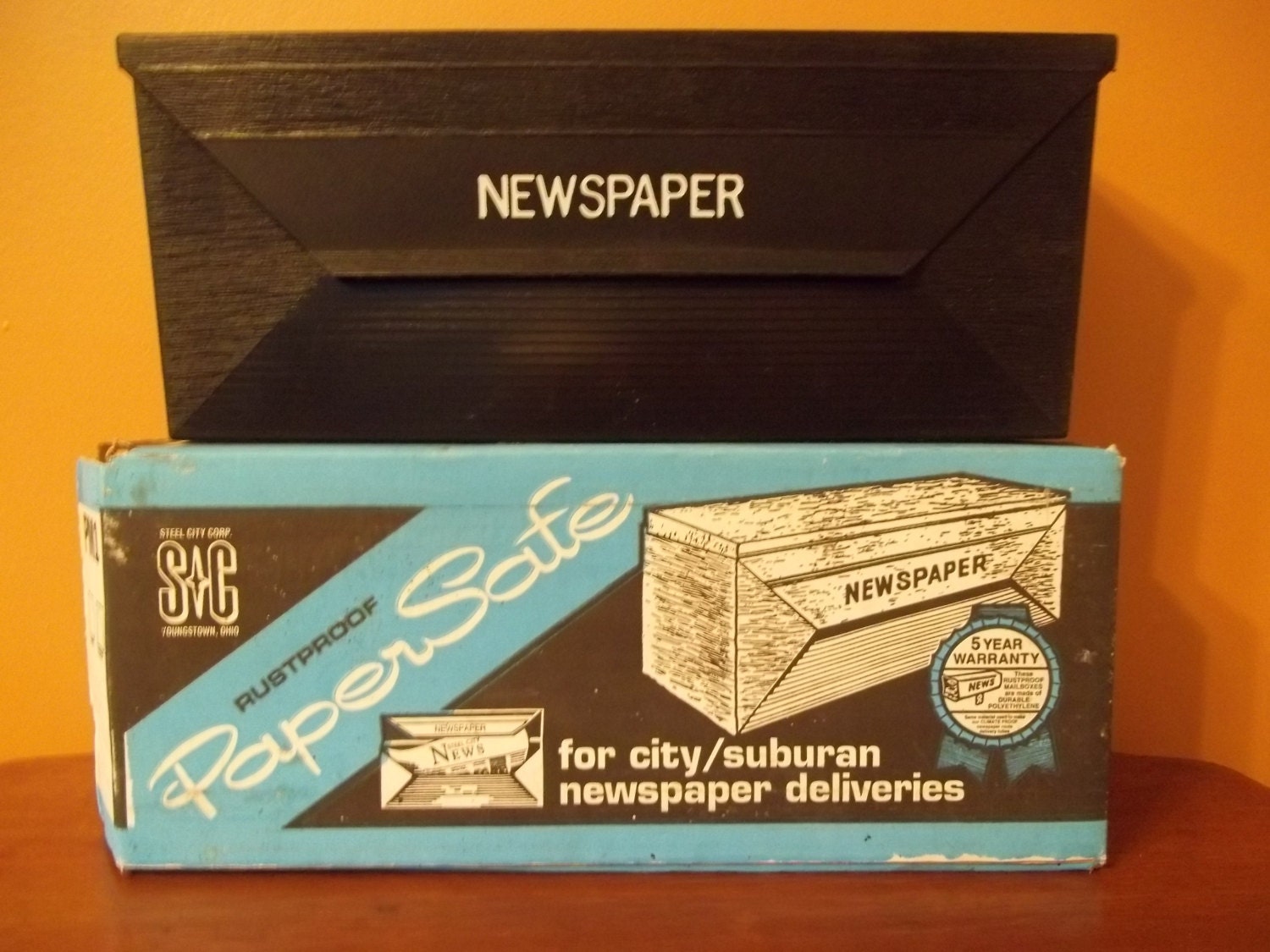
For example: https://img1.etsystatic.com/055/0/7471543/il_fullxfull.74786...
BS. I didn't ask for the lockers, or even want them - because I knew what would happen. I've never signed up for Prime service for the same reason. Tell me again, how is anything my fault?
Honestly, I don't blame the drivers in the slightest. If I were treated the way they were treated and paid what they were paid, I wouldn't care about doing my job the right way either. Hell, they're so monitored by algorithms and surveillance devices that they probably don't have time to do it the right way even if they wanted to.
Things like this are going to keep happening and keep getting worse until the middle class/upper middle class realizes that our current lifestyle and access to "cheap" services is being held up by a systematically abused and underpaid labor force that isn't given the time, compensation, respect, or basic decency to support doing a good job.
This is Amazon/Bezos' fault, not the driver's.