I have windows open all the time, air conditioning on too often, and dehumidifiers and HEPA filters as well. It is not efficient or particularly environmentally friendly... but I want a CO2 level < 800 ppm and a PM2.5 level under 10... so here we are.
My next half baked idea is figuring out a way to have a sealed home and an appliance (or messy bench-top device) to remove CO2 from the room continuously and exhale outside -- current ideas revolve around using a carbonate (lithium? sodium?) in water in an electrolysis cell and an aquarium bubbler to collect CO2 and expel it outside. The best I've been able to accomplish so far is baking CO2 out of baking soda (sodium bicarbonate) and sealing it in about a cubic foot container and achieving ~300 ppm CO2 (lower than outside which is ~400-450).
There are these things called "plants"...
Algae is commonly the go-to for CO2 scrubbing for it's relative efficiencies. Algae might scrub 1-3 grams of CO2 per liter per day (https://www.osti.gov/servlets/purl/1485133).
Humans exhale approximately 1kg CO2 per day.
I consider 300-1000 L of algae scrubber tanks per person a lot of volume.
But it's probably better if you invested into a counterflow heat exchanger for ventilating your home. You can recover a large part of the heating/cooling energy.
Also I would prefer levels lower than outside, obviously air exchangers will necessarily be worse than just being outside.
With small device I could drop CO2 levels to zero in volume of a gargabe bag in few minutes.
But that would give you oxygen rich atmosphere. You'd probably want to add some inert gas to that. Nitrogen preferably. Are there nitrogen concentrators?
Also all of that is probably really dangerous because human body doesn't detect oxygen level, just CO2 level. So you might easily pass out and suffocate without any warning if your oxygen supply unit get damaged but your nitrogen supply unit doesn't.
My literature searches haven't had much success thus far, lacking a chemistry degree hasn't helped. I have found some things but not enough to come to any sort of engineering designs. I'm assuming it's one of those things that's almost too simple for anyone to have bothered writing a paper about unless they had the exact sort of ideas I did. (OR they're using terms that I haven't been able to come up with yet)
Current levels outside as measured by my device just now are about 450ppm.
Like so many things I think it is a small effect; it's not like I can go anywhere for a week to experience 300ppm air.
I haven't gone to the levels of designing experiments and data tracking on myself. The fact that I've lived with allergies and a broken nose most of my life probably hasn't helped my personal respiration characteristics.
More heat than is common for home appliances I know! A commonly referenced stat is 825 C. There's really a gradient: https://en.m.wikipedia.org/wiki/Calcium_carbonate#Calcinatio...
You would need to consider the occupant oxygen consumption. A typical human respiratory quotient is 0.8 (0.8 mole of CO2 produced for every 1 mole of O2 consumed). You’ll get a net inward movement of gas into house all things being considered.
Anyway, don’t do if. If you do it ‘right’ the argon will slowly build up and you’ll asphyxiate. Thankfully achieving that level of seal is very difficult.
If you are really worried about PM2.5, just wear a PAPR.
PM2.5 is easy to maintain with HEPA filters.
CO2 is not easy to maintain without forced ventilation, and really I would like to try inside levels lower than outside levels. (say 300 ppm)
There’s something like 50x as much oxygen in the atmosphere as co2 so a relative change of 1% nominal value will correct itself fifty times faster for oxygen than for co2 between outside and inside (ok a wild simplification, but still)
The result is that without really intense sealing it’s basically impossible to make a difference in indoor oxygen levels whereas with even a cracked window i can maintain co2 levels two to three times outdoor concentrations in my apartment.
Running a co2 fixer with the place shut up would be more like... running the air conditioner full blast with the place shut up. Yes there would be losses but they would be relatively contained.
From one randomly googled article on the myth of house plants cleaning the air:
"To remove toxins, you would need at least 10 plants per square foot."
But CO2... to simplify imagine being a vegetarian, how much plant matter would you eat in a day? How much plant matter grew in one day in your houseplants? The only way plants are going to fix carbon is by adding it to their own mass. Just think about a conservation of carbon atoms. There's no way any plants in your apartment are going to make a dent in the carbon cycle of your personal environment.
There are arguments to be made for lots of things sticking to or getting sucked into the leaves of plants... maybe if there were a whole lot of plants a meaningful amount of VOCs or other pollutants could be removed... maybe.
And then air purifier can keep PM2.5 levels below 10 on the lowest setting while outside is above 30
And one window cracked like that is enough to drop CO2 levels below 800 while there's one person in the apartment.
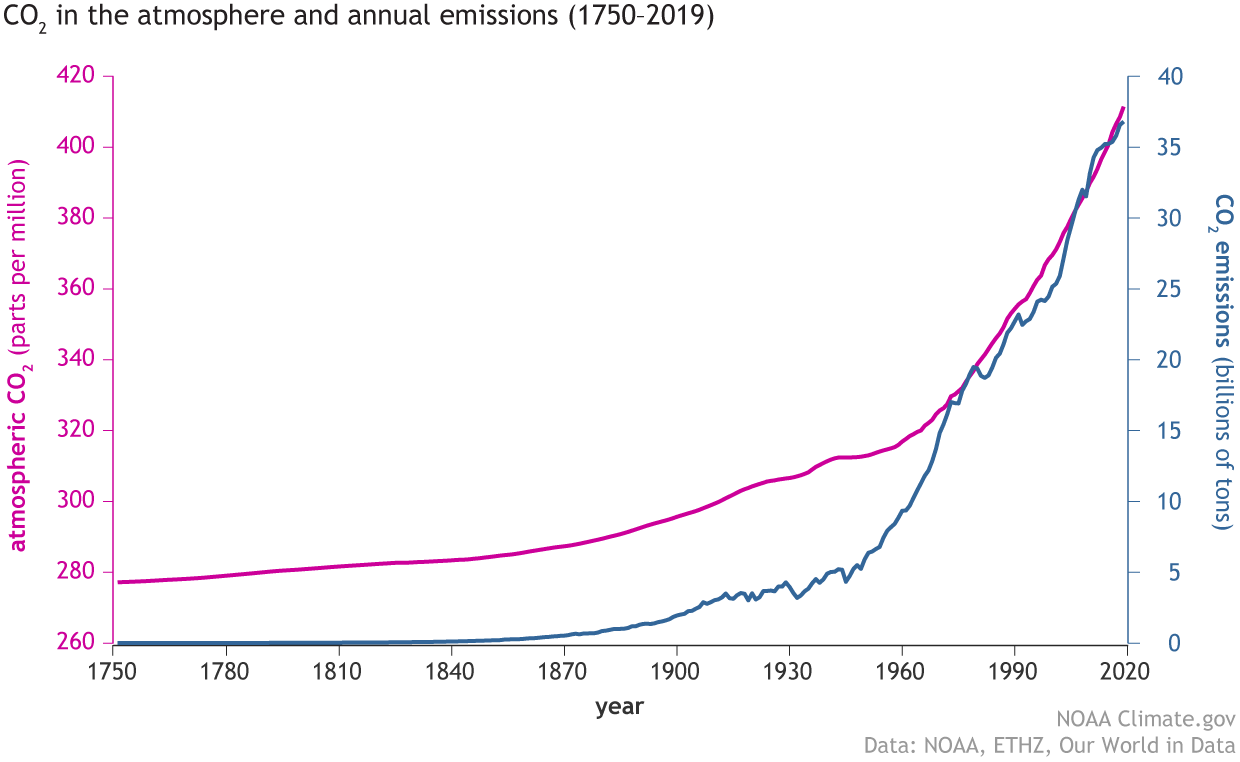
It's been, what, 30? 50? million years since atmospheric CO2 levels matched current outdoor levels, much less what happens inside.
the concentrations and types of particulate matter, however, is unprecedented, and as such, presents a higher inate risk, something that scientific research is really only starting to grapple with but so far is showing to be likely a serious risk to many (most?) species on earth.
with that said, i'm not trying to discourage your project in any way, just saying that for most people, addressing particulate (plus voc) risk is likely going to be the overwhelming majority of the benefits to be found in relation to indoor air quality. reducing co2 could be worthwhile if you have an especially airtight room/house, but nearly no houses are that airtight (passiv houses are meant to be so, however).
You can read more on it on the See the Air Blog: https://seetheair.wordpress.com/2021/04/26/thailand-school-s...
If the air quality is decent outside, it is easy to maintain a PM2.5 rating of near <10 like this.
In California fire season I have a box fan on high in the window pushing air in (and sealing the areas around the window) through an MPR 2800 furnace filter (which is better than the 99.97% rated hepa filters, would be marked as a ULPA filter I believe in different contexts) with this I can maintain the ~0 PM2.5 rating inside even when the AQI outside is >300 while keeping CO2 in check.
It's been quite surprising how easily the CO2 spikes with closed windows and doors in the bedroom with just one person... I essentially always have a window in each room open several inches, cracked isn't enough, usually with at least one fan pushing air through a window.
Positive pressure systems can virtually achieve zero AQI inside even on the worst polluted days. You can read more here: [1] https://www.airgradient.com/blog/2020/01/08/positive-pressur... [2] https://seetheair.wordpress.com/2021/04/26/thailand-school-s...
i put my air purifiers on low when the windows are open to deal with the particles i throw up by moving around and doing stuff indoors. with the windows closed (usually only at night), i put the air purifiers on medium/high.
Very much depends on where you live. I have a few DIY air quality stations with data being piped to Grafana. I just looked at the latest data, the average outside PM level for the past 5 months has been around 100 µg/m³, while inside it's around 10 µg/m³.
This spring happens to be pretty windy and this skews the outside levels down, otherwise the ratio would be much worse.
edit: i mentioned the road to note that outdoor pollution is higher during the day, yet opening the windows despite that lowers overall particulate levels indoors. it may be different in indian cities or cities like beijing with much higher pollution levels.
I am interested in replicating your hardware stack but implementing the software stack using the esphome framework which supports all of the components used in your DIY solution.
https://esphome.io/components/sensor/senseair.html
https://esphome.io/components/sensor/pmsx003.html
I can't guess why they would be, and searching around a bit doesn't seem to suggest that's the case either.
To send me a message please go to https://www.airgradient.com/diy/ and send me a message with the orange chat button. Thanks!
Not affiliated in any way.
(replying to you to not pollute parent level replies)
4(index):14 Uncaught ReferenceError: zE is not defined at openWidget ((index):14) at HTMLDivElement.onclick ((index):308)
One thing one has to bear in mind is that often when you optmize your home for low PM (e.g. with air purifiers and fixing of air leackage) your CO2 will get very high causing headaches and reduce cognitive performance.
So it always makes sense for indoor air quality monitoring to measure PM and CO2 in parallel.
We have open source, open hardware build instructions for a very reliable Air quality sensor that can be used to measure PM2.5 and also CO2 [1]. It is very accurate for the fraction of the costs of commercial sensors. You can build it for less than USD 20 (or with CO2 for less than USD 50) and send the data to our cloud server or any other backend.
I am more than happy to send you some free PCBs (you just paypal me the cost of the postage) and you can build your own sensor and log the data. Contact me if you are interested.
[1] https://www.airgradient.com/diy/