That sounds like a cherry-picked number to downplay the change but:
1) That's 90,000 apps
2) The amount of revenue those apps (like Spotify and Netflix) generate is probably in the 10s or 100s of millions
I'd bet that some of the largest revenue apps are the ones using their own billing -- the devs who make low-revenue apps probably don't want to spend the time or money to set all that up.
Just like authentication, there will be abstraction libraries that take care of it soon enough, or somebody like stripe will build a SDK and do some consolidated billing management for you.
Want to prorate upgrades? Well google play doesn't offer that. Want to allow switching from monthly to annually? Does Apple offer that? Want to issue a partial refund? Want to credit an account? Etc.
It goes further, a customer emails and asks "how do I cancel?". Instead of having easy instructions for them, it's now a switch block for all the different IAP solutions. If that customer forgets how they signed up, now they need to dig through all the IAP steps for cancelling.
And it's not just Google Play and Apple. There's web, Windows store, amazon app store, android, ios, chrome payments (deprecated), something for linux, etc.
While revenuecat seems decent for Google/Apple, it doesn't touch any of the others.
I'm not saying it's not possible. All I'm saying is it's a whole lot of extra work just to allow the largest companies in the world to scalp 30% from an indie dev, and force a poor experience down users throats.
Abstractions are not excuse for the underlying payment grab both the vendors are forcing on the devs. Just saying such problems and abstractions are not new and indie devs will get some relief with an abstraction
So if you have a formula how the e.g. train service gets money from a selling tickets app for iOS in a country with zero iPhone presence, you have our attention.
https://deviceatlas.com/sites/deviceatlas.com/files/images/m...
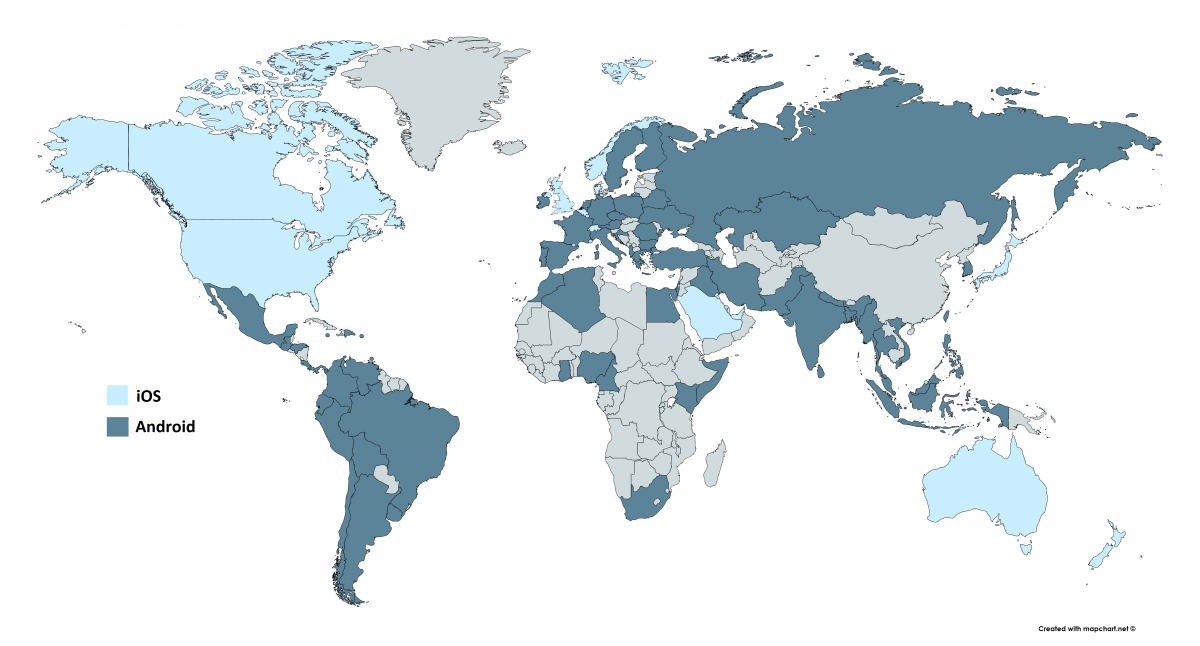
I imagine there are a ton of garbage apps that were created automatically for spam, seo, whatever reasons.
I've done it too.
I think Android App development culture is extremely different than iOS Development.
> That seems astonishingly low [...]
That depends. I would not be surprised if there were an order of magnitude more "developers with apps on the Play Store" than on the iOS store, simply because of the lower barrier to entry ($$ and lock in patterns pushed by Apple makes it harder to get started on iOS). So would that mean 3% is actually astonishingly high?
The important part of this discussion is not on the user side. Yeah they can sideload but really they won't do that because of IAP, of all things.
The important part of this discussion is on the developer side. Going through Google will mean they get to shape what apps developers can even economically build without falling back to sideloading (which just won't happen, see above) and we already see how "great" that in the iOS ecosystem.
Of course, you are in camp "IAP means clear and central subscription management, it's great for me!" then you might not care or even welcome this.
I happen to be in camp "What is good for the user should not be contingent on the business model allowing for a 30% cut going to google." There are and will be products/services users want, but not at 1.30 times the price, and those will simply become impossible now.
On the other hand... Let's just watch Rome burn and then see what we do with the ashes?
But just take stock of your surroundings. Think of everyone you know, and think who of them sideload apps on a regular basis. Now correct for the tech-affinity of your social surroundings (probably high if you hang out on HN...)
For me, only the most hard-core of my friends sideload at all. Everyone else goes with stock apps. So sideloading should be in the regime of "count the zeros before the first non-zero mantissa digit."
Don't confuse the US experience for the global one.
Instead of play store, "Default app store" to cover what ever comes with chinese phones.
Or, US and Europe, what percentage...?
"Google requiring Android apps on the Play Store"
Requiring all android apps (eg: from third party app stores, built in apps shipped with phones or from vendors) as implied by the HN title would be a huge leap and have a lot of implications. But this is not that. I'm very surprised though by this statement from their post about it:
> Less than 3% of developers with apps on Play sold digital goods over the last 12 months
That seems astonishingly low - while I understand the Play Store is very ad driven, I had thought IAP was still a decent component of monetization. From this it sounds like the Play Store is a bit of an advertising wasteland ... or am I misunderstanding?