Just like authentication, there will be abstraction libraries that take care of it soon enough, or somebody like stripe will build a SDK and do some consolidated billing management for you.
Want to prorate upgrades? Well google play doesn't offer that. Want to allow switching from monthly to annually? Does Apple offer that? Want to issue a partial refund? Want to credit an account? Etc.
It goes further, a customer emails and asks "how do I cancel?". Instead of having easy instructions for them, it's now a switch block for all the different IAP solutions. If that customer forgets how they signed up, now they need to dig through all the IAP steps for cancelling.
And it's not just Google Play and Apple. There's web, Windows store, amazon app store, android, ios, chrome payments (deprecated), something for linux, etc.
While revenuecat seems decent for Google/Apple, it doesn't touch any of the others.
I'm not saying it's not possible. All I'm saying is it's a whole lot of extra work just to allow the largest companies in the world to scalp 30% from an indie dev, and force a poor experience down users throats.
Abstractions are not excuse for the underlying payment grab both the vendors are forcing on the devs. Just saying such problems and abstractions are not new and indie devs will get some relief with an abstraction
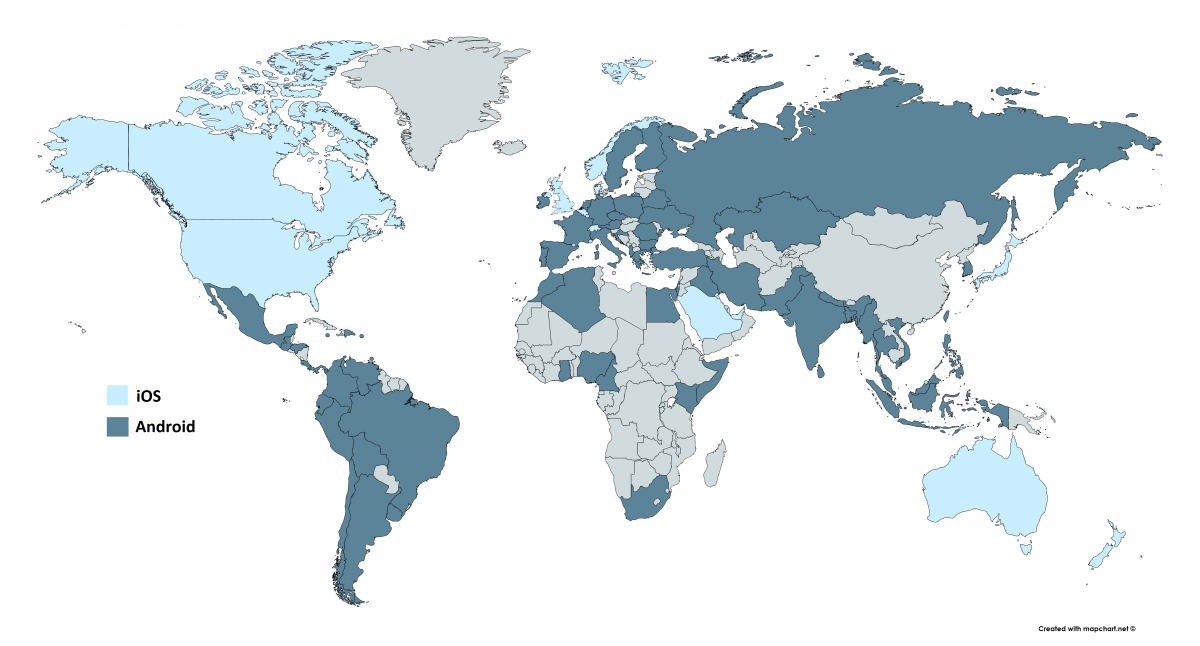
So if you have a formula how the e.g. train service gets money from a selling tickets app for iOS in a country with zero iPhone presence, you have our attention.
https://deviceatlas.com/sites/deviceatlas.com/files/images/m...
That sounds like a cherry-picked number to downplay the change but:
1) That's 90,000 apps
2) The amount of revenue those apps (like Spotify and Netflix) generate is probably in the 10s or 100s of millions
I'd bet that some of the largest revenue apps are the ones using their own billing -- the devs who make low-revenue apps probably don't want to spend the time or money to set all that up.