Warcraft II was amazing because it had really great RTS mechanics. Warcraft III was a great game, but it introduced hero units so powerful the game ceased to be an RTS and became a hybrid of the genre it eventually gave birth to. It already felt like a MOBA half the time when players could just power-level their hero and come decimate your entire army almost single-handedly because you focused on building.*
*Not saying this was an optimal strategy vs really gifted players, I wasn't a WC pro and I only played on LANs back in those days.
Interestingly, one of the criticisms of new total war games is similar to this. Sadly that series seems to be going down the drain.
https://www.youtube.com/watch?v=Zctp972y_Eg&feature=emb_logo
This is often called the uncanny valley:
Daniel Dennett mentions an experience where a painting , with very little detail up-close, appeared to him to have all the detail of a photograph when viewed from afar[0].
It's not quite the same thing as the uncanny valley effect, for him it came about from his naive expectation of up-close detail being blown apart by his experience, when getting closer and closer to the painting, of realizing that the painting itself was almost incomprehensible up-close -- the detail was created by the way the abstract shapes created the illusion of detail from afar on a very large canvas.
It was sort of an artistic physical version of rendering LOD tricks.
He expresses it much better than I do, I recommend the TED talk or the Google talk where he highlights this example as a way to gain insight into what consciousness may be.
Breath of the Wild is another example of stylized art instead of trying to look like a live action movie. It is imagination fuel in a way similar to a Miyazaki film. I think it will age well, too.
I think over the years, people will continue to move away from PCs as a gaming platform to mobile devices, and shovelware from the casual, pay-to-play game companies will keep the market so saturated that it will be hard to discover great indie titles.
PS. your list is missing Disco!
The only 90 games worth talking about anymore are the rpg games, the space simulators/rpgs and Homeworld. As in that you would actually prefer to play it instead of a modern game for none nostalgic reasons.
And we still have games breaking new ground like Disco Elysium.
I dunno. Ocarina still holds up today, or at least the 3DS remake does. I don't know about the original.
https://upload.wikimedia.org/wikipedia/commons/1/14/Clonk-En...
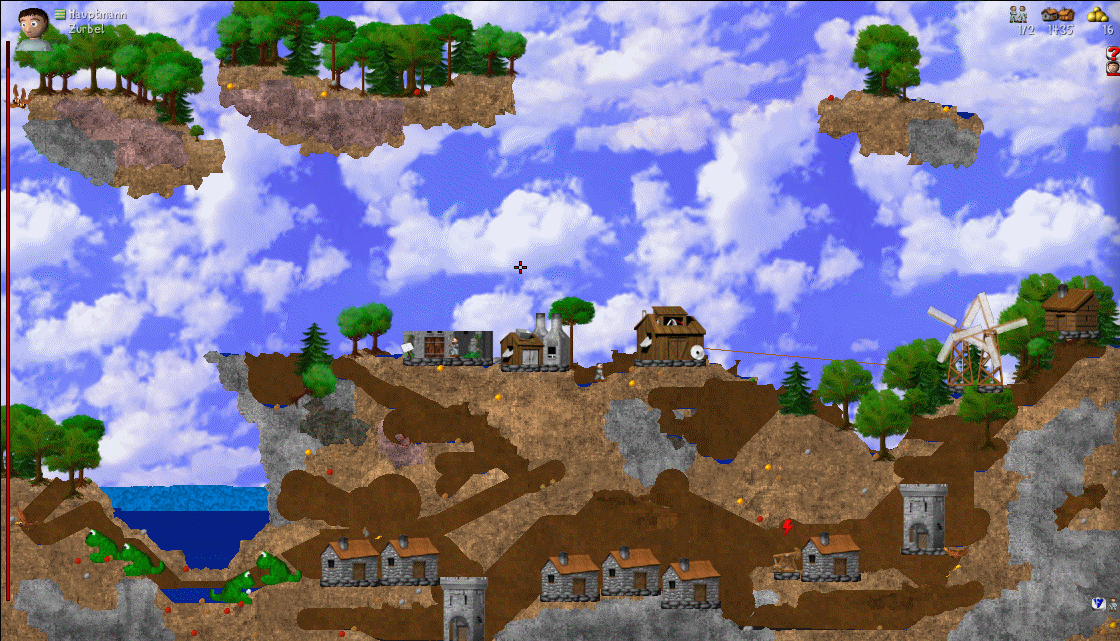
https://cc-archive.lwrl.de/shots/7.jpg (with Stippel pack)

Seems like it's really hard to come by screenshots these days. Things like the Stargate pack with working portals, Goa'uld etc were just great.
That is one of the few games I intend to always have installed on at least one machine.
Waiting for Silksong...
From a quality and diversity standpoint, the last ten years have seen the best games ever made, a lot of them indies.
I'm a child of the late 80's, and nothing will ever beat the experiences of Zaxxon, Manic Miner, Paradroid, etc.
I do know gamers who were teens in the late 70s, and it's all about River Raid, Pole Position, Frogger.
My guess is that, just like music, what you experience as a teen shapes you.
Leaving the rest up to imagination is the key part IMO. Rollercoaster Tycoon, Simcity 2 & 4 (never played 3000), Warcraft II (and too some extent, III), Baldur's Gate I/II.. the graphics are just enough to tell you what's going on, and your brain fills in the rest of the details. I feel the closer graphics approach reality, and the more details their are, your brain begins to filter out those details, and notices the flaws/unpolished pixels, which ends up taking away from the immersive experience.