Is this really that different than what humans do?
After watching dozens of AlphaStar commentary videos [1] over the last few months, I was more or less thinking the same thing: the AI has basically evolved a massive ruleset: "Do X. If you see Y, do Z."
Nonetheless, I decided to start playing again myself. Poking around, I saw a recommendation to go through one guy's sort of "training course" [2], and guess what? A lot of it comes down to the same kind of thing. "Send your first overlord to scout their natural. If they haven't expanded to their natural, build one -- ONE -- spine crawler in your natural."
How much of our "intelligence" is really anything more than pattern matching + search? And during the actual dogfight, how much of what the human pilot was doing was anything more than simply pattern matching from their own vast experience racked up in a simulator?
[1] https://www.youtube.com/playlist?list=PLVRQoOk_ltE3Fr1ofRE0Y...
[2] https://www.youtube.com/playlist?list=PLFeZeom2b4Dlt63qmkPO8...
I think your general question is still a good one, but it's worth noting that from a human perspective, Starcraft matches only start off this way. Very quickly, the game state becomes complex enough that decision trees break down and intuition becomes the driving process for high-level human players.
The extent to which AI can begin to compete with this sort of intuitive human processing is most interesting to me. As it relates to this article, I think it matters a great deal if the experiment has constrained the system to the degree that it ceases to operate in that intuitive realm that high-level Starcraft matches operate in.
As far as I can tell, we're already there. Go is a game where search + explicit rules work really poorly, and intuition is a heavy factor in how humans play. AlphaGo was the first major success where neural nets were able to replicate this "intuition", and actually become far better at it than humans.
You can definitely see this "intuition" factor if you watch the AlphaStar games. Basically, if you have two armies with "middle of the road" units, AlphaStar always knows when to take a fight. You can sometimes see it take its army up to a defensive line, then turn around and go home; but if it decides to attack up that ramp, it always wins, even in a situation where a human would be less sure.
The exception is with unusual unit compositions; for example, it seems in training to have only encountered 1-2 battle cruisers at a time. So there are games where over and over again it throws an expensive army full-throttle into a group of 10 battle cruisers, and over and over gets slaughtered.
But again, I think this "intuition" factor, even in humans, is not much more than a sophisticated pattern matching, perhaps with background search.
Could be wrong, but I believe this is actually a case-in-point moment for the other side. AI as it exists now is flummoxed by unfamiliar input, whereas a human expert is more likely to be able to react in a way that is at least directionally correct.
Put another way, if AlphaStar is confronted with a Terran opponent that can build Zerg units, how likely would it be to win the game? How likely would an expert human be to win that game?
Some insight gained like going to three three which is a taboo like old day playing three three alone.
Intuition or not ... learning we from computer go.
What the problem is they are perfectly known game. Air battle is not a perfect information game. That is why you need human decision.
Perfect information would be the knowledge of all possible outcomes of a given move. That's not even possible in chess, and is fantastically less possible in a game like go. That's why, until AlphaGo, there had never been a go computer program that had ever even come close to beating a professional go player.
Let me emphasize that: As of early 2015, nearly 20 years after Deep Blue beat the world champion Kasparov at chess, there had never been a computer go program that had come close to beating a professional go player. The game starts with literally 361 possible moves, and each move thereafter decreases the possible moves by exactly one. The search space is just so massive that it's impossible, by brute force computation, to do a search with any meaning.
What's needed is an intuition about two things. First, for a given a board position, which color is more likely to win? Secondly, given the hundreds of moves you could make, which ones are the best ones to explore? Go players have some rules, but primarily they develop an intuition for these two things by playing and looking at hundreds and hundreds of games.
AlphaGo's primary architecture was the same. It has two neural nets, which spit out board evaluations and move suggestions. These nets don't have explicitly coded rules, but were developed by playing millions of games. How is that any different than our wetware neural networks?
> In fact, players who have played against it have often gotten worse.
I hadn't heard this, but this is probably not unusual. Take my StarCraft example: Suppose someone had gotten to Diamond league mainly by perfecting their early rush strategies, but then hit a wall. Then they watch that video series which says the foundation of a GrandMaster strategy is having a solid economy first. If they decide to take this advice, it will entail a complete re-building of their skillset; they'll almost certainly drop in their rankings before picking back up again.
You could imagine the same thing happening in go: for hundreds of years, certain principles have been believed to be true. AlphaGo regularly violates these principles. As people are exploring this alternate strategies, they will inevitably get the "new" principles wrong while they're learning.
On the other hand, the early versions of AlphaStar clearly dominated mainly by having inhuman micro capabilities (ability to precisely control individual units). A human trying to replicate a strategy that relied on inhuman micro would inevitably fail.
Similarly, it might be that certain moves in go are good moves if you can do the kind of massively deep search that only AlphaGo can do. If that's the case, then of course humans trying to imitate AlphaGo are going to fail. A similar thing happened in chess: computers historically have been amazing at tactics and weak on strategy. A human playing a computer should focus on a good strategy, because they're never going to beat a computer at tactics.
But none of that changes the fact that what AlphaGo is doing, with two neural nets that spit out answers based not on explicit rules but based on millions of games worth of experience, is indistinguishable from human intuition.
One example is memory. Deep mind doesn’t update it’s strategy when playing the same player repeatedly or even over the same game. It can operate at near peak human performance indefinitely, but it avoids being exploited via deep understanding of the exact rules in play. It was also playing on the ladder under random names to avoid people developing specific counters.
This is because many games without perfect information have "rock-paper-scissor" situations. An AI designed without this in mind, lacking a source of randomness (or memory of the last encounter fed into the next game), is going to pick "rock" every time and start losing to the human who realizes and exploits this.
Yes, we have built in mechanism that react to situations we never encountered before. You will never be able to simply sit calmly while something is damaging you for example.
Pattern matching and search are brute force approximation of actual “intelligence”.
1. A model of how Go worked, constructed by humans
2. A neural net for generating interesting moves, and a neural net for evaluating game positions.
3. A Markov search algorithm that used 1+2 to do pattern patching and search.
I will say that so far, #1 -- constructing mental models which can then be searched -- is something I haven't seen an AI do yet.
But looking at the actual work that I do -- from coding to deciding what to cook for dinner to deciding how to lay out my extension -- I'm pretty sure that behind the scenes it's exactly the same as 1+2+3 above; and that if I could download my mental model and my utility evaluator into a program, it could (with training) do all of the above faster and more consistently.
Like the sibling said, the game begins like a decision tree but quickly falls outside that purview.
And my point is that basically what he does in the series is start with a super simple set of rules, and then slowly add more subtleties and sub-clauses. That's obviously at some level how he works when he's actually playing -- he has a general plan, then a whole load of patterns that he matches on in how to respond. I'd be willing to bet that he rarely encounters a genuinely new situation for which there is absolutely zero precedent -- absolutely nothing in his experience which is similar enough for him to take an existing response and adapt it for that purpose. How is that different to what AlphaStar is doing?
The main difference is likely to be in how they learn afterwards. If he encounters a new situation in a game, afterwards he will use his model of the game to try to come up with new responses. AlphaStar will most likely have to do something much closer to brute force to find an appropriate response.
Seems like with every breakthrough the goalpost of AI gets moved.
I believe a researcher coined a phrase for this but I can't remember what it was.
It also seems like with every breakthrough this complaint is raised without addressing the underlying issues with the new AIs shortcomings.
My hot take: true AI is so far out of reach of our ability it's not even funny, which makes the whole field either a search for the fountain of youth at worst, or at best a search for tools to inform humans or to replace humans in rote tasks. See https://youtu.be/orMtwOz6Db0
For example, would you fool even a child with this? https://cdn.mos.cms.futurecdn.net/s4DuKgTLnS4cngTyiqVkNC-970...
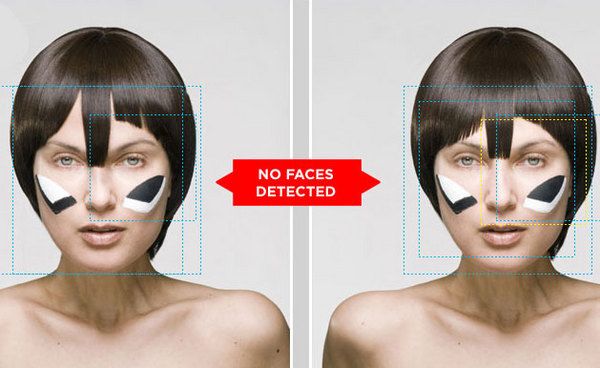
There's an article on Wikipedia called "AI effect", I don't know if that's what you had in mind.
https://en.wikipedia.org /wiki/AI_effect
But I also don't think we're miles away from computers learning some sort of reasoning structure. Some sort of causality-type thinking where you have hierarchies which at some level are reasonably simple, because humans can only fit so much. But when the computers figure it out, they don't have that problem.
At the moment, yes, there's a huge corpus of patterns and you can make some smart decisions just by being able to learn from the huge library, but it's the difference between knowing that one move tends to beat another, without knowing the why. For instance in sports, you have man-marking vs zone-marking. The naive thing to do is just tabulate how often a team did one or the other vs how often they won. Then break it down even more by who they were facing and various stats. But if you don't have a theory of marking, you're a bit lost for explanation, even if the tabulation clearly says zone marking tends to win. A causal explanation might sound something like "man marking allows the other team to pull you out of shape and gives them the choice of which players face which". It might also tell you that sometimes it's actually smarter to man-mark, eg when there's some player you really feel is dominant and needs to be taken out.
I gather that people are working on this causality type AI though, so no doubt we'll see something interesting soon.
You only get ONE chance to beat AI in real life dogfight. So you better make sure that your strategy to exploit AI is going to work.
But simultaneously, it's not like the United States is really trying to fix this problem. The modern generation fighter aircraft are boondoggles with massively inefficient manufacturing designed to win senators and congresspeople votes - not act as the backbone of a hardened supply chain.
They're being built the way they are because the US doesn't seriously expect to face any enemy who can substantially deplete its forces, or is going to have any ability to strike the mainland.
My suspicion is that if there was an actual belief in the need to have reliable supply lines, it could be done and manufacturing could be streamlined a lot. You could definitely imagine a nearly fully automated factory rolling these things off very quickly.
Unlike previous wars, cruise missiles are a mature technology, making it much easier to precisely zap an opponent's manufacturing facility and infrastructure than before. High tech gizmos also have a lot more dependencies that go into them, making it easier to disrupt by knocking out a few or even just one of them.
If you think there's any intention or well defined predictability to these things, I've got a bridge to sell ya.
Its not really all that simple, as you have limited time/resources to determine what exactly you are up against.
And you get to test your hypothesis once. You win or lose after that.
One other thing to note is that there will not be a unique AI in every individual jet; that would be impossible to maintain. There will be one version rolled out to each type of jet, maybe with a few customization options that can be changed during mission planning. When a new AI version comes out of testing it will get rolled out to every plane in the fleet that has the required computing power- some jets used for training/reserve/national guard duties won't have the latest hardware upgrades and won't get the newest version. So a pilot will be able to ID a jet, know where it is generally strong and weak, and then try to target the enemy's weakness while avoiding the strengths. Sometimes they'll lose, but once enough people have survived encounters with AI jets (either from exploiting stolen jets or from plain old combat) the best practices will get pushed to the other squadrons. Just like what already happens.
The side with AI planes is just looking up K/D ratios on their telemetry from the planes. The other side is losing pilots.
The USAF missiles will make guns obsolete doctrine of the 1960’s was premature not completely wrong.
No one would authorize a non-visual shoot down of a target in a non-active AO and not during an actual conflict.
If you are at the stage where you have factions duking it out in the skies especially these days were talking about a major conflict in which case there won’t be any civilian jets flying there anyhow.
I guess if its going fast enough its almost certianly a military aircraft. Can the radars in the military jets identity the type of the aircraft before it gets blown out of the sky?
I assume this would happen pretty quickly when a war went hot.
> My theory is that AI will not exist until we reach AGI.
You are confusing the definition of AI for AGI so of course you think that. AI doesn’t need to have true understanding to be considered AI, it just has to have the appearance of intelligence.
The best algorithm will win the war.
People stop bullying your nerds at school if you don't want to loose your next war ;)
Unlikely. You will rather a swarm of drones against an enemy that has no such technology.
A country that can have a swarm of drones would very likely also have nuclear weapons and deterrence is a thing.
[0] Most people don't know this but Canada is one of the few countries that built nukes (in conjunction with America and the UK) and then gave them up. I think we still technically own the seven nukes, but America is in possession of them.
I think AI powered swarm of drones is certainly feasible for a small team of motivated engineers and modest funding.
The thing that would let them at a disadvantage is the quality or lack thereof of their missiles guidance system.
Unless the swarms are easily exploitable like the current "AI"s.
I recall that there was AI beating top Dota players. I'm not familiar with humans figuring out the AI and exploiting weaknesses. Every search I've done just shows articles about the AI winning. By chance do you know where I can read up on humans figuring out the weaknesses of the AI?
> The general strategy is to win by claiming first tower. At 0:00, you aggro the enemy creep wave so that they start following you. Then you walk around in a circle around the jungle, and the enemy wave will start to form a congo line that will follow you around. You then path around the jungle so that on the next wave spawn, you can aggro the wave again and continue to walk around in circles. The AI will burn glyph when your creep wave hits the tower, and for some reason it can't really decide between chasing you or defending the tower. So after about 5 minutes of doing this, your creep waves will eventually destroy the tower and you win the 1v1.
No matter how impressive each of these techniques were, each of them had a counter that was highly effective.
You can also check the ml subreddit for discussions of exploits:
https://www.reddit.com/r/MachineLearning/comments/bfq8v9/d_o...
https://www.reddit.com/r/MachineLearning/comments/6t58ks/n_o...
https://www.reddit.com/r/MachineLearning/comments/bcumrs/d_o...
https://www.reddit.com/r/MachineLearning/comments/6u304t/n_m...
I also recall a post from one of the pros talking about his strategies to try and beat them but I can't find it.
Lets retry this experiment but the loser of any games get shot in the head, and the next player only gets basic telemetry while also shitting themselves. A human Dota player with a gun pointed at him will likely perform differently too.
Note that the AI player doesn't get killed if it loses, because it is software. It just doesn't get full telemetry and diagnostics.
We've seen this before, even for a lot more limited and controlled environment like the game Dota the "AI" can beat the humans a few times before the humans learns to exploit it's many weaknesses.
Some program that self learned a (admittedly impressive) number of reactions based on seeing/playing a huge number of simulations is not intelligence so not AI. It cannot reason on the spot and will fall for the most ridiculous of traps. For example the AI that beat the professional Dota players fell for running in circles around a tower forever while getting slowly damaged to death. Even the most simple of mammals (which we do not consider intelligent) would react to the pain at some point and bolt.
My theory is that AI will not exist until we reach AGI. Because with specialized AI you can always fall outside it's area of "expertise" and behave like a stupid bot.