No government is beyond over stepping it's boundaries but unfortunately non US citizens do not have a constitution to protect them from the US government.
China is threatening the US global trade dominance and the US is reacting in exactly the same way incumbents usually do and unfortunately trade wars between major powers have been historical quite bloody.
No. I do not trust USA.
"Dear members of the jury, I know what you are thinking: well it looks like this guy did napalm little children in Vietnam, and did sell weapon to terrorists, and did support violent dictators. But I urge you to take a second look at my client; consider all the occasions where he DIDN'T murder women and children, that ought to count for something! And there are also instances where he DIDN'T support some dictators and terrorists. Also he gives to charity. I rest my case."
https://www.statista.com/statistics/248552/us-arms-exports-b...
The wars China has been involved in don't include most of the places you claim. Korea, Vietnam, Tibet - that's about it since the post-WW2 revolution.
https://en.wikipedia.org/wiki/List_of_wars_involving_the_Peo...
USA on the other hand has quite some list.
https://en.wikipedia.org/wiki/List_of_wars_involving_the_Uni...
There is so much wrong with this statement. Let's take a look at some of your great examples.
> Iran (theocracy)
Do you know anything about American and British led operations to overthrow the Iranian government in the 1950s?
https://en.wikipedia.org/wiki/1953_Iranian_coup_d%27%C3%A9ta...
They overthrew a democratically elected government in order to install one more friendly to Western oil interests. Does that sound like a government that is the "protector of liberal democracies"?
> Cuba (dictatorship)
So the popular revolution against the military dictator Fulgencio Batista ended up with a pretty authoritarian government. We can argue on the legitimacy of the communist government, but let's talk about the government before that.
If the US was a "protector of liberal democracies" and likes to be "in conflict" with dictators, why didn't they care much about the government before the communist one? Oh yeah, because American companies owned 70% of the island and Batista was put into power by the US themselves.
> Venezuela (dictatorship)
Oh, Venezuela. This is a great topic. The US has been wanting to topple the democratically elected government since it's inception.
Here's a quote summarizing the sentiment of the people before 1999, when Hugo Chavez was elected.
> A sensation of insecurity became generalized throughout the population, constituting "an emerging culture of violence. . . very distinct from the culture of tolerance and peace that dominated Venezuelan society in the past." (Briceño León et al., 1997: 213). Along with unemployment, personal safety topped the problems perceived as most serious by the population. Between 1986 and 1996 the number of homicides per 10,000 inhabitants jumped from 13.4 to 56, an increase of 418 percent, with most of the victims being young males
It was a very bad time to be Venezuelan. Nowadays it is also a bad time to be Venezuelan. Why though? Do you think American sanctions and big business sabotage has nothing to do with it? To think so would be naive.
There are countless examples in every region of the entire planet where the US has done things that are not in line with the tag "protector of liberal democracy". They regularly cooperated with dictators, even brutal ones like Pinochet or Saddam Hussein. They do not care one lick about liberal democracy. It is realpolitik, plain and simple.
Now, I must state for posterity... The US is not the only country that behaves in this manner. I think any country will behave this way, because it's simply game theory. If someone's interests are in line with yours, you're going to cooperate with them.
I just think the US has so much power that it's influence is felt at a much higher presence than any other nation. So while any other country in the US's position would be performing similar actions, it's the US that's performing this actions.
Which is not to excuse any of this, but please get the timeline right. :)
It was only going into the 19th century that anything resembling control or oversight started to come into being. Which in no small part led to their disestablishment.
Edit: if I built a fleet of warships, flying the US flag, escorted by full US Navy warships began starting shooting wars with other countries, can the US government just go "not us, private citizens, we don't have anything to do with that"?
The company was far more a relic of the earlier age - when the sovereign gave favour, handed letters of marque and established privateers. The East India Company and the Dutch East India Company similarly were more corporate states than companies as we might recognise them.
The history is incredibly complex, worthy of many books, but for the period of roughly 1600-1800 the EIC was closer to the independent Nassau privateers turned pirate than to a regulated, and at least somewhat controlled, London plc. At some point early in their existence they remodelled themselves on the VOC (Dutch EIC) model to become more state-like as the VOC was so successful. The VOC was more independent nation state until the very late 18th century too.
They both fielded armies and navies independently and distinct from Britain or the Netherlands, made and enforced treaties in their own, not national, interests, had their own systems of justice etc. Being amongst the very first stock based institutions there were no systems of oversight and control. Stocks were still traded in coffee and tea shops, despite the recently established Royal Exchange - where stockbrokers weren't allowed. It was one of those coffee shops that would eventually became the London Stock Exchange. Any regulation came much later, and slowly, and ultimately led to the disestablishment of the EIC, and the wide range of corporate and stock law.
I might also blame government for not seeking to constrain the company earlier than they did... I can't really blame them for not regulating something that was new and unknown, just as in the current era bitcoin has seen regulation start to come long after its success. Or the talk of regulating Facebook, or no end of others...
Those two statements directly conflict: Saddam kept things under control a lot better than the violent mess that exists in Iraq now.
There is a reason why Kurdistan is one of the most peaceful and developed regions in the Middle East: they act the way you must act to be a prosperous modern people. The violent radicals who squandered the post-Saddam opportunity to build a modern Iraq are to blame for the killing and the chaos.
John Bolton, is that you?
The Pax Americana is a widely recognized phenomenon.
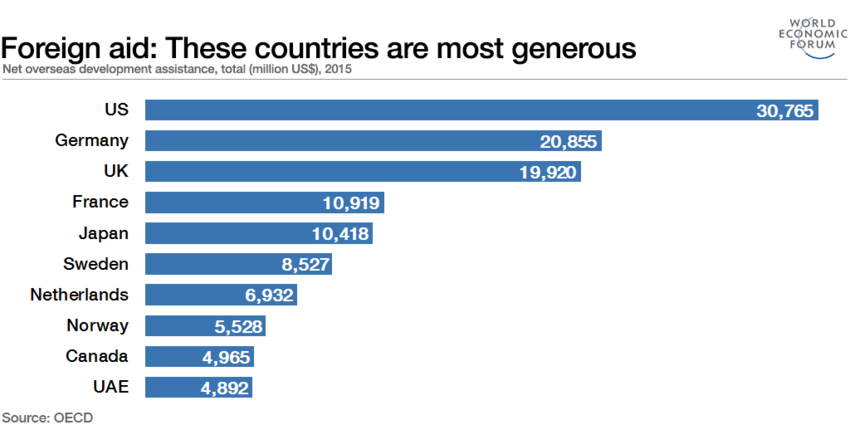
Taking down democracy in Iran. Supporting dictators in Latin America and Africa and assisting them in hunting down democracy activists. Financing terrorism in Angola for two decades. Fabricating an incident in order to attack North Vietnam, killing 3 millions people. Supporting "Asian Hitler" Pol Pot and the Khmer Rouge. Tacitly supporting Pakistan's genocidal attack against Bangladesh. Selling weapons to the terrorist regime of Iran, and then using the money to support terrorists in central America. Fabricating a threat in order to invade Iraq (hundreds of thousands of dead, millions displaced). Supporting terrorist groups in Syria. Waging undeclared wars in (at least) seven countries at the moment.
"Small mistakes."