Of course, GM really did conspire to put the trolleys out of business.
https://en.wikipedia.org/wiki/General_Motors_streetcar_consp...
However, this is the kind of thing organizations (companies, government agencies, non profits) do when they get to a certain size or have accomplished initial goals and are looking to conquer that next frontier. Just look at the overreach of the SV titans, for example.
For better or worse, we have a car based society now, and pining for the good old days is backwards looking. The next thing should preserve the immense freedom and flexibility that cars brought. Prescribing a top down solution that gives even more power to the state at the expense of the people is a non starter.
> The next thing should preserve the immense freedom and flexibility that cars brought.
In addition to stimulating sprawl and it's enormous costs, this limits the actual freedom and choices of people who can't or won't drive.
Even ex-burb homeowners whose every trip begins and ends in a parking spot eventually get pissed as the only way for a city to grow is then to pave more and more highways, and spread out in distance making automobile commutes a daily misery literally spanning oceans of asphalt.
Did the car bring freedom? A car is expensive for people to purchase, maintain, and operate. In many regions individuals are also compelled to purchase insurance because they are dangerous. They also drive up the cost of living since the expensive infrastructure must be paid through taxation, construction is more expensive because a certain amount of space must be allocated to parking, land is more expensive since infrastructure reduces the supply. The cost of cars pretty much dictates a particular way of living, even before factors such as urban sprawl are even considered.
Perhaps there were elements of freedom and flexibility when the automobile first gained traction, but the social geography mutated. Workplaces became more centralized, then decentralized, as the automobile facilitated large and dedicated zoning regulations. The shifting of workplaces necessitated the shifting of shopping and recreation, typically following patterns of consolidation in a spatial and business sense. With cities no longer being walkable, there were fewer reasons for housing to stay put. It too drifted outwards, often with little consideration to schools and medical care. The end result is that people are often stuck owning a vehicle or making very serious compromises to live without one.
I didn't mean to paint such a bleak picture, and it is likely more harsh than it rightfully deserves to be, but the reality is that the family car (and, later, personal car) ended up being more of a trade-off than a liberator. It is difficult to deny that more is within reach because of it, yet it is also undeniable that less is within immediate reach.
In a certain (much softer) sense, I think this is an example of the type of thinking I was complaining about in the original comment.
I do it myself, most people do it.. especially us "rational" thinkers. But, it is taking a particular and instinctively fitting it into a story that we're used to. Maybe the story is regulatory capture, maybe it's corporatism, overeaching governments and unintended consequences, patriarchy, empire, globalism... Whatever story we're used to refering to.
In any case, I think the next transportation revolution will be related to autonomous vehicles, so this particular conversation is probably moot.. AVs might just dissolve lines between public and private transport. It will, however, probably remain very impacted by both consumer choice and government (generally municipal) choices.
Can you give me an example that doesn't involve driving to the middle of nowhere, that isn't solved by a good public transportation system, and doesn't involve bringing home large amounts of groceries, or furniture, etc?
It just so happens that most of the public transit in the states royally sucks -- even in the city centers.
The coaches have the benefit to be able to go anywhere and modify your routes as suits you, while the trolleys need a fixed infrastructure. Both have their own pros and cons, so i don't see the need for a conspiracy.
The only thing the city can do (and that's what they're working on) is to upgrade from bus to streetcar. Dresden has some of the longest trams in the world, at 45 meters (50 yards), and these carry 3-4 bus loads at once.
Probably related, I doubt we have a bus line with anywhere near that ridership.
People have been complaining about the 38 for years, but I don't want to criticize the SFMTA (local agency that runs buses/trolley buses and light rail) because it does seem to get the job done without much expensive investment (cost of most recent underground metro in SF was $1.6B for 1.7 miles [2]).
[1] https://sf.curbed.com/2017/9/19/16302396/sf-worst-bus-transi...
https://www.transitchicago.com/assets/1/6/Monthly_Ridership_...
Except these conspiracies were (and are) generally real, and their effects are real. The pattern isn't journalistic, it's historical.
The problem is that I keep forgetting the secret handshakes. One of these days, I'm going to leave my thumb out rather than in and someone's going to shank me with a shiv. Or shiv me with a shank; I can't remember how that goes either.
Spending too many brain cycles in these abstractions makes us formulaic. We no longer see unique & specific examples, just uninteresting specific examples of a greater truth.
We all do it. It's inevitable. It's how we think, especially politically. But, it is worth consiously avoiding, in my opinion.
but we sometimes collectively need to grind through the ruts a number of times before finding a good solution, especially if the solution involves a variable abstracted away by the model.
so why specifically does your noted pitfall need to be avoided? and what alternatives can you offer?
but more to the point, what's the model of car-centric cities you'd advocate?
Unfortuetly this area and "green" in general does I am afraid does tend to attract "hobbyist" / "crank" activists. (I am using these terms in the political sense and not dising peoples hobbys
Eg the green movement needs to concentrate on the present problem (runaway global heating) and not on pious things like banning plastic straws.
That's probably a consequence of both the overcrowding of our roads, and the density of our infrastructure -- I rarely have to drive more than 15 minutes to reach any kind of shop, and by bike I can take shortcuts that my car can't follow, especially in inner cities.
Ultimately, my car has been relegated to recreational purposes only -- everything else in my life (work, shopping, friends) I can do by bike or public transport. For me, it doesn't really feel like a conscious personal choice -- it feels more like the pragmatic consequence of our infrastructure design.
I am from Denmark who also have plenty of bikes and it's a thing. The reality is however that thats fine as long as you live in the cities, it's not way to get around if you live in the suburbs and have to drive 30 miles to work and take care of your picking up the kids and drive 20 miles to the nearest grocery store etc.
Biking is possible in small cities but you can't build infrastructure around a giant continent like the US on bikes and trucks.
The car is the perfect combination of flexibility, scale, speed, utility and so on.
Sprawls are a byproduct of what the car made possible, they where not created to promote the car they where created because the car made it possible and gave a number of benefits for the individual families.
Again even in Denmark and other places that are extremely pro-public-transportation and anti-car, cars are still used by the majority of people because its the base means of transportation which provides the most benefits when you boil it down.
Forcing people to live in big cities with public transportation makes no sense on a continent like America.
Public transportation is only good for very dense areas and becomes extremely expensive once you need to cover less dense areas. This is true even in countries like Denmark which are geographically pretty small.
Denser cities mean more expensive real-estate which means less money for yourself and your family.
The sprawls and laws came after the cars, not the other way around.
Based on what metrics?
Sure, the space is there, but there are real costs to using it the way we do. It is a choice we have made as a society. But, there's no natural law that required us to choose cars or stopping us from reconsidering.
As I see it: - cars and the sprawl they allowed made sense at the time
- entrenched interested worked to codify the car-based lifestyle
- it is likely time to reconsider the path we took, given what we now know about pollution, the time wasted in traffic, and other factors.
- those entrenched interests have done such a good job of selling the car as a fundamental (and "free") part of the American Dream that many people are unwilling to consider anything else (see sibling comments about freedom and flexibility).
Edit - a few links that discuss the costs of maintaining suburban sprawl: 1 - https://usa.streetsblog.org/2015/03/05/sprawl-costs-the-publ... 2 - https://www.citylab.com/equity/2013/05/quantifying-cost-spra... 3 - https://fee.org/articles/the-unbearable-truth-about-infrastr...
Plenty more to read through, if you want to spend the time.
The discussion is what allowed cars to take over i.e. in the past not what might happen in the future.
Urbanization is a reality ex. because of the way the job market evolves, but the claim that there was some big conspiracy to make the cars take over is simply unfounded and based on very sloppy thinking.
Cars took over because they allowed us to live further away from the big cities which was cheaper and gave us more room and allowed us to build sprawl because the land was plentiful.
It's a combination of things not just some single reason that obviously isn't true which you will see the second you look at other countries who also need cars but doesn't have a legal system that helps.
Urbanization is taking over because of the benefits it offers today. Just because cars might not make sense in the future it doesn't mean that it didn't make sense in the past.
And no matter what, it's not something anyone of us decide to do just because it'something that we do once it makes sense and the benefits outweigh the negatives.
That's a consequence of cars not the other way around. If cars were never invented, you wouldn't have the problem of traveling 30 miles to work and driving 20 miles to a store. Those things are possible because of cars and now it chains us to those kinds of design.
The reason why people choose to live further out is among other things to get more nature for their children, it is to get cheaper houses, it used to be safer etc.
The car took over because the car was the optimal vehicle compared to the alternatives not because of some law which is easy to show since it's the same in other countries like Denmark where the opposite was the case and yet cars are still hugely popular.
I do love Amsterdam, but there's no way I could live there.
Contrary to a slope the wind can also hinder you on the way there and on the way back (when you stayed long enough for the wind to turn). Yay.
But hills are always in the same place, so you just leave a little earlier and shift to a lower gear. It's slower, but no more difficult, and you have the downhill return journey to look forward to.
91 km2
Counter-counterexample
Rome, 1,285 km2
I'm from Rome
Rome is particularly bad regarding cars (we are probably the western city with the highest number of cars per capita, 73 every 100 inhabitants, if I remember correctly), but it is also a very complicated city for biking.
For two reasons
- hills: they are not a problem for the majority of expert bikers, they are if the average age of the citizens is 45 years, most of them are not expert bikers and there are hills everywhere. Add to it the road surface which is less than optimal for biking in large areas of the city, including the city center (for many reasons, historical in primis, but also political, even more so lately that we have the worst major in the world).
- distances: many people live very far from where they work, 1.5 million people everyday come to Rome for working, but live outside of it, most likely in the range 30-50 kms from the city, not counting the distances you have to cover when in the city (it's easily around 10kms, or 20kms total in a day). How many people can bike 100kms a day and make it alive? How long would it take?
Biking is like running, playing soccer, playing tennis, swimming, many people don't do it because they don't do any sport.
Biking requires skills that normal people usually don't have, but that they believe they have.
It is in fact more dangerous than driving (compared to the driver, not pedestrians)
As soon as older people could not bike anymore, they started buying electric scooters and in Holland they have now more deaths caused by scooter accidents than cars.
France is going to ban them because they are too dangerous.
People than cannot drive anymore because of age or because they had their driving license revoked, started using less "law encumbered" vehicles and the number of accidents began to rise.
People on bikes are less controlled,they are not forced to use safety measures, they are not inside a "secured box", they don't have anti intrusion bars, air bags, safety belts, etc. etc.
Very few wear an helmet, many of them don't follow street rules, they bike on the sidewalk, very fast, they are very quiet and many pedestrian don't hear them coming.
They pay a lot less taxes (and fines), taxes used to implement mobility politics.
In Italy, for example, the money that cities earn from fines, cannot be used for anything else than mobility.
City planning is complicated, you don't solve problems just by changing few rules, you have to carefully plan for them
Changing a model that has been THE model for at least half a century and that have become so popular because freed people from the task of commuting or having to go somewhere, fast, without having to share the ride with other 150 people, just like the washing machine freed women from the task of washing clothes, it's not an easy task.
EDIT
I don't want to give the idea that cities are doomed, but biking is not the solution, biking is just like cars but with different problems, THE solution is walkability.
Walkable cities are for everyone.
Bikeable cities are just for bikers.
Walkable cities are for everyone.
This is trivially untrue. Cities with lots of steps or staircases are only accessible for pedestrians, but no one else.
Bikeable cities are just for bikers.
I guess it depends a lot on what you consider "bikers". When you think of bikers, do you think of image [1] or [2]?
[1] https://www.visitcopenhagen.com/copenhagen/sightseeing/copen...
[2] https://www.betteshanger-park.co.uk/wp-content/uploads/sites...

They are the same thing.
Bicycles have wheels, they should be on the streets.
> Cities with lots of steps or staircases are only accessible for pedestrians, but no one else.
And that's good!
BTW, you can walk the bike.
Just like you do when you have to jump on a train or take the subway.
If you're talking about accessibility in general, that's a whole other problem.
Bike lanes on sidewalks aren't accessible either, there are deaf pedestrian, blind pedestrians, handicapped pedestrians, that are put at risk by sharing the same space with bikes.
> I guess it depends a lot on what you consider "bikers"
[1] is very young [2] is expert bikers, people that dresses for biking
the percentage of the population that can bike regularly in a large city is quite small and Copenhagen is a very small city.
The point is that you don't solve anything with bikes, just like you don't solve anything with skates, kick scooters and whatever you are thinking of
You're over optimizing for a small percentage of the population.
You solve a lot by removing cars from the streets (think about underground parking lots) and giving way more space to walking lanes, hardly separated from wheeled vehicles (cars, public transport, motorbikes, bycicles, whatever...)
If you improve the walkability, you also improve the mobility: people can easily switch from bike, walking the bike for a bit on a sidewalk, take the public transport, get off, walk a bit more, jump on the bike again.
If you cannot walk easily, safely and fast, you're packing pedestrian on very small areas, you're making their journey uncomfortable and leaving them at the mercy of wheeled vehicles, because they can be obviously faster and demand precedence.
And those who use a vehicle are encouraged to leave it very close to where they are going, because walking, even a little bit, is painful.
That's how we end up with cars parked in handicapped spots or on double lines or on the sidewalks or bikes chained to school gates or road signs or bus stops as you can see in cities like Milan [1] (where they use the bike a lot)
Ironically the road sign in the picture says "bikes chained here will be removed"
The majority of people in large cities walks, even if you don't notice it, even in cities terrible for walking like Rome, it's what people are good at.

But who is arguing that they shouldn't?
> [1] is very young
No it's not. Photo from 1926: http://www.rijwiel.net/fotos/foto001n.htm
> You're over optimizing for a small percentage of the population.
From the link [1] in my GP post: "Cycling accounts for 24 % of all commuter trips." That doesn't sound like a small percentage.
> You solve a lot by removing cars from the streets (think about underground parking lots) and giving way more space to walking lanes, hardly separated from wheeled vehicles (cars, public transport, motorbikes, bycicles, whatever...)
I'm unsure what you're arguing against. This is the bike-oriented city center of Den Haag: http://www.ditisdenhaag.nl/hofwegspui/
What would you change in that picture?
There are people in their 90s swimming in freezing water
Would you say it is ok for everybody?
What kind of discussion are you trying to have?
> That doesn't sound like a small percentage.
And what accounts for the remaining 76%?
You are trying to force Netherlands way as if it is the only one.
But Netherlands is a very _uncommon_ place.
> What would you change in that picture?
Why would I want to change anything?
Can you see that there are vast areas for walking in that picture?
Do you think there aren't other small cities in the World where bike is the preferred vehicle?
This is Ferrara, Italy [1] [2]
This is Bologna, Italy [3] [4] [5] [6]
Can you see the large pedestrian areas?
I think they're even more beautiful then Deen Haag.
I've lived in Bologna for 2 years, I never had to drive a car or ride a bike, because I could walk.
Because they're also also very small (the size of Deen Haag) and everything is close.
Now let's talk about big cities:
Large areas for walking means that other vehicles have their spaces as well
Small areas for walking means that ONLY vehicles have their own spaces (streets have to be big enough for cars, but sidewalks can be reduced to a bare minimum or eliminated completely [7] <- this is in Rome) which make moving painful for the majority of citizens, especially the low income ones that cannot afford to own a car or to live near the workplace or people with kids or people with reduce mobility, that's why they then switch to using cars, because streets are not safe for them and bike lanes wouldn't change a thing.
[1] https://italoamericano.org/sites/default/files/styles/crop_s... [2] https://www.lautomobile.aci.it/fileadmin/_processed_/6/1/csm... [3] https://media-cdn.tripadvisor.com/media/photo-s/15/d6/28/b2/... [4] https://cdn.civitatis.com/italia/bolonia/tour-bicicleta-bolo... [5] https://media.audleytravel.com/-/media/images/home/europe/it... [6] https://www.bolognawelcome.com/imageserver/gallery_big/files... [7] https://www.larena.it/image/policy:1.5942827:1504744507/imag...


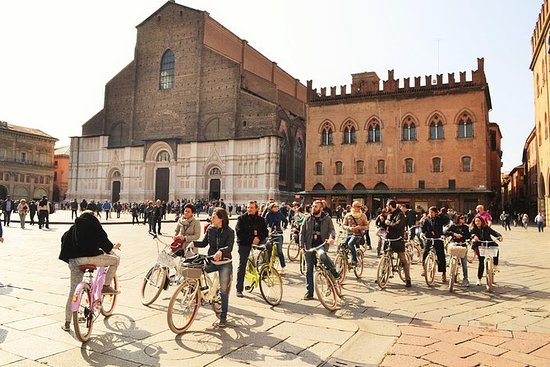
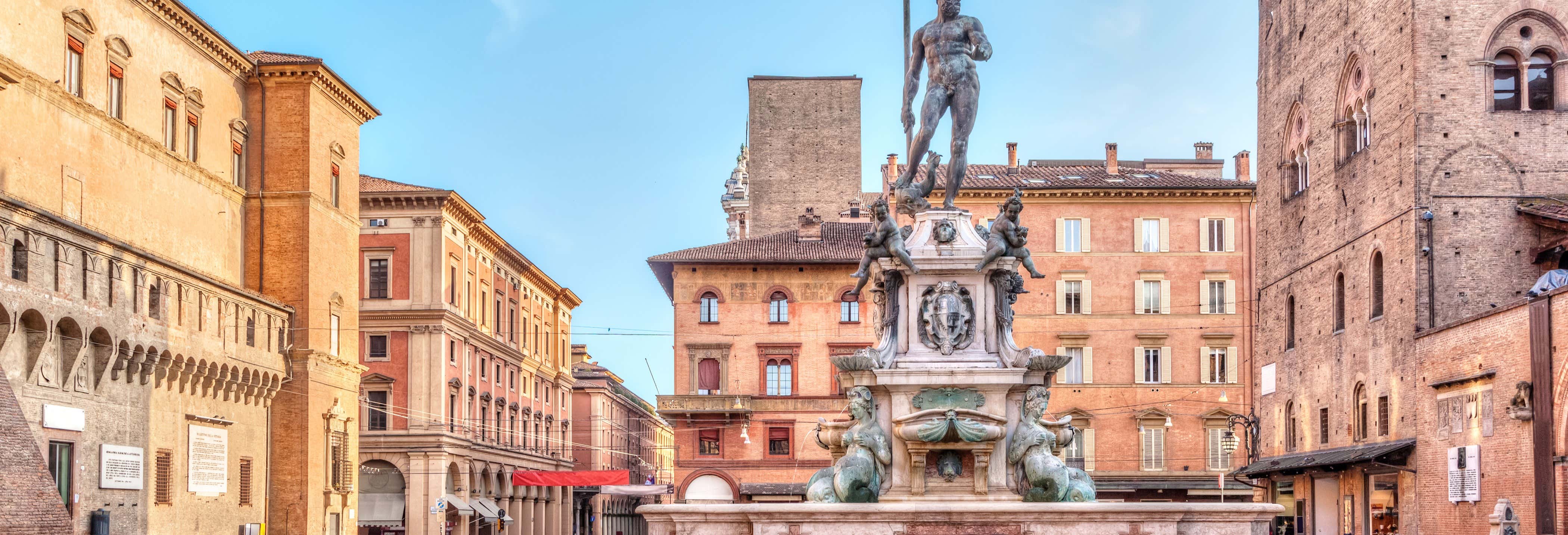
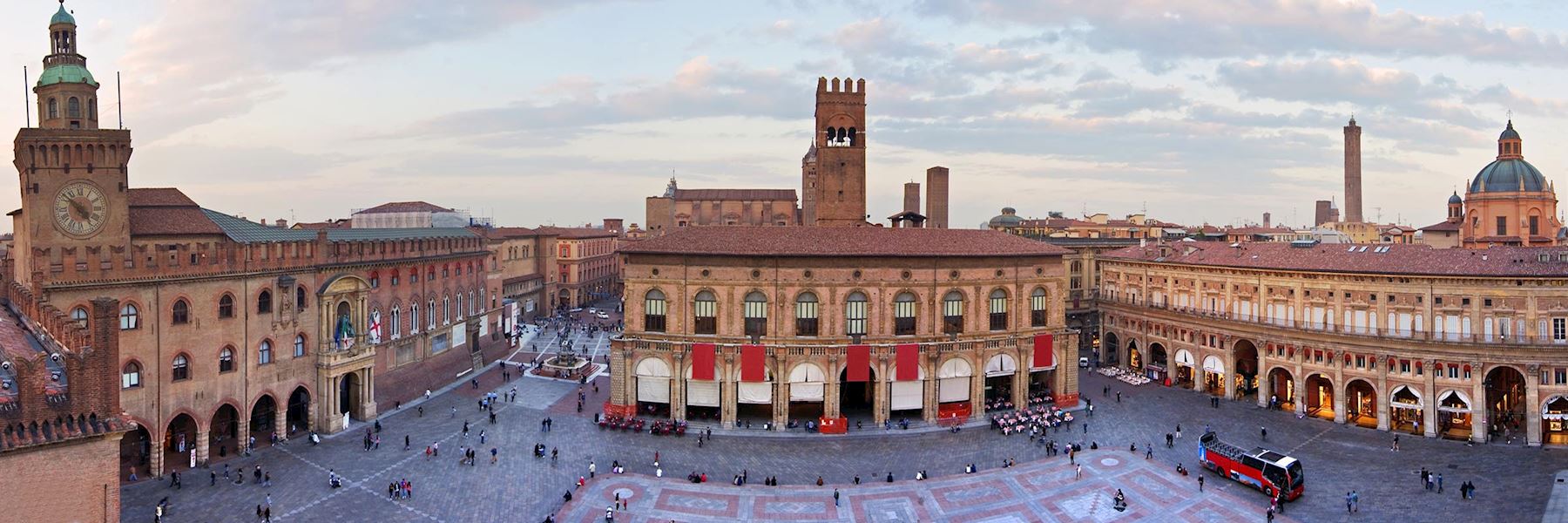


> And that's good!
Even for people with difficulty walking or in wheelchairs?
What part of "if we are talking about accessibility in general that a whole different problem"?
walkable means walkable, not staircaseable.
Stop bikeshedding.
Are streets or bike lanes the right solution for wheelchairs?
I seriously doubt that...
The real problem though is what you do in less densly populated areas.
What freedom and flexibility? Being forced to drive everywhere is not flexibility. Being forced to subsidize massive parking lots and highways is not freedom.
I get what you are saying, but isn't it, in this case, a relatively accurate description of what happened? If not all over the US, at least in some big cities.
You can't ignore the politics of this.
* USA * Japan
Countries out of the first list, with policies favouring cars:
1/2
Conclusion:
Insufficient data.
* In many US cities, businesses are required by law to have certain amounts of parking for employees and customers. This makes car use more convenient and takes up space, making walking less viable.
* German taxes on gasoline and diesel are over 100%.
* Most areas of larger German cities are zoned for high-density housing; it's typical for street-level businesses to have several floors of apartments above them.
* They may be high but motorists still pay less in taxes than the general public contributes to the upkeep of their infrastructure, even when excluding externalised costs (healthcare, climate change accommodation etc).
* The same is true for e.g. New York, whereas (e.g.) London has a fair amount of low-density housing. Not quite sure how this is an argument if the vast majority of space in cities is still reserved for cars (either parking or driving).
the one thing they have in common is no substantial domestic car industry
Context is important.
The population of cities has grown. For example, the Chicago metro area has 70% more people now than in 1950. Population growth has impacted car ownership and use. We shouldn't use today's context against the past. Things were different and that's worth considering.
Urban areas are about 3% of the US physical space. The design of transportation for dense cities (and they are getting denser) is different from that of suburban or rural spaces. There is no one size fits all.
[1] https://en.wikipedia.org/wiki/Rationalization_(sociology)
https://www.youtube.com/watch?v=vxopfjXkArM
Most of these are also laws passed by groups of people deciding to control others for a mix of perceived altruistic and selfish reasons. It's not secret but there's people conspiring.
(FWIW, Robert Anton Wilson once pointed out that, of regime changes in the 20th century, over half of them were the result of some sort of coup. In other words, conspiracy is normal. Make of that what you will.)
https://www.schneier.com/blog/archives/2013/06/the_psycholog...
FWIW, you identified the reason(s) why I'm personally not concerned about general erosion of privacy, while bring very concerned about differential erosion of privacy.
- - - -
A though, can animals conspire? It's something that almost seems to require intelligence and "higher level" communication. Do chimpanzees conspire?
Would there be an adaptive advantage to conspiracy skepticism? Is that why conspiracy skepticism is so common? Most people are followers and a few are... tricky?... leaders?
Maybe rampant conspiracy is a phase between the moment of evolution of intelligence and the time when "fake news" forces fidelity to reality? It's trivial to show that conspiracy is only ever a local optimum. Multiple competing "truths" incur caloric cost to maintain, but honesty is maximally efficient.
Maybe we all get a clue, become scrupulously truthful, solve all our problems, and go on to live in a new Golden Age...
Im fairly sympathetic to the overall aims of this article. I think a transport system more similar to those in the Netherlands makes for better urban landscapes.
But... this habitual style of treating everything as a conspiracy, built around a personified enemy ("They gave legal force to a mind-set—let’s call it automobile supremacy—that kills 40,000 Americans a year)... this way of thinking isn't doing us any favours.
In day-to-day political conversations and articles, it's mostly just formulaic and lazy. Name the conspiracy, point to vested interests that have been influencing policy, find a link to established personifications of evil.. big oil and segregation, in this case.
I'm not saying we should never think in abstractions... but there is a formulaic pattern here that's old, paranoid and harmful.