News for hackers. Stuff that matters.
Re:Quake II RTX: Re-Engineering a Classic with Ray Tracing E... by pizza234 on Friday March 22, 2019 @06:25AM (#19461107)
I'm very skeptical.

This is not just RTT; there's a big amount of rework. Likely, any old game would look significantly better with such development effort (in other words, with any good remastering).

This could be considered a great market stunt - the graphical improvement is touted to be due to RTX (ray tracing), while it's actually due to many factors.

On top of that, it misleads people into thinking that this type of improvement is typical of ray tracing, and that it comes at virtually no cost, while currently, ray tracing takes a big performance hit, and it's generally hard to notice.

Q2VKPT is close to the concept "improved with ray tracing", and while certainly impressive, it doesn't yield the same "AMAZING!" effect.

Re:Quake II RTX: Re-Engineering a Classic with Ray Tracing E... by ladon86 on Friday March 22, 2019 @12:04PM (#19463862)
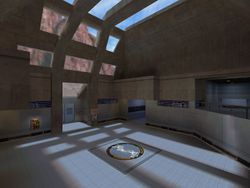
But it's not down to polygons or details in the environment - the simple architecture still looks realistic with the addition of realistic lighting. In the quest for realism, modern games have so many details, dirt and grit everywhere [1]. Perhaps going forward artists can let the lighting do more work and still represent realistic clean environments. I loved this blocky room in Half Life 1 for the dramatic (prebaked) lighting: http://combineoverwiki.net/images/thumb/3/37/C2a4e_lobby.jpg...

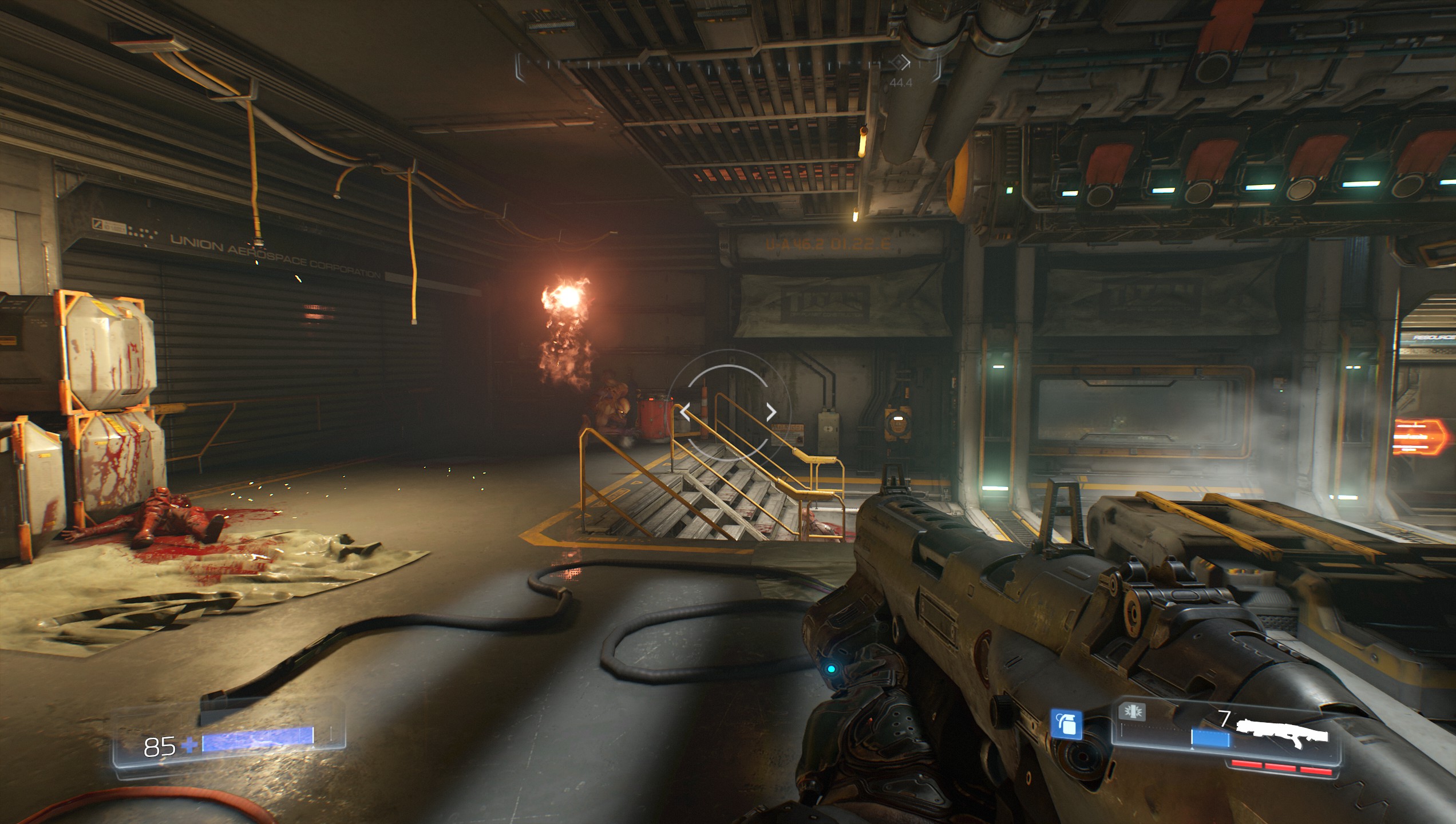
[1] just look at Doom 2016: https://cdn.arstechnica.net/wp-content/uploads/2016/05/20160...
Re:Quake II RTX: Re-Engineering a Classic with Ray Tracing E... by fwip on Friday March 22, 2019 @01:12PM (#19464595)
A whole lot of the benefit is the added "normal and roughness maps for added surface detail."

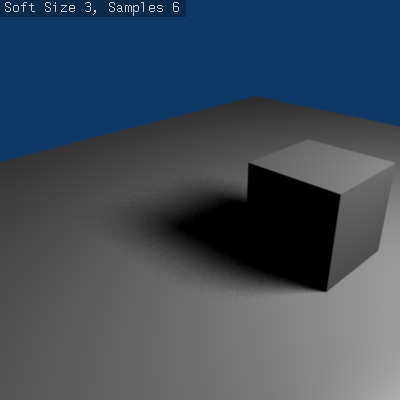
If they hadn't done the hard work of basically retexturing every single surface, it wouldn't look half as good. Without depth, ray-tracing looks incredibly flat, like this: http://builder.openhmd.net/blender-hmd-viewport-temp/_images...
Re:Quake II RTX: Re-Engineering a Classic with Ray Tracing E... by a_f on Friday March 22, 2019 @04:46PM (#19466761)
I believe the origanal proof of concept didn't do the retexturing, and just focused on the lighting; it looks fantastic: http://brechpunkt.de/q2vkpt/
Re:Quake II RTX: Re-Engineering a Classic with Ray Tracing E... by int_19h on Friday March 22, 2019 @10:48PM (#19468755)
How hard would it be to automatically derive such maps from textures? After all, they are already drawn to visually imply that with shading, so wouldn't it be possible to e.g. train a model to extract that information, just as our eye does?
Re:Quake II RTX: Re-Engineering a Classic with Ray Tracing E... by karrotwaltz on Friday March 22, 2019 @06:36AM (#19461149)
> it's actually due to many factors

To add to this point, at 1:35 in the video they compare with / without volumetric ligthing except, well, volumetric lighting has been used in games for a while now.

The "before" should show a non-RTX lighting instead of just nothing at all.

Re:Quake II RTX: Re-Engineering a Classic with Ray Tracing E... by robin_reala on Friday March 22, 2019 @07:30AM (#19461508)
I remember one of the big selling points of the Dreamcast in 1998 was volumetric lighting.
Re:Quake II RTX: Re-Engineering a Classic with Ray Tracing E... by corysama on Friday March 22, 2019 @12:02PM (#19463843)
Fun fact: The Dreamcast GPU was a precursor to the PowerVR GPUs used in iPhones and many Androids.

Also, Qualcomm’s popular Adreno line on Android GPUs has its roots in the Xbox360 GPU.

Re:Quake II RTX: Re-Engineering a Classic with Ray Tracing E... by krige on Friday March 22, 2019 @08:44AM (#19461991)
Unreal, a Quake 2 contemporary, already had it and managed it on meager hardware like P200MMX
Re:Quake II RTX: Re-Engineering a Classic with Ray Tracing E... by TomBombadildoze on Friday March 22, 2019 @10:56AM (#19463103)
If you consider a slide show "managing it", then sure.
Re:Quake II RTX: Re-Engineering a Classic with Ray Tracing E... by jl6 on Friday March 22, 2019 @11:15AM (#19463326)
My P200MMX with a Voodoo 2 managed it just fine.
Re:Quake II RTX: Re-Engineering a Classic with Ray Tracing E... by elsonrodriguez on Friday March 22, 2019 @12:35PM (#19464207)
It was more that Voodoo than the MMX. I tried playing some MMX "accelerated" games and it was a lo-fi slideshow.

I think the MMX era was the start of Intel's tradition of hyped up graphics related press releases followed by a total lack of execution.

Re:Quake II RTX: Re-Engineering a Classic with Ray Tracing E... by rasz on Friday March 22, 2019 @11:13PM (#19468837)
MMX was useless for games. MMX is Integer math only, good for DSP, things like audio filters, or making a softmodem out of your sound card. Unsuitable for accelerating 3D games. Whats worse MMX has no dedicated registers, and instead reuses/shares FPU ones, this means you cant use MMX and FPU (all 3D code pre Direct3D 7 Hardware T&L) at the same time.

All comes down to Microsoft and Intel coming up with a concept of purely software peripherals around 1997. Intel released things like MMX, AC'97, Communications and Networking Riser (CNR), and audio/modem riser (AMR) standards, all in an effort to push hardware vendors out of the market by handling those roles in software by the CPU. More work for CPU = more demand for fast CPUs = more profit.

Funnily enough AMDs 1998 3DNow! did actually add floating point support to MMX and was useful for 3D acceleration until hardware T&L came along 2 years later.

Intel Paid few dev houses to release make believe MMX enhancements, like POD (1997)

https://www.mobygames.com/images/covers/l/51358-pod-windows-...

1/6 of box covered with Intel MMX advertising while game used it only for some sound effects. Intel repeated this trick in 99 while introducing Pentium 3 with SSE. Intel commissioned Rage Software to build a demo piece showcasing P3 during Comdex Fall. It worked .. by cheating with graphic details ;-) Quoting hardware.fr "But looking closely at the demo, we notice - as you can see on the screenshots - that the SSE version is less detailed than the non-SSE version (see the ground). Intel would you try to roll the journalists in the flour?". Of course Anandtech used this never released publicly cheating demo pretending to be a game in all of their Pentium 3 tests for over a year.

https://www.vogons.org/viewtopic.php?f=46&t=65247&start=20#p...

Re:Quake II RTX: Re-Engineering a Classic with Ray Tracing E... by tomc1985 on Friday March 22, 2019 @01:44PM (#19464934)
MMX was always more selling point than substance, from my experience... a Voodoo card, on the other hand...
Re:Quake II RTX: Re-Engineering a Classic with Ray Tracing E... by jackfraser on Friday March 22, 2019 @01:04PM (#19464488)
Glide, man, such a great era for PC gaming if you had the right equipment.

I'll never forgive the computer store guy when I was 14 who pushed me to buy the $40 cheaper S3 Trio3D instead of the Voodoo. Instead of something useful, I ended up with a glorified paperweight that only worked well for Direct3D. Guess how many games back then bothered to use that?

I think I got Quake 1 with some shitty hacked MiniGL driver working _once_.

Re:Quake II RTX: Re-Engineering a Classic with Ray Tracing E... by leonroy on Sunday March 24, 2019 @07:09AM (#19475658)
Heheh, I ended up in the same boat. Enamoured with tile based rendering (and the lower price) I bought the PowerVR based Apocalypse 3dx which also had a shortage of supported titles.

All my school friends had 3dfx cards. Didn’t get to do 3D gaming until I bought a Radeon 8500 many years later!

Still have my 3dx actually...it was a very interesting card:

https://en.wikipedia.org/wiki/PowerVR#Series1_(NEC)

https://videocardz.net/videologic-apocalypse-3dx-4mb/

Re:Quake II RTX: Re-Engineering a Classic with Ray Tracing E... by deadbunny on Friday March 22, 2019 @06:47AM (#19461214)
Yeah checking out some of the comparison photos and the textures have definitely received a bump in resolution/quality.

Most obvious to me in the quake logo/skull on the left of this[1] image.

1. https://images.nvidia.com/geforce-com/international/comparis...

Re:Quake II RTX: Re-Engineering a Classic with Ray Tracing E... by sosuke on Friday March 22, 2019 @08:32AM (#19461894)
> Quake 2 XP high-detail weapons, models and textures; optional NVIDIA Flow fire, smoke and particle effects, and much more!
Re:Quake II RTX: Re-Engineering a Classic with Ray Tracing E... by spyder on Friday March 22, 2019 @12:04PM (#19463868)
Yes, they should compare it to Quake 2 XP which is already a nice improvement over the original graphics:

https://www.youtube.com/watch?v=0uurJ-zjhok

Re:Quake II RTX: Re-Engineering a Classic with Ray Tracing E... by _bxg1 on Friday March 22, 2019 @04:22PM (#19466526)
Given all the additions they should've placed less emphasis on the before/after. The really cool thing about the demo isn't "look how great a remastered version of Quake 2 can look", it's "look, we can run an entire game in real-time with nothing but raytracing, even if it requires a low polygon count". The Metro and Battlefield demos only use RTX for small pieces of their environment where it has the greatest effect; this is a whole level using no rasterization at all. The other improvements distracted from that somewhat.
Re:Quake II RTX: Re-Engineering a Classic with Ray Tracing E... by Justsignedup on Friday March 22, 2019 @12:34PM (#19464201)
I was thinking the same thing. They re-textured and enabled RTX. So it would be nice to see the new game turn RTX on / off and see whats the actual difference. Just that feature.
Re:Quake II RTX: Re-Engineering a Classic with Ray Tracing E... by lanevorockz on Friday March 22, 2019 @07:35AM (#19461539)
Not sure what can you be skeptical about. The difference from RT Quake to Quake it’s only that the lights are not precompiled at the beginning of the level. Any other game just need to rework the light baking step to use RTX and job done.

The only downside that can be pointed out is that you are hardware dependent. Would be amazing to see thing in a console, all games with dynamic lighting would help developer and gamers.

Re:Quake II RTX: Re-Engineering a Classic with Ray Tracing E... by mbel on Friday March 22, 2019 @07:54AM (#19461654)
> The difference from RT Quake to Quake it’s only that the lights are not precompiled

In the linked demo video they also use new high resolution textures. Which include not only color data as in the original Quake, but also normal maps and maps with PBR parameters (metalness, roughness).

Re:Quake II RTX: Re-Engineering a Classic with Ray Tracing E... by KallDrexx on Friday March 22, 2019 @10:11AM (#19462646)
That's not the only difference shown in the video. IN the official keynote when Jensen was talking about it he specifically said the "RTX Off" was using the software rasterizer. So it's not comparing Vulkin RTX on with Vulkin RTX off but Vulkin RTX On with Software rendering on.