Lab work and higher math may be a problem, but I’ve read many times today’s best botanists and agricultural students go into cannabis so the worlds may not be as incompatible as one would think.
:)
Since obviously such behaviour is totally unheard of in universities.
My experience from dating someone at Caltech is that this would not, in any possible way, be an issue.
Repair of specialized equipment is a big deal, too. In many cases it takes as much skill as fabricating an apparatus in the first place.
Like the article says, it helps a lot if the glassblower understands the scientific process and works closely with the researcher. I think researchers work around this by finding ways to use or combine standard equipment. A scientist doing truly novel work, though, will benefit from or require customized glassware.
My belief is that this will be solved by 3-D printing or automation in some way.
The most recent 3-D printing with glass I have read about creates a piece of fused silica, which is even harder to fabricate and more useful in lab work. They print it from a silica infused polymer, and then each section is fused with the laser, and the polymer burns away, leaving quartz. Seems quite workable to me. This was covered in an article published recently.
edit: one article that gives a good overview: https://www.azom.com/article.aspx?ArticleID=15114
a more consumery article: https://www.smithsonianmag.com/innovation/you-can-now-3d-pri...
There are still things best done with tubes, and in some ways tubes are much better than transistors if it comes to reliability, mostly related to the sheer physical size preventing as-trivial cases of ESD/EMP fried LNAs in radios. Or the HF switch selecting between antennas and RX/TX. But this is probably a minor concern in practice.
I am interested in the amount of specialized glasswork required by the institution. I also doubt that the glassware of tomorrow's science is even remotely like the glassware of today's. The next glassworker is more of a materials scientist, with glassware as a skill, probably; in much the same way as a programmer may know both Java and Python.
FDM glass: https://static.dezeen.com/uploads/2015/08/Glass-Printing_Med... (and sadly this counts as a pretty complex example)

Glassware, not complex at all: http://www.raystoreylighting.com/wpimages/wp71af747e_05_06.j...
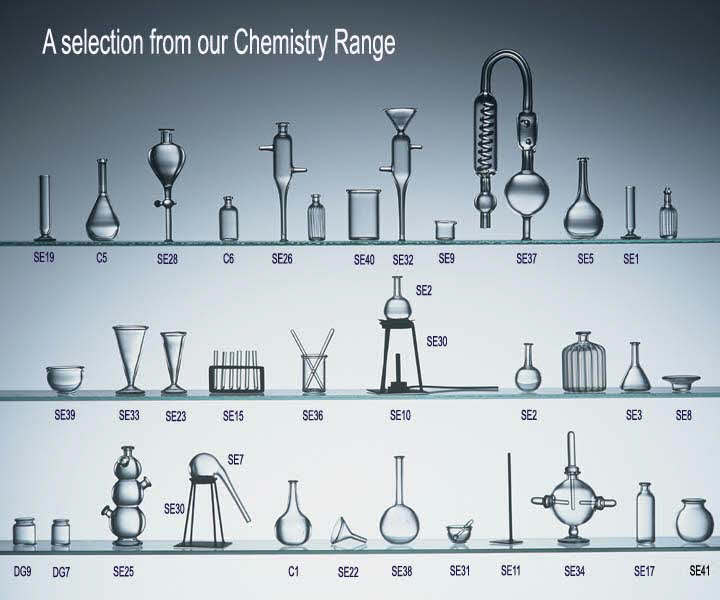
Somewhat complex glassware: http://www.adamschittenden.com/laboratoryglasswarecondenser....

You can see the clear differences. Assuming you can get the printer at all, 3d printed glass has layers (and therefore isn't going to contain gases or hold vacuums very well), it's easily 10x heavier, far more expensive, ...
Also there are several alternate methods under development that won't leave a rough surface, like hot glass methods.
Glass can be smoothed by heating to temperatures below that which cause sagging and deformity. If the smoothness is fine, on the order of a frosty surface (>200 grit or so) that would polish it (this is called kiln polishing). Of course, you risk basically melting the piece so this is a delicate operation with anything other than a plate of glass.
If 3d printing doesn't work, we can create robots that do what glassblowers do. I could easily script what I do for the right machinery (a series of computer controlled lathes and torches).
More likely the University will outsource to a local company that in turn handles the communication with an overseas factory.
How ableist! Some people can’t choose whether they smoke cannabis or not. They need it like diabetics need insulin.
In the functional glass industry, we don't discriminate against cannabis usage... somewhat the opposite. If you don't smoke and especially dab, you will have a hard time fitting in, and more limited social and business opportunities. At the same time, many people in the community look down on excessive alcohol usage. Smoking throughout the day is considered perfectly normal, or beneficial, and nobody would consider looking down on it or encouraging less consumption of cannabis.
FWIW, this strikes me as quite distasteful. It sounds like cannabis is helpful to you, and that's great. But other folks should be able to make their own decisions.
The medicinal market is likely to explode though, given how it's not covered by patents and legalization is happening left and right.
There will be no problem finding people with glass skill and a desire to do flameworked glass. It is the other skills mentioned in the article, such as familiarity with chemistry, higher math and lab work, plus the desire to have a 9-to-5 job with an institution that is difficult to come by. Many people who choose to become artistic glassblowers do not have any sort of higher technical education, or would not mesh well with a university job in some other way, such as, being enthusiastic about tattoos and vaping cannabis extracts all day.
Besides that, many glassblowers can imagine the benefits of a regular job that involves glassblowing, especially as they get older and the healthcare benefits grow more useful. The volatility of the artistic/functional glass market plays a role, too. Currently it's experiencing a downturn, despite the cannabis market booming, and many people are seeking other incomes. It would be interesting to hear whether Salem has seen an increase in applications or inquiries.
What I didn't see an article is a mention of one reason this is happening. Mass production, primarily in China, and outsourcing, primarily to India, has removed the need to have an in-house glassblower and made it not a good choice financially, because a lot of the items they used to make can now be replaced more cheaply then they can be produced by hand.
I have a cousin who worked for a petroleum company for over 40 years as a scientific glassblower. He recently scaled down his business from hundreds of items and now only makes one especially profitable item.