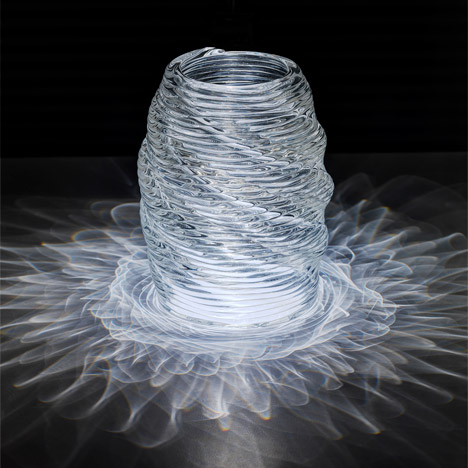
FDM glass: https://static.dezeen.com/uploads/2015/08/Glass-Printing_Med... (and sadly this counts as a pretty complex example)
Glassware, not complex at all: http://www.raystoreylighting.com/wpimages/wp71af747e_05_06.j...
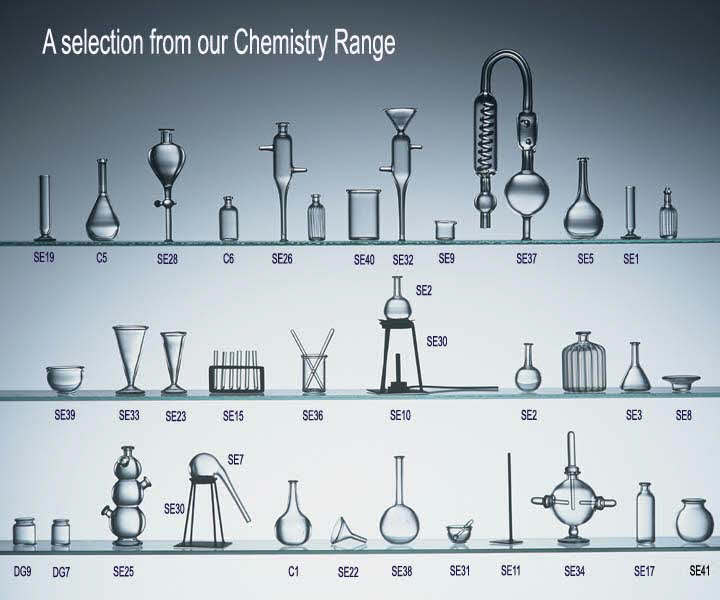
Somewhat complex glassware: http://www.adamschittenden.com/laboratoryglasswarecondenser....

You can see the clear differences. Assuming you can get the printer at all, 3d printed glass has layers (and therefore isn't going to contain gases or hold vacuums very well), it's easily 10x heavier, far more expensive, ...
Also there are several alternate methods under development that won't leave a rough surface, like hot glass methods.
Glass can be smoothed by heating to temperatures below that which cause sagging and deformity. If the smoothness is fine, on the order of a frosty surface (>200 grit or so) that would polish it (this is called kiln polishing). Of course, you risk basically melting the piece so this is a delicate operation with anything other than a plate of glass.
If 3d printing doesn't work, we can create robots that do what glassblowers do. I could easily script what I do for the right machinery (a series of computer controlled lathes and torches).
I am interested in the amount of specialized glasswork required by the institution. I also doubt that the glassware of tomorrow's science is even remotely like the glassware of today's. The next glassworker is more of a materials scientist, with glassware as a skill, probably; in much the same way as a programmer may know both Java and Python.