Cloudflare:
  64 bytes from 1.1.1.1: icmp_seq=0 ttl=128 time=2 ms
  64 bytes from 1.1.1.1: icmp_seq=1 ttl=128 time=2 ms
  64 bytes from 1.1.1.1: icmp_seq=2 ttl=128 time=2 ms
  64 bytes from 1.1.1.1: icmp_seq=3 ttl=128 time=9 ms
  64 bytes from 1.1.1.1: icmp_seq=4 ttl=128 time=2 ms
  64 bytes from 8.8.8.8: icmp_seq=0 ttl=54 time=12 ms
  64 bytes from 8.8.8.8: icmp_seq=1 ttl=54 time=11 ms
  64 bytes from 8.8.8.8: icmp_seq=2 ttl=54 time=13 ms
  64 bytes from 8.8.8.8: icmp_seq=3 ttl=54 time=45 ms
  64 bytes from 8.8.8.8: icmp_seq=4 ttl=54 time=14 ms
  64 bytes from 8.8.8.8: icmp_seq=5 ttl=54 time=11 ms
  64 bytes from 8.8.8.8: icmp_seq=6 ttl=54 time=34 ms
  64 bytes from 9.9.9.9: icmp_seq=0 ttl=53 time=10 ms
  64 bytes from 9.9.9.9: icmp_seq=1 ttl=53 time=69 ms
  64 bytes from 9.9.9.9: icmp_seq=2 ttl=53 time=14 ms
  64 bytes from 9.9.9.9: icmp_seq=3 ttl=53 time=58 ms
  64 bytes from 9.9.9.9: icmp_seq=4 ttl=53 time=52 ms
  64 bytes from 1.1.1.1: icmp_seq=0 ttl=128 time=14 ms
  64 bytes from 1.1.1.1: icmp_seq=1 ttl=128 time=14 ms
  64 bytes from 1.1.1.1: icmp_seq=2 ttl=128 time=2 ms
  64 bytes from 1.1.1.1: icmp_seq=3 ttl=128 time=3 ms
  64 bytes from 1.1.1.1: icmp_seq=4 ttl=128 time=1 ms
64 bytes from 1.1.1.1: icmp_seq=5 ttl=128 time=4 ms PING 1.1.1.1 (1.1.1.1): 56 data bytes
64 bytes from 1.1.1.1: icmp_seq=0 ttl=52 time=241.529 ms
64 bytes from 1.1.1.1: icmp_seq=1 ttl=52 time=318.034 ms
64 bytes from 1.1.1.1: icmp_seq=2 ttl=52 time=337.291 ms
64 bytes from 1.1.1.1: icmp_seq=3 ttl=52 time=255.748 ms
64 bytes from 1.1.1.1: icmp_seq=4 ttl=52 time=247.765 ms
64 bytes from 1.1.1.1: icmp_seq=5 ttl=52 time=235.611 ms
64 bytes from 1.1.1.1: icmp_seq=6 ttl=52 time=239.427 ms
64 bytes from 1.1.1.1: icmp_seq=7 ttl=52 time=247.911 ms
64 bytes from 1.1.1.1: icmp_seq=8 ttl=52 time=260.911 ms
64 bytes from 1.1.1.1: icmp_seq=9 ttl=52 time=281.153 ms
64 bytes from 1.1.1.1: icmp_seq=10 ttl=52 time=300.363 ms
64 bytes from 1.1.1.1: icmp_seq=11 ttl=52 time=234.296 ms $ ping 1.1.1.1
PING 1.1.1.1 (1.1.1.1): 56 data bytes
Request timeout for icmp_seq 0
Request timeout for icmp_seq 1
Request timeout for icmp_seq 2
Request timeout for icmp_seq 3
Request timeout for icmp_seq 4
Request timeout for icmp_seq 5
Request timeout for icmp_seq 6
Request timeout for icmp_seq 7
Request timeout for icmp_seq 8
Request timeout for icmp_seq 9
Request timeout for icmp_seq 10
$ ping 1.0.0.1
PING 1.0.0.1 (1.0.0.1): 56 data bytes
64 bytes from 1.0.0.1: icmp_seq=0 ttl=50 time=167.359 ms
64 bytes from 1.0.0.1: icmp_seq=1 ttl=50 time=165.791 ms
64 bytes from 1.0.0.1: icmp_seq=2 ttl=50 time=165.846 ms
64 bytes from 1.0.0.1: icmp_seq=3 ttl=50 time=166.755 ms
64 bytes from 1.0.0.1: icmp_seq=4 ttl=50 time=166.694 ms
64 bytes from 1.0.0.1: icmp_seq=5 ttl=50 time=166.088 ms
64 bytes from 1.0.0.1: icmp_seq=6 ttl=50 time=166.460 ms
64 bytes from 1.0.0.1: icmp_seq=7 ttl=50 time=166.668 ms
64 bytes from 1.0.0.1: icmp_seq=8 ttl=50 time=166.753 ms
64 bytes from 1.0.0.1: icmp_seq=9 ttl=50 time=165.670 ms
64 bytes from 1.0.0.1: icmp_seq=10 ttl=50 time=166.816 ms
  64 bytes from 1.1.1.1: icmp_seq=0 ttl=57 time=17.580 ms
  64 bytes from 1.1.1.1: icmp_seq=1 ttl=57 time=18.025 ms
  64 bytes from 1.1.1.1: icmp_seq=2 ttl=57 time=17.780 ms
  64 bytes from 1.1.1.1: icmp_seq=3 ttl=57 time=18.231 ms
  64 bytes from 1.1.1.1: icmp_seq=4 ttl=57 time=17.906 ms
64 bytes from 1.1.1.1: icmp_seq=5 ttl=57 time=18.447 ms PING 1.1.1.1 (1.1.1.1): 56 data bytes
64 bytes from 1.1.1.1: icmp_seq=0 ttl=59 time=22.806 ms
64 bytes from 1.1.1.1: icmp_seq=1 ttl=59 time=23.321 ms
64 bytes from 1.1.1.1: icmp_seq=2 ttl=59 time=24.379 ms
64 bytes from 1.1.1.1: icmp_seq=3 ttl=59 time=25.869 ms
64 bytes from 1.1.1.1: icmp_seq=4 ttl=59 time=24.485 ms
64 bytes from 1.1.1.1: icmp_seq=5 ttl=59 time=24.165 ms
PING 8.8.8.8 (8.8.8.8): 56 data bytes
64 bytes from 8.8.8.8: icmp_seq=0 ttl=57 time=23.005 ms
64 bytes from 8.8.8.8: icmp_seq=1 ttl=57 time=22.867 ms
64 bytes from 8.8.8.8: icmp_seq=2 ttl=57 time=24.461 ms
64 bytes from 8.8.8.8: icmp_seq=3 ttl=57 time=23.680 ms
64 bytes from 8.8.8.8: icmp_seq=4 ttl=57 time=35.581 ms
64 bytes from 8.8.8.8: icmp_seq=5 ttl=57 time=21.033 ms
64 bytes from 8.8.8.8: icmp_seq=6 ttl=57 time=41.634 ms ping 1.1.1.1
PING 1.1.1.1 (1.1.1.1) 56(84) bytes of data.
64 bytes from 1.1.1.1: icmp_seq=1 ttl=58 time=1.36 ms
64 bytes from 1.1.1.1: icmp_seq=2 ttl=58 time=1.32 ms
64 bytes from 1.1.1.1: icmp_seq=3 ttl=58 time=1.34 ms
64 bytes from 1.1.1.1: icmp_seq=4 ttl=58 time=1.38 ms
64 bytes from 1.1.1.1: icmp_seq=5 ttl=58 time=1.37 ms
ping 8.8.8.8
PING 8.8.8.8 (8.8.8.8) 56(84) bytes of data.
64 bytes from 8.8.8.8: icmp_seq=1 ttl=56 time=1.33 ms
64 bytes from 8.8.8.8: icmp_seq=2 ttl=56 time=1.38 ms
64 bytes from 8.8.8.8: icmp_seq=3 ttl=56 time=1.35 ms
64 bytes from 8.8.8.8: icmp_seq=4 ttl=56 time=1.36 ms
64 bytes from 8.8.8.8: icmp_seq=5 ttl=56 time=1.35 ms PING 1.1.1.1 (1.1.1.1): 56 data bytes
64 bytes from 1.1.1.1: icmp_seq=0 ttl=60 time=5.044 ms
64 bytes from 1.1.1.1: icmp_seq=1 ttl=60 time=6.447 ms
64 bytes from 1.1.1.1: icmp_seq=2 ttl=60 time=6.371 ms
64 bytes from 1.1.1.1: icmp_seq=3 ttl=60 time=6.308 ms
64 bytes from 1.1.1.1: icmp_seq=4 ttl=60 time=7.317 ms
64 bytes from 1.1.1.1: icmp_seq=5 ttl=60 time=5.989 ms PING 1.1.1.1 (1.1.1.1): 56 data bytes
64 bytes from 1.1.1.1: icmp_seq=0 ttl=55 time=14.053 ms
64 bytes from 1.1.1.1: icmp_seq=1 ttl=55 time=12.715 ms
64 bytes from 1.1.1.1: icmp_seq=2 ttl=55 time=13.615 ms
64 bytes from 1.1.1.1: icmp_seq=3 ttl=55 time=14.018 ms
64 bytes from 1.1.1.1: icmp_seq=4 ttl=55 time=12.261 ms
64 bytes from 1.1.1.1: icmp_seq=5 ttl=55 time=11.428 ms
64 bytes from 1.1.1.1: icmp_seq=6 ttl=55 time=11.950 ms
64 bytes from 1.1.1.1: icmp_seq=7 ttl=55 time=13.034 ms
64 bytes from 1.1.1.1: icmp_seq=8 ttl=55 time=13.679 ms
64 bytes from 1.1.1.1: icmp_seq=9 ttl=55 time=12.415 ms
64 bytes from 1.1.1.1: icmp_seq=10 ttl=55 time=12.088 msAny idea why my ISP redirects this IP?
    PING 1.1.1.1 (1.1.1.1): 56 data bytes
    64 bytes from 1.1.1.1: icmp_seq=0 ttl=57 time=5.531 ms
    64 bytes from 1.1.1.1: icmp_seq=1 ttl=57 time=4.420 ms
    64 bytes from 1.1.1.1: icmp_seq=2 ttl=57 time=5.450 ms
    64 bytes from 1.1.1.1: icmp_seq=3 ttl=57 time=5.438 ms
    64 bytes from 1.1.1.1: icmp_seq=4 ttl=57 time=4.231 ms
    64 bytes from 1.1.1.1: icmp_seq=5 ttl=57 time=5.933 ms


    PING 8.8.8.8 (8.8.8.8): 56 data bytes
    64 bytes from 8.8.8.8: icmp_seq=0 ttl=57 time=6.440 ms
    64 bytes from 8.8.8.8: icmp_seq=1 ttl=57 time=4.574 ms
    64 bytes from 8.8.8.8: icmp_seq=2 ttl=57 time=4.684 ms
    64 bytes from 8.8.8.8: icmp_seq=3 ttl=57 time=4.992 ms
    64 bytes from 8.8.8.8: icmp_seq=4 ttl=57 time=5.942 ms
64 bytes from 8.8.8.8: icmp_seq=5 ttl=57 time=5.955 ms$ ping 1.1.1.1 PING 1.1.1.1 (1.1.1.1): 56 data bytes 64 bytes from 1.1.1.1: icmp_seq=0 ttl=58 time=111.781 ms 64 bytes from 1.1.1.1: icmp_seq=1 ttl=58 time=102.982 ms 64 bytes from 1.1.1.1: icmp_seq=2 ttl=58 time=102.206 ms 64 bytes from 1.1.1.1: icmp_seq=3 ttl=58 time=110.135 ms 64 bytes from 1.1.1.1: icmp_seq=4 ttl=58 time=110.085 ms
$ ping 8.8.8.8 PING 8.8.8.8 (8.8.8.8): 56 data bytes 64 bytes from 8.8.8.8: icmp_seq=0 ttl=58 time=6.886 ms 64 bytes from 8.8.8.8: icmp_seq=1 ttl=58 time=5.475 ms 64 bytes from 8.8.8.8: icmp_seq=2 ttl=58 time=5.674 ms 64 bytes from 8.8.8.8: icmp_seq=3 ttl=58 time=5.557 ms 64 bytes from 8.8.8.8: icmp_seq=4 ttl=58 time=7.066 ms
$ ping 9.9.9.9 PING 9.9.9.9 (9.9.9.9): 56 data bytes 64 bytes from 9.9.9.9: icmp_seq=0 ttl=58 time=5.880 ms 64 bytes from 9.9.9.9: icmp_seq=1 ttl=58 time=5.534 ms 64 bytes from 9.9.9.9: icmp_seq=2 ttl=58 time=5.251 ms 64 bytes from 9.9.9.9: icmp_seq=3 ttl=58 time=5.194 ms 64 bytes from 9.9.9.9: icmp_seq=4 ttl=58 time=5.698 ms
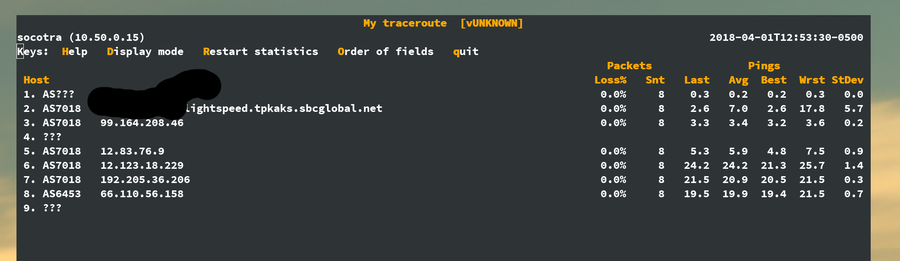
Your pings also have the same thing showing up 128 vs 53. I tried on my laptop and get something simmilar. traceroute to 1.1.1.1 is 1 hop which is wrong. 1.0.0.1 shows a few hops.
`dig google.com @1.1.1.1` doesn't work for me.
Edit: Assuming this is the right file: https://github.com/iputils/iputils/blob/master/ping.c, I don't see the reverse lookup code anywhere. But then I'm not the most proficient in reading linux code.

  $ ping 1.1.1.1
  PING 1.1.1.1 (1.1.1.1) 56(84) bytes of data.
  64 bytes from 1.1.1.1: icmp_seq=1 ttl=56 time=10.8 ms
  64 bytes from 1.1.1.1: icmp_seq=2 ttl=56 time=11.3 ms
  64 bytes from 1.1.1.1: icmp_seq=3 ttl=56 time=10.7 ms
  64 bytes from 1.1.1.1: icmp_seq=4 ttl=56 time=10.9 ms

  PING 8.8.8.8 (8.8.8.8) 56(84) bytes of data.
  64 bytes from 8.8.8.8: icmp_seq=1 ttl=60 time=10.7 ms
  64 bytes from 8.8.8.8: icmp_seq=2 ttl=60 time=11.3 ms
  64 bytes from 8.8.8.8: icmp_seq=3 ttl=60 time=11.1 ms
64 bytes from 8.8.8.8: icmp_seq=4 ttl=60 time=10.5 ms $ ping 1.1.1.1
Pinging 1.1.1.1 with 32 bytes of data:
Reply from 1.1.1.1: bytes=32 time=4ms TTL=60
Reply from 1.1.1.1: bytes=32 time=4ms TTL=60
Reply from 1.1.1.1: bytes=32 time=4ms TTL=60
Reply from 1.1.1.1: bytes=32 time=4ms TTL=60
$ ping 8.8.8.8
Pinging 8.8.8.8 with 32 bytes of data:
Reply from 8.8.8.8: bytes=32 time=27ms TTL=60
Reply from 8.8.8.8: bytes=32 time=27ms TTL=60
Reply from 8.8.8.8: bytes=32 time=27ms TTL=60
Reply from 8.8.8.8: bytes=32 time=28ms TTL=60
    $ ping 202.180.64.10

    Pinging 202.180.64.10 with 32 bytes of data:
    Reply from 202.180.64.10: bytes=32 time=11ms TTL=61
    Reply from 202.180.64.10: bytes=32 time=11ms TTL=61
    Reply from 202.180.64.10: bytes=32 time=11ms TTL=61
Reply from 202.180.64.10: bytes=32 time=11ms TTL=61 $ ping -c 4 1.1.1.1
PING 1.1.1.1 (1.1.1.1) 56(84) bytes of data.
64 bytes from 1.1.1.1: icmp_seq=1 ttl=56 time=29.0 ms
64 bytes from 1.1.1.1: icmp_seq=2 ttl=56 time=27.7 ms
64 bytes from 1.1.1.1: icmp_seq=3 ttl=56 time=30.5 ms
64 bytes from 1.1.1.1: icmp_seq=4 ttl=56 time=28.6 ms
--- 1.1.1.1 ping statistics ---
4 packets transmitted, 4 received, 0% packet loss, time 3004ms
rtt min/avg/max/mdev = 27.731/28.993/30.573/1.028 ms
$ ping -c 4 8.8.8.8
PING 8.8.8.8 (8.8.8.8) 56(84) bytes of data.
64 bytes from 8.8.8.8: icmp_seq=1 ttl=55 time=27.7 ms
64 bytes from 8.8.8.8: icmp_seq=2 ttl=55 time=30.7 ms
64 bytes from 8.8.8.8: icmp_seq=3 ttl=55 time=28.5 ms
64 bytes from 8.8.8.8: icmp_seq=4 ttl=55 time=30.6 ms
--- 8.8.8.8 ping statistics ---
4 packets transmitted, 4 received, 0% packet loss, time 3005ms
rtt min/avg/max/mdev = 27.772/29.409/30.710/1.280 ms
  PING 1.1.1.1 (1.1.1.1) 56(84) bytes of data.
  64 bytes from 1.1.1.1: icmp_seq=1 ttl=59 time=7.65 ms
  64 bytes from 1.1.1.1: icmp_seq=2 ttl=59 time=8.53 ms
  64 bytes from 1.1.1.1: icmp_seq=3 ttl=59 time=10.2 ms
  64 bytes from 1.1.1.1: icmp_seq=4 ttl=59 time=8.04 ms
  64 bytes from 1.1.1.1: icmp_seq=5 ttl=59 time=7.92 ms
  64 bytes from 1.1.1.1: icmp_seq=6 ttl=59 time=7.85 ms
  64 bytes from 1.1.1.1: icmp_seq=7 ttl=59 time=7.88 ms
  64 bytes from 1.1.1.1: icmp_seq=8 ttl=59 time=7.73 ms
64 bytes from 1.1.1.1: icmp_seq=9 ttl=59 time=7.73 ms64 bytes from 1.1.1.1: icmp_seq=0 ttl=60 time=0.966 ms
Outstanding.
64 bytes from 8.8.8.8: icmp_seq=0 ttl=59 time=25.478 ms
Not so great.
    iMac   ~ ping 1.1.1.1
    PING 1.1.1.1 (1.1.1.1): 56 data bytes
    64 bytes from 1.1.1.1: icmp_seq=0 ttl=64 time=0.688 ms
    64 bytes from 1.1.1.1: icmp_seq=1 ttl=64 time=0.814 ms
    64 bytes from 1.1.1.1: icmp_seq=2 ttl=64 time=1.153 ms
    64 bytes from 1.1.1.1: icmp_seq=3 ttl=64 time=0.752 ms
    64 bytes from 1.1.1.1: icmp_seq=4 ttl=64 time=0.755 ms
    64 bytes from 1.1.1.1: icmp_seq=5 ttl=64 time=0.789 ms
    64 bytes from 1.1.1.1: icmp_seq=6 ttl=64 time=0.876 ms
    64 bytes from 1.1.1.1: icmp_seq=7 ttl=64 time=0.869 ms
    64 bytes from 1.1.1.1: icmp_seq=8 ttl=64 time=0.830 ms
    64 bytes from 1.1.1.1: icmp_seq=9 ttl=64 time=1.387 ms
    --- 1.1.1.1 ping statistics ---
    10 packets transmitted, 10 packets received, 0.0% packet loss
    round-trip min/avg/max/stddev = 0.688/0.891/1.387/0.204 ms
    traceroute to 1.1.1.1 (1.1.1.1), 64 hops max, 52 byte packets
1 1dot1dot1dot1.cloudflare-dns.com (1.1.1.1) 1.117 ms 0.710 ms 0.727 msUsing 1.0.0.1 works.
On a Unifi nano hd, with moderate signal, my latency only goes up 1ms.
Getting ~3.5 ms on wifi to 1.1.1.1, ~2.5ms ethernet
Sucks that VDSL2 no longer supports fastpath, not that I could use it on an ADSL line due to bonding anyway :/
  Pinging 1.1.1.1 with 32 bytes of data:
  Reply from 1.1.1.1: bytes=32 time=1ms TTL=128
  Reply from 1.1.1.1: bytes=32 time=1ms TTL=128
  Reply from 1.1.1.1: bytes=32 time=1ms TTL=128
  Reply from 1.1.1.1: bytes=32 time=2ms TTL=128

  Pinging 8.8.8.8 with 32 bytes of data:
  Reply from 8.8.8.8: bytes=32 time=91ms TTL=37
  Request timed out.
  Reply from 8.8.8.8: bytes=32 time=66ms TTL=37
  Request timed out.

  Pinging 1.0.0.1 with 32 bytes of data:
  Reply from 1.0.0.1: bytes=32 time=146ms TTL=50
  Reply from 1.0.0.1: bytes=32 time=144ms TTL=50
  Reply from 1.0.0.1: bytes=32 time=142ms TTL=50
Reply from 1.0.0.1: bytes=32 time=140ms TTL=50The standard Comcast black-box router/modem I have has a mean ping of ~9ms, and a min of ~3ms, so yeah, I'd have to agree.
(I get ~28ms to 1.1.1.1.)
    PING 1.1.1.1 (1.1.1.1): 56 data bytes

    --- 1.1.1.1 ping statistics ---
    10 packets transmitted, 10 packets received, 0.0% packet loss
round-trip min/avg/max/stddev = 1.335/1.431/1.517/0.053 ms1.1.1.1 60 ms
8.8.8.8 20 ms
PING 1.0.0.1: 64 data bytes
--- 1.0.0.1 ping statistics ---
14 packets transmitted, 14 packets received, 0.0% packet loss round-trip min/avg/max/stddev = 120.784/126.222/128.433/2.036 ms
1.1.1.1 timed out, must be blocked by my iso.
I suspect that Cloudflare and Google DNS both have POPs in Dallas, which accounts for the similar numbers to my private resolver. My point is, low latencies to datacenter-located resolver clients is great but the advantage is reduced when consumer internet users have to go across their ISP's long private fiber hauls to get to a POP. Once you're at the exchange point, it doesn't really matter which provider you choose. Go with the one with the least censorship, best security, and most privacy. For me, that's the one I run myself.
Side note: I wish AT&T was better about peering outside of their major transit POPs and better about building smaller POPs in regional hubs. For me, that would be Kansas City. Tons of big ISPs and content providers peer in KC but AT&T skips them all and appears to backhaul all Kansas traffic to DFW before doing any peering.