News for hackers. Stuff that matters.
Re:How to Compromise the Enterprise Endpoint by mappu on Wednesday June 29, 2016 @03:06AM (#11999978)
>object capabilities, much more powerful than UGW permissions.

    man 5 acl
>If people decide to run as root that's their problem. Also you don't need root to exploit UNIX users, getting hold of their $HOME is way more valuable than getting hold of the OS.

Same on windows.

Re:How to Compromise the Enterprise Endpoint by zyx321 on Wednesday June 29, 2016 @05:41AM (#12000486)
>>getting hold of their $HOME is way more valuable

>Same on Windows

Windows 8 Metro/Modern/UWP apps do not have access to your home directory.

What is being done to improve the situation on the Linux side of things?

Re:How to Compromise the Enterprise Endpoint by pfg on Wednesday June 29, 2016 @06:17AM (#12000629)
I believe Flatpak/Snap (Fedora/Ubuntu's new app packaging formats) makes this possible quite easily. It'll take quite some time until these initiatives really take off, but then again things aren't all that different on Windows today. A typical Windows system is still one Office macro away from losing $HOME.
Re:How to Compromise the Enterprise Endpoint by raesene6 on Wednesday June 29, 2016 @06:35AM (#12000686)
But then no standard desktop OS is immune to users executing code from untrusted sources, you need something more locked down like iOS for that.

To get a macro running in office the user has to explicitly ignore security warnings to do it, this would be the same in linux or MacOS where code execution capabilities were present.

Re:How to Compromise the Enterprise Endpoint by pfg on Wednesday June 29, 2016 @06:55AM (#12000756)
I'm making a comparison to Windows, and my point was that it's no different there today despite the fact that Metro apps exist (just like Flatpak/Snap exists on Linux). Walled gardens such as iOS are definitely superior in that respect.

> To get a macro running in office the user has to explicitly ignore security warnings to do it, this would be the same in linux or MacOS where code execution capabilities were present.

Sure, but it's pretty easy to ignore those warnings when you see something like [1] or [2].

[1]: https://3.bp.blogspot.com/-ginpmnFHC_E/V3J3kFADrxI/AAAAAAAAo...
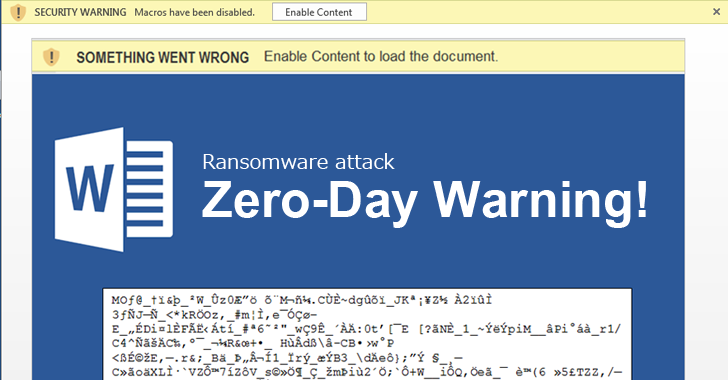
[2]: https://pbs.twimg.com/media/CiqwqUOWgAAVTzE.jpg:large

Re:How to Compromise the Enterprise Endpoint by raesene6 on Wednesday June 29, 2016 @09:41AM (#12001553)
indeed those messages are good examples of social engineering, but when comparing OS security there's nothing inherent about MacOS or Linux that would make them any more resistent to the same kind of social engineering attack.

I'd suggest that the reason that there are fewer attacks of that nature on those platforms isn't down to superior OS security but less profit available to attackers, due to smaller market share and perhaps lack of a ubiquitous target app. like office.

Re:How to Compromise the Enterprise Endpoint by pfg on Wednesday June 29, 2016 @04:28PM (#12004579)
I think you're missing my point. I'm not saying either is better in that respect (like zyx321 claims for Windows), I'm just saying they're both just as vulnerable despite the existence of sandboxed apps.
Re:How to Compromise the Enterprise Endpoint by pjmlp on Wednesday June 29, 2016 @04:55AM (#12000335)
The IEEE 1003.1e draft 17 ("POSIX.1e") document describes several security extensions to the IEEE 1003.1 standard. While the work on 1003.1e has been abandoned, many UNIX style systems implement parts of POSIX.1e draft 17, or of earlier drafts.

Note the implement parts of, that is not something UNIX has in any portable way.