So, instead of just trying to understand what do these people think, feel and fear we just assume we're superior and think they're ignorant? Of course, there are ignorant conservatives, just as there are ignorant liberals. There are also really smart conservatives who have a really strong foundation and understand how the world works. They just have another view of which are the solutions to our problems, but it's really hard to say which is the "right" and which is the "wrong" view.
I also find surprising that religion is in the same bucket as climate change denial or anti-vaccinations. I've meet a lot of religious people who have already tried to understand things and have found that they believe in a god, or whatever, and that does not make them more or less intelligent, it's just a personal belief.
Finally, the correlation "higher education => magic knowledge of everything" is plainly not true, not even "in some cases". A degree just gives you knowledge in a specific area, and does not make anyone more intelligent just by having it. It is not a badge of superiority.
As someone said in another reply, this is just an attitude of "liberals are right, conservatives are not", but there's no right political view as of now.
I've always felt the most beneficial part of higher education isn't the knowledge gained but the way you are taught to get it - Through research and critical thinking.
That isn't to say that people who don't have a higher education aren't capable of these things, but as a proportion of the population I think you'll find a greater competence in those with a higher education.
This isn't necessarily the case with college grads of the past few years, who are more self-centered, self-absorbed and coddled. In fact, most of the 'noise' coming out of colleges today are the b*tching and moaning that someone said something that offended them. Not exactly 'research' oriented or based on 'critical thinking'. Its more aligned with the environment they've decided to surround themselves in, while those who are 'less-formally-educated' get their 'education' through elbow grease and busted knuckles (also known as 'life experience'.
  > A degree just gives you knowledge in a specific area, and
  > does not make anyone more intelligent just by having it.
Regarding the degree thing, you may or may not acquire them. The degree just requires you to demonstrate a certain knowledge and skills, but not necessarily problem solving and answer finding. If you apply yourself and have good teachers, you can certainly learn it, but it's not that much different of a situation than when you're working in some job or doing things by yourself. It's not necessary nor sufficient, and definitely not even in most cases.
You clearly do not live where I live.
Within Christianity (much less religion more generally), the idea that the answers are all "in the book" (the doctrine of sola scriptura) is a doctrine of a distinct subset of the larger body of believers.
Yeah, immediately after I posted that, I wondered if I should clarify that sola scriptura actually doesn't mean that itself, and the "all answers are in the book" approach is actually at best a not-infrequent corruption of a minority approach to what is, itself, within Christianity a minority doctrine, rather than the doctrine itself.
But I figured that the clarification was probably not necessary, and that it was tangential to the point that "the answers are all in the book" isn't some kind of universal, or even general, trait of religious belief.
Still, its well taken.
> It means that when it comes to issues of faith and morals, the Bible is authoritative above all else.
While this is getting a bit far afield, the mere authoritative above all else on matters of faith and morals approach is the doctrine of prima scriptura, which is an alternative to sola scriptura held in some branches of Protestantism.
That's hardly representative of most fundamentalist Christians, let alone religious people generally.
Why? Most of what the parent wrote is factual and descriptive, not prescriptive or disparaging. The post doesn't condemn anyone. I find your response just as unpleasant, because you seem to be suggesting that this line of discourse should be shunned, which frankly isn't going to help anyone.
They aren't, you just don't understand it. Anti-vax people are often very well educated. Their position is that you can't trust the pharmaceutical corporation and the government to put health of the citizens above their profit.
99%+ of the population is in no position to make their own judgement about climate change or effectiveness of medical procedures. What most people do is choose who to believe. You choose to believe the government and the researches, some people don't. From purely incentive based analysis maybe those people are rational after all as they are very clearly not aligned in the interest of general population (the whole thing relies on assuming there would be enough whistleblowers among researchers and that they are in general ethical - both very shaky assumptions).
>>It's worth noting that all these things are driven by fear of things people don't understand.
No, they just don't believes the same authority figures as you do.
>>Someone who understands how vaccinations work, why we do them, why they're made the way they are can't be afraid of them, and thus won't be against them.
This comment is equivalent of sticking your fingers in your ears and shouting rather than seeking to actually understand the position of others.
Thinking like yours is a problem because it skips over actual problems: misaligned incentives, lack of transparency, history of corruption and politically motivated government policies (for example with anti-fat pro grain diet policy).
Highly educated people are exposed to more ideas and theories leading them to less likely BLINDLY believe what "authority" figures say/claim and that they (the highly educated person) could be wrong due to or that not enough information is known [at this time] to make or change their own determination of what or who to believe. They are more likely to be open minded because they are cognizant of blind spots.
You're answer boils down to "because liberals are right and the others are wrong". But there isn't really such a thing as a wrong political opinion. People's political choices are based on their experience of the world. The whole premise of democracy is that if you take the mean of everybody's personal experience you will arrive -- more or less, and with some difficulty -- at the right answer.
I disagree. I read the OP's answer as, "The more education you have, the more you're prepared to accept the possibility that you're wrong." This leads to a greater acceptance of viewpoints (or at least the right to hold them) which you don't necessarily agree with, which is basically liberalism in a nutshell.
I've never met or seen anyone who self-identifies with a specific political label who was willing to accept they might be wrong.
That includes liberals. To be honest, the inability to consider alternative viewpoints is an attribute I associate strongly with liberals in particular.
True, but there is such a thing as being on the wrong side of history.
https://i2.wp.com/upload.wikimedia.org/wikipedia/commons/thu...

https://upload.wikimedia.org/wikipedia/commons/9/9b/National...
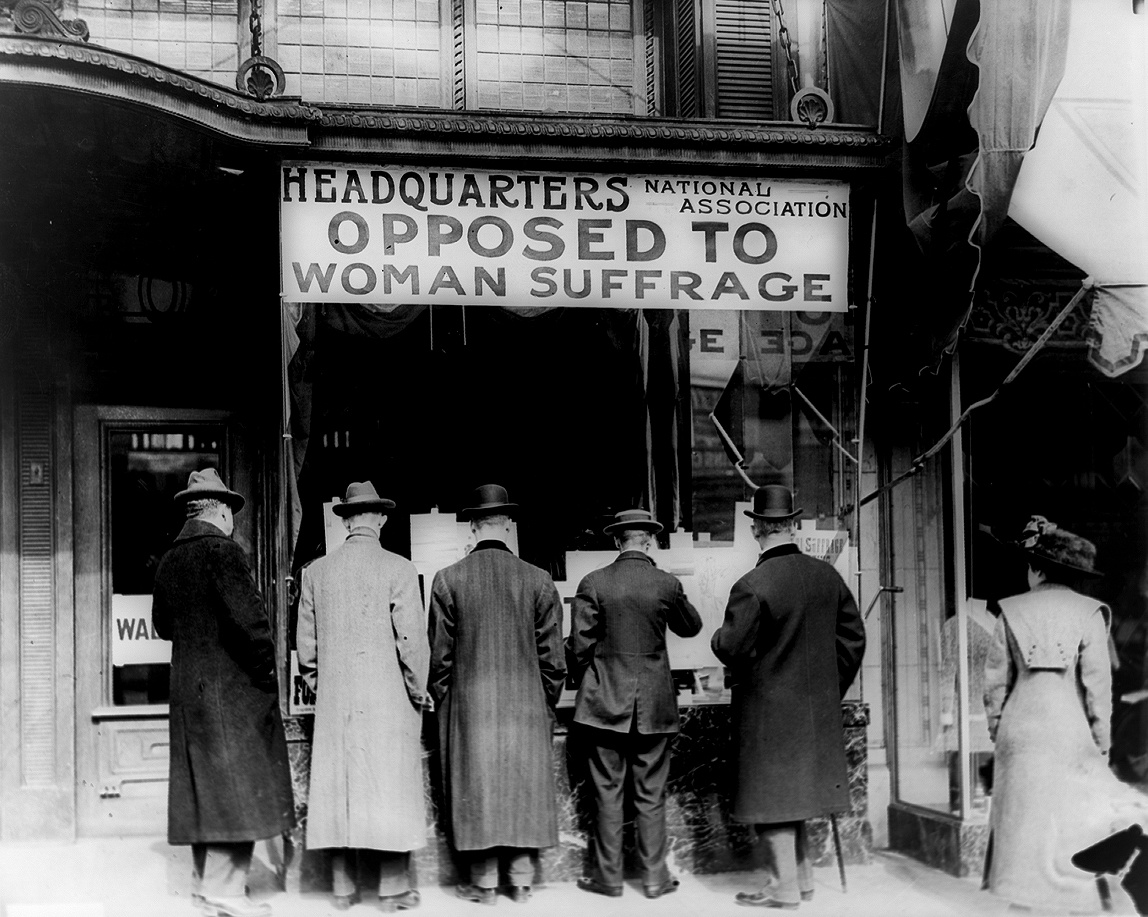
everyone from person to country tries to justify their actions to be morally acceptable - depending on what 'morally acceptable' passes for at the moment in time.
That's not to say there's nothing to be scared of out there - obviously there is. But there's a difference between knowing something is worth worrying about, and being badly informed or not informed at all, and thus being scared of it.
* Thing not to be scared of: vaccinations for your kids
* Thing to be scared of: long term effects of climate change
I'd take higher levels of education to mean that you're more exposed to being wrong about things, thus more accepting of the idea that you might be wrong, and more likely to change your view on finding out you are.
The more educational levels you pass through, the more you have it beaten in to you that you don't know as much as you think you do, and you're wrong to greater or lesser degrees a lot of time, about a lot of things.
I believe that academia is the perfect place for the formation of cliques which over time exclude non-believers. Right now there's a powerful liberal clique in academia - but over time it could be replaced by anything, really. At some point eugenics were all the rage, today it's taboo, etc. And since educated people pass through the academia, and receive a lot of information filtered through the leading clique, they're likely to share the clique's views. (Whether, on top of that, educated people also simply exhibit less critical thinking and original opinions based on their own experience than the average person I don't know; I wouldn't be surprised by it being either true or false, I can certainly construct a believable narrative explaining both possibilities.)
Speaking of eugenics and such... how do I put this, in hindsight people reevaluate their ideas wrt what's scary, and the British Labor and Liberal parties' insistence that Nazi Germany wasn't particularly scary seems to me to be a pretty good example. I think this shows that "you're generally not threatened of things you understand" sometimes is less accurate than "you're not threatened of things that you completely misunderstand, while those who do understand them are right to be scared shitless about them." And sometimes, like in this case, "you" are more liberal than "them", and sometimes it's the reverse.
Such as a highly educated media worker, has no fear of the factory closing because the company has found somewhere with lower taxes and relaxed pollution laws?
This is the appeal of Trump: he is the only candidate who doesn't want to send his demographics jobs offshore. It absolutely makes perfect sense for a significant number of voters to prefer him. I am really astonished at how many "liberals" despite their "high intellect" don't seem to get that there is a whole world outside their little bubble.
There's lots of examples of people losing jobs. That's sad for the individual, but long term it's generally good for the country. It'd be easy to say no to those forms of progress that hurt workers, but it'd be the wrong decision in the long run.
No-one said making the right choice has to be victimless, or that the wrong one has to be hard.
What you need to tell the worker is not that they need to give up their livelihood, but that they need to retrain. Still painful, but much less. Also, there are ways to reduce and relieve the pain of retraining. And who knows for many people acquiring new skills and contacts may even turn out to be exciting and fun.
We need a politician with the guts to openly explain to the public that retraining is a necessity instead of fostering delusions that the old jobs can be kept. In fact, the progress in the development of self-driving cars combined with the fact that the most common job in most states is a truck driver [1] make this something of an emergency.
[1] http://www.npr.org/sections/money/2015/02/05/382664837/map-t...
The number of niches in the economy are not expanding.
When the average worker gets laid off, he or she stays laid off.
We could sprinkle the market with PhDs and it would solve nothing. The underlying issue is much more structural than the NYT wants to admit.
Or at least he'll say that.
Whether he'll a) change his mind the next day, b) have any feasible plan to implement this, c) whether it's actually a net-positive for his demographic, d) whether he supports a bunch of other things that will hurt this demographic are all less clear.
I mean this is a man who manufactures stuff in China himself (http://abcnews.go.com/Politics/donald-trump-admits-gear-made...).
Why not just increase sales tax and then give it to American union members if buying votes by subsidising them is a good strategy? It's basically the same thing, but it seems a lot less "American" to be honest about it.
Given a choice between someone who promises to fight for the thing you care about, but might be lying, and someone who promises to not fight for the thing you care about, the choice seems easy.
If you reply within seven days you get exclusive access to my fat burning natural rose petal extract pills!
Don't listen to those people who claim it isn't this easy to be rich and thin, they're just haters. I'm the only one looking out for you!
Someone promising you unreasonable things is much more likely to be fucking you over. Some would say that promising you unreasonable things and then fucking you over is the basic thread of all politics, Trump is just taking it several steps further because apparently people have become unmoored from the reality of government and so cannot judge what is unrealistic anymore.
Doesn't want too, but he'll muddle through and do it anyway. Just google "trump clothing china". In his world profit trumps all.
I think your view really boils down to "i'm right they're wrong, so of course education and experience would cause anyone to be on my side!"
Also, socialism != communism.
Also, Stalinism != communism.
It's just a tad naive to list the entirety of religion with climate-change and anti-vax and then conclude that the sole reason that religion exists is "fear of things people don't understand". Do you know anything about religion at all or are you just parroting what you read in the news about American Christianity?
It's funny to me because this kind of thinking seems to indicate that you are "Someone who sees things in black and white, ignoring the complexities of life, [who] will respond with simple, ignorant answers."
Furthermore, the vast majority of people who are pro-vax and anti-religion have made up their mind based on nothing more than social cues. They're not scientists and they have to trust what they're told just like most people.
I guess we are all are against some things. For my own part, I don't see that when there is something I feel is wrong, it is always, or even usually, because I am afraid of it. Furthermore, some things (strong AI; synthetic biology), I have become afraid of by understanding some of it.
> Someone who understands how vaccinations work, why we do them, why they're made the way they are can't be afraid of them, and thus won't be against them.
Oh, my. I am all for vaccinations, but the reason is simply that I find the people who claim that vaccinations do not cause autism (or whatever negative consequence) more credible than those who claim that they do. It's not even about my own education, it's about what sources of information I find trustworthy. I couldn't possibly say anything myself about how vaccinations and autism are or are not related.
Your comment boils down to saying, "Because education opens your mind," which is completely asinine. Political science and philosophy are not young fields. Where would Aristotle, Hobbes, Machiavelli, Locke, Jefferson, Hamilton, Franklin or Madison fall today?
Are you telling me that you find it reasonable to think that none of them would find themselves on the right, because they're uneducated, have a simple world view, and can't appreciate nuance?
I like this website more when I don't click the political articles.
The left doesn't have exclusive ownership of liberalism, nor does the right always find itself to be illiberal. Fear and ignorance however can abound on both sides, leading to illiberal opinions.
I'm sure some of those mentioned would be left and right, as well as anyone else you might want to bring up. There's parts of Aristotle's Politics and Ethics that would most certainly place him on the right of the political spectrum. But that's got nothing to do with liberal views.
Okay, but the article did, and so do the statistics, and that was certainly the framing of your original comment. The crux of the question is why our universities are churning out individuals that align so strongly with the politics of the left, not necessarily liberalism.
I am completely comfortable admitting that policies of the right are sold more often with FUD than policies of the left. What I resent is the implication that there isn't an argument to be made beyond the FUD.
That's an uninteresting question. Environments change, and so do our definitions. I don't know much about your founding fathers beyond the Declaration of Independence, but I'd say all those mentioned were progressives in their own time.
The answer is apparently that the smarter you are, the more likely you are to have absorbed this information, but also, the more likely you are to realise that your social group expects you to answer in a certain way.
For people outside the social groups that have rejected evolution/climate change, more knowledge helps rather than hurts. So it's not just about ignorance.
The issue is where people fear a situation or outcome, and then draw their answers from their peers, who are also either un or ill-informed on the subject. Then you get bad answers to important questions, which no-one goes back to question (because now disagreeing with the answer means disagreeing with your social group).
http://www.wired.com/2015/02/closer-look-silicon-valleys-dis...
Yeaaaaah. No. Not really
But to be honest a lot of people trained in "hard fields" have some trouble with concepts that are "easier" for the people in the humanities field
Hehe, the obvious hole in his education was of course that he couldn't fix his pipes himself. :)
Anyway, would you care to summarize or just briefly mention what point the article argues?
When you have a simple world view, nuance is always going to escape you. An educated person can understand that the world isn't simple, which will lead to a more liberal view, as liberal views tend to be based on the assumption that angry, narrow world view responses aren't a good thing. Someone who sees things in black and white, ignoring the complexities of life, will respond with simple, ignorant answers.
Examples: climate change denial, anti-vax, religion... They're the intellectual equivalent of sticking your fingers in your ears and shouting, rather than seeking to actually understand anything.
It's worth noting that all these things are driven by fear of things people don't understand. Someone who understands how vaccinations work, why we do them, why they're made the way they are can't be afraid of them, and thus won't be against them. But most people aren't in that camp, which opens the door for people to make bad choices.
It's hard getting people to be want to be informed and right, when it means they might have to disagree with their social group.