It stands for Web Template Framework, but it's funny it appears all the time in crash reports:
http://google.com/search?q=wtf+webkit+crash
For example:
    Thread 2 name:  WebThread
    Thread 2 Crashed:
    0   JavaScriptCore                  0x32a97d46 WTF::StringImpl::hash() const + 42
    1   JavaScriptCore                  0x32a97c6a WTF::HashTable<WTF::StringImpl*, WTF::StringImpl*, WTF::IdentityExtractor<WTF::StringImpl*>, WTF::StringHash, WTF::HashTraits<WTF::StringImpl*>, WTF::HashTraits<WTF::StringImpl*> >::lookupForWriting(WTF::StringImpl* const&) + 18
    2   JavaScriptCore                  0x32a9b028 std::pair<WTF::HashTableIterator<WTF::StringImpl*, WTF::StringImpl*, WTF::IdentityExtractor<WTF::StringImpl*>, WTF::StringHash, WTF::HashTraits<WTF::StringImpl*>, WTF::HashTraits<WTF::StringImpl*> >, bool> WTF::HashTable<WTF::StringImpl*, WTF::StringImpl*, WTF::IdentityExtractor<WTF::StringImpl*>, WTF::StringHash, WTF::HashTraits<WTF::StringImpl*>, WTF::HashTraits<WTF::StringImpl*> >::add<WTF::StringImpl*, WTF::StringImpl*, WTF::IdentityHashTranslator<WTF::StringImpl*, WTF::StringImpl*, WTF::StringHash> >(WTF::StringImpl* const&, WTF::StringImpl* const&) + 448
    3   JavaScriptCore                  0x32a9ae30 WTF::AtomicString::addSlowCase(WTF::StringImpl*) + 96
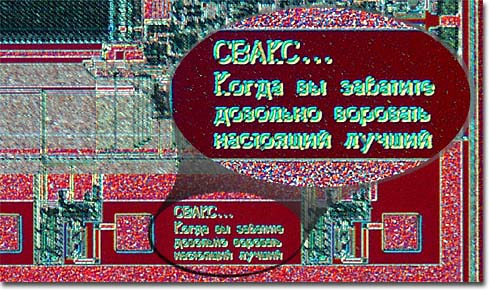
4 WebCore 0x31bade0c WebCore::AtomicHTMLToken::initializeAttributes(WTF::Vector<WebCore::HTMLToken::Attribute, 10ul> const&) + 232Every Mac has the kernel extension "Dont Steal Mac OS X.kext" for example, which loads into RAM a short poem.
    There once was was a user that whined
    his existing OS was so blind,
    he'd do better to pirate
    an OS that ran great
    but found his hardware declined.
    Please don't steal Mac OS!
Really, that's way uncool.DSMOS.kext has another function, however; it is involved in Apple's binary protection scheme[2] for certain OSX binaries. Essentially, OSX ships with certain important binaries (such as loginwindow, SystemUIServer, Finder, and Dock) that have certain vm pages encrypted. Decrypting these pages for use requires DSMOS.kext.
[1]: http://osxbook.com/book/bonus/chapter10/tpm/ [2]: http://www.osxbook.com/book/bonus/chapter7/binaryprotection/
There's just an outstanding myth that Macs still use TPM...
I remember some issues with the Apple II rom being copied and that they had to add a "Copyright Apple" or something similar to the binary data.
If anyone can confirm/deny this, please do.
http://popularlogistics.com/wp-content/uploads/2012/02/cvax1...
You can't change a paid app to free on the Google Play store. All you can do is to pull it, and submit it again.
It seems to have increased the sales for less than 10% in my case, but since I did this only a few days ago, I cannot say with confidence that it had anything to do with the switch.
But it did reduce confusion about the product itself and therefore support emails. (just the fact that there were 2 ways to get the full featured app was confusing to many - but this pro only exists because my own stupidity)
Long term I hope (it may never happen) that less people upload and therefore download pirated apks, because those versions are often very outdated, and some downloads out there are even broken because of that, causing additional support requests and bad reviews. (I rely heavily on Facebooks APIs, which change quite frequently)
If someone asked me if it was a good idea to pull an app that has been out there for a year or longer (with 100.000+ downloads) and resubmit it again I would definitely say no, because that also means that you basically start from zero again - from 1000+ downloads per day down to 10.
I don't know how the rankings in the Google Play store are created, but it seems to me that being around for a long time favors your ranking and downloads heavily.
Users who are artists must heed these wise words.
All Hail the Cult Leader.
As for this "poem", I've seen better from kids in elementary school. This speaks to the creative aptitude of Apple's kernel engineers. Certainly not the strongpoint of their workforce.
What sort of royalties or up-front payments did CMU get for letting Apple use their kernel?
It's only "nifty" until it's put to the test and fails in court. It's "effective" as a way to protect software only in the minds of some Apple engineers; but a judge might not see it that way. There's no precedent to assure anyone that it would work. If there were, I suspect we'd see it in widespread use. Or maybe Apple has tried to patent it?
Perhaps the DMCA exists because "nifty" gimmicks like this one cannot be relied on?
Nice try.
I've never understood the rationale behind this.
Keep in mind I'm a software developer myself and run strictly non-pirated software, and open-source as much as possible. You could never make me replace a Linux desktop with a limited OS X experience, and I see no reason what so ever to put in the effort to pirate it.
But why is it worse to pirate a OS with bad hardware-support out of the box than pirating... say Microsoft Office? I'm just curious what's up with that.
First, who are those "Maccards" you are reffering to? Perhaps you meant to say "OS X user" or "persons who likes Apple stuff".
Second, a lot of us OS X user could not care less if you pirated OS X or not. Matter of fact, I know several people with genuine Macs that also run a Hackintosh (and I experimented with one a while ago).
>(to the point that parent post is bringing up poems about it like its a cute, non-weird thing).
The poem is placed by Apple developers, inside the OS X internels. IIRC, it's loaded in a .kext (a kernel extension). That's cute, especially it being a flippant poem and not some 20 page long legal text. In essense, it's a small easter egg.
It's not like random Apple users write poems about not pirating OS X, which seems to be your impression.
>At the same time pirating everything else on the planet seemingly is OK.
"Maccards think pirating OS X is very bad" (wrong) "At the same time pirating everything else on the planet seemingly is OK" (wrong again).
Even if "Maccards" (sic) thought that pirating OS X is bad, who told you it's the same persons that think pirating everything else is OK?
>I've never understood the rationale behind this.
The problem might be that what you believe goes on is not happening in the first place.
Note that I don't have any pirated software on my machine. Running Debian here.
There is a license "key", it's the whole computer.
Sometimes there is freedom in restriction.
Yes, it is. If I pay for a product, it's my prerogative to use it in any way I please. Copyright grants a monopoly on distribution, not on controlling post-purchase usage of the product.
It's one thing to say "we only officially support installation of this product on this list of devices, and can't guarantee it will work on other devices", but inserting artificial restrictions into the product that prevent people from even trying to do officially unsupported things with the product, at their own initiative and at their own risk, is something there really isn't any justification for.
> do I really want the pain of people using it on an Arduino?
What pain? How does it even concern you if people are installing your firmware onto an Arduino, provided that they have legitimate copies of it?
> Opening it up to all the devices dilutes the main thing it has going for it.
Obviously, not installing OSX on other devices is what dilutes the "main thing it has going for it" for those people who have chosen to install OSX on other devices. Are you seriously trying to tell people that their personal preferences are objectively wrong?
> Sometimes there is freedom in restriction.
Straight out of Orwell.
That said, I don't find your arguments compelling; there's a difference between supporting and just not artificially preventing the software from running, and I don't see how doing the latter would make OSX stop "just working" on officially supported machines.
In fact, it's not like they don't anyway, and I don't see how have Hackintoshes diluted the experience of OSX on an Apple machine.
But I'm not saying they should, as I said, I don't really care. I'm just saying that just because they don't want to support other machines, that doesn't mean they have to purposely block them.
I mean, Asus doesn't support Linux on their motherboards either, but they don't have BIOS checks verifying that the OS is supported and refusing to boot if it isn't; they just tell you "you're on your own".
In fact the machines they're selling now almost certainly do have precisely this. It's called 'secure boot', and caused a lot of controversy. The major Linux distributions work because they've managed to get themselves signed with the appropriate key so the BIOS accepts them, but if you want to put a more niche distribution on there, you probably have to disable that check in the BIOS.
And you don't even have to disable the check if you want to use an unsigned distribution: most (all?) implementations allow the user to load her/his own public key to verify the signature against.
While we should worry about its impact - particularly in certain implementations - it's really not even close.
As far as I know, as long as all the hardware is stuff OSX has drivers for (and you generate a DSDT to describe that hardware) then you don't need any special "authorization." You just put in the OSX installer USB/DVD and it works.
> A Mac OS X system which is missing this extension, or a system where the extension has determined it's not running on Apple hardware, will be missing this decryption capability, and as a result will not be able to run the Apple-restricted binaries Dock, Finder, loginwindow, SystemUIServer, mds, ATSServer, backupd, fontd, translate, or translated.
In the old days (10.4), hackintosh systems would patch the protected binaries to remove the page encryption/decryption. Over time kernel extensions were developed to replace the functionality of Don't Steal Mac OS.kext (dsmos.kext or AppleDecrypt.kext) without the hardware checks.
The reason you no longer need either of these extensions is because a kernel extension called FakeSMC.kext was developed, which emulates as much of the functionality of the SMC as possible. This includes thermal and fan monitoring as well as the decryption key storage.
In a modern hackintosh setup, you make use of EFI emulation (inc. DSDT support) included in the bootloader (a boot-132 derivative, most likely Chameleon) and the pre-boot loading of emulator kernel extensions like FakeSMC.kext.
[1]: http://www.osxbook.com/book/bonus/chapter7/binaryprotection/ [2]: http://osxbook.com/book/bonus/chapter7/tpmdrmmyth/
Maccard = a word for a mac-user person thingie. There's nothing derogative about that.
If people read it as you did though, that might explain the downvotes.
And the attitude I've seen (especially in the OSX 86 community) is that general piracy is completely OK, but you have to buy OS X from Apple, otherwise you are doing something super-duper wrong. Then they move on to pirate Photoshop.
It's a mind-bending sort of ethics, and I was curious about what the reasoning behind it was.
If so, Hackintoshes are, from Apple's point of view, piracy anyway. Apple makes no money on the OS (which they sell for a few dollars) and all their money from the hardware the Hackintosh user is avoiding buying. So whatever ethics are involved are already in a dubious state.
If you mean general Mac users, then, as I and others have said, there isn't a prevalent attitude of condoning piracy (everyone I know who uses Photoshop/Illustrator/InDesign has paid for it).
http://developer.android.com/reference/android/hardware/Sens...
http://developer.android.com/reference/android/hardware/Sens...
There are also similar methods in the Android SDK:
UserManager.isUserAGoat() link: http://developer.android.com/reference/android/os/UserManage...
Log.wtf() link: http://developer.android.com/reference/android/util/Log.html..., java.lang.Throwable)
AdapterViewFlipper.fyiWillBeAdvancedByHostKThx() link: http://developer.android.com/reference/android/widget/Adapte...