Re:Economics of Orbital vs. Terrestrial Data Centers
by verzali on Tuesday December 16, 2025 @05:52AM
(#46287075)
The atmosphere is still thick enough to drag you down at 500km. You would last typically last a few years before burning up - the rate of fall is pretty low at 500km. But you do need fuel to do collision avoidance manoeuvres and for attitude control (otherwise your panels will no longer face the Sun and your antennas will not face the ground).
Re:Economics of Orbital vs. Terrestrial Data Centers
by danpalmer on Tuesday December 16, 2025 @11:51PM
(#46298404)
Thank you, I think it might have been collision avoidance and/or attitude control that I was thinking of then, rather than actually burning up. I remember reading about this in relation to the ISS which needs frequent adjustments, although is a bit lower than 500km.
Re:Economics of Orbital vs. Terrestrial Data Centers
by jaywee on Tuesday December 16, 2025 @09:24AM
(#46288846)
Quite helpful infographics from ULA:
https://blog.ulalaunch.com/hubfs/orbital%20debris.jpeg
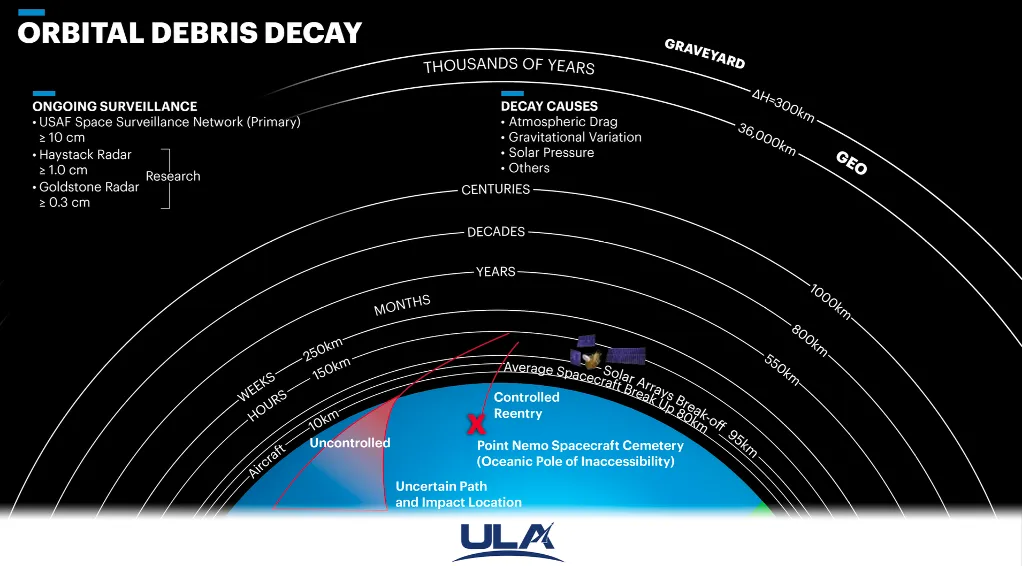
I'd be interested to know what the average lifespan or failure rate of Starlink has been. That's good that some are still up there 6+ years later, but I know many aren't. I'm not sure how many of those ran out of fuel, had hardware failures, or were simply obsolete, but an AFR would be interesting to see.