In contrast, the transit systems I've seen in Europe and Asia appear well maintained, clean, and relatively safe.
Biking is also safer in European cities that have proper bike infrastructure.
[1] https://www.newsweek.com/man-armed-chainsaw-threatens-bart-r...
However, the point is that these incidents, along with the BART one, are unusual. Avoiding public transit because of them would be like avoiding flying because of air accidents or avoiding going to a theater or musical event because of the various massacres that have happened at them over the years.
I'm sure it's similar for many other metro transport options in the USA. California in particular has a rough go for many reasons.
It doesn't even have to be something bad or happen to you. One "my buddy had his bike stolen off the light rail" and several people will be turned off of ever trying to use it.
Police and policing culture is heavily biased in the United States to the protection of property and the interests of capital, so it makes complete sense they wouldn't give a fuck about keeping public transit or spaces that aren't highly trafficked by the wealthy very well protected. Maybe a little tinfoil hat, but if you take that into account, I think it makes perfect sense.
In the mean time, the number of shooting deaths by private car drivers in the US has more than doubled since 2018, to more than 1 per day. That doesn’t count threats with other weapons, nor any other kind of road rage, nor does it count accidental crashes. There are more than 120 deaths per day in the US in cars (the vast majority of “private transit”), and more than 2 million ER visits by injured riders per year.
And public transit is sketchy? Not compared to driving cars it isn’t.
Anything disparaging public transit is played up to the extend even sitcoms will have disparaging scenes that are essentially "you took public transport? Are you poor?". The tax system is basically privatised, it's a pain to do anything without paying for tax software now with a lot of lobbying and propaganda that it's the only way. A lot of US citizens actually seem to believe that anything government run is inefficient (despite the lack of academic data on this) and demand the dismantling of all government institutions (see DOGE). Even utilities are often privatized with no competition (you just pay what you're told).
It's a bit crazy coming from a country where i had fibre internet at my regional home (the recently rolled out national broadband network) which is faster than the best connection i can get in the middle of silicon valley, i had affordable public transit with a universal tap on/off card that worked for all of them so no change/cash needed. Universal healthcare. A free online tax system that would start pre-filled by the numbers my employer+stockbroker entered in, i just had to quickly check through any federal or state specific exemptions i might qualify for. Etc.
Like it's madness the level of propaganda for this viewpoint that privatization is better and it's blatant why that propaganda is there - you privatize something essential like healthcare and you can leach vast amounts of money from everyone.
To this day my home country pays a fraction of US salaries yet the median wealth per capita is more than double the USA (Australia's 261k wealth per capita vs USAs 112k wealth per capita) since we don't get leached at every turn by privatized essential services. Yet in the USA they are clamouring for more of this as if that makes them wealthier.
A man died while riding the train, one person robbed the corpse, then another had sex with it..
For that matter, how many who came to harm on the highway were speeding vs random subway assaults.
Speed is absolutely a huge factor in driving injuries, one of the biggest. Again not sure how or even why to compare that to assaults on the subway, but googling briefly, the result I got suggests there were around 2k reported assaults of any kind. It’s a drop next to the nearly 3M ER visits, which may leave out large numbers of unreported, uninsured, or less serious injuries.
Not where I live. the comparison/debate is:
> In contrast, the transit systems I've seen in Europe and Asia appear well maintained, clean, and relatively safe.
I think the point is, although (public) necrophilia is rare, so presumably is access to dead bodies, so the fact this happened is telling.
> does your example actually count as a “robbery” if they died first?
Of course it fucking does. picking someone's pockets is also robbery even if no confrontation is involved, and I'm pretty happy this guy is being charged with "attempted rape"; the fact the guy was dead doesn't make it not rape.
> The anecdote you brought doesn’t seem to reflect on safety
you don't see a correlation between safety, and the presence of people you cannot trust to be around?
> speed is absolutely a huge factor in driving injuries, one of the biggest. Again not sure how or even why to compare that to assaults on the subway
Speed, or speeding i.e. inappropriate levels of speed. The comparison is that an individual can control their speed, and the authorities can police it. There's not much you can do if you run into the wrong person on the subway.
Still not sure what the argument even here is. You’re being pretty forceful about one single, weird incident. Fine, but the fact of the matter is that driving in cars is causing a lot more injury and death than public transit, by several orders of magnitude.
All of the US except NYC. In NYC 45.6% of households own a car. In Berlin it's 49%.
https://www.titlemax.com/discovery-center/u-s-cities-with-th...
https://www.berliner-zeitung.de/en/car-free-berlin-li.113268
Broadway has had large expansions to its curbing from the flatiron building to union square.
Its a slow process but its getting there.
Broadway has expanded the sidewalk but it is definitely not closed to traffic. Also 2 partial closures in a city of 10 million kind of proves the point.
One street in a city the size of NY?
I thought you were joking when I read that reply. I thought it might have been straight out of a Monty Python sketch. ;)
On that note, if you want to get an idea what pedestrianization does to cities, enter "Barcelona Superblocks" into your fav. search engine.
NYC needs more, but I think the tide is turning the right way.
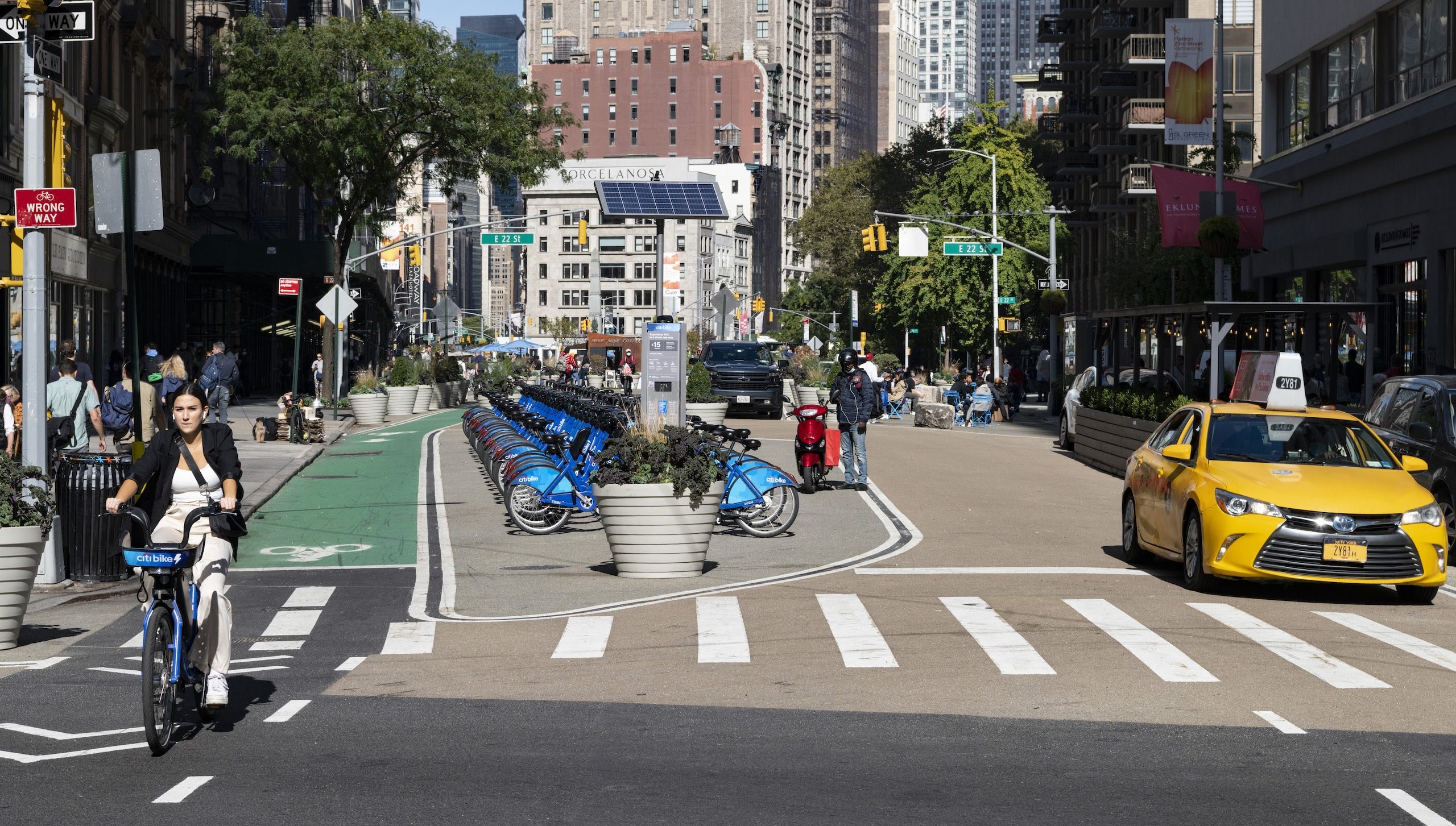
There is no restriction of through traffic. Effectively pedestrians are still confined to tiny and overcrowded sidewalks.
By comparison, here’s what a pedestrian street looks like in the non-US city I grew up in: https://sana.ae/wp-content/uploads/2020/04/Corso-Italia-Stre...
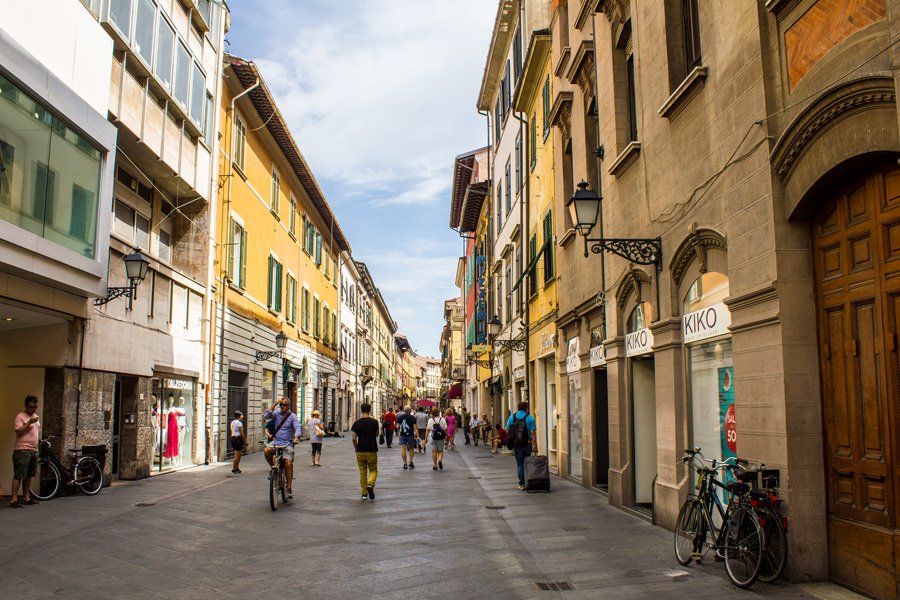
Keep in mind that cars are still allowed for emergency services and (night time) deliveries. But the difference is night and day.
This is exactly what “the US can't imagine itself without cars” means to me.
If you think population density is an excuse for public transport infrastructure not coping or need for more people owning cars I suggest taking a long hard look at e.g. Japan to have that hypothesis reality-checked.
I'm btw. not saying you did, just reading between the lines.
As I wrote in an earlier reply to parent, NYC hasn't managed to even build ring Metro lines around its city center – since a century!
And that is for one reason and one reason only: not nearly enough (political) pressure from the public to improve public transport infrastructure.
And that in term gets us to the root cause again: the US can't imagine itself without cars.
This is not a critique. It's just an observation that is very plain to see if you grew up in Europe (and possibly many other places, too).
When/if that changes, ever, the above things will just happen naturally.
Many metro systems in other big cities with comparable topological constraints have metro lines that are orthogonal to those going out in roughly a star pattern from the center.
But NYC almost only has the latter.
Underwater sections are not an issue, really. There are many cities that have metro lines going under bodies of water.
And even the length or depth required is not an issue if you want to build it.
That's why you can go from England to France, by train, in roughly half an hour, under the English Channel.
They just don't look like streets anymore, as they are turned into plazzas or parks.
EG: E25st at Lex, Baruch College is truned into a plazza/walkaway. No cars. 8th/st Saint Marks, by A Ave, is off cars, (It is part of the Tompkins park). Irvin Avenue is part of a park (gets interrupted by Grammercy Park)
etc...
There are plenty of places like that, but over time they turn into plazzas or parks, and you think they were not streets at some point.
Ps https://maps.app.goo.gl/Df6U3DkPpUxirG5B9
https://maps.app.goo.gl/ZivSNhiEnn2Q4pjr6
You can see throw time that it used to be a street at some point.
Anyways, there are plenty of examples like that. Just stop exaggerating.
A less abrasive approach than congestion pricing might just be pedestrian streets or narrower streets/wider sidewalks. If you make the city unattractive for cars, there will be fewer of them, and I am willing to bet that programs like these are less likely to trigger the outrage congestion pricing has, because it doesn't target car owners directly and en masse. You can sort of pick away at it, street by street. There will be less of a show of solidarity, because, hey, it's not my street.
The only thing that seems silly is penalizing delivery trucks. This only raises the costs of goods and services. This is one reason I would favor narrower, one-way streets over pedestrian streets. You still want vehicles. The issue is that many if not most vehicles in NYC are a luxury item and do nothing but negatively impact the common good. They don't even make transportation easier for their owners, on the whole. Of course, this should be combined with other policies that improve public transportation and improve availability of good and services in the city to reduce the burdens that cars alleviate.
That being said, it takes me nearly an hour to take public transit between my home near Forest Hill and my office in the dogpatch whereas it takes 20-25 minutes to drive (plus an extra five minutes to park and walk from the parking lot to the office). This is not a long distance, on a map it looks like it should take me 10 minutes but San Francisco is so incredibly inefficient.
I would love to not own a car but it’s just not realistic. Also when going to Costco or when the weather is bad, public transit becomes a lot less of a fit as well. I got a bike, only to find out that you’re not allowed to bring bikes on the Muni train which is frustrating, and in the end means my commute isn’t any faster than not involving biking at all. I tried a scooter, and I got in an accident because apparently the brakes don’t work well in the rain, especially when there’s an intersection at the bottom of a hill, so I’m not doing that anymore. I guess they’re trying to make driving as bad as all of the other bad options. I wish instead we could make some good options.
Certainly I've seen delivery vehicles on Grafton Street in Dublin and Shop Street in Galway in the early hours.
There is probably no other city in the US where you can truly eschew car ownership (this includes metro "dense" regions like San Francisco, Washington DC, Boston). Maybe you could include Chicago where there is a heavy amount of density/walkability in most of central Chicago neighborhoods.
E.g. I. Berlin metro timing is about 5mins between trains and that is long compared to Tokyo metro timing.
But when it comes to density/how direct a public public transport connection exists between two arbitrary points in the city, Tokyo and Berlin are very close (and far ahead of NYC btw.).
What I'm saying is that the feasibility public will be seen as a real alternative or even improvement over using a car only if both topological as well as temporal improvements are blatantly obvious to commuters.
This used to be a regular street at some point https://maps.app.goo.gl/ZivSNhiEnn2Q4pjr6
There are plenty of other examples, just now they look more like plazas, and not streets.
Avoiding public transit has historically been one way affluent white people avoided contact with poor people in general and black people specifically; underfunding or shutting down public transit in turn disproportionately hurts those populations.
Again, not the only explanation, but it's the simplest for a number of things.
To disguise the project, terms like "white flight" were invented in order to frame the disintegration of these European neighborhoods as a racist reaction. This worked especially well during the Civil Rights movement, because it played on black/white categories in the forefront of everybody's minds. But were these European ethnic groups "white"? We already know that the Irish and the Italians weren't considered "white" until recently.
Perhaps you've seen videos of "white people" in Chicago throwing rocks at black marches led by MLK into these ethnic neighborhoods? These were people, like Lithuanians, who were defending the integrity of their neighborhoods from an invasion. That the marching masses entering their neighborhoods were black is completely irrelevant: any mass migration of another cultural group into a host population harms and destroys the integrity of the host population. And that was the point. White flight destroyed the ethnic neighborhood through mass migration and the subsequent dispersal of them across the newly created suburbs. This process hastened their assimilation into an amorphous mass shaped by the mass media. These assimilated groups formed a buffer between WASP neighborhoods and the neighborhoods of the new black arrivals from the South. The construction of highways played a similar role by erecting psychological or physical barriers between these neighborhoods. They were also used as excuses to demolish "undesirable" neighborhoods.
LOL. sure it was.
The real reason America has so many cars is people like cars better, and America developed in a time where people were rich enough to make it happen. People don't like public transport. I asked someone who grew up in another country, in a huge city with only public transport--and reputedly good, clean public transport at that--what they think of public transport, and they said it's gross and for poor people. (It wasn't a code for racism, their country was ethnically monotone.)
People like that don't visit threads like this though. You just get this echo chamber of young, childless, cosmopolitans who only care about a certain kind of efficiency in transport.
The system can prioritize either method of travel. It's no surprise that when this happens, one is faster than the other.
The entitlement of drivers to think they have a right to park a metal box wherever they want for free in the middle of the most expensive real estate in the world is staggering.
The neighborhood is also quite clearly full of cars that basically never get used—given there's no cost to store them, the owners save them for an occasional trip and in the meantime they accumulate snow/leaves/pollen etc the rest of the year, in proportion to how long they sit without being used.
The dysfunction of this system is particularly aggravating when you have an actual need to park nearby your home, e.g. if you're loading/unloading heavy things, and there's never any space. I would love if every block had temporary loading zones, but people freak out about the idea because it requires taking away some free parking.
As someone who’s deeply frustrated by the lack of progress on projects like high-speed rail between SF and LA, completing the BART loop around the Bay, improving public schools in San Francisco, and addressing homelessness, I find it maddening. These are real, urgent issues, and yet they often seem sidelined.
Of course, Republicans generally oppose these kinds of initiatives altogether.
Trying to push for change within the Democratic Party has been incredibly difficult for me. It often feels like the space is dominated by highly educated, well spoken, intellectually confident people (far more so than myself) which can make it hard to even participate, let alone influence policy.
So I just think: screw it, I’m a Republican now. And that is not going to make public transport any better.
So this is why…
https://www.transit.dot.gov/about/news/biden-harris-administ...
https://www.transportation.gov/briefing-room/biden-harris-ad...
How can I blame Trump for what is happening with public transport in SF and CA? Both CA and SF are 100% democrat for last 20 years.
California's so-called Democrats are in love with the idea that private industry (i.e., Silicon Valley) will swoop in and do the government's work for them. And they'll sideline any government project if they think someone else might shoulder the burden. LA almost elected a real estate billionaire as mayor whose solution to homelessness was to build a bunch of "housing" out in the middle of the desert.
Also the average voter is a flip-flopping idiot who throws temper tantrums when they don't get low or no taxes, when costs rise for them right now even if lowering them is at the expense of later generations, etc.
Also US politics are a lot more complicated than who held majority within and area or state. As far as I can see if senate/congress has a huge bearing and those lip between majorities constantly.
I mean keep propping Trump up though, as a foreigner it's interesting to watch the show. It's a shame that countries are making deals with the US now, I would've loved to see us ban export of pharmaceuticals, weaponry, rare earths to the US just to educate Americans on why we should all be working together.
Don't get me wrong, China & Russia are much worse for it. And NK is an absolute disgrace, all those millions of people...in a thousand years we're going to look back on this period of history as "they had the means for peace but chose oppression and violence". Future humans will look at us as barbarians as we do many of those who lived hundreds of years ago.
https://www.nytimes.com/2023/04/02/opinion/democrats-liberal...
Complain and vote all you want but the best way to fix the government is to become the government.
Manhattan is a long rectangle, whilst Berlin has a more rounded shape.
Its faster to cross the small width of the rectangle than to go all the way around.
The MTA still has a gap in the funding for the 2020-2024 capital plan due to Andrew Cuomo's raiding and Kathy Hochul's incompetence, so I wouldn't expect much from the 2025-2029 capital program! It is $48 billion short of maintaining existing levels of service, "with a focus on areas in need of urgent investment".
I tire of "you guys just love your cars too much". I've lived in several states and only when I lived in Los Angeles county was there ever a bus within "walking distance" - but still that was a 25-30 minute walk.
Oh, and in case you were curious, California is about 60,000 square kilometers bigger than Germany.
And I live 36 hours away from California in the United States. At highway speeds.
That's why we "love our cars"
And even cities in the US are vast sprawls compared to organically grown very old cities in other parts of the world. That makes a huge difference for walkability.
And, as you say, Urban != dense city downtown.
my point is, talking about Berlin and then carrying that thought over to "americans just love cars" is silly. Germany is smaller than CA, and double the population of california. Most people "in california" live in the "san angeles" range or in the "bay capital" area. a half hour outside of any of those areas and it's either sand or farms or mountains.
and i wish i was "rural", there's ~600 houses within 6mi radius, that's not very rural. It's rural compared to Manhattan, i guess.
So a lot of people tend to translate 80% urban into 80% cities which is manifestly not true, and even less dense cities.
> The use of housing unit density instead of solely population density. The minimum population threshold to qualify as urban increased from 2,500 to 5,000 or a minimum housing unit threshold of 2,000 housing units.
> The jump distance was reduced from 2.5 miles to 1.5 miles for 2020. Jump distance is the distance along roads used to connect high-density urban territories surrounded by rural territory.
> No longer distinguishing between urbanized areas and urban clusters. All qualifying areas are designated urban areas.
We agree (i think), i'm just quoting the census bureau document.
So you've explicitly chosen to live far away from everything, in effect you've chosen to have to own a car. What bearing does this have on anything?
> The US is massive. It doesn't look like it on the mercator projection, but the US is massive. It takes days to drive across it at highway speeds.
Unless you drive across the US on a regular basis, this point has precisely zero relevance.
The topic was about public transit in cities, where many millions of people gather. Nobody has said that the US needs to ditch cars and only use public transport between states or cross-country.
I'm having trouble imagining where a useful ring line could exist in the New York metropolitan area or within the city itself, given its geography, longstanding commuter movement patterns and other characteristics. Maybe you could have a relatively small ring just in midtown Manhattan?
When I visited NYC two years ago, I was blown away by how unbelievably bad public transport infrastructure is.
The most flabbergasting thing was the absence of Metro ring lines around the center. The fact these have not been built, in 2025, when Metro transport networks in most cities are now over a century old, is telling.
IMHO the real problem is cars. The US still can't imagine itself without cars.
I live in Berlin center. The only reason for me to own a car is prestige. So I don't.
During rush hour any destination I go to, even outer city, would take me the same time by public transport as by car. At least.
During non-peak hours going by car can be from 25-40% faster than by public transport if you trust Google Maps & co.
But these estimates only consider travel time. When you add finding a place to park at the destination (and walking to the destination as the place may not be right in front) this shrinks to either negative numbers or max. savings of maybe 25%.
My average travel time is around 30mins by public transport. This includes walking to and from the station.
Why would I own a car to save maybe, on a lucky day, 5mins?
At the same time bike infrastructure is being improved. Lots of side streets have been declared bike streets, cars may only enter if they have business there (you live there or deliver something).
The city has enforced this with blocking off intersections on such streets with permanent structures that let only bicycles pass.
Big streets have bike lanes that are often separated by a curb or bollards from car traffic.
This makes it also less nice to drive a car. You can't use Waze any more to guide you through side streets to avoid congestion because these streets can't be passed through any more by car, only on foot or by bike.
Which means the chance of being stuck in traffic increases. When at the same time you have options to be there just as fast with public transport and almost as fast but more healthy and with less likeliness of being ran over by a car, by bike.
These ideas are not new. And there are many more things other cities do to reduce car traffic/need for cars.
If you think of private mini busses, the best examples IMHO is actually ridepooling, e.g. Volkswagen's Moia in Hamburg and Hannover.