News for hackers. Stuff that matters.
Re:Future of 32-bit platform support in FreeBSD by rwmj on Tuesday February 20, 2024 @06:57AM (#39440222)
Fedora has been slowly removing i686: https://fedoraproject.org/wiki/Changes/Stop_Building_i686_Ke... https://fedoraproject.org/wiki/Changes/EncourageI686LeafRemo...

There's still some 32 bit software (usually proprietary stuff, and/or libraries used by Wine). Removing 32 bit libraries especially just breaks this software and you don't really have any option except to get the vendor to fix it.

But more importantly I sometimes find 64 bit assumptions in code. One recent example was in this new package that we're trying to add to Fedora: https://bugzilla.redhat.com/show_bug.cgi?id=2263333 It doesn't compile on i686 with some obvious compile issues. Upstream isn't particularly interested in fixing them.

Typically the issues are incorrect assumptions about the size of 'long' and 'size_t'. And incorrect casts from pointers to longs (instead of using uintptr_t).

Does any of this matter still or should we embrace this 64 bit only world? Will CPU makers remove i686 support? I guess we're going to find out.

Re:Future of 32-bit platform support in FreeBSD by CJefferson on Tuesday February 20, 2024 @07:12AM (#39440323)
It's increasingly hard to test 32 bits -- I run a modern Ubuntu, they don't even provide 32 bits versions of most libraries any more, so I have to wonder why it's worth putting significant hours I to supporting 32bits, when it's unclear if there are even any users.
Re:Future of 32-bit platform support in FreeBSD by torstenvl on Tuesday February 20, 2024 @07:22AM (#39440391)
How about effort to remove undefined behavior based on non-portable assumptions?

No code should cast a pointer to a `long`, ever. Trying to excuse it it with "we don't support 32-bit" is deeply wrong.

EDIT: Apparently this position is unpopular. I am curious why people feel differently.

Re:Future of 32-bit platform support in FreeBSD by CJefferson on Tuesday February 20, 2024 @07:53AM (#39440613)
Well, yes, I'd like to do that, but programmers make mistakes and it isn't easy to test.

Also, you can't reasonably remove all undefined behaviour. In C++ you basically can't do file IO without undefined behaviour.

Re:Future of 32-bit platform support in FreeBSD by knorker on Tuesday February 20, 2024 @08:54AM (#39441258)
As a fellow UB nitpicker, I'd like to hear more about your favorite UB triggers. E.g. in the space of file IO.
Re:Future of 32-bit platform support in FreeBSD by CJefferson on Tuesday February 20, 2024 @10:25PM (#39449802)
The C++ filesystem section contains the following, which basically means you can’t do safe IO when other programs are running in the same computer:

“ The behavior is undefined if the calls to functions in this library introduce a file system race, that is, when multiple threads, processes, or computers interleave access and modification to the same object in a file system.”

Re:Future of 32-bit platform support in FreeBSD by torstenvl on Thursday February 22, 2024 @08:33AM (#39466787)
I'm not sure that means much, since that's true of literally every language that does file I/O.
Re:Future of 32-bit platform support in FreeBSD by mark_undoio on Tuesday February 20, 2024 @08:33AM (#39441000)
On GCC , as far as I know, pointers will always cast to long and back ok. I'd expect the same from clang.

No, that's not a portable behaviour but I can see that it's valid if you're targeting Linux.

uintptr_t is more polite, though.

Re:Future of 32-bit platform support in FreeBSD by a1o on Tuesday February 20, 2024 @08:48AM (#39441179)
I agree with you, we have appropriate types now, so we don't need to use long anymore - long also has different assumptions in Windows x64 builds vs equivalent regular Linux x64 (see also LLP64 vs LP64 vs ILP64)
Re:Future of 32-bit platform support in FreeBSD by Brian_K_White on Tuesday February 20, 2024 @09:17AM (#39441586)
This is simply correct and I see no excuse for objecting.

Hell I still try to make sure stuff works on both big and little endian.

Re:Future of 32-bit platform support in FreeBSD by cesarb on Tuesday February 20, 2024 @10:12AM (#39442223)
> No code should cast a pointer to a `long`, ever. Trying to excuse it it with "we don't support 32-bit" is deeply wrong.

It's deeply wrong as an excuse but for a different reason: casting a pointer to long also works on 32-bit. The only mainstream architecture in which it doesn't work is 64-bit Windows.

Re:Future of 32-bit platform support in FreeBSD by DinoCoder99 on Tuesday February 20, 2024 @10:46AM (#39442657)
Sure, but just because something works doesn't mean you should do it. Better types have been around for what 25 years now?
Re:Future of 32-bit platform support in FreeBSD by electroly on Tuesday February 20, 2024 @10:22AM (#39442354)
Does it matter to remove portability to platforms we don't care about any more? It's a question with no objectively/universally right or wrong answer. The obvious counterpoint I'd mention is big endian: is it worth fixing your endianness bugs? Or is it ok to assume little endian since the vast (VAST) majority of software does not care about the very few remaining big endian platforms? 32-bit could become a similar situation. It happened with 16-bit, right? Nobody today cares whether their modern code is portable to 16-bit machines.

More generally, I disagree with absolutist takes on programming. There's no right or wrong in programming. There's just requirements and choices.

Re:Future of 32-bit platform support in FreeBSD by int_19h on Tuesday February 20, 2024 @01:17PM (#39444701)
Casting a pointer to long is incorrect on any LLP64 platform, which includes all modern versions of Windows.
Re:Future of 32-bit platform support in FreeBSD by xenadu02 on Tuesday February 20, 2024 @07:16PM (#39448692)
No matter how technically correct that may be people just don't like doing work for some theoretical future benefit that may never materialize. Supporting 32-bit imposes a cost I have to pay right now today for the benefit of very few people (and a shrinking pool at that). Why not spend the effort on something more productive?

It is also likely that general purpose CPUs will use 64-bit integer registers and address spaces for the rest of our lifetimes. Computing has already (for the most part) converged on a standard: Von Neumann architecture, 8-bit bytes, two's complement integers, IEEE floating point, little-endian. The number of oddballs has dramatically decreased over the past few decades and the non-conforming CPUs manufactured every year are already a rounding error.

FWIW If a transition is ever made to 128-bit that will be the last. There aren't 128-bits worth of atoms in the visible universe.

Re:Future of 32-bit platform support in FreeBSD by torstenvl on Tuesday February 20, 2024 @10:16PM (#39449760)
That seems non-responsive, as none of those things mean that a pointer and a `long` have the same size. Did you intend to respond to someone else?
Re:Future of 32-bit platform support in FreeBSD by djao on Tuesday February 20, 2024 @10:17PM (#39449764)
Google says "There are between 10^78 to 10^82 atoms in the observable universe." Even the lower number is (just slightly) greater than 2^256.

(Imagine installing 2^256 sound cards in a system ...)

Re:Future of 32-bit platform support in FreeBSD by sillywalk on Wednesday February 21, 2024 @04:04PM (#39459534)
One of the reasons, besides having the OS run on it, OpenBSD has the multiple architectures is to catch bugs based on non-portable assumptions - endian stuff, 32 vs 64 bit, memory alignment stuff etc.
Re:Future of 32-bit platform support in FreeBSD by ndiddy on Tuesday February 20, 2024 @09:20AM (#39441639)
Ubuntu dropped 32-bit support several years ago. AFAIK they only support the 32-bit libraries required by Steam and Wine.
Re:Future of 32-bit platform support in FreeBSD by rwmj on Tuesday February 20, 2024 @07:16AM (#39440352)
I keep a very old Fedora VM around for this. Not ideal.
Re:Future of 32-bit platform support in FreeBSD by jsheard on Tuesday February 20, 2024 @07:27AM (#39440426)
> Does any of this matter still or should we embrace this 64 bit only world? Will CPU makers remove i686 support? I guess we're going to find out.

We're already on this path, Intel has proposed an "X86-S" subset which drops support for booting into 16/32-bit modes (though 32-bit applications would still be supported under a 64-bit OS), ARM Cortex-A cores already dropped support for 32-bit boot a few years ago and the latest ones are also dropping support for 32-bit applications, so the whole stack has to be 64-bit.

Re:Future of 32-bit platform support in FreeBSD by my123 on Tuesday February 20, 2024 @09:55AM (#39442020)
Rosetta supports 32-bit code execution via a very basic (segment-level) facility, designed for use by Wine.
Re:Future of 32-bit platform support in FreeBSD by jsheard on Tuesday February 20, 2024 @10:17AM (#39442277)
TIL. I'm surprised they went out of their way to accomodate emulating 32-bit Windows apps, when they cut off 32-bit Mac apps completely.
Re:Future of 32-bit platform support in FreeBSD by plorkyeran on Tuesday February 20, 2024 @12:00PM (#39443687)
Dropping 32-bit macOS apps let them drop the second copy of every system library, and possibly even more importantly, support for the old obj-c runtime that was weird and different from the runtime used on every other platform. Supporting 32-bit wine is a much smaller burden.
Re:Future of 32-bit platform support in FreeBSD by MBCook on Tuesday February 20, 2024 @01:02PM (#39444522)
Which is especially useful on phones that are much more memory constrained than desktops.
Re:Future of 32-bit platform support in FreeBSD by zahllos on Tuesday February 20, 2024 @11:04AM (#39442927)
For the modern server/desktop and even laptop, that's also no bad thing. It is somewhat ridiculous that UEFI bioses, internally, still boot in 16-bit real mode and have to do all the steps your bios bootloader used to do to set up a 64-bit environment ready to go: https://github.com/tianocore/edk2/blob/edc6681206c1a8791981a..., https://github.com/tianocore/edk2/blob/edc6681206c1a8791981a..., https://github.com/tianocore/edk2/blob/edc6681206c1a8791981a...

Why not just start the CPU in "long mode", which is what everyone is using it for, in the first place?

These newer ARM processors support 32-bit code at EL0 only (userspace). That seems like a reasonable approach for x86 as well and the freebsd announcement has this to say:

> There is currently no plan to remove support for 32-bit binaries on 64-bit kernels.

So for the moment, you can run 32-bit applications just fine.

Re:Future of 32-bit platform support in FreeBSD by zokier on Tuesday February 20, 2024 @01:06PM (#39444570)
> Why not just start the CPU in "long mode", which is what everyone is using it for, in the first place?

Why not indeed?

https://www.intel.com/content/www/us/en/developer/articles/t...

Re:Future of 32-bit platform support in FreeBSD by rwmj on Wednesday February 21, 2024 @07:19AM (#39452916)
Not even a new idea!

https://en.wikipedia.org/wiki/Intel_80376

> It differed from the 80386 in not supporting real mode (the processor booted directly into 32-bit protected mode)

... although it didn't support paging.

Re:Future of 32-bit platform support in FreeBSD by arp242 on Tuesday February 20, 2024 @11:24AM (#39443221)
> Why not just start the CPU in "long mode", which is what everyone is using it for, in the first place?

Are you sure it's "everyone"? No doubt it's "overwhelming majority", but that's not the same, and "everyone" is a lot of people.

As I understand how this works, the compatibility is perhaps slightly inconvenient to a small group of developers, but not that inconvenient and generally relatively cheap. So why not have and keep it?

ARM has a lot less history than x86. Yes, it goes back to 1985 in the BBC Micro, but didn't really see serious usage as a "generic platform" until the late 90s/early 2000s.

Re:Future of 32-bit platform support in FreeBSD by zahllos on Tuesday February 20, 2024 @12:57PM (#39444453)
Do you ever boot your machine only into 32-bit mode? Most UEFI firmware I've seen is launching /EFI/BOOT/BOOTX64.EFI, which means your bootloader is in long mode even if you then switch back to 32-bit mode (and UEFI is likely already there). I don't know if emulating a traditional bios avoids this or not, never thought about it. But I'd take a guess that the vast majority of people are passing through long mode and then back again if they installed a 32-bit OS.

I'm not saying remove the possibility of 32-bit userspace and nor are, it seems, freebsd. I am saying don't bother with a 32-bit kernel. Otherwise you're limited to a 4GB address space and hacks like PAE. No harm in running 32-bit binaries if you want and, I think Solaris actually left userspace as 32-bit only even on their 64-bit OS, unless the application really benefited from a 64-bit setup. Not sure what they do now, been a while since I used it.

It's arguable ASLR only works well in a 64-bit mode, as well.

Re:Future of 32-bit platform support in FreeBSD by arp242 on Tuesday February 20, 2024 @01:45PM (#39445133)
> Do you ever boot your machine only into 32-bit mode?

No, but I'm not everyone.

Or let me put it this way: I don't know the motivation for why the things work like they do. It's entirely possible there is no good reason at all. Or maybe there is? Either way, I wouldn't assume anything so quickly.

Re:Future of 32-bit platform support in FreeBSD by plorkyeran on Tuesday February 20, 2024 @03:56PM (#39446792)
Intel is currently trying to find out if it's everyone. The whole point of announcing the idea of dropping the old modes years before you plan to actually do so is to give a chance for people to speak up if it's a problem.
Re:Future of 32-bit platform support in FreeBSD by jsheard on Tuesday February 20, 2024 @11:15AM (#39443086)
> These newer ARM processors support 32-bit code at EL0 only (userspace).

Even that is being phased out, starting from 2021 ARMs reference cores mostly dropped 32-bit support, with the Cortex-X2 big cores and Cortex-A510 small cores being 64-bit only, and only the medium Cortex-A710 cores retaining the ability to run 32-bit code in userspace. With the next generation the medium cores lost 32-bit support, but the small cores gained 32-bit support again, so the chips can barely still run 32-bit code but it's relegated to only running on the least performant cores. I'm sure they'll drop it altogether as soon as they think the market will accept it.

Re:Future of 32-bit platform support in FreeBSD by ksec on Tuesday February 20, 2024 @11:44AM (#39443469)
I think we need to be more specific, since on x86 64bit instructions are a superset of 32bit. On ARM they are different with AArch32 and AArch64 being two separate set of instructions. It is AArch32 that is being dropped and no longer required.
Re:Future of 32-bit platform support in FreeBSD by legulere on Tuesday February 20, 2024 @02:28PM (#39445723)
They’re mostly a superset, but also some instructions were dropped like the bcd opcodes.

https://en.m.wikipedia.org/wiki/Intel_BCD_opcodes

Re:Future of 32-bit platform support in FreeBSD by judge2020 on Tuesday February 20, 2024 @01:24PM (#39444801)
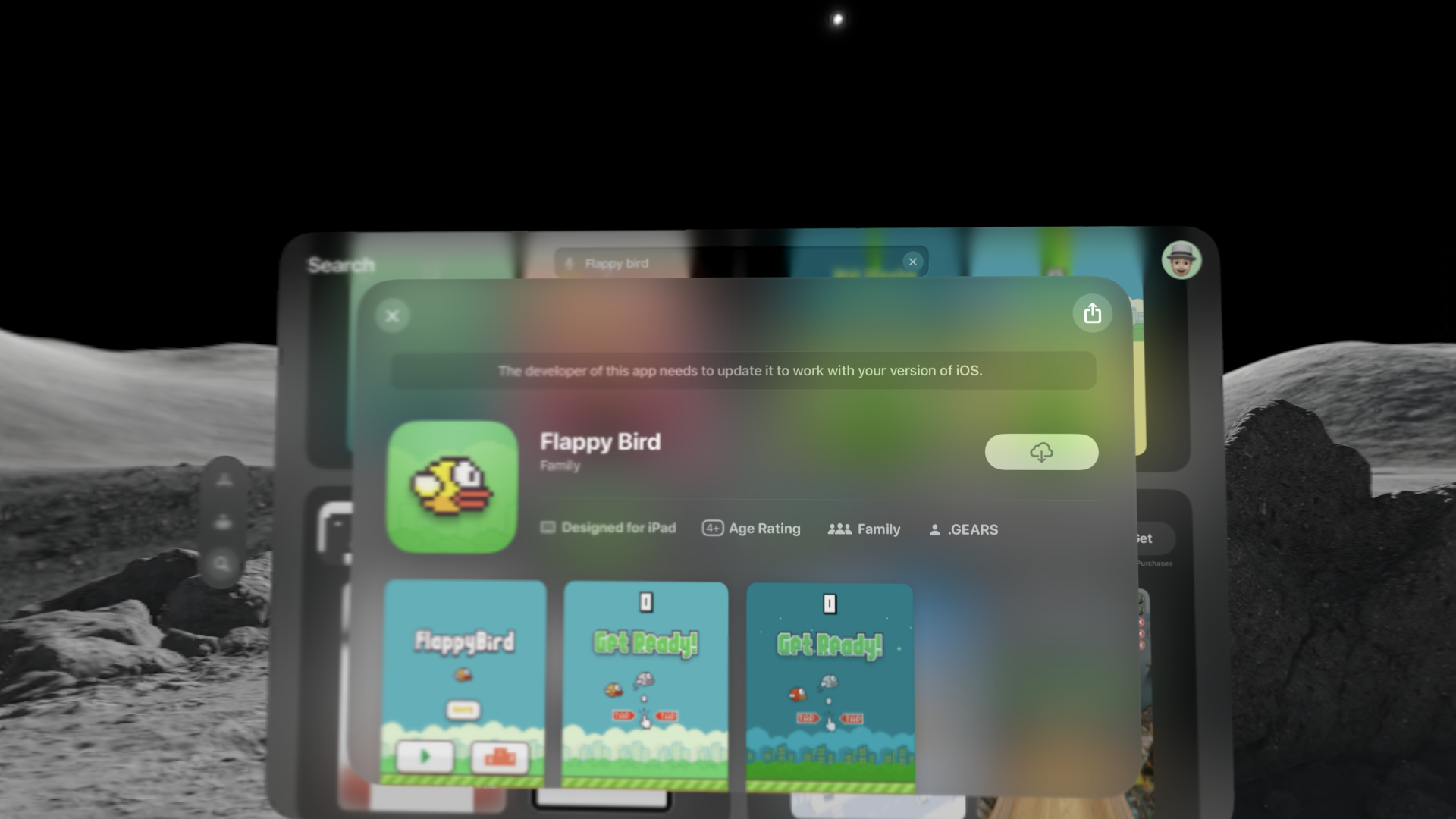
> Apple preemptively killed 32-bit apps even on hardware that could technically still support them, and their current hardware doesn't support 32-bit at all, not even in Rosetta.

Slightly related: visionOS references "iOS" for old 32-bit apps when you view them on the App Store. https://rr.judge.sh/Acaciarat%2FIMG_0002.PNG
Re:Future of 32-bit platform support in FreeBSD by dooglius on Tuesday February 20, 2024 @07:33AM (#39440461)
I thought the Linux kernel enforces/requires a pointer to fit into a long, so any platform with Linux will define long type as appropriately sized?
Re:Future of 32-bit platform support in FreeBSD by DinoCoder99 on Tuesday February 20, 2024 @10:49AM (#39442717)
I'd much prefer C users not use long at all. What's wrong with size_t and uint32_t and uint64_t?
Re:Future of 32-bit platform support in FreeBSD by UncleEntity on Tuesday February 20, 2024 @12:14PM (#39443876)
> What's wrong with size_t and uint32_t and uint64_t?

An extra #include and more typing?

Plus, all the C89 users are out of luck...

Re:Future of 32-bit platform support in FreeBSD by int_19h on Tuesday February 20, 2024 @01:43PM (#39445098)
It's trivial to roll your own basic <stdint.h> with those types for existing C89 implementations.

Unless they don't provide the corresponding type natively at all (which can be the case for some 16-bit platforms and 64-bit). But then you have a bigger problem anyway.

Re:Future of 32-bit platform support in FreeBSD by legulere on Tuesday February 20, 2024 @02:45PM (#39445963)
Only with effort Linux was able to be ported to Clang. All compilers that compile Linux should also be able to deal with size_t and consorts.
Re:Future of 32-bit platform support in FreeBSD by cesarb on Tuesday February 20, 2024 @08:57AM (#39441297)
> And incorrect casts from pointers to longs (instead of using uintptr_t).

That's not an issue on mainstream Linux, since uintptr_t and long always have the same size, both on 32-bit and on 64-bit. It's an issue only when using some new experimental stuff which uses two machine words per pointer, or when trying to port to Windows (where long is always 32-bit even when compiling for 64-bit).

Re:Future of 32-bit platform support in FreeBSD by Brian_K_White on Tuesday February 20, 2024 @09:47AM (#39441912)
At one point 16 bits were universal, and then 32 bits came along and broke everything. We learned some lessons that day. Then 32 bits was universal for a while and 64 bits came along and broke everything. I guess we forgot those lessons, but OK well at least we learned them again for real this time.

What a relief it is that we have reached the final architecture and will never have to worry about anything like that again!

Re:Future of 32-bit platform support in FreeBSD by arp242 on Tuesday February 20, 2024 @10:30AM (#39442456)
At some point in history a "byte" could also be considered to mean any number of things. There was great value in standardizing on 8 bits.

The there is of course no clean separation between the two, but by many definitions the "64-bit era" has already lasted longer than the "32-bit era". The real lesson from history is that we moved for specific practical reasons, and that these reasons don't exist with 64-bit architectures today. 64-bit is and most likely will remain the standard size for the foreseeable future. I predict that even embedded will (slowly) move to 64-bit because again, there is great value in standardizing these types of things.

Re:Future of 32-bit platform support in FreeBSD by int_19h on Tuesday February 20, 2024 @01:39PM (#39445047)
I agree that 64-bit is likely to be a very long-running standard. But, given that on 64-bit, there's no agreement on sizeof(long) - and it's impossible to change at this point because it would be a massive breaking ABI change for any of the relevant platforms - the only sensible standardization approach for C now is to deprecate short/int/long altogether and always use int16_t/int32_t/int64_t.

It helps to look at the history of C integer type names and its context. Its origin lies not with C, but with ALGOL-68 - as the name implies, this is a language that was standardized in 1968, although the process began shortly after ALGOL-60 Report was published. That is, it hails from that very point in history when even 8-bit bytes weren't really standard yet nor even the most widespread - indeed, even the notion of storing numbers in binary wasn't standard (lots of things still used BCD as their native encoding!). ALGOL-60 only had a single integer type, but ALGOL-68 designers wanted to come up with a facility that could be adapted in a straightforward way to all those varied architectures. So they came up with a scheme they called "sizety", whereby you could append any number of SHORT or LONG modifiers to INT and REAL in conformant code. Implementations could then use as many distinct sequences as they needed to express all of their native types, and beyond that adding more SHORT/LONG would simply be a no-op on that platform. K&R C (1978) adopted a simplified version of this, limiting it to a single "short" or "long" modifier.

Obviously, this arrangement makes sense in a world where platforms vary so widely on one hand, and the very notion of "portable code" beyond basic numeric algorithms is still in its infancy. Much less so 40 years later, though, so the only reason why we still use this naming scheme is backwards-compatibility. Why use it for new code, then, when we had explicitly sized integer types since C99?

Re:Future of 32-bit platform support in FreeBSD by arp242 on Tuesday February 20, 2024 @02:11PM (#39445515)
Specifically on the topic of "avoid using long" I don't disagree; I was mostly replying to the general sentiment of "you should never assume 64 bit because this changed in the past and will change in the future". That said, if you're writing software specifically for Unix systems (as much software is) then it de-facto works, so it's fine. That's why people keep doing it: because it works in all cases where the software runs.

Starting C in 2024 is like starting Game of Thrones in the middle of Season 5. Dubbed in Esperanto.

Re:Future of 32-bit platform support in FreeBSD by int_19h on Tuesday February 20, 2024 @02:25PM (#39445688)
More like dubbed in Volapuk. Dubbed in Esperanto would be Smalltalk.
Re:Future of 32-bit platform support in FreeBSD by cesarb on Tuesday February 20, 2024 @10:09AM (#39442191)
> At one point 16 bits were universal, and then 32 bits came along and broke everything.

That's not an issue in mainstream Linux, since 16-bit Linux (ELKS) never caught on. Other than ELKS and perhaps some new experimental stuff, since its first release Linux always had long and pointer with the same size.

Re:Future of 32-bit platform support in FreeBSD by cesarb on Tuesday February 20, 2024 @09:09AM (#39441470)
> There's still some 32 bit software (usually proprietary stuff, and/or libraries used by Wine).

Wine is going to stop being an issue somewhat soon. The Wine developers are adapting it to work more like Windows, by making even 32-bit applications call the 64-bit libraries.

I expect that, not long after Wine switches to always using 64-bit libraries, distributions (probably starting with faster-moving ones like Fedora) will completely (or almost completely, leaving only glibc and its dependencies) drop the 32-bit libraries. And we're already close to the Y2038 deadline, which gives distributions another incentive to drop 32-bit libraries (instead of having to go through a migration to the 64-bit time API, similar to the migration to 64-bit file offsets we had some time ago).

Re:Future of 32-bit platform support in FreeBSD by zozbot234 on Tuesday February 20, 2024 @09:41AM (#39441863)
Debian is moving their 32-bit releases to 64-bit time, it's a big transition but it's expected to be ready for the next release. But they've also announced that they may be forced to drop their i686 release quite soon.