News for hackers. Stuff that matters.
Re:We need a lot more electricians if we’re going to electri... by yamtaddle on Wednesday January 11, 2023 @03:28PM (#34344181)
I hate the damn things. If a breaker pops, it's easy. You have a box, maybe two if you live in a really huge house. Go there, look for the switch that's not quite lined up, toggle switch, done.

GFCI, you gotta figure out which one popped. If the wiring's not great, it may well be in a totally different room from the outlet that stopped working. On top of it, they seem to outright fail (get stuck in a broken state, start tripping under even very light load, simply stop working at all) much faster than breaker-box switches (I'm... actually not sure I've ever seen one of those fail? I've had several GFCI outlets fail, across multiple houses).

I get why they're good to have, but they're really annoying. And expensive.

Re:We need a lot more electricians if we’re going to electri... by metadat on Wednesday January 11, 2023 @03:44PM (#34344453)
What are you talking about? GFCIs are integrated into the outlet. Did you mean something about chaining GFCI plug wiring? If it's even possible, such a wiring configuration seems like an obvious building code safety violation.

For example:

https://cdn.vox-cdn.com/thumbor/oGJ0LxRFZ9FNcRtpABAlXPnUApM=...

Edit 1: If you're in Europe, my apologies - I have no experience with the wiring outside of the US. It sounds genuinely annoying and a bad user experience indeed.

Edit 2: Thank you all for your replies!

Re:We need a lot more electricians if we’re going to electri... by yamtaddle on Wednesday January 11, 2023 @03:56PM (#34344633)
Circuit breaker versus GFCI outlets (which also have breakers). I find the former far more convenient—I know they don't serve the same purpose, but the way one interacts with them is similar, except that the GFCIs are scattered all over the place and may require moving things to find.

> If it's even possible, such a wiring configuration seems like an obvious building code safety violation.

Norm in every house I've lived in in the US (except one so old it had knob-and-tube wiring... hahaha) is one GFCI for a set of outlets. Like, if you have a long vanity in a largish bathroom, you might end up with two or three outlets, one GFCI, the others following after it so they trip it, too. The only times I've seen a single one used with nothing hanging off it is when it's the only outlet in the room, or for under-sink outlets for dishwashers and disposals to plug into. This can turn into a real mess if anyone got "creative" with wiring at any point. We've had a garage GFCI kill a couple outlets in the house proper (in a nearby laundry room, not super distant), plus an outdoor outlet probably 30 feet away, all of which were evidently attached to it.

Re:We need a lot more electricians if we’re going to electri... by dionidium on Wednesday January 11, 2023 @03:59PM (#34344704)
Every GFCI outlet has a line side and a load side designed specifically for protecting additional downstream outlets. it's perfectly safe and legal (and a great way to protect multiple outlets, especially in older houses with ungrounded outlets).

What OP is saying is that one of those downstream outlets can trip the GFCI and if you don't know which GFCI it tripped, then you have to go looking.

Re:We need a lot more electricians if we’re going to electri... by yamtaddle on Wednesday January 11, 2023 @04:16PM (#34344981)
Right, that. And it's not like they're intolerable or anything, but they do represent a pretty high percentage of the time I spend messing with my house's electrical system. It's probably light bulbs (I swear, all but the crazy-expensive LED bulbs are blatantly lying about their lifespan, like by a literal order of magnitude) then GFCI stuff after that.
Re:We need a lot more electricians if we’re going to electri... by jacquesm on Wednesday January 11, 2023 @03:49PM (#34344522)
In the UK, yes, in lots of other parts of the world they are integrated into the circuit breakers.
Re:We need a lot more electricians if we’re going to electri... by metadat on Wednesday January 11, 2023 @03:50PM (#34344545)
Would this be a regular circuit breaker fuse? Otherwise what's different?
Re:We need a lot more electricians if we’re going to electri... by jacquesm on Wednesday January 11, 2023 @03:56PM (#34344642)
If single phase you'll notice sometimes it has a little extra ground wire connected (now mostly obsolete), for 3 phase it doesn't, in both cases it will say so on the outside (typically: the test current, and usually there is a test button which makes them easy to identify, this test button forces a small leak causing the circuit to become unbalanced resulting in a trip (if it doesn't trip when the test button is pressed the breaker is considered faulty and should be replaced).

For instance, here is an 'Eaton' 3 phase breaker with integrated ground fault protection circuitry:

https://www.omnical.co/products/eaton/1742431/2259595

Note the little yellow 'test' button. That's a 30 mA fault current device, you can have higher permissible fault currents for certain gear that tends to be a bit more leaky which would otherwise cause nuisance trips. These little things are quite the work of art inside, if you ever have a faulty one I would encourage you to pick it apart to see what makes it tick.

Re:We need a lot more electricians if we’re going to electri... by antonjs on Wednesday January 11, 2023 @04:13PM (#34344947)
Circuit breakers trip when there's too much current going through the circuit (enough to melt the wiring for example), and so protect from short-circuits: hot and neutral touching each other, or a short in equipment.

GFCIs protect against current leaking to ground, by detecting if the current flowing on a hot and neutral leg are different. If they're different, the current must be going somewhere else: to ground, through you, etc. The GFCI breakers do this in the breaker, the outlets do it at the outlet. As someone else mentioned, you can also have other non-GFCI outlets chained to a GFCI outlet, so that upstream outlet is the one that pops if there's a fault.

TL;DR they detect and protect against different fault conditions.

Re:We need a lot more electricians if we’re going to electri... by hajile on Thursday January 12, 2023 @12:01PM (#34356717)
Good GFCI receptacles are almost 10x the cost. Adding them everywhere would add a few thousand extra to building costs.

In any case, new houses must use arc fault breakers which do the same thing and more for most things.

I would add that big motors will trip these every time, so they aren’t usable for every circuit.

Re:We need a lot more electricians if we’re going to electri... by jacquesm on Wednesday January 11, 2023 @03:47PM (#34344502)
Ground fault interrupters are life savers. The minor overhead of figuring out the cause is well worth the price of admission: without them you might not be around to figure anything out.

In the UK, where ground fault interrupters can be part of the sockets it can be hassle, but then again that is strictly optional: in most other countries the ground fault interrupters are always integrated into the circuit breaker at the distribution panel. The upside of that it is that it also protects the wiring.

Re:We need a lot more electricians if we’re going to electri... by OJFord on Wednesday January 11, 2023 @04:03PM (#34344770)
> In the UK, where ground fault interrupters are part of the sockets it can be hassle

Did you mean US? I've never seen that, and searching 'ground fault interrupter UK' images all look like US sockets.

They're usually called RCDs (Residual Current Devices) in the UK, and they're fitted in the Consumer Unit.

Re:We need a lot more electricians if we’re going to electri... by jacquesm on Wednesday January 11, 2023 @04:09PM (#34344883)
Re:We need a lot more electricians if we’re going to electri... by OJFord on Wednesday January 11, 2023 @04:51PM (#34345464)
Wow ok, I've never seen that in the wild. RCDs are required on all circuits including lighting in the current regs (i.e. old installations can not have them and be compliant, but they have been required and socket circuits for a long time; bathroom & outdoor lighting for less; all lighting more recently). Maybe these sockets are for when you have no more room in the panel and don't want to replace it, but need it upgraded due to other work or to pass an EICR to let the property? Not sure.

Example US looking one I was seeing: https://i5.walmartimages.com/asr/e9c29ec0-5eeb-40c3-8cde-e2f...
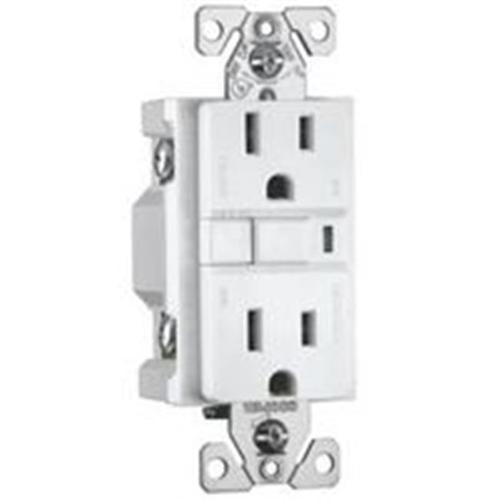
I suppose Earthed sockets are less common there anyway right, so that limits how common these could possibly be.

Re:We need a lot more electricians if we’re going to electri... by jacquesm on Wednesday January 11, 2023 @05:01PM (#34345612)
The lack of grounded sockets in the US has always been a complete mystery to me. Especially for kitchen appliances.
Re:We need a lot more electricians if we’re going to electri... by Domenic_S on Wednesday January 11, 2023 @05:32PM (#34345998)
Grounded outlets became code for kitchens and baths in 1961, although it wasn't that uncommon to see in '50s new construction. 1971 code started requiring them throughout the house.
Re:We need a lot more electricians if we’re going to electri... by OJFord on Wednesday January 11, 2023 @08:57PM (#34348060)
It's weird on imported goods here in the UK too. Macs are infamous for the fuzzy feeling of the double not-quite-insulated chassis. My Marantz amplifier (not US made but also sold there) that arrived today is the same. Weird looking plug too, like they had to go out of their way to source a dummy Earth to Earthless kettle lead and the result is bizarre and cheap looking but it's all they could get, because it's a weird requirement.
Re:We need a lot more electricians if we’re going to electri... by scrlk on Wednesday January 11, 2023 @05:45PM (#34346177)
The university halls that I lived in had those RCD sockets installed. The halls dated back to the early 60s - the sockets + Ethernet were installed in perimeter trunking. I suspect it was the cheapest option available to the university to modernise the electrical infrastructure inside the halls.
Re:We need a lot more electricians if we’re going to electri... by davidcuddeback on Wednesday January 11, 2023 @03:56PM (#34344640)
> If a breaker pops, it's easy. You have a box, maybe two if you live in a really huge house. Go there, look for the switch that's not quite lined up, toggle switch, done.

FWIW, you can have the same thing with GFCIs. I recently wired my garage for woodworking and installed all GFCI breakers in the breaker box, so a GFCI trip is just like a regular breaker trip (not that either of those has happened with the new circuits). The GFCI breakers cost about $50/ea [1] and protect the whole circuit.

> GFCI, you gotta figure out which one popped. If the wiring's not great, it may well be in a totally different room from the outlet that stopped working.

I once couldn't operate my garage door for a few days. There were no tripped breakers in the box. Eventually, it dawned on me that the circuit was labeled "GFCI" so maybe I should go check the GFCIs in the house, and I found that the GFCI in the upstairs bathroom had tripped. The upstairs GFCI is nowhere near the garage (and in the opposite direction from the breaker box). Since then, I've talked to several people in the area whose houses are wired the same way. I guess GFCIs must have been really expensive in the 80s, when these houses were built.

The moral of this story is that GFCI breakers can save a lot of headache. (Plus, those GFCI outlets are kinda ugly IMO).

[1]: I see they're about $60/ea now: https://www.homedepot.com/p/Square-D-Homeline-20-Amp-Single-...