There is nuance here. They claimed that their project is faster than a specific hand optimized project. Not faster than a theoretical peak performance c++ program.
I've run into similar situations where python reimplementation s are faster than java because python is easier to change and fixup algorithms. And %timeit in the ipython shell is way easier than the black magic involved in profiling and benchmarking java.
You also have people on rust subreddit or discourse asking for optimization help when their rust is not as fast as a Go example they wrote. Often you get buffered IO going and it's on par. But to melt faces like ripgrep and friends you often need to drop pretences and work on Vec<u8>s.
Unfair criciticm... first, Java has had a REPL for several years and you can time stuff like in Python as easily... second, profiling tools in Java are some of the best available, and are not blackmagic... quite simple to use, just attach them to the running process and hit "profile".
With that said: yes, I've also seen Java programs that run faster than the Rust or C counterpart. I suspect what OP saw falls into this category: a rare example that you take as a rule (maybe I misinterpreted the claim, I admit, but it does sound OP meant his Haskell program and, I assume, others which you write in the same style, cannot be beaten by the equivalent C++).
You're right that the java tooling is powerful. But getting numbers out of the JVM is not the black magic. The dark arts are setting up an experiment, managing the JIT warm-up, and interpreting the results. In my experience it's just hell trying to turn those numbers into a convincing argument that we have confidence in our performance. Concrete example: convincing openjdk11 to use AES instructions Vs conscrypt using AES out of the box with no warm-up...
The whole song and dance means that we just don't take it as a priority because it's a tiring sink of effort. On the other hand %timeit is so easy and remains consistent that you can use it with unit tests and offer algorithm fixes in PRs.
shared_ptr and unique_ptr have pretty significant overhead and are common practice, even for optimized codebases, so I wouldn't say it's impossible at all.
shared_ptr is expensive and easy to build leaks with, so a lot of code bases avoid it where possible. Though it's only expensive when you copy it, moving it is ~free.
From what I've been told, C++ games do another thing and just use arena allocators, which make allocations cheap (just an integer addition, provided you know a reasonable upper bound on the size of an arena, and if you don't, you may reserve a large piece of virtual memory, and commit it later in reasonably small, but also not too large chunks) and free-s even cheaper (either reset the integer, so that the arena can be reused, or a single syscall to unmap the whole arena in one go). That's a different strategy than making a lot of little allocs and frees, and then trying to minimize them by reusing objects, which is also quite hairy.
It still take time linear in length, but dead nodes are by definition stable so it does not really matter when you free them.
  fun replace_head_with_1 (_::xs) = 1::xs;
  val a = [2, 3, 4];
  val b = replace_head_with_1 a;
And a linked list is only a simple demonstration of a chain of pointers. It occurs spontaneously outside of containers, when you just write e.g. classes which have objects of other classes as their fields. In Haskell that would be records, or just an algebraic data type. Or just closures.
However, I doubt the efficacy of your C++ experts: most of the people I know who write C++ are actually really bad at optimizing code. They mostly use it for legacy reasons. If you get a team of experienced (and expensive) systems programmers, you will likely get a slightly better result than your GC algorithm.
Which is a very good reason to develop an optimized GC algorithm, the domain experts can crank out code without having to optimize every single memory (de)allocation which sounds like a waste of their time.
It’s funny, people don’t usually doubt that a modern compiler can do a better optimization job than an expert but add a memory management algorithm and that’s a bridge too far.
However, a GC is a lot slower than manual memory management, which contrasts with the fact that most compiler activities are actually pretty low in overhead (now - it didn't used to be this way). Really, the only cost overhead left is the abstraction mismatch, and that is not too bad, when you compare to how bad humans are at writing assembly.
That said, this case looks like one where the C++ experts spent very little time optimizing (mostly writing business logic), and probably made a very poor choice of tools.
There is a triangle of GC performance; througput, latency (i.e. pause length), and memory overhead. Manual memory management will often be slower (in the throughput sense) than a throughput-tuned GC because:
1. Manual memory management typically precludes moving live data
2. Manual memory management often frees data as soon as it is dead
GC will often have faster allocations than manual memory management because #1 makes it possible to just use a pointer-increment for allocation. GC will often have faster freeing of data because of #2; in particular using a nursery with Cheney's algorithm makes it O(1) to free an arbitrary amount of data.
Where a throughput optimized GC falls down is in that any code that allocates may have an unpredictable amount of delay.
Also note that for video games, both typical GC and malloc/free are often too slow for per-frame data, so arena allocators are used, which sidestep #2, and allow a pointer-increment allocation without needing #1. This is specifically because there are a lot of objects with exactly the same bounds on their lifetime. Special-purpose algorithms will almost always trump general-purpose algorithms when run on the workload they are optimized for.
  extern void foo(T *p);   // some arbitrary function

  void bar1(bool cond)
  {
    ..
    auto p = std::make_unique<T, your_deleter>();
    if (cond) { return foo(p.release()); }
    ...
  }
  void bar2(bool cond)
  {
    ..
    auto p = new T();
    if (cond) { return foo(p); }
    ...
    your_deleter()(p);
  }
In an ideal world, though, you could have an optimizer smart enough to do that transformation automatically. C++ compilers already do that in trivial cases, but they can't do it in general. My impression is that their Haskell compiler exploits the internal knowledge of what your_deleter does (i.e. reference counting) in order to optimize the code in various ways, like optimizing out such code, consolidating refcount updates, etc. And if I understand this correctly, there's no surprise at all that it can be faster than idiomatic C++ code written even by experts.
The question for me isn't the expertise of their programmers. Perhaps in their case they genuinely do need to have lots of objects on the heap, have (say) tight loops where they (for whatever reason) nevertheless cannot avoid the heap allocations, and don't have much of a use for finalizers besides freeing memory. In which case, I'm not surprised their solution clearly delivers better results than the C++ equivalent. The question from me, instead, is how well they think that generalizes, such as to (a) well-written Haskell programs in general, (b) well-written C++ programs in general, and/or (c) other domains. It would be one thing if their solution delivers better results in Haskell than C++ for their use case; it would be another thing if they could claim their solution delivers better results in Haskell than C++ for most use cases.
This is a non-issue.
The point is that check itself is an extra instruction (or two, rather) that would otherwise be skipped entirely.
I'm not saying this commonly makes a difference. I'm just saying this might be something that does make a difference for them in their particular use case.
Also note that I was trying to describe the general phenomenon with a simple example, but this obviously isn't limited to std::unique_ptr.
Or you can do what Erlang does: Erlang has neither mutation nor laziness, so you can't create cycles. The GC also lays out object in topological order in memory, so that you can detect garbage without tracing every life object.
Though I’ve been hacking on a UI framework written in Nim. Its ui nodes form a tree structure that only tracks parent => child. When it needs the parent info it makes a stack of parents during processing.
Essentially it moves the cycle collector / GC work to extra work during processing. But it’s cheaper since you’re already accessing the memory.
I just prefer to write cycle free code when I can and turn off the cycle collector. Though Nim’s cycle collector performs well and does some tricks using the RCs.
It's very easy to make a reference counting scheme not stop the world. It's a bit more difficult to make a GC implementation so.
That only works when you have infinite memory (or infinite CPU resources).
> It's very easy to make a reference counting scheme not stop the world. It's a bit more difficult to make a GC implementation so.
Only if by "not stopping the world" you mean your previous suggestion (leaking unbounded amount of memory to free() everything at some later point). When your memory is bounded, you will eventually have to stop/crash once you have run out of it.
AFAIK, the best modern state of art garbage collectors have stop-the-world pauses, proportional to size of root set and/or thread count. I'd love to see an RC implementation, that does not have stop-the-world pauses at all, but that sounds as audacious as claims of perpetual motion machine.
The Linux kernel uses RCU to manage data structures that are concurrently read and updated. When an old value (after an update) is no longer needed, a thread can either:
(a) block for a while to make sure no other thread is using it using synchronize_rcu() and then free the memory (see https://www.kernel.org/doc/html/latest/core-api/kernel-api.h...)
(b) if the thread cannot block, it will use call_rcu to register a callback to free the memory at a later time (https://www.kernel.org/doc/html/latest/core-api/kernel-api.h...). That callback generally runs in some other thread to do the cleanup.
Now, moving the concepts to user space, a typical user space implementation will just launch a dedicated thread to free all memory that is no longer needed by any RCU data structures.
You could go a bit further and have multiple concurrent threads mark the references, then sweep them up in a separate thread, too. Some sort of concurrent sweep and mark reference count system.
Alloc/free can introduce arbitrary pauses last I checked, so yes, there are pauses. Any time doing book keeping for resources rather than running your code counts as GC time.
Perhaps a nitpick: memory management time, yes, but not GC time.
alloc/free is manual memory management, not garbage collection.
More nitpicking: on x86-64, SMI interrupts can cause arbitrary pauses even without any software control involved. Hard realtime on x86-64 is not possible.
Orrrrr, GC pause just means pauses caused by the GC as part of its implementation's work to manage memory.
There appear to be two ways the terms are categorized:
1. "reference counting" and "garbage collection" are two types of automatic memory management/reclamation.
2. "reference counting" and "tracing garbage collection" are two types of garbage collection.
I think mbrodersen is using #1.
(Back in the 90s and 2000s I feel like #1 was much more prevalent. But #2 seems to have gained popularity since then. My theory is that whoever started writing the Wikipedia content for this stuff picked #2.)
Furthermore, pretty much every language has I/O, but that doesn't make the term useless.
Note that this mostly reflects automatic reference counting, like you have in Python or Swift, not so much manual reference counting like std::shared_ptr or Rc.
One reason is that GC is already universally used to mean only tracing garbage collection, and trying to defend its wider meaning is a pointless uphill battle.
Another is that is suits the job much better, because not every AMM technique works by producing garbage then collecting it, you know.
And the confusing thing is that garbage collection (GC) doesn’t collect garbage, while reference counting (RC) does.
GC doesn’t look at every object to decide whether it’s garbage (how would it determine nothing points at it?); it collects the live objects, then discards all the non-live objects as garbage.
RC determines an object has become garbage when its reference count goes to zero, and then collects it.
That difference also is one way GC can be better than RC: if there are L live objects and G garbage objects, GC has to visit L objects, and RC G. Even if GC spends more time per object visited than RC, it still can come out faster if L ≪ G.
That also means that GC gets faster if you give it more memory so that it runs with a smaller L/G ratio (the large difference in speed in modern memory cache hierarchies makes that not quite true, but I think it still holds, ballpark)
Where GCed languages pulled ahead for a while, particularly Java, was that they had mature concurrent memory allocation before most OSes did, so many people found on early two and four core hardware that malloc started to show up as a bottleneck.
(Exception is shared pages, not used for heap memory often.)
https://devblogs.microsoft.com/oldnewthing/20120105-00/?p=86...
The problem with that in the case of C++ is that you likely only want to leak things used in the end from the main thread, but not "recursively" - the distinction is hard to do.
It overlooks the difference in how likely this can occur (without large enough object graphs freed from the top it may never be an issue), when this occurs (any time vs on cleanup that may not be latency sensitive), and how much control the programmer has over RC costs (determinism allows to profile this and apply mitigations).
RC with borrow checking can avoid a lot of refcount increments.
Tracking GC typically needs write barriers, so it’s not free either.
I fail to see how would it be deterministic in a highly dynamic program. Like, imagine a game for example where the user can drag'n'drop different things to a "parent" object. Observability is imo an entirely different axis.
> RC with borrow checking can avoid a lot of refcount increments.
That's the same thing as escape analysis - with language support many many objects could be effectively "removed" from the guidance of the GC, decreasing load and greatly improving performance. It is a language-level feature, not inherent in the form of GC we do (RC vs tracing)
Where is the reference count going to 0 here? Presumably the object you dragged from one parent to another parent just swapped the reference and no ref count ever went to 0 which would have triggered a free.
I'm guessing OP meant deterministic as in, "oh when I profile my code and it hits that big lag spike, this occurs in my particle system. Let's swap that to a fixed size static memory allocation instead of RC". Whereas with GC you say, "oh my program has a big lag spike. I wish I could tell why that is, but the code executing at that time may or may not have been the reason GC was collecting then". The only experience I've had trying to get accurate profiling data on memory usage in Java/C# was aggravating to say the least.
Also, most games these days (and probably since the beginning of gaming) don't allocate and free stuff randomly. They're most likely using RC on big blocks of memory that are shared among several other game objects. Or RC on several fixed size pools that get used for different components like in an ECS. Or they use RC for things like long living assets that have difficult lifetime management.
Honestly, RC and garbage collection are unnecessary in most instances. Most of the time all you need is a unique pointer because you know exactly where the ownership of the object lies. For the edge cases, RC works fine.
I guess my biggest complaint is, why rely on a magical algorithm that you have no control over? I've had so many "fun" times trying to force GC to collect at specific points. It's really nice when you can say, "at this point in the program, this ref count will go to 0 and it will free and I don't have to worry about it lagging anything". Rather than "please GC.collect(), actually do something when I call you right here and don't wait another 5 minutes and ignore my pleading".
Because that's not the type of application for which a non-deterministic GC is suited. The vast majority of applications don't need that determinism. Right tool for the job.
Escape analysis is hard, and GC is typically used to free programmers from assisting it with extra syntax or unsafety. This is why GC languages tend to use generational GC instead of having precise analysis.
Using std::shared_ptr in a performance-sensitive context (e.g. after startup completes) is code smell.
Using pointers as important elements of a data structure, such that cycles are possible at all, is itself code smell. A general graph is usually better kept as elements in a vector, deque, or even hash table, compactly, with indices instead of pointers, and favoring keeping elements used near one another in the same cache line. Overuse of pointers to organize data tends to pointer-chasing, among the slowest of operations on modern systems.
Typical GC passes consist of little else but pointer chasing.
But the original article is completely, laughably wrong about one thing: an atomic increment or decrement is a remarkably slow operation on modern hardware, second only to pointer chasing.
Systems are made fast by avoiding expensive operations not dictated by the actual problem. Reference counting, or any other sort of GC, counts as overhead: wasting time on secondary activity in preference to making forward progress on the actual reason for the computation.
Almost invariably neglected or concealed in promotion of non-RC GC schemes is overhead imposed by touching large parts of otherwise idle data, cycling it all through CPU caches. This overhead is hard to see in profiles, because it is imposed incrementally throughout the runtime, showing up as 200-cycle pauses waiting on memory bus transactions that could have been satisfied from cache if caches had not been trashed.
If a core is devoted to GC, then sweeps would seem to cycle everything through just that core's cache, avoiding trashing other cores' caches. But the L3 cache used by that core is typically shared with 3 or 7 other cores', so it is hard to isolate that activity to one core without wastefully idling those others. Furthermore, that memory bus activity competes with algorithmic use of the bus, slowing those operations.
Another way GC-dependence slows programs is by making it harder, or even impossible, to localize cost to specific operations, so that reasoning about perforce becomes arbitrarily hard. You lose the ability to count and thus minimize expensive operations, because the cost is dispersed throughout everything else.
Very true. No matter how one looks at it, GC imposes a non-trivial overhead. If I remember correctly, wasn’t there a study that demonstrated an average Swift application spending 40% of its time on RC?
But at the same time hardware can be improved. Apple CPUs are an obvious example. Uncontended atomics are extremely cheap and the memory prefetcher can detect and prefetch pointer chases.
This is one of the biggest misconception about RC. You need not to increase the refcount just to read the referred data because you already have a reference whose count has been increased when handed down to you. That’s a semantic that’s very well carried off by Rust’s Arc type: the count is inc’ when the Arc is cloned, and dec’ when the cloned Arc is dropped. But you can still get a regular ref to the data since the compiler will be able to enforce locally the borrow, ownership and lifetime rules.
For example, in a web server, you might have the app’s config behind an Arc. It gets cloned for each request (thus rc inc’d), read a lot during the req, then dropped (thus rc dec’d) at the end of the handler.
RC limits itself to modifying only relevant objects, whereas GC reads all objects in a super cache-unfriendly way. Yes, an atomic read-modify-write is worse than a read, but it's not worse than a linked-list traversal of all of memory all the time.
And of course, not all kinds of object lend themselves to garbage collection - for instance, file descriptors, since you can't guarantee when or if they'll ever close. So you have to build your own reference counting system on top of your garbage collected system to handle these edge cases.
There's trade-offs, yes, but the trade-off is simply that garbage collected languages refuse to provide the compiler and the runtime all the information they need to know in order to do their jobs - and a massive 30 year long effort kicked off to build a Rube Goldberg machine for closing that knowledge gap.
Depends on the GC algorithm used. Various GC algorithms only trace reachable objects, not unreachable ones.
Reference counting does the opposite, more or less. When you deallocate something, it's tracing unreachable objects.
One of the problems with this is that reference counting touches all the memory right before you're done with it.
> And of course, not all kinds of object lend themselves to garbage collection - for instance, file descriptors, since you can't guarantee when or if they'll ever close. So you have to build your own reference counting system on top of your garbage collected system.
This is not a typical solution.
Java threw finalizers into the mix and everyone overused them at first before they realized that finalizers suck. This is bad enough that, in response to "too many files open" in your Java program, you might invoke the GC. Other languages designed since then typically use some kind of scoped system for closing file descriptors. This includes C# and Go.
Garbage collection does not need to be used to collect all objects.
> There's trade-offs, yes, but the trade-off is simply that garbage collected languages refuse to provide the compiler and the runtime all the information they need to know in order to do their jobs - and a massive 30 year long rube goldberg machine was built around closing that gap.
When I hear rhetoric like this, all I think is, "Oh, this person really hates GC, and thinks everyone else should hate GC."
Embedded in this statement are usually some assumptions which should be challenged. For example, "memory should be freed as soon as it is no longer needed".
Yeah, I think it's an inelegant, brute-force solution to a language problem - and that we continue to throw good money after bad improving it.
We should be investing in removing the need for GC through smarter compilers and through languages that allow us to better express our intent - and our object graph. Instead, we continue to improve on a giant linked-list traversal through all of live memory to try and infer the object graph at runtime. Without sufficient information to do it efficiently. The fundamental issue is that we don't have languages that express our goals in a way that allows memory management to be elided efficiently.
That doesn't mean I have some particular affinity for reference counting, though. It has its own issues as you rightly point out. I prefer it for its determinism, nothing more.
Having studied GC, implemented GC, and used it extensively (either as a dev or someone in operations) I'd say that there's just a lot of people out there who don't understand it. That's why people come to the wrong conclusion that it's somehow "inelegant" or "brute-force", when it is definitely neither of those.
There's also a lot of people who formed their opinions on GC from, say, what the JVM was like in the 1990s.
And there's a lot of people who only have a vague idea of how GC works in theory, but no knowledge of deeper theory and no practical knowledge of how real-world GC algorithms work.
I agree. To better understand garbage collection, nothing better than implementation. This article is such a joy to read:
https://journal.stuffwithstuff.com/2013/12/08/babys-first-ga...
There is nothing to understand or not understand there, it's hard data.
If you think GC pauses are measured in milliseconds, and not microseconds, then you're reading horribly outdated material. You're off by three orders of magnitude for an off-the-shelf GC with no tuning.
Even if you go for a GC that is designed to balance throughput and latency, like G1, you can still configure what pause times it should target and those can easily be ~10-20msec if you want, with the vast majority of pauses being far less than that (less than 3 msec).
"I was recently reading some blog posts of the V8 JS engine team. There is nothing to understand or not understand there"
Look, if your knowledge of GC comes from reading V8 blog posts then you're proving the grandparent's point pretty nicely. You leaped from an extremely basic and remote understanding of GC to "there's nothing to understand or not understand here".
Also yes, pauseless GC tends to have higher overheads than GC that pauses for longer. Whether that matters or not depends a lot on the use cases and actual size of the overheads. For example ZGC is pauseless but not yet generational. Generational ZGC when it launches will improve throughput significantly.
Google haven't done pauseless GC for V8. I don't know why not because they have done one for Android. ART uses a fully concurrent collector iirc. At any rate, although you can't import a JVM GC to V8, you can run JavaScript on the JVM using GraalJS and use the GCs that way. Though I don't recall off hand if Graal supports ZGC yet. There's no deep reason why it couldn't.
https://source.android.com/devices/tech/dalvik/gc-debug#art_...
It also does mixed AOT / JITC, amongst other tricks.
I really don't think it is a language problem, for several algorithms that one may want to write, GC is a necessity as object lifetime is not decidable at compile time. And it's not just some special parallel algorithm, I believe most business problems fall into this category - that's why we have basically "hacks" like RC, shared ptr, etc in low level languages to let us fake a partial GC (not collecting cycles).
On the plus side of GC, it has been one of the biggest productivity boosters the field has seen since the first non-assembly PL.
The paper mention elsewhere in the comments, https://web.eecs.umich.edu/~weimerw/2012-4610/reading/bacon-... "A Unifying Theory of Garbage Collection" put this in context.
For example, a generational garbage collection essentially employs a hybrid approach between tracing and reference counting.
Similarly, depending on your system's trade-offs, reference counting might be better. Eg tracing garbage collection works really great for main memory, but for filesystems we typically use reference counting to decide whether to retire an inode. (The paper explains this in more detail.)
Apropos hacks, have a look at this memory management 'thing' that doesn't move, but manages to compact: https://github.com/plasma-umass/Mesh
All tracing GC algorithms scan only live memory, and they typically do so in an array-like scan (writing some bits in the object header when a pointer to that object is discovered), not in linked-list order.
> RC limits itself to modifying only relevant objects, whereas GC reads all objects in a super cache-unfriendly way. Yes, an atomic read-modify-write is worse than a read, but it's not worse than a linked-list traversal of all of memory all the time.
This is patently untrue. Contemporary GCs have had card marking/scanning for 10+ years now.
But a compacting GC copies the data it's scanned into a contiguous stream, dramatically improving locality, cache utility and stream detection. And this affects not only subsequent GCs but also the application itself, which may traverse its object graph far more often than the GC does.
This is pretty trivial to avoid. When your thread finds itself freeing a big chain of garbage objects, you can have it stop at any arbitrary point and resume normal work, and find some way to schedule the work of freeing the rest of the chain (e.g. on another thread). It's much more complex and expensive to do this for tracing live data, because then you need to manage the scenario where the user program is modifying the graph of live objects while the GC is tracing it, using a write or read barrier; whereas for garbage, by definition you know the user can't touch the data, so a simple list of "objects to be freed" suffices.
"Reads become writes" (indeed, they become atomic read-modify-writes when multiple threads might be refcounting simultaneously) is a problem, though.
But this is what happens in a modern state-of-the-art tracing GC implementation, isn't it?
You have to do this if you want deterministic deallocation, because your holding a read-only reference to that object might be exactly what keeps it around for longer. So you need to track that.
(Deterministic deallocation also means having to recursively free unreachable objects. That's often described as an arbitrary "pause" behavior in RC systems, but it's actually inherent in the requirement for deterministic behavior. If you don't care about determinism for some class of objects, you can amortize that pause by sending them to a separate cleanup thread.)
My own read on this is that it blurs the line with deferred collection/counting, because you could either use it to complement deferral making it cheaper, or avoid deferral because you're getting enough of the benefits of deferral by proving objects dead instead of discovering that they are dead.
The issue with GC is it is a fluid implementation detail that is often necessary to understand deeply.
This lead to one of the more entertaining C# memory leak stories, where Princeton's entry to the DARPA Grand Challenge ended up failing because every frame they detected obstacles, created a class for each, and subscribed each obstacle object to an event. They missed that the event subscription was keeping those objects alive, and every piece of tumbleweed in the desert helped leak memory until the car just stopped! https://www.codeproject.com/Articles/21253/If-Only-We-d-Used...
When it finally gets destroyed, its Destructor method would be called. At which point the thing at the other end of the network is told that it was talking to a zombie.
Note that network connections can be expensive for the other end, so this is a horrible design. We put a lot of work in to reliably get rid of connections when not needed. But you still need the fallback of being able to correctly handle programmer oversights.
When our observer is also dead (so the pair is out of scope) it will be a dead object receiving events.
The codebase I work with has had many pathological crashes due to this behavior.
So basically in C# when you use += to subscribe to events, in a big system where lifetimes of objects are independent of each other, you're back to a C/C++ mindset where you should check you have a -= call for the subscribed object when the subscribing object is about to run out of scope. Else you get random crashes, when you get events delivered to an object that should have been dead.
This is one of the reasons I don't like "event" and += in C#. It's a leaky abstraction, like you said.
There's WeakEventManager [0] but that's available only in "classic" dotnet framework (and in "new" dotnet but only if you're targeting Windows) since it lives in the WPF namespace. It can be used outside of it, but you still take a dependency on System.Windows.
There are some other bespoke solutions too.
There's an open issue on the dotnet repo to add a weak event manager to the standard libs [1]. It's very well worth reading through it, it also has links to the other bespoke solutions available.
[0] https://docs.microsoft.com/en-us/dotnet/api/system.windows.w...
If you're used to objects being destructed when they go out of scope ala C++ then yeah adapting to the lifecycle of objects in Java/C# takes some doing. But I think there's benefit to be had.
Which pauses you are meaning?
Reference counting is not free, but there are no long pauses (long compare to GC, e. g. in JVM under certain workloads you can get 100ms pauses).
Nim switched from GC to RC and it even increased performance.
Benchmarks show they are within 30 percent of each other: https://www.techspot.com/images2/news/bigimage/2021/03/2021-...
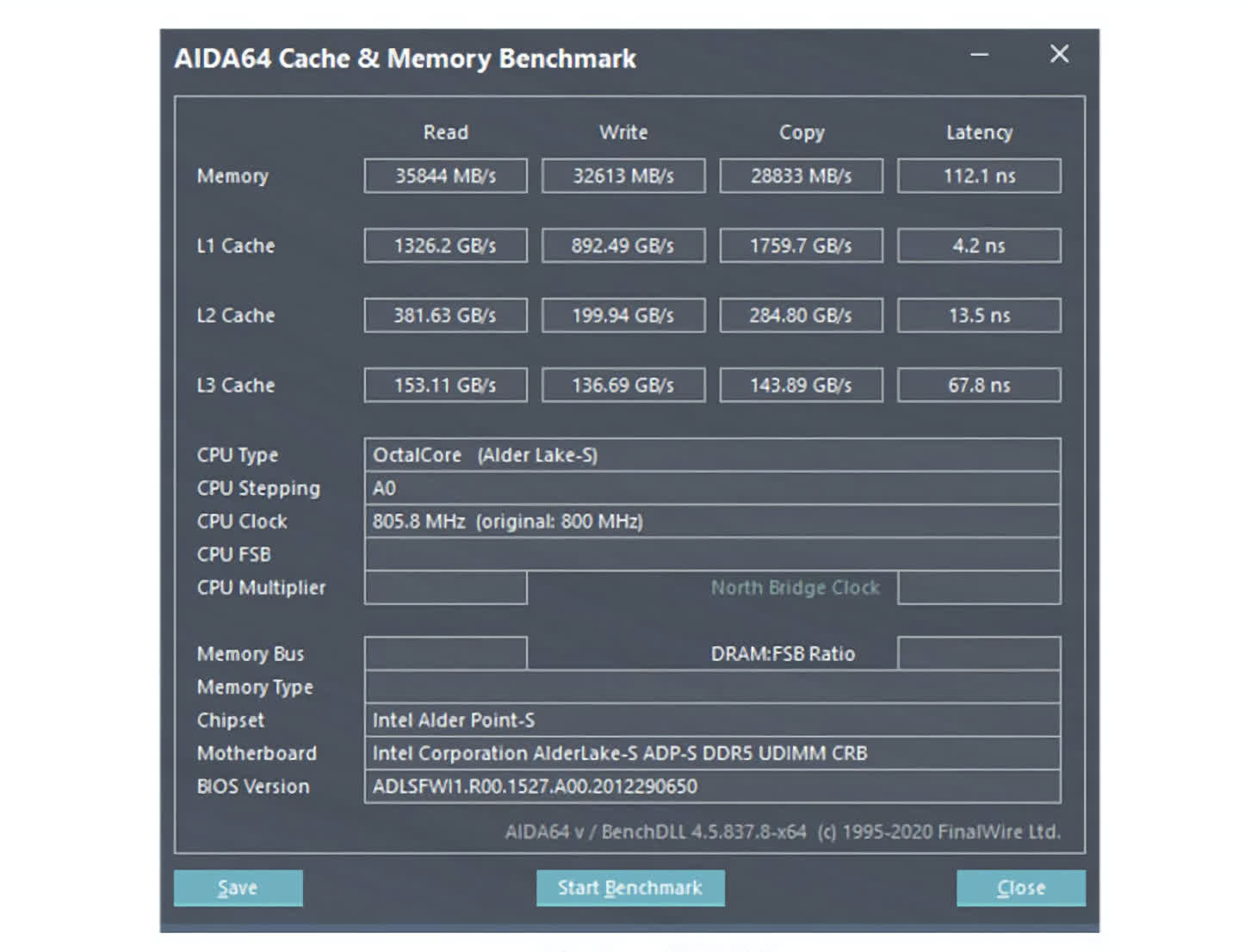
When I can easily replace the deallocator (thus excluding most non-RC production GCs), I can (re)write the code to avoid GC pauses (e.g. by amortizing deallocation, destructors, etc. over several frames - perhaps in a way that returning ownership of some type and its allocations to the type's originating thread, and thus reducing contention while I'm at it!) I have done this a few times. By "coincidence", garbage generation storms causing noticable delays are suprisingly uncommon IME.
As programs scale up and consume more memory, "live data" outscales "garbage" - clever generational optimizations aside, I'd argue the former gets expensive more quickly, and is harder to mitigate.
It's also been my experience that tracing or profiling any 'ole bog standard refcounted system to find performance problems is way more easy and straightforward than dealing with the utter vulgarity of deferred, ambiguously scheduled, likely on a different thread, frequently opaque garbage collection - as found in non-refcounted garbage collection systems.
So, at best, you're technically correct here - which, to be fair, is the best kind of correct. But in practice, I think it's no coincidence that refcounting systems tend to automatically and implicitly amortize their costs and avoid GC storms in just about every workload I've ever touched, and at bare minimum, reference counting avoids GC pauses... in the code I've written... by allowing me easier opportunities to fix them when they do occur. Indirectly causal rather than directly causal.
> if you read a heap-object out of a data structure, you have to increment the object's reference count.
This isn't universal. Merely accessing and dereferencing a shared_ptr in C++ won't touch the refcount, for example - you need to copy the shared_ptr to cause that. Rust's Arc/Rc need to be clone()d to touch the refcount, and the borrow checker reduces much of the need to do such a thing defensively, "in case the heap object is removed out from under me".
Of course, it can be a problem if you bake refcounting directly into language semantics and constantly churn refcounts for basic stack variables while failing to optimize said churn away. There's a reason why many GCed languages don't use reference counting to optimize the common "no cycles" case, after all - often, someone tried it out as an obvious and low hanging "optimization", and found it was a pessimization that made overall performance worse!
And even without being baked into the language, there are of course niches where heavy manipulation of long-term storage of references will be a thing, or cases where the garbage collected version can become lock-free in a context where such things actually matter - so I'll 100% agree with you on this:
> There are no hard lines; this is about performance tradeoffs, and always will be.
Perhaps the biggest misconception about reference counting is that people believe it avoids GC pauses. That's not true. Essentially, whereas tracing GC has pauses while tracing live data, reference counting has pauses while tracing garbage.
Reference counting is really just another kind of GC. I'd highly recommend perusing this paper for more details: A Unifying Theory of Garbage Collection. https://web.eecs.umich.edu/~weimerw/2012-4610/reading/bacon-...
One of the biggest issues with reference counting, from a performance perspective, is that it turns reads into writes: if you read a heap-object out of a data structure, you have to increment the object's reference count. Modern memory architectures have much higher read bandwidth than write bandwidth, so reference counting typically has much lower throughput than tracing GC does.