Generally the people using regexes care if they're correct. Frequently, all possible input variants are not enumerated in tests. Frequently, companies want to have confidence in their production code. Imagine this regex is deployed on a sign up flow, and its failures invisibly increase your churn rate. Can it happen with a hand crafted regex? Yes, of course. But I'd imagine it will happen even more frequently with an AI produced custom regex plus a person who doesn't actually understand regexes.
If you have to be a programmer to understand why something's bad, who's going to prevent it? This is a major unsolved problem in the structure and organization of working.
As you type in comments or code, CoPilot will sometime autocomplete up to about 10 lines of code, based on the content of the file you are editing (maybe just the code close to the edit point?).
My other tools? I use LispWorks Professional, Emacs with Haskell support, and sometimes IntelliJ. I work a lot on remote servers so I depend on SSH/Mosh and tmux also.
Kind of like regular autocomplete. If it's wrong you just keep typing.
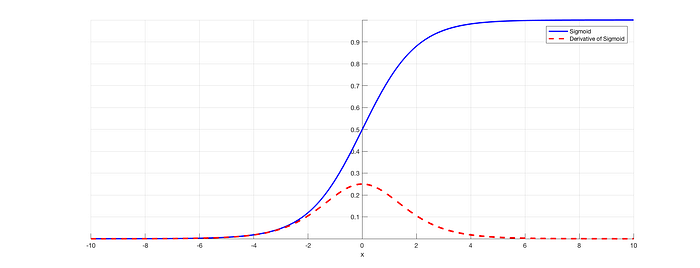
We've been on the steep part of an S-curve.
Come on, you could have said the same thing about excel 30 years ago.
The exponential model is something close than what is behind Ray Kurzweil reasoning about the Great Singularity and how the future will be completely different and we're all going to be gods or immortals or doomed or something dramatic in that vein.
The S-Curve is more boring, it means that the future of computing technology might not be that mind blowing after all, we might already have reaped most of the low-hanging fruits.
A bit like airplanes, or space tech you know, have you seen those improving by a 10x factor recently?
Is space tech included ironically here? There's been 10x (or more) improvements across dozens of space tech problems in the last couple decades.
Would that be 1000x, 100x or even 10x easier than 60 years ago? Well, I don't think so.
From my perspective space tech has never quite leaved the prototype phase, for some reason.
But I still have hope for a undivided world, that one day even abolish the patent system. Then I would see potential for exponentional progress.
AlphaZero is already capable of optimizing itself in the limited problem space of Chess.
Infinitely increasing the computing power of this system won't give it properties it does not already have, there is no singularity point to be found ahead.
And I am not sure that there are any singularities lying ahead in any other domains with the current approach of ML/AI.
We've already seen in games with simple rules and win conditions that giving computers data on what we think are good human games can make them perform worse than not giving them data. Most problems aren't possible for humans to ebncapsulate perfectly in a set of rules and win conditions to just leave the processing power to fill in the details, and whilst curating data and calibrating learning processes is an area we've improved hugely on to get where we are with ML, it's not something where human knowledge seems more likely to reach an inflection point than hit diminishing returns.
I think this is only true because, so far, our heuristics are not that clever.
The number of orders of magnitude remaining, is not that large.
We live in exciting times. Given exponential rates of progress, I can’t really even imagine what breakthroughs we will see in the next year, let alone the next five years.
EDIT: I forgot to mention: having GitHub/OpenAI tools like CoPilot always running in the background in PyCharm and VSCode has in a few short months changed my workflow, for the better.