"The requirements dictated the step-in height, the glass height (including the low side glass), the vision angles, the internal height, and the maximum roof height," wrote Kahn in a tweet. "That was all locked in."
Other constraints included the ability to reach the mailbox while in the seated position, and the requirement to see the ground around the vehicle...
Just because those things are spec'd as they are, that doesn't mean they need to be.
My local postal service used to make delivery on bicycles but they have gradually introduced golf-cart like miniature EVs. This allow each run to cover a much larger area but probably would not for the most of US because their mail routes are too long.
Also it sounds like the new trucks have pretty stringent visibility requirements, which would help avoid running over playing children in a suburban setting. I can see that as a pretty serious risk for the USPS, given how frequently they stop for a few minutes. An off-the-shelf van without the unusually shaped front probably has more blind spots a kid could sneak into.
Oshkosh is also a very well established manufacturer of vehicles for the government and holds substantial military contracts for custom vehicles such as the highly recognizable HEMTT. So the Oshkosh purchase is fairly low-risk in that Oshkosh has a proven track record of delivering vehicles for government fleets.
UPS and FedEx also make use of largely custom vehicles. They are based on off-the-shelf step vans, but to a large extent OTS step vans no longer exist in the US and nearly all of them you see are contract designs for fleets. There's a bit of a cyclical relationship here as the modern step van is basically defined by UPS and FedEx, which purchase their trucks custom to specification from body-makers like Utilimaster and formerly Grumman-Olson. Grumman popping up here again is not coincidental - the USPS and UPS formerly got their custom trucks from the same manufacturer, but Grumman-Olson is no longer nearly as important of a player as it once was.
The short answer: USPS is contracting for at least 50,000 vehicles. When you buy 50,000 of just about anything you gain a lot of leverage to customize.
[0] I couldn't quickly find any believable stats, but I think it's a reasonable guess to start with traffic deaths in general, for which there are published numbers.
It certainly sounds reasonable to have an enclosed cargo area with sufficient head room for comfort, but saying they look like they do because there are requirements doesn't really explain it.
In town here, it's all walking routes. I wonder what the numbers are on curbside vs walking?
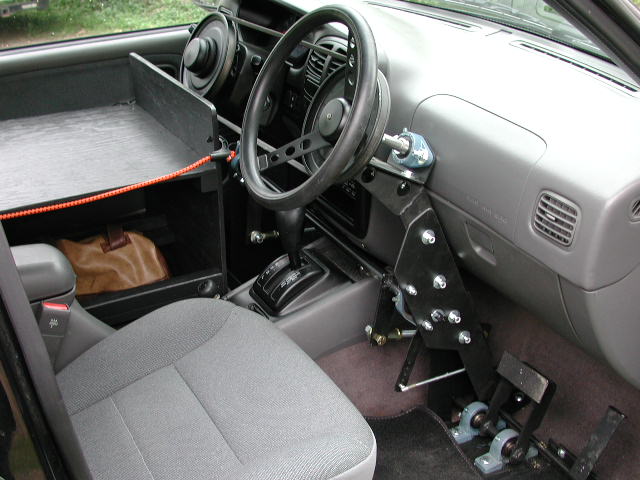
Aftermarket RHD modified vehicles have a lot of issues, like being able to see the gauges, the ability to operate all of the ancillary controls, interference with factory safety equipment, poor ergonomics, etc.
https://www.postalthings.com/images/MailTrays/KiaMailTray.jp...
I made 1 statement saying that requirements aren't explanations, 1 statement that I observed a rural carrier use a jeep for years, and then a statement that jeeps are in fact commercially available.
I would certainly expect a jeep with a mirror bolted on the traffic side to have better rear and side visibility than something with no glass in the back, so go ahead and hang your hat on visibility if you want.
Now, I understand that it's to prevent accidents, make it more easy to put mail into mailboxes if they're situated right next to the road, etc. Yet somehow every other country makes it work without specialized vehicles.
To my knowledge, there are no right-hand-drive vehicles manufactured in the US, as RHD is limited to countries closer to extensive auto manufacturing in Europe and Asia. As a stopgap measure, the Postal Service has been making use of domestic minivans converted to RHD using a belt arrangement that does not look particularly user friendly. The driver has to lean over to see the dashboard instruments.
Unit cost would be higher but it would be laying the groundwork for the next generation of vehicle, sustaining those smaller companies and encouraging innovation. As well as avoiding too much reliance on one supplier.