- Immunity tests used might have shown false positives. So the 15% might be too high.
- Results of the highly infected town Gangelt are not transferable to whole Germany with lower infection rates.
- The author of the study is inflicted with a marketing agency, which is at least uncommon in science.
Own comment: The danger SARS-Cov19 remains in the speed of spreading due to missing herd immunity (in contrast to the common flu). 0.37 per cent is still a lot. USA: 327,200,000*0.37% = 1,210,640. Social distancing remains the single most effective tool.
[1] https://www.zeit.de/wissen/gesundheit/2020-04/heinsberg-stud...
Regarding your other comment about the 15%. You might have a point. But I'm not into this topic deep enough for any kind of judgement.
https://www.sueddeutsche.de/wissen/heinsberg-studie-herdenim...
it is a good start & germany is doing now many more serological studies (also to monitor over time) and hopefully we'll soon gain more confidence re status quo and what it means
6 feet was chosen as a matter of policy because it was the most you could reasonably get people to stay apart. Sidewalks, store aisles, elevators, etc, are all about 6 feet wide and so it's a good number to convince people to cross the street or wait for the aisle to clear. 100 ft would be a much safer number but that's just not really physically reasonable (and so the guidance would have been dismissed by the public).
The choir practice should not be an example of how easy it is to spread; rather, it should be an example of the unreasonable intuitions people have about 'distance'.
Remaining in close contact, indoors, while singing, for a long period of time is not a good idea. It is quite reasonable to expect that to lead to transmission.
Similarly, two people passing by each other on a sidewalk, with nose breathing and mouths closed, even if it's closer than 6 ft., is a very small risk. Still good to maximize space, but nothing to get worked up about.
I don't have a source, but a microbiologist I know was saying that safe distances, based on droplet physics, depend on activity, e.g. standing in a single file line vs walking vs hiking vs running.
Regardless, doesn't matter. Singing/shouting/chanting with a high density of people inside a closed setting is dangerous for any repository disease as viral concentration just keeps building up. Same thing happened with Shincheonji on a far larger scale.
"Members of the choir were already aware of the COVID-19 outbreak in their state, particularly around the Seattle area, which is about an hour south of Skagit County by car. Hand sanitizer was dispensed at the door of the practice that night in March, no one shared sheet music, and people were conscious not to stand too close to one another or engage in their huggy greetings. Also, no one remembers anyone coughing or sneezing, and no one present felt ill at the time. Nonetheless, a huge percentage of people present later tested positive for the virus."
My point is that the original article said that it's hard to get infected. Assuming that everyone was asymptomatic, and there was no coughing or sneezing, and everyone stayed away from each other, it's actually not that hard to spread the infection. In fact, if there was a single person who was asymptomatic and they infected 45 people, that means it's very easy to get infected.
It may very well be that it's very easy to spread this virus, but I don't think this incident is a good indication of that. It seems more an indication of how poorly even well-intentioned people understood the contagiousness and what exactly social distancing meant at the time this happened (1 month ago).
Brings up the difference between public health risk and personal risk. Public health perspective you want contacts to be infrequent and importantly short.
That is this evidence doesn't contradict Streeck arguing that formate transmission is unlikely and that it is long term exposure to breathing people that is the real risk. (Or that being in a relatively empty grocery store provides little risk)
(I don't have a clue one way or the other, just commenting on applicability of evidence)
Standing 6 feet away from someone for an hour... Is another story.
Also worth noting: My wife has worked with a lot of community choral groups. She is convinced that they took all reasonable precautions, but doubts that their rehearsal space was sufficient to accommodate everyone standing 6 feet apart from eachother for the entire exercise... Or even for any part of it.
I leave it as an exercise to the reader to work out what this means for the typical tech firm's open office layout.
Also this is self report of behavior after people did what was in retrospect a very stupid and risky activity.
In fact existing outbreaks COVID-19 are notably NOT solely due to "people being closer together over a longer period of time". Cases of completely untraced community infection are everywhere with this disease.
> “To actually 'get' the virus it would be necessary that someone coughs into their hand, immediately touches a door knob and then straight after that another person grasps the handle and goes on to touches their face.”
This is just simply not true. Fomite transmissibility was demonstrated back in January. I think what he's trying to say is that the chances of static infectious surfaces seem low and that close proximity to an infected person is still the most common vector. But the way you quoted it makes it sounds like you can't get it from a surface, and we know that's not true.
Seriously, wash your hands, folks. And beware of selectively quoted articles telling you not to take obvious mitigation steps.
In early April 2020, Streeck and his team reported that they had "carried out an intensive search of the home of a family infected with the coronavirus but found no trace of it on surfaces."[18]
“We did not find any live virus on any surface. Not on cellphones, not on taps, not on doorknobs.”
Again, we know that this virus can be transmitted to surfaces by the infected. We know that it lives there for days and can be cultured. We do not know the fraction of real-world infections that take a fomite route vs. inhalation, and this study seems like evidence (albeit somewhat limited) that the number is very low.
No one should be interpreting this as "you can't get sick from touching things". We don't know that. Even given this one study, that's not an appropriately conservative way to understand the disease, given the known stakes.
Wash your hands.
I walked into a Costco that had a line that stretched across most of the store. For visual reference, imagine people lined up almost to the horizon of this image: https://s3-media0.fl.yelpcdn.com/bphoto/MTkFPPFWgy7UPQtsJo_e...
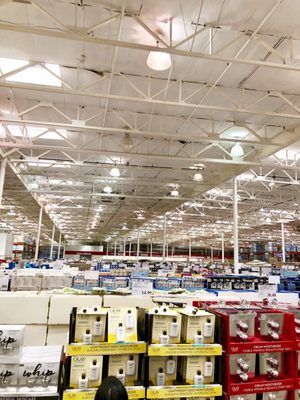
I immediately walked out, but if there were COVID positive people (this was in NYC by the way), I cannot imagine how others would not be infected
While “social distancing” is a logical thing to do because of what we generally know about respiratory viruses, there’s actually little/no evidence that “shopping” is a thing that we need to specifically be worried about. It’s likely that we hit the point of diminishing returns once we shut down large gatherings like concerts and restaurants.
As a counter to claim virus is “unable to live on surfaces”:
Virus was found 17-days after cabins on a cruise ship were vacated: https://www.cdc.gov/mmwr/volumes/69/wr/mm6912e3.htm
Coronaviruses: How long can they survive on surfaces? https://www.medicalnewstoday.com/articles/coronaviruses-how-...
First link is ambiguous as to if the samples taken were “toxic” enough to result in infection, but the second link makes it clear that virus survives on surfaces for days in quantities large enough to infect someone.
Unless there’s more to this, it doesn’t seem very useful to me. It seems obvious to me that you’ll find some RNA. However it would likely be damaged/fragmented.
I’m not sure about the second reference, it would be interesting to dig out the original study.
— Research found that SARS-CoV-2 was detectable in quantities large enough to be infectious in aerosols for up to 3 hours, up to 4 hours on copper, up to 24 hours on cardboard and up to 2-3 days on plastic and stainless steel.
https://www.journalofhospitalinfection.com/article/S0195-670...
Human coronaviruses can remain infectious on inanimate surfaces for up to 9 days. Surface disinfection with 0.1% sodium hypochlorite or 62–71% ethanol significantly reduces coronavirus infectivity on surfaces within 1 min exposure time. We expect a similar effect against the SARS-CoV-2.
As one of 9 million recently unemployed, I'd gently remind you that while the changes to our behaviour are simple, they have real costs.
Likewise groceries, parcels and deliveries either go into quarantine for 2 or 3 days or they are washed.
At this point new hospital admissions are significantly down from their peak. If the point is to slow the spread but acknowledging that it cannot be eliminated, we’ve in fact over-corrected.
On the testing and PPE front, again I wonder if this is just a feel good notion or if there’s even napkin math to show what scale of PPE and testing is theoretically being deployed and what impact that may have on R0.
But returning to the core point, how long until COVID has runs its course, and at what cost? Can we admit that herd immunity must be reached? As Dr. Birx repeatedly asks, are we at the tip of the iceberg or 25/50/75% of the way through?
No one wants to think about it because I guess it would make an uncomfortable choice obvious. Better to just self-flagellate so we can feel like we’re doing something.
> Saying that live virus is there because viral RNA was found is like saying I must be holding a meatball sub because there's a marinara stain on my pants.
https://www.virology.ws/2017/02/17/viral-rna-is-not-infectio...
But so much we don't know about this new virus strain, hence big rush to learn all these details about this virus as with better understanding, better management and approaches come about.
As for its survival rate on surfaces, we still don't know all the details, but does no harm to just treat all surfaces as infected outside your home and work with that - hence hand washing and not forgetting the details like tap, keys, phone, things you can't avoid touching up to the point you actually get to wash your hands. I'd hate to think how many have clean hands and then turn the tap off with the same hands that turned it on when potentially contaminated. That will be the small oversights that catch people out more.
Hence until we get that data to know for sure science wise, presume the worst and hope for the best is always the only prudent approach.
There is no "dormant vs. live" distinction for viruses outside of a host as they have no function / biological processes outside of a host. They are just molecular robo-syringes that inject RNA/DNA.
Heck, may find out that frozen good with contaminated packaging can put the viruses into dormant mode and when you take them out of the freezer, and temperature and humidity level kick it into life. Details like that unlikely, yet still not been ruled out and much science still ahead upon this virus and caught many off guard and on the backfoot, but we love solving problems and the science is starting to get more detailed a bigger picture every day. But still, mindful of not eliminating aspects that have not been totally ruled out is a balance of risk/caution and fair judgement still plays a part.
However, outside of the cell, neither of those terms mean anything.
A virus outside of a cell does nothing, period. It is essentially a USB flash drive with a computer virus in it. Saying a USB flash drive can "lie dormant in a drawer for days" is just silly.
> Heck, may find out that frozen good with contaminated packaging can put the viruses into dormant mode and when you take them out of the freezer, and temperature and humidity level kick it into life.
We won't though, because we thoroughly understand how these things function. There are things that function like that: bacteria.
https://www.land.nrw/sites/default/files/asset/document/zwis...
All statements made in the paper are marked with "vorläufig", which translates to preliminary.
Considering the gravity of the situation, I don't think it's bad to provide preliminary results, but that's probably highly debatable.
— Research found that SARS-CoV-2 was detectable in quantities large enough to be infectious in aerosols for up to 3 hours, up to 4 hours on copper, up to 24 hours on cardboard and up to 2-3 days on plastic and stainless steel.
Edit: Now that I actually read the paper that OP posted, it seems that they're estimating the half-life of SARS-CoV-2. It really depends on the initial amount of viruses how long it takes to go below some fixed 'non-infectious limit'. So numbers such as '3 hours' quoted in the paper are pretty much meaningless in practical situations where the inital amount of viruses might be much different. It's not that they're trying to emulate a cough or something.
https://news.ycombinator.com/newsguidelines.html
More generally: will you please stop posting unsubstantive comments and flamebait to HN? You've done it a lot, and we ban accounts that do it, because it destroys the spirit of curious conversation, which is what the site is intended to be used for.
Ah yes so the single men's bathroom at my office of 250 people!
This study and its conclusions have seen close to universal dismissal. It can't even demonstrate that it is actually detecting SARS-CoV-2 immunity (it was claiming results before anyone had even demonstrated effective tests for relevant antibodies), and not any of the many variations of coronavirus that spread during the colder months (yet which offer no immunity to SARS-CoV-2).
The claims about shopping are...unsupported and go contrary to an enormous volume of evidence (namely the high R0).
It isn't a good example of anything except that junk science has a moment to shine in a crisis.
EDIT: LOL, -2. This is the moment I delete my account and find slightly less stupid venues to participate in. Cheers.
Professor Hendrik Streeck, director of the Institute of Virology at the University Hospital in Bonn
https://en.wikipedia.org/wiki/Hendrik_Streeck
Streeck studied medicine at the Charite University, Berlin and obtained his PhD from the University of Bonn, which he performed part-time at the Partners AIDS Research Center, Massachusetts General Hospital, Harvard Medical School.
After his graduation Streeck started to work as a postdoctoral fellow at the Ragon Institute of MGH, MIT and Harvard. In 2009 he was promoted to Instructor in Medicine and in 2011 to Assistant Professor at Harvard Medical School. In September 2012 he was recruited to the United States Military HIV Research Program, Bethesda, where he became the Chief of the Cellular Immunology Section as well as Assistant Professor at the Uniformed Services University of Health Sciences and adjunct faculty of the Bloomberg School of Public Health, Johns Hopkins University.[3] In 2015 he became the Chair for Medical Biology at the University Duisburg-Essen and founded the Institute for HIV Research in the same year,[4][5][6][7] though he still maintains the status of "visiting scientist" with the US Military HIV Research Program.
In 2018 Streeck was appointed to the advisory board of the German AIDS Foundation (Deutsche AIDS Stiftung).[8] In April 2020, he was appointed by Minister-President Armin Laschet of North Rhine-Westphalia to a 12-member expert group to advise on economic and social consequences of the 2020 coronavirus pandemic in Germany.[9]
Coronavirus research
In early April 2020, Streeck and his team reported that they had "carried out an intensive search of the home of a family infected with the coronavirus but found no trace of it on surfaces."[18]
“We did not find any live virus on any surface. Not on cellphones, not on taps, not on doorknobs.”
Being an amazing HIV researcher does not mean Streeck has an appropriate background in coronaviruses to be an authority in that field, especially given that his team has (a) found outlier results at odds with every other study thus far published and (b) is making a broad policy pronouncement based on studying a single family's household without considering confounding factors, like say the family cleaning the house before the researchers visited.
...which would be? AFAIK, there aren't any comparable studies to date, which is why there was such a buzz about it.
Junk science can come from people not known for junk science. And in the end we rack it up to a technical fault (e.g. a test for coronavirus antibodies that cannot distinguish between many of the several other coronavirus infections that spread during the winter), the way participants were enrolled, etc. That's why there is a peer review process.
And this study bizarrely was released with a press conference and a press conference, yet perilously little actual methodology or useful information for the scientific community to critique. Oh and with a professional PR firm. And it uses this to promote significant changes in public policy! (e.g. relax the restrictions because our two page summary gives some conclusions that are entirely contrary to the entire world of experts)
It's all extraordinarily weird.
And again, it has only made waves online. Among the medical professionals, virologists, etc...crickets.
Just to be clear, HN would normally laugh nonsense like this off the site -- a PR "study" that has zero peer review, that goes against all conventional wisdom, that is not acknowledged or credited by any other expert in the field. Has this site gone absolutely stupid?
Kinda. A lot of people are panicking, even on HN, and this also draws out a lot of opposition. It's becoming a polarized topic like everything else.
Honestly? An R0 of 2-3 is frankly not that high.
If grocery shopping were a huge risk, and people spread the disease before being symptomatic, you’d expect a single sick individual to infect way more than just 2-3 people on average.
Compare with measles’ 12-18 R0. That’s high.
Severe acute respiratory syndrome coronavirus 2 is the causative agent of the 2019 novel coronavirus disease pandemic. Initial estimates of the early dynamics of the outbreak in Wuhan, China, suggested a doubling time of the number of infected persons of 6–7 days and a basic reproductive number (R0) of 2.2–2.7. We collected extensive individual case reports across China and estimated key epidemiologic parameters, including the incubation period. We then designed 2 mathematical modeling approaches to infer the outbreak dynamics in Wuhan by using high-resolution domestic travel and infection data. Results show that the doubling time early in the epidemic in Wuhan was 2.3–3.3 days. Assuming a serial interval of 6–9 days, we calculated a median R0 value of 5.7 (95% CI 3.8–8.9)
That basically explains the difference...
The study has been widely critiqued, but dismissal is too harsh. I don't think anybody really has said that the main finding is wrong. It just might not be as strong. Instead of 15% immune in the area, it might be just 12% or 10%. Fatality rate might be 0.5% rather than 0.37%.
The study goal itself is correct and it is a shame that not every epidemiologist is doing exactly the same study right now all over the world. That the German CDC did not think to run such a study themselves since Covid-19 turned bad is a scandal.
a) giving confidence intervals, and
b) telling that several of the infected patients have their worst time yet to come.
Germany launched the Heinsberg Protocol study to examine the rural town of Gangelt in the region of Heinsberg, where the first virus fatalities occurred.
https://www.thenational.ae/world/germany-s-wuhan-has-15-per-...
During recent weeks, his team completed substantial research conducted through surveys and investigations in homes across the Heinsberg region - where more than 1,400 confirmed cases had been reported. Heinsberg has an approximate population of 250,000 inhabitants and has confirmed 46 coronavirus-related deaths.
These research findings have already provided some indication on how the virus works, as Streeck clarified:
“There is no significant risk of catching the disease when you go shopping. Severe outbreaks of the infection were always a result of people being closer together over a longer period of time, for example the après- ski parties in Ischgl, Austria.” He could also not find any evidence of ‘living’ viruses on surfaces. “When we took samples from door handles, phones or toilets it has not been possible to cultivate the virus in the laboratory on the basis of these swabs….”
“To actually 'get' the virus it would be necessary that someone coughs into their hand, immediately touches a door knob and then straight after that another person grasps the handle and goes on to touches their face.” Streeck therefore believes that there is little chance of transmission through contact with so-called contaminated surfaces.
https://today.rtl.lu/news/science-and-environment/a/1498185....