That's not what the guidelines said. They guidelines were referring only to "hygienic masks" a.k.a. generic surgical masks:
The Federal Office of Public Health (FOPH) does not recommend that people who are well wear hygienic masks (surgical masks). If you are in good health, they do not protect you effectively against an infection with respiratory viruses (i.e. self protection). Wearing a mask therefore can give you a false sense of security.
This is a known point. But they did not mention -- nor did they advise against the use of -- properly rated and certified masks (such as N95 masks). Which do provide some protection (albeit with caveats).
Also, just think for minute around the basic logic of what you're saying. If (properly rated and certified) masks provide "no protection" (for unprotected individuals) - then why are the health care workers using them?
And N95s are heavy and uncomfortable. No one can wear them for long. But if anyone wants to, they’re welcome to it.
Although there are different kinds of N95 masks, the most common kind weighs a few grams; this is not uncomfortable.
I find N95 face masks insufferably hot and muggy, with their “few grams” hanging off my nose and ears eventually very annoying. I don’t know if any hc workers that find N95s tolerable for very long.
I wouldn't say that was fun. But it was tolerable. A N95 mask is fine by comparison - not much worse than a surgical mask.
(1) Which category of mask are you saying provides "no" self protection -- ASTM 3 and N95? (I've read over your post multiple times, and not entirely clear).
(2) So to be clear - are you saying that N95s provide "no" self protection? Not just that they can be misused; or that protecting against surface droplets is more important; but literally "no" self protection?
(3) And if the answer to (2) is yes, can you provide a source or two we can use for further illumination on this topic?
I'm not trying to waste your time, here. I'd actually really appreciate your input.
Looked for interventional studies testing whether face masks and eye protection work in humans to protect against airborne viral particles. A big issue with many such studies is that medical staff only use masks and/or eye protection at work, opening them to being infected outside of work.
Found a small study [1] getting around this problem by exposing subjects (n = 28, avg age 30.5 years) to monodispersed live attenuated influenza vaccine particles by placing them in front of a vibrating-orifice aerosol generator for 20 minutes, subsequently testing for infection using RT-PCR and culture in nasal washes.
RESULTS
- No precautions: 4 out of 4 infected.
- Ocular exposure only: 4 out of 4 infected.
- Surgical mask only (3M 1818): 5 out of 5 infected.
- Surgical mask with eye protection (Z87 Uvex non-vented): 5 out of 5 infected.
- N95 mask (3M 1860/1860S) only: 3 out of 5 infected.
- N95 mask with eye protection: 1 out of 5 infected.
1. Bischoff WE, Reid T, Russell GB, Peters TR. Transocular entry of seasonal influenza-attenuated virus aerosols and the efficacy of n95 respirators, surgical masks, and eye protection in humans. J Infect Dis. 2011;204(2):193–199.
And just to clarify, again people are talking about surgical masks. N95 masks, which are still "cheap paper masks", indisputably work. This is way beyond debate.
Translated from Norwegian:
- Does a facemask help against spreading virii?
- No, not when you are using it out among people. The point is that you will scratch your face and get your fingers in contact with your soft tissue. So it is counterproductive to use these regular paper masks, says associate in microbiology and infection control at the University of Southeast Norway, Jörn Klein.
[1] https://www.nettavisen.no/nyheter/smittevernforsker-munnbind...
So they're saying that... masks will help if you don't touch your face? Makes sense to me, the PPE that the CDC recommends involve a face shield in addition to a mask.
Also, it dodges the question of - "What if, being adults, we train ourselves not to scratch our face (in view of the seriousness of the issue)? Will masks help then?"
Surgical masks don't work. Surgical masks are a subset of masks, and it is grossly inaccurate to extrapolate that out to "masks don't work".
Considering there are multiple papers out of china which suggest the virus is aerosolized, I think it's irresponsible for anyone to claim masks are useless PPE. Anything less than n99 or p99 might be useless, but that's a different story.
There's also one paper which claims that treating a mask with saline solution makes it substantially more effective against viruses. I'll see if I can't dig it up.
Governments the world over have already demonstrated that they cannot be trusted to properly handle this virus.
What do you think happens if the CDC says everyone needs to wear masks, you go to your local store, and there are no masks? There would be violence in the streets.
If this event is half as bad as all the literature out of China is suggesting, panic is the least of our worries. What a responsible government should do is initiate some sort of recommendation for gradual stockpiling of goods - perhaps a lottery just to encourage the majority of people to calmly stock up in turns.
In any case the CDC has already issued warning to prepare for "severe disruption to everyday life." Now it's up to the ignorant population to wake up and realize that this isn't just another flu.
No. The risk of dying from this disease is negligible for most American adults. The real issue with the corona virus is economic disruption and overburdening of the healthcare system. All of which is significantly exarbarated by panic.
Which is literally the point of my post. The population ideally will have started gradual, orderly preparation sooner. At this point it's better to have a short panic early rather than end up in a situation where the government kept quiet but suddenly the virus is here and people are running out of food and there's a mass panic.
The longer the government waits, the worse the outcome will be.
Yes, the mortality changes with age younger people are about 0.2% but older are close to 15%.
Having health issues such as cardiovascular or diabetes increases the risk further, and Americans aren't the healthiest people.
First, parent was talking about the risk to an individual adult person; you yourself note that varies with other parameters including age. This isn't comparable to the 2% figure.
Second, the mortality figure is 2% of people who are infected, not of the total population. So it's substantially less than 6.5 million people, unless literally everyone in the country catches the bug.
https://www.worldometers.info/coronavirus/coronavirus-death-...
Can you tell us please:
(1) What your numeric definition of "negligible" is
(2) And on what math this is estimate based?
If we take China as a comparison, a country with urban agglomerations of 50 million people and more and the 80k cases as rough estimate then the chance that you're even going to be infected in the US is marginal.
So unless you panic literally every time you leave your house I don't see why this is appropriate to cause a panic.
Not sure what to do here. This isn't even a coherent sentence. Nevermind the handwavey logic.
The virus seems to persist for quite a while so you can't simply wait a couple of weeks (or even months) for this to blow over - best case is the seasonal change will slow it considerably, but that isn't a guarantee either. Historically, viruses with these characteristics weaken over time because they don't benefit from killing their host.
So hopefully 2 years from now this will be another annoying virus that comes and goes, that is the best case natural outcome. Maybe we have some breakthrough in vaccines or luck with off-label cures like the malaria drug in trial now, but those are longshots. So it is LIKELY that this is going to be a long and unhappy situation globally.
So there's not much we do with their prognosis.
Exactly. And that's why I'm gonna look out for myself.
And the 30 million the US has stockpiled is short by a factor of ten: https://time.com/5785223/medical-masks-coronavirus-covid-19/
Anyhow, here in Hong Kong the virus has been, kind of, contained. Mask wearing, along with hand washing and other measures, have been adopted by the majority population.
One of the problems with the Wuhan virus is that there are quite a few asymptomatic cases, and AFAIK at least one preprint study has confirmed that these hosts can transmit the virus to others, making mask wearing for "healthy" people an even more desirable measure in preventing the virus from spreading.
This is a bizarre claim that can be countered against the reality that every front-line worker is equipped with a mask.
EDIT: Almost immediately I dropped to -2. Bizarre. Again, every health agency the world over equips health workers who deal with potential COVID-19 with N95+ masks. For some reason people desperately want to clutch onto the notion that it's useless because otherwise..uncomfortable and uncool mask, right? Another poster mentioned that the source didn't even state that about masks, but instead about surgical masks which is a tiny subset.
-Masks prevent aerosolized matter (e.g. a sneeze) from getting at mucous membranes (where it needs to get to yield an infection).
-Masks prevent you from touching your hands to the vulnerable areas of your face. It is effectively a check. So when you touch that door handle leaving the subway station it's far less likely you'll transfer to your mouth or nose, and we naturally touch our face thousands of times a day. Ideally one would have a mental process they follow where you clean thoroughly before taking it off.
Those alone seem like an absolutely enormous win for masks.
https://time.com/5785223/medical-masks-coronavirus-covid-19/
https://www.livescience.com/respirators-prevent-coronavirus-...
I'm certainly not at the point where I'm going to wear a mask in public, but the whole "Hurrr masks don't work at all" seems like either disinformation (e.g. stop buying all the masks because we want them), or people trying to comfort themselves in some bizarre way. Every bit of evidence says otherwise.
The moderation through this is absolutely cartoonish and ignorant.
In addition, the permanent rubber units provide protection when fitted with suitable filters; NIOSH calls these half masks (as distinct from full facepieces, colloquially ‘gas masks’). Where I am, these are still languishing on the shelves⁴, which means that the sort of people who are willing to spend five minutes looking up that P95 ≥ N95 are not yet panicking.
¹ https://www.cdc.gov/niosh/npptl/pdfs/UnderstandDifferenceInf...
² https://www.fda.gov/medical-devices/personal-protective-equi...
⁴ https://www.canadiantire.ca/en/pdp/3m-performance-reusable-p...
N95 masks just look like cheap little paper things that you stick on your face.
https://cdn10.bigcommerce.com/s-rxcy1k/products/11668/images...
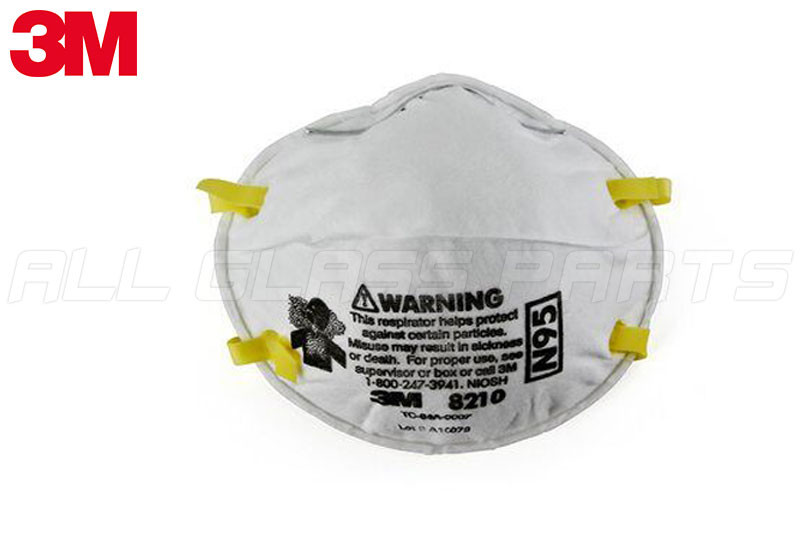
Your linked image in no way objectively looks “just like” cheap square pleated surgical masks. https://i.ebayimg.com/images/g/LyoAAOSwMTFeMbmh/s-l300.png

Remarkably two people have criticized me for not being specific when replying to a blanket (and incorrect) post, when I was actually specific. Amazing.
Then again, the one guy claims that health-care workers only wear masks to protect patients, which is just cartoonishly incorrect (beyond in the abstract "protect patients by the healthcare workers not getting infected" way). To the point that is has to be malicious.
This whole discussion is beyond ignorant. It demonstrates, again, how painful any discussion outside of code is on HN. It's almost as bad as HN talking about AGW (where it turns out 80% of the residents here are deniers). Embarrassing.
> A. Masks were introduced into clinical practice at the beginning of the 20th century to protect patients from microorganisms being expelled from healthcare workers’ respiratory tracts during clinical procedures (Wilson, 2006).
https://www.nursingtimes.net/archive/when-should-staff-wear-...
N95 masks are distinctly and absolutely worn to protect the wearer. N95 masks are recommended for front-line staff when dealing with viral outbreaks. H1N1, SARS, MERS, and now COVID-19 -- staff wear self-protection masks. During flu outbreaks front-line staff wear N95 for clinics.
This discussion -- what we are talking about -- is COVID-19. Every front-line staff dealing with this, worldwide, is equipped with an N95 mask, or there is a problem. Because when your front-line staff get sick things really break down.
> Then again, the one guy claims that health-care workers only wear masks to protect patients, which is just cartoonishly incorrect (beyond in the abstract "protect patients by the healthcare workers not getting infected" way). To the point that is has to be malicious.
it’s not clear which (COVID-19/typical healthcare) setting is being referred to (maybe same for comment you’re responding to as well).
Apologies for any confusion on my part.
The Surgeon General, on the other hand, does understand the difference and made an appropriate comment.
This is a bizarre claim that can be countered against the reality that every front-line worker is equipped with a mask.
This is not necessarily to protect the front-line workers. Since the incubation period is so long, it makes sense for front-line workers to wear masks to prevent them infecting other people even if it has zero effect in preventing them being infected in the first place.
I downvoted you because you talked about your downvotes.
If you're keeping track of scoring, HN is perhaps not the right community for you.
Will they prevent you from getting sick? Unlikely unless it is N95 or even N100 PPE
But I'm been wondering if they are not useless in terms of the speed at which the human body experiences a high viral load.
If only one virus particle gets through that should be enough to infect if it takes root and multiplies, but going from one virus to tons in your body takes times since they have to multiply.
Compare that with an infected person coughing right in your face. In this situation, potentially thousands of virus particles will infect you. In this situation, the viral load your body experiences will climb high quickly.
The faster the viral load climbs the less time your immune system has to be able to develop antibodies and learn to fight off the infection.
I imagine this is not too dissimilar from how vaccines work.
If this is the case, that might explain why Li Wenliang died at 34 years of age. Being at the center of it all, it's likely he was exposed to many more virus particles than the typical person. I imagine this would be enough to trigger a cytokine storm if the viral load got high fast enough.
Disclaimer, IANAE (i am not an epidemiologist), I'm just reasoning from first principles here.
- Wash your hands thoroughly. https://www.youtube.com/watch?v=jvcvvRp3lsY
- Cough and sneeze into a paper tissue/handerchief or the crook of your arm. https://www.youtube.com/watch?v=M3_rFPtQgKE
- If you experience shortness of breath, have a cough or fever: • Stay at home. • Contact a doctor immediately by phone or call the coronavirus infoline. • Avoid contact with those around you. • Do not go directly to the doctor or to a hospital emergency room.
[1] https://www.bag.admin.ch/bag/en/home/krankheiten/ausbrueche-...