Not really. I learned programming when I was 14, far before learning English.
How many English constructs do you have in a programming language? Func, var, for, if, else, import, etc. You can memorize those in no time, especially if you do that as you learn programming.
Documentation and textbooks are a different thing, of course. But I learned programming in high school, from teachers speaking my language and with textbook in my language.
You're got three barriers between the learner and the language: unknown keywords, unfamiliar letters, and the wrong LTR/RTL order.
It all adds up to where, boy, it would be intimidating for me to learn this language, as someone who already knows how to program. Doesn't that imply it would be equally intimidating for someone who only speaks Arabic to learn C?
But again, while I can't speak from the Arabic speaker -> "English" PL direction, I'm perfectly capable of speaking for the English speaker -> "Arabic" PL direction.
It's the same reason why Chinese developers haven't banded together to create a Chinese-based language. They still code in Chinese, but the languages and libraries they use are mainstream: C++, Java, Python, ... All of these languages support arbitrary Unicode in comments and Java and Python also support Unicode identifiers. As a result, Chinese documentation is available even for software that's otherwise in English. However, if you tried to convince Chinese developers to abandon their battle-tested languages with a rich ecosystem for some other language just so they can use different keywords, you'd get laughed out of the room. It's not solving a problem they have.
That doesn't mean that localized programming languages can't be useful e.g. in education. But translating documentation and libraries is useful for many more people than translating the syntax of a language.
Your comment is an argument against any new programming language.
[0] Disclaimer all the Spanish/Arabic/etc words were pulled directly from google translate.
[1] Though Arabic is particularly rough because the shape of the letters change based on the letters around it so you have to learn that too! See: http://www.arabion.net/lesson2.html
What I think may be more useful for bringing more people into programming in their native language would be thinking about providing transliterations where, for example, the Python keywords are translated into Arabic. Doing that Arabic speakers could write in their own language and English speakers could run a utility that maps from the Arabic keywords to the current standard English keywords. Stuff like variable names gets a little tricky there I'll admit, not sure how to handle them, maybe Romanize them too?
Func and var aren't even English words. Even an English speaker would have to at least get confirmation that their guess is right. You could replace them with arbitrary symbols and it wouldn't rally really change anything.
Amusing so many programmers will complain how they feel horribly excluded by APL, but see no issue with every other programming language in existence speaking exclusively ASCII English. At least Math is a true lingua franca, unlike our awful Saxon bodge. I know which I'd be safer speaking when Aliens come to visit. https://youtu.be/t2TDf9XU09k?t=120
Sure it is, if you’re not a professional mathematician. For those who are, it is a fabulously precise concise system of communication. The same can be said for “legalese”, “medicalese”, or any other specialist language that provides its specialist users with unrivaled efficiency and power of expression.
Whereas laypeople require lay language; which is why the best communicators are fluent in both, able to communicate complex ideas to both peers and public at a level and in a language that fits each audience.
That so many programmers resist – even belittle – attempts to understand and close the accessibility gap in their own constructed languages speaks volumes of what piss-awful communicators they really are; and how – rather than break that shortcoming down and work to improve it – they weaponize it to keep all those who are not like them out and so maintain their exclusive control at the expense of everyone else.
..
Remember, the point of software is not to encapsulate programming knowledge, it is to encapsulate business (or other expert domain) knowledge. That is where the program’s actual value is, and all that classes and types and conditionals and loops and whatnot crap is just a lot of bureaucratic bullshit that must be waded through when encoding that expert knowledge in unspecialized languages of poor expressive power.
Making programming languages accessible and useful to users operating in other domains will take far more than just some l10n sugar. Still, anything that can improve access for the 5Bn humans who don’t speak English, never mind “ASCIInerdese”, is a positive move.
There are only a handful of English words you have to memorize. Music students have to memorize a handful of Italian words to follow written music. It hasn't been a problem.
Yeah, no.
I want to strive for a field of professionals who know what they're doing instead of every second 'engineer' being a script kiddie with a MOOC or two of Python under their belt and nothing else. The barriers need to come way up from where they are today, not be lowered even further.
It is not necessary to be male, white, or English speaking, to be an excellent engineer, and yet those groups are significantly over represented.
One and the same. Making it easier to join a group necessarily lowers the barrier for joining said group which necessarily lowers the standard of said group. There are entire books written about this problem which leads to it being impossible to build large above-average skilled teams.
No need to bring identity politics into engineering practice. They have as much place here as they do in getting a pilot license.
There is a minimum bar to pass, and part of that bar is speaking a common parlance with members of your professional body from the rest of the world. I'm sorry you feel upset that English happened to be the language of choice for that, I personally just invested the time to learn it. I get paid more than doctors or pilots with the same amount of experience as me, so I'm not going to start complaining about satisfying the same language requirements that they deal with.
https://image.slidesharecdn.com/tceacsimperative-15072621371...
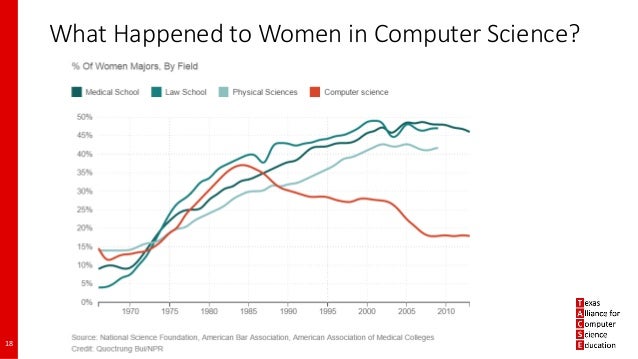
Yes. The reason is that air traffic control inherently requires people from different regions and languages to communicate quickly in life or death situations. Ease of being an air-traffic controller is not a primary motivating factor, and getting more diverse input isn't really a useful feature.
On the other hand, ease of being a developer should be something we strive for. We don't generally deal with fast paced life or death communication, we instead want programming to be accessible, to get a range of people (and their input, experience, opinions) involved, and to break down unnecessary barriers. Programming in a foreign language is a pretty significant barrier.