Can you tell us a bit more about this? Took a look at their website and searched around a bit, but don't find anything about it. What makes ReMarkable more open than most other commercial devices? Seems any device running Android and alike would be more open to hacking.
Also can't find anything about the company's support of open source.
Their CTO, Martin Sandsmark, is a long-time KDE developer.
Unfortunately, xochitl (the device's main UI) isn't open. It's a major miss in their open approach, and frankly I don't get why they would keep it closed - the RM's competitive advantage is in the hardware design, the xochitl software is merely okay and could only benefit from user patches.
The name "Xóchitl" is pronounced with the "x" sounding like "s" and the "t" silent by Spanish-speaking Mexicans. I'm pretty sure that's not how it is pronounced in Náhuatl; there I think the "x" sounds more like English's "sh", and the "t" is not silent.
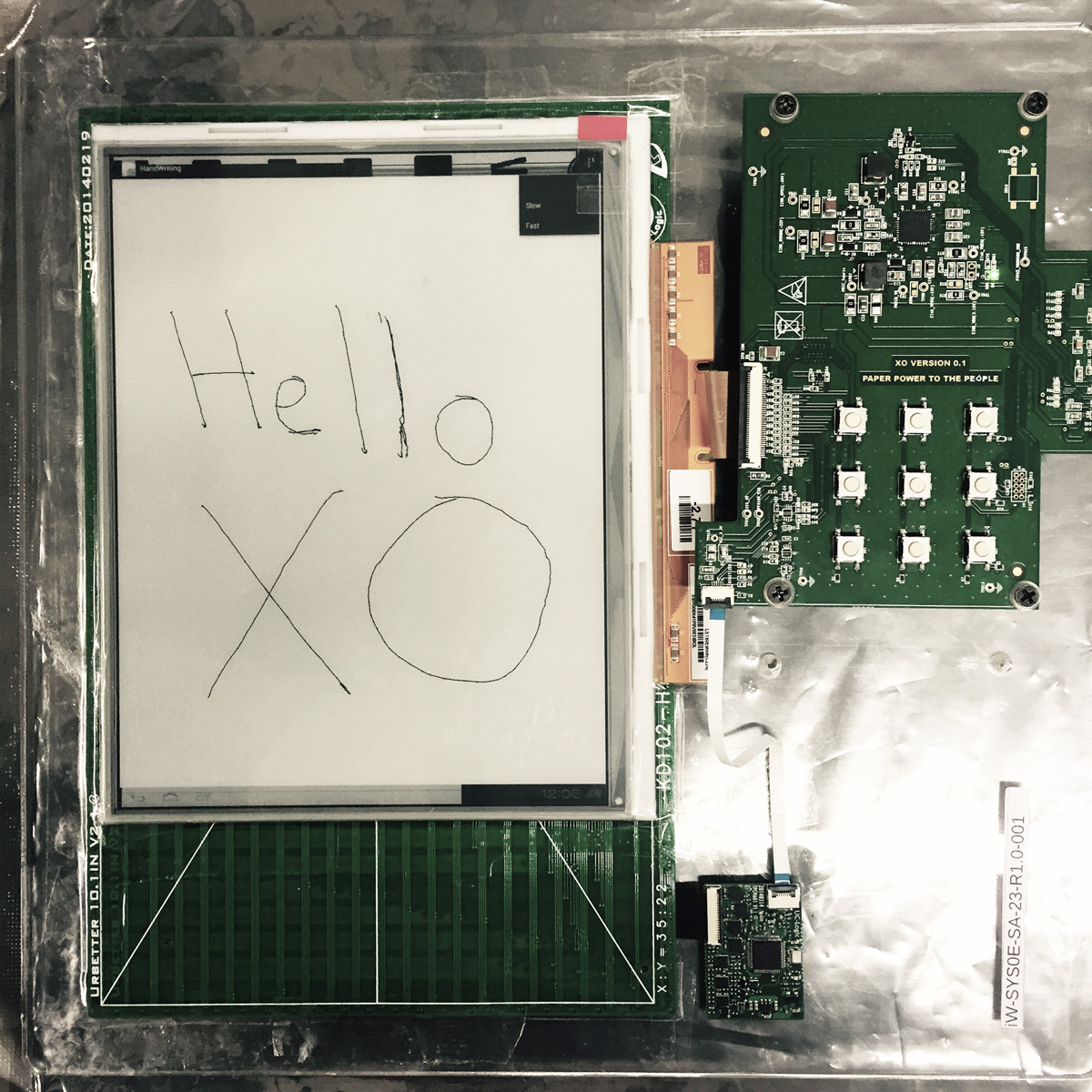
:-)
Is the password different for every device? Is the ssh daemon updated regularly? Seems like a massive security vulnerability otherwise.
The SSH daemon is Dropbear, and it doesn't seem to be updated though:
> reMarkable: ~/ dropbear -V
> Dropbear v2016.72
We shipped the first software with an old dropbear, though it had backported patches for the known CVEs: http://cgit.openembedded.org/openembedded-core/tree/meta/rec...
> It's sunday, we'll try to get it up during next week.
> In the meantime a normal cross-compiling ARM toolchain should work (e. g. the one packaged in Ubuntu).
Edit: now a added "Sorry, forgot to update this..." so seems someone updated the link right now
It is incredibly easy to come up with must-have and would-be-nice features for this device. The hardware is a dream and there is clearly a huge potential. I saw they are hiring software developers, hopefully that will speed up development.
I would say it's very far from polished, but it's finally okay now. It took a long time to get there though. I don't even want any particular features for the device, it should be just like a paper notebook, with minimalistic software. It was only in this spring's update, a few months ago, that they finally shipped features to manage notebook pages, such as moving a page or inserting a blank page. It's one of the very basic features the device should have, but I had owned the RM for over a year before finally getting that.
I understand they're a small company with a small software team, but I think it's still important to point out the software weaknesses while saying that the hardware is indeed amazing.
I remember reading that remarkable spent quite a bit of work on getting the latency of the pen input very low (which I guess is important for the feel).
However, for the tactile feel I would guess that the screen coating and the pen nib material are even more important (e.g. felt nibs or matte screen protectors)?
Since it seems like their proprietary software stack is crap, but the hardware is good, then getting decent software on it may be the better route. :)
* The writing experience is top notch. It feels like pen and paper. I recently had the chance to try Onyx Boox Max 2 (very briefly), and it's nowhere close to the RM as far as the tactile feeling goes. This is the main selling point of the RM, and it's very good.
* It's an open-source Linux-based device but not entirely. The actual UI application isn't open source. But as others have said here, it has pretty good hacking potential, and it's definitely more open than most commercial devices. The company's support of open-source was another reason for me to buy it.
* The on-tablet software started out really bad but has improved. The first version had a bug that dramatically reduced battery life. It took a few more updates to get essential features like inserting a blank page in the middle of a notebook.
* The off-tablet software is bad. There's a file manager webapp with remarkably poor UX, the cloud sync API isn't particularly convenient for automation, and so on.
* As a reader, it's mediocre at best. PDFs formatted for large screens look good, but rendering is slow, navigation is poor, etc. I would absolutely not replace my Kindle with the RM.
To summarize, I think the RM is a very good device if you treat it as a digital paper replacement. That's what it is for me, and I'm happy. But if you want a good e-book reader, or any advanced software at all, this isn't the right device.