One of the problems is that it isn't even good communication to say (for example) "This device has a 7 inch screen." That's mostly useless information for most people.
It's much more genuinely helpful to tell people something like "You can easily read our large screen even in bright sunlight." Most people aren't going to see specs concerning screen size and mentally translate that to "Woah, this will make my life easier because it will be more readable than the dinky thing I currently use."
Good product descriptions explain to you what this thing will do for you. If it gives a spec, such as weight, it needs to also tell you why this matters -- such as "this is lightweight for this type product, making it much more portable than average so you can take it with you to the work site."
There is no clear dividing line between the kind of description that explains you can do X with this product and the kind of advertising that leaps to implying "And then women will fall madly in love with you and you will be the new Don Juan of your neighborhood!"
Over the years, I've wondered a great deal where the dividing line is between good communication and active manipulation. I think that line is actually quite fuzzy.
When push comes to shove, if you want to tell people about X, you can be assumed to have an agenda of some sort. But, most days, I'm reluctant to suggest the world would be a better place if we all just stopped communicating entirely.
Imaginary benefits are imaginary. If you buy Gadget X you will not instantly become attractive to the opposite sex, nor will you be the envy of your friends.
The line is where you shift the emphasis from real benefits to imaginary social, emotional psychological, and sexual - i.e. lifestyle - boosts that the product can't possibly provide.
Homeless men (granted, an extreme example) aren't seeing a lot of action. From what I gather, not owning a car as a man in the US is a serious barrier to having a romantic life. Etc.
Sure, some things are pretty ridiculous. But lifestyle enhancements that impact your love life are not simply imaginary. They can be quite real and tangible.
That's part of why it is tricky. If studies show owning a nice car helps a man's love life, is it outright lying to imply the connection by having some gorgeous woman lay across the hood of the car you are promoting?
That connection is not purely made up, though it may well be an exaggeration in some sense.
Even before the ad blocker wars tanked online advertising generally, the HN crowd used ad blockers more aggressively than most other traffic to my sites. People on HN also routinely post some means to get past paywalls for articles posted here.
I wrote this piece in January: https://raisingfutureadults.blogspot.com/2019/01/the-hand-li...
It took me about two weeks to write it. I have about six years college and years of experience pertinent to the topic, plus years of experience writing for pay.
It has gotten more than 60k page views. It did fairly well on the front page of HN.
It did not make me one thin dime.
I've talked about this on HN for years. I was actually homeless when I began doing product descriptions et al for pay. Every time I comment on this problem space, I get told "quit you're whining and get a real job."
This is not just about me. Local papers are folding left and right, etc. It's an industry wide problem.
The world seems to want high quality writing completely for free with zero means for the creators to pay their bills.
I generally like the writing I do for pay. But even if I didn't, I would have zero moral qualms about it. It isn't like anyone gave a damn about me being homeless and unable to afford a meal at times while they read my writing for free and sometimes cooed about it being good writing while simultaneously telling me to STFU about my problems, which were not their problem.
I would love to have my Patreon well funded so I can write fewer product descriptions and write more stuff like the above piece. But the world simply doesn't want to pay me for that.
I do have clients who love my product reviews. That's how I'm currently keeping food on the table.
People who de facto expect good writing to be done by unpaid slave labor are not people in any position to make me feel bad about writing product descriptions. That's a laugh.
This sentence really hurts my head, especially because I think you are right. In my mind, it is equivalent to being chased by a leopard, and not taking your knife out of your pocket because there's no one there to remind you that knives are pointy and can stab things. I dislike advertising that tells me suggestions rather than specifications; it keeps me from being able to decide if the product will work for the use cases I need it for. I don't think I'll ever understand why that works so well on people.
It's my job to give such clues to the clueless. (Not intended to call anyone stupid. I used to routinely ask for clues for the clueless when asking questions for myself online and self identifyng as the clueless on topics where I lacked expertise.)
I would prefer to make my own judgements. There's a better chance that I know enough about physics and biology and have a relevant understanding of the situation that I'm currently in, than the chance that someone else has all of those things and is paying as much attention to my situation as I am, has no agenda conflicting with mine, and chooses not to lie to me for any unknown number of reasons.
For what reason would I be unable to take a ruler, measure the screen of my current device, subtract that number from 7, and use the outcome to decide whether or not the device you are selling will have better visibility? It would take, maybe 4 seconds. I could even estimate it within an inch if no ruler was available. What clue can you offer that I could not deduce for myself given base information, and additionally make a better deduction, because you don't know that I'm colorblind and nearsighted. You simply aren't in a good position to offer me a clue.
Edit: I think that last sentence sums up why I dislike advertisements, but let me add an addendum: advertisements tend to offer me stories to distract me from the facts. I do not seek distraction. I want to understand the facts, and use the product to create my own story, for myself, because it will be more genuine than what is advertised to me, because it will be true, and be real, and be rewarding.
I don't know about that. Years of being exposed to advertising has taught me that squishy claims like that are almost certainly misleading.
It's harder to skirt truth in advertising laws when you're stating objective facts, but it's trivial when making squishy "experience" claims.
I'm happy to talk to people in an informational way about a lot of things, but I basically think it is unconscionably rude to try to essentially dictate food choices or similar to anyone for any reason at any time or otherwise put them on the spot where they might need to turn me down and then have to wrestle with whether or not to divulge medical information or other personal info that I might not yet be privy to.
I do this in part because there is a long history of me just making small talk and, to my horror, people jumping on it like it was excellent advice and it going weird, weird places.
I've wrestled a lot with the question of "where does good communication end and manipulation begin?" precisely because I place a high value on self determination and respecting boundaries, yet have all too often had people react to my words as if I were trying to make them do X. It's often not only weird, but also some manner of train wreck.
I knew a woman going through a divorce who was feeling old and ugly etc. I casually joked that the cure for that was a younger lover. My real point was "Oh, don't let your ex make you feel that way. His opinions no longer count." But the next thing I knew, she had a younger boyfriend.
We weren't even friends. We were casual acquaintances and she treated me terribly every step of the way, which just added to the WTF?? factor.
I bring those same rubrics to my paid writing, so I try to be very informational and explain what x product is good for and who might want it and why. But I'm very clear that if I do that well, there are people who will find my words compelling and promptly jump on it.
I sincerely believe you simply cannot neatly and cleanly distinguish powerful and effective communication from intentional manipulation. If I make the case strongly and effectively enough that this is good for x, there will be people who will jump on that without further thought.
And if it's me, I will probably be paid to tell you why you might want to buy each product listed.
Obviously, the 7" model is portable, no frills, fits standard pockets and you will appreciate it if you need a space saving model or are buying on a budget.
The 9" has all the bells and whistles, is a premium product and well worth the money, if you can afford it.
I almost never see ads of type one - in fact, even finding that information is usually made accidentally or deliberately difficult.
Type 1 ads (if one relaxes the dry listing of specifications a bit) might be called "informational ads"; Type 2 ads might be called "aspirational ads".
The informational ads are often found in hobby magazines. Interests like woodworking, electronics, airplane flying, fishing, guns, gardening, cooking, crafts, etc. Many readers enjoy looking at those type of ads to learn about new and unknown products that are relevant to their passions.
The aspirational ads are the abstract visuals that really don't describe the product at all. They are meant to tap into the emotions. They deliberately avoid mentioning any concrete specifications. E.g. perfume ads where a model walks through the forest, or a Coca Cola bottle being drunk by a CGI animated polar bear, or Apple showing silhouettes dancing with white ear buds. Apple doesn't want to communicate the earbud's frequency response such as 60Hz to 18kHz -- that's too vulgar. So let's show happy people dancing instead. These type of ads are designed to prey on our feelings of inferiority and therefore, the advertised product promises to make us more beautiful and popular.
I agree with both of those, but would also classify the examples you gave below as the difference between "mass advertising" and "intent based advertising". TV ads vs AdWords essentially. One is to capture interest and change behaviours, the other is to sell to an audience who's already in the market for your product.
Typically some ordinary household chemical.
I mean imagine a Coca-Cola ad where they talk to you about the fact that carbon dioxide is dissolved in the drink and it comes out of solution, giving you a tingling sensation. Versus what coke ads actually look like... snowy streets with trucks decorated for Christmas, a sense of warmth and expectation.
Drink Coke! - Tastes good if you like sugar and caramel, much better than Pepsi - Not the most unhealthy drink in moderation - Carbonation that bites your tongue so you feel alive - Our tax dollars subsidize the Georgia state government
For instance "The Best Steak Knife Set" [1], lays out a couple of options and why you might pick them as well as their criteria and test methodology so you can figure out why you might want to pick something else.
That they're allowed in the US at all is demonstration of caustic effects of high-dollar lobbying.
Which is essentially admitting it's very good manipulation so close to lying it should carry a warning or regulation.
It's the former type that's sometimes quite popular - like in the back of old computer or hobby magazines - precisely because it's handy for discovering new things.
TL;DR Type 2 is what marketers and advertisers do, type 1 is what a lawyer, gardener or software engineer might produce to sell their product.
How does "Look at this beautiful person, just look. Your life isn't like this. Ha. You suck. You're a failure. You're ugly, you're stupid and nobody likes you and you haven't even got $product" "This family is so much happier and more well adjusted than yours, you're a rubbish parent and you don't even have $product"
Every ad in fashion be it for cream or stink or (gasp) sometimes even clothes. Loads of mirrors in every shopping centre aren't there?
Negging is exactly right. Make people afraid and sad. Fear of missing out, fear of weapons of mass destruction, fear that "maybe they don't really like me." Sometimes it's subtle eg Clooney selling coffee and sometimes it really isn't, eg Life Insurance ads and the Iraqi invasion. (Maybe some pushing the idea believed in WMD - that's not the point. It was levered very thoroughly to sell the war - be right or wrong).
Teaching children to identify and analyse psychologically manipulative techniques is essential for their mental well-being.
Obviously it's not just ads. There's a load of academic research that follows the same pattern. "You need to be terrified about your children's screen time." Maybe I do but do you have the research or are you just stoking fear to promote your career? The latter definitely exists.
Light side: Closing the loop between what the customer wants, what their actual problems are, and what engineering and manufacturing can deliver.
Darkside: Ladies you need to use our spray or else your hoo-haw will stink.
Our society is paying huge costs to support this industry in terms of wealth, novel innovations, productivity and sanity. It's terrible.
For this reason I block ads in every way that I can, no matter how "light-side" they might be.
I don't think that's true at all. Where else would you learn about new services or products?
Here are some examples from a 2010 model railroader. https://photos.app.goo.gl/RvRzECgs7MaTo7tP8
Some, especially the Kato model Amtrak one, have some aspects of an aspirational ad, but I don't know if I'd condem them as such. They usually, as the Kato one has, information about the specific items that are now available and often some "ambiance" information that many hobbiests, especially people new to the hobby like to look at.
I don't mind ads like these as they're not designed to make you feel as though you need to purchase something to be better and they're not in a public space. They're they're to matter-of-factly says a service or product is available.
I could also show you the local pennysaver or Craigslist. All of those are also add, but they're not the "aspirational" kind. They're more matter-of-factly that someone is selling so (used) item, or provides some kind of service, or that there is a garage or estate sale at such-and-such address. How else would this information be made redily and easily available?
Or more directly to the point, why would I want to let /you/ decide which services and products I learn about, when, where, and how often? When that is a) more in your interest than mine, and b) inevitably going to turn into a "cover every surface and channel into advertising as you try to shout loudest for my attention in competition with every other vendor of every product and service in the world".
I think you missed the context of gp's comment. His example of ads was from a hobby enthusiast's magazine such as Model Railroader.[1]
Many readers buy hobby magazines in part for the ads. Yes, there are feature stories but the ads themselves are also informative of new products the readers want to learn about.
So to directly answer your question of "why would I want to learn about new services or products?" -- it's because that desire for ads was implicit in your decision to buy a hobby-oriented magazine. (The "I" and "you" is not you specifically but a rhetorical placeholder for the generalized magazine buyer.)
Another example of some people expressing a desire for ads is buying the Sunday edition of their local newspaper. (Many readers won't buy the Monday-to-Saturday editions but they'll go out of their way to buy the Sunday copy that's has the ad inserts.) They didn't buy it for the news articles written by journalists; they bought it for the stores' ads to see what's on sale and for the coupons.
An opposite example of buying a magazine because it does not have ads would be something like Consumer Reports.
I have no fear that the news of useful and interesting products will spread just fine even if advertising is massively reduced.
> Humans learned about new things for thousands of years without the modern of technology.
> I have no fear that the news of useful and interesting information will spread just fine even if technology is massively reduced.
Sure, we don't need ads the same way we don't need computers. I however like being able to learn about things outside my physical filter bubble and immensely enjoy my used tools and electronics (along with the massive coat savings) I've bought from ads on Craigslist.
You may have read the gp's comment too quickly. The context was used tools and electronics from Craigslist ads.
The "used" would be pre-owned and less expensive, and "Craigslist" presumably means buying from a local seller.
Catalogs for tools and electronics are typically new items that are national in scope instead of local.
The Craigslist advertisements made him _aware_ of a local seller selling a used tool that he wanted.
What would be the non-advertising way to accomplish that same goal? Possibly driving to flea markets or swap meets every week? But the sellers with their wares on display are themselves a form of advertising. It's also an incredibly inefficient use of time to repeatedly drive to a location and walk away empty-handed compared to seeing a relevant Craigslist ad.
>some sort of catalog. The lack of advertisements wouldn't cause any serious difficulties.
Fyi in case you were unaware... Many retailers' catalogs are created with ad sponsorships to offset the cost of printing, mailing, etc.
I guarantee you some sort of comparable solution would arise for used goods. Once again, perhaps it is as simple as something like a craigslist requiring a small fee. It could be subscription based, a fee paid by the seller (to place the listing or when the sale is completed), and so on. Aren't there apps already doing this?
And of course, there are likely many other good solutions that I'm not thinking of.
Lastly, we don't have to ban _all_ advertising. We could significantly reduce it and gain many of the same benefits.
Right, and the print version of that in newspapers was actually called "classified ads". The listing is an advertisement from the seller trying to make the public aware of what he's trying to sell. The seller paid a fee to the newspaper to list his item.
>Lastly, we don't have to ban _all_ advertising.
Ok, that comment changes things. I was interpreting your previous claim of "the lack of advertisements" as literal absolutism and it seemed to contradict the concept of "classified ads" which you approved of. I understand you just want less ads.
They wouldn't be considered ads if it was a dedicated medium intended primarily to facilitate the exchange of used goods (or whatever product). This is what I was referring to.
But even still, classified ads are an interesting case. They feel closer to a catalog than your standard advertisement.
Then I admit I don't follow what your reply[0] was about to jimktrains2 comment "I've bought from ads on Craigslist."
With my straight reading of your subsequent replies, it seems like your suggestion of "a dedicated medium intended primarily to facilitate the exchange of used goods" -- is exactly what Craigslist already _is_ -- and you had originally dismissed Craigslist ads in your reply to jimktrains2.
Perhaps the conversation seems nonsensical to me because you were unaware of what Craigslist actually _is_? From the wiki[1]: "Craigslist is an American classified advertisements website"
Apparently Craigslist doesn't actually have "ads" in the usual sense: https://www.quora.com/How-does-Craigslist-make-money-if-it-d...
It seems the difficulty here is identifying what is considered an advertisement, beyond the obvious display ads which are not intrinsically a part of the content that they are embedded in. But fortunately display ads (and their brethren) are the most problematic, so I think we would get significant mileage just focusing on that.
At its core, marketing is all about creating information asymmetry. You're not informing the customer, you're persuading them. They're opposites.
Marketing seems to have given up on that sort of effort years ago.
>Marketing seems to have given up on that sort of effort years ago.
Marketing hasn't, but companies' hiring and organizational structure decisions have - especially tech companies.
As long as the only marketing personel a company hires are advertising personel, given authority and responsibility for advertising only, the loop can't be closed.
In tech, programmers are the "engineering and manufacturing", but they tend not to want to be told what consumers want by the marketing team (who, if hired and authorized properly, would be doing rigorous independent research and data analysis using data from that research, user data, and bought research, to come by those insights...)
This is true. In fact, I'm currently engaged in a bit of a battle over this very thing at my current employer (I'm a software dev). They're hiring a brand new marketing team, but all they've been hiring are salespeople, and I've been pushing them to be sure to include someone who will do actual market research that we devs can use to inform product design.
The web has enabled unprecedented levels of intrusion for advertisers.
Previously the idea that you would struggle to know what specific product an ad is selling, where to buy it, what it costs, and what it's features are would seem obscene, but these days concepts of brand, desire, status, aspiration, are so omnipresent that deriving any pertinent details is now a common experience.
Pre that, it probably is all the same, because modern advertising is, fundamentally, just propaganda rebranded by ad men.
http://christinetrent.com/wp-content/uploads/2017/02/cigs-10...

http://christinetrent.com/wp-content/uploads/2017/02/pills.j...

http://www.nationalarchives.gov.uk/wp-content/uploads/2014/0...
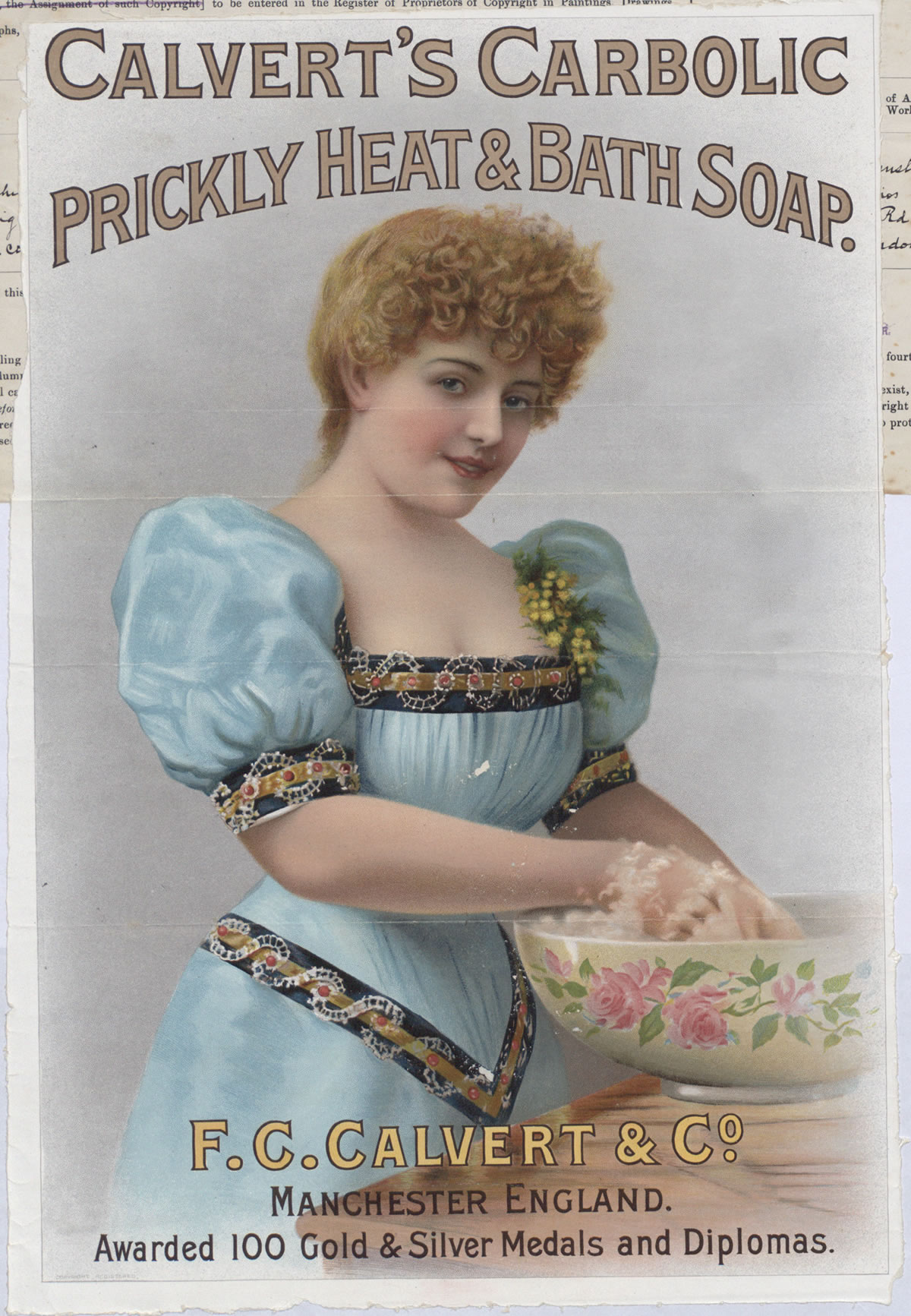
Industrial printed advertising started in the early 19th century with the first stirrings of printed mass media.
But flyers and noticeboards have been around since at least Roman times, and limited-run pamphlet and newspaper/gazette ads were already a thing as far as back as the 16th century.
The propaganda research is more Type 3 - tailored ads designed and monitored for effectiveness. Before Bernays ads were hit and miss, usually made by someone with a brush who could draw and set type.
After Bernays it became a huge industry of influence, and concepts like branding, image, narrative, demographics, and dramatisation began to be used consciously.
On the other hand, your third example is definitely Type 2.
The presence of pretty women is a popular way to dramatise the "benefits", but it's not obligatory.
I'm pretty sure that I haven't seen that sort of ad since the late '80s.
However, I don’t remember the content of the ad, so I can’t be confident that it didn’t also have an emotional appeal to it.
The company in question later did something else I didn’t like, but the added feature (really, the removal of a ubiquitous mis/anti feature) continues to be something I appreciate.
This was in the last 5 years I am pretty sure.
The problem is that Type 2 ads are more effective than Type 1 ads for mainstream consumers, the ones that think with their emotions rather than carefully weighing competitive alternatives. So even though Google started as a Type 1 only company, the text ads on it have gradually been creeping back to Type 2 manipulation since, and they've expanded into more manipulative ad segments with the DoubleClick and YouTube acquisitions. They also face competition from Facebook (which has been manipulative from the start).
Manipulative ads became the face of the Internet because they work. For them to stop being the face of the Internet, they'd have to stop working. That either requires that 3B people take ownership of their emotions (which seems unlikely, given the general state of emotional education in the world) or that the Internet serve only the few million people in well-off, hyper-rational, educated professions (which also seems unlikely, and not even desirable).
Today, I run an ad blocker because most ads are manipulative again, I recognize I can be manipulated, and I have to do what I can to avoid it. I wonder if there is some way to configure uBlock Origin to allow informative ads while blocking manipulative ads.
I remember those. Those ads were actually useful and welcome.
I'd rather just consign the type 2 adverts to the nearest null device and pick up a copy of Consumer Reports when I want factual information about a product. It helps that most of the women used in advertising are just skinny blondes that you can get for a dime a dozen in Stepford, CT.
One is "Hey, did you know this thing exists? Check it out! Here are all the tests it passed, realistic cost of ownership, and locations where it is in stock".
The other is "Look at this woman, isn't she fascinating? People like her will desire you more if you buy the thing she's lying on top of. Actual woman not included."
Unfortunately, people have discovered type 2 is effective for a lot of things. Not only that, there are no scruples at all with appealing to people in this kind of way. It's not lying in the normal sense, but it is manipulation, or an attempt at it. Current dogma seems to be that rational people can just take the type 1 info out of your type 2 advert and think with the appropriate organ.