If I were playing the odds, I'd put money on democracy failing in the west rather than it rising in China in the next century.
Even if that was the case for now (lets say e.g. reading or education made the masses harder to oppress), this doesn't mean other developments cannot outperform those effects in a different direction. Especially social media is a recent invention that seems to put a lot of power into the hands of very few. So far they don't seem to wield that power to drastically shape politics of our societies. At least not intentionally. But keeping it this way will be hard, since they either do something to prevent headlines like "A Genocide Incited on Facebook, With Posts From Myanmar’s Military" or have them attract the wrong kind of investor. Actually, the latter is probably impossible to avoid long-term, if the US broadcasting industry is something to go by.
The rising political divide in the US is an interesting upcoming case study. I don't see a lot that could revert course, so it will probably end as an anecdote for "less stable". The current US existing for that long is still a remarkable achievement. But we better use the knowledge we gain, since technological progress has made it unacceptable to have our societal systems become unstable every once in a while and needing to be reset violently.
Democracy was also one of the major themes of the May Fourth Movement of 1919. In these decades, China was busy importing Western ideas because they believed that was the key to rejuvenate China.
The Communist Party eventually won power in China, but it was only following the Korean War that all hope was lost that China could transition to a democracy.
Still, the spectre of democracy remains. The Chinese Communist Party still talks about democracy positively sometimes and the Chinese constitution describes China as a democracy. They do this partly by ignoring what democracy means (the constitution also guarantees "freedom of speech, of the press, of assembly, of association, of procession and of demonstration"), and partly by redefining what democracy means. It's Western-style democracy that the CCP treats as an unambiguously bad and dangerous idea.
Nowhere in his comment did he say it was. He simply said the situation wold "boil-over"

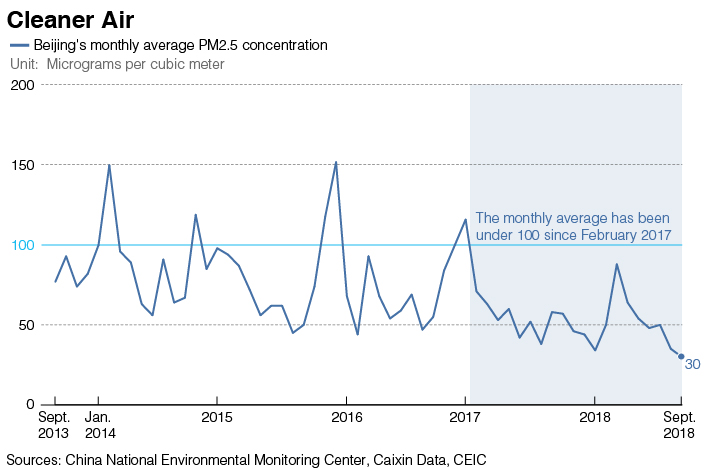
Also, have you been to Beijing? The smog is so dense that sometimes you don't see 50m ahead ...
The only thing they're doing is trying to build cheaper electric vehicles.
Isn't that what happened in the referenced photo? And the regime murdered the protesters and put in place a draconian censorship system to avoid it happening again.
The value systems in Asia are far different, and people are much more collective where as we are a more individualist society with different thoughts about individual freedom.
I doubt China could have become as strong as it is today without it's long history of authoritarian regimes, and I feel that many in China believe this to be true. The growing dissent may not be a sign of what's to come but may simply be the growing pains of a totalitarian regime moving into the 21st century. I do not agree with Chinese government but I never underestimate it. There are some smart people working to keep over a billion people under control and productive, and I'm sure they will ultimately find a way that keeps them like that, and can be accepted by it's citizens.
In fact, there was a time when our own dictator and his followers used exactly the same argument, saying that "Western Democracy" does not fit Asia's unique culture, and we should instead implement "Korean Style Democracy", i.e., authoritarianism. I view them as traitors of our own country and our own culture.
In fact, one of the core tenets of Confucianism is that the monarch is not an absolute ruler but is bound by moral duty. As a classical Confucian text says: 君者舟也, 庶人者水也, 水則載舟, 水則覆舟.
"The monarch is a boat, and people are the water. Water floats the boat, but water also sinks the boat."
The intuition that western liberal democracy is some sort of inevitable wave is very possibly just an artifact of the US winning WWII.
They are huge, filled with uneducated hungry people. Isn't too remarkable when the government's tactic boils down to "kill dissenters & feed the rest".
Only individuals can want something. Societies can't want something; the Earth can't want something; a company or government can't want something.
It's clear that there are individuals in China who do want tolerance. And it's even clearer that there are government officials who are scared of what individuals might start wanting if exposed to ideas of tolerance and democracy.
I'm going to just skip tolerance here, because it's a complex idea not entirely related.
Let's use Democracy. There are definitely some people in China who want Democracy. There are everywhere. It's not remarkable that some people want it, but the numbers are the important part. If 2% of the people want it, then it's never going to happen. If 40% of the people want it, then it might move that way soon. Thing is, while 2% is a tiny minority, it's still objectively a lot of people. 2% can get you a bunch of activist groups and busy-looking protests and that sort of thing. It's much easier than you might think to look at a 2% movement that you personally agree with and believe that it's a mainstream view, the future of the country, etc, when it actually isn't.
Now that's just an example. Personally, I have no idea what the approval rating of Democratic ideas is in China. Tricky thing about totalitarian countries that practice censorship, it's hard to get an idea of what people really think. I'd like to think that it's a mainstream, growing idea. Clearly the Government is indeed afraid of it enough to go out of their way to censor it. But I worry that we may be fooling ourselves, and it has no real traction.
I would also point out that we don't have entirely clean hands either when it comes to tolerating 2%-size political movements advocating for radical changes to the structure of our government and society. Plenty of examples to pick from, no matter what your political persuasion is. I'm not saying we're as bad as them or anything - they're much, much further down that rabbit hole. I'm just saying that it's much easier than you think to ignore and excuse such abuses when they're against something that you don't like.
Some truths really are self-evident.
https://slatestarcodex.com/2014/09/30/i-can-tolerate-anythin...
TL; DR: Everyone hates their outgroup, and everybody has one, including you and me. Isn't it rather convenient to convince yourself that everyone in your outgroup is intolerant totalitarians, so that you can continue to hate them and justify any kind of tactics against them while also patting yourself on the back at how tolerant you are? (The 'you' there doesn't mean anyone in particular, just a general statement).
Tolerance means not hating your enemies, your outgroup, and is genuinely hard and pretty rare. Everybody likes their friends and allies, and there's nothing particularly special or virtuous about it.
That's a pretty extreme strawman. I disagree with lots of outgroups, and I only call a couple of them totalitarians.
If someone hates all of the outgroup, they are almost certainly hypocritical and lying to themselves about being tolerant.
If someone hates none of the outgroup, we can agree they're virtuous and special, sure.
If someone hates 15% of the outgroup for specific reasons, that's probably okay. It doesn't automatically imply that they are secretly intolerant. Most people that claim to prioritize tolerance are here, and most of them are telling the truth.
And perhaps that statement was an oversimplification, but as I understand it, that's essentially the point of the Paradox of Tolerance. If you had to sum that up in a sentence or two, how else would you do it?
The paradox of tolerance is not particularly difficult to deal with. You prioritize the preservation of as much tolerance as possible. If someone is trying to reduce the levels of tolerance in the world by a large amount, it's important to fight them, even if it means minor short term intolerance. And even then you tolerate them in all other ways.
Chinese people aren't drones. They don't have a hivemind to tell them what is good for them. Sacrifice for the country might be a thing during Mao's period, but I am not seeing it in nowadays' young generation.
On the contrary, I think Chinese people believe less in the collective good. If the problem isn't your own problem, then it is everyone's problem, then it is no one's problem. That is why in so many situations, government becomes that last resort to figure stuff out.
'The mountains are tall, and the emperor is afar', as the old Chinese sayings goes. The ruthless authoritarianism and primitive freedom co-exist in China's case.
There is pressure to conform, but only because not doing so, there will be pain. 'The bird who extends out its head most gets shot first', as they always say.
Confucianism might be what the world, even China itself thinks about itself, how it is ruled upon. But Fajia (Legalism) is what actually gets executed in real life.
In particular, getting there would arguably involve considerable chaos. And so it's not that hard for those in control to play on people's fears about that. After all, Westerners have tried to impose democracy on China before, and it didn't work out very well.
Back in the 60s, China was on track to be North Korea times 10^4 to 10^6. But Kissinger managed to convince Nixon to intervene in a constructive and noninvasive way. That clearly has worked, so what we need is arguably to stay on that track.
On the other hand, isolating South Africa arguably did hasten the end of Apartheid. And if China undertakes full-on genocide against the Uyghurs, that may be the only moral path. But orders of magnitude more dangerous. And when we add global climate change to the mix, it'll be insane.
I suppose that you could claim Germany or Japan as long-term successes. But the costs were immense.
I did not read anything of the sort in that response. It stated that respondent disagreed with your conclusion and explained why. Are you conflating a difference of opinion with suppression of free expression? That does not seem a healthy attitude to have.
Are the actions of the current Chinese dictatorship praised or at least scene as normal by Koreans, Japanese, or Taiwanese?
No.
The culture of repression, and a hair trigger to stamp out any unfavorable comment on a regime is a sign of bad governance. Where will it end? Ten years ago, it was safe to criticize the actions of the regime, so long as you accepted that the government as a whole legitimate. Now you can no longer criticize the top-level, as its just one man. Will this trickle down till no one can speak ill of the government at all, lest they be seen as speaking ill of its dictator?
That could be because they just don't want to talk about it. Or because they are mostly from rich families and so they really don't care. Or only kids from loyal families are allowed to go to school overseas.
I have also heard, but have not been able to verify, that any Chinese student who studies abroad must become a member of the Communist Party.
https://foreignpolicy.com/2018/02/14/exclusive-chinese-gover...
Not true. Being a Chinese student who studied in the US in the past, I never joined, or was asked to join the Communist Party. In fact, the majority of Chinese students in the US that I know are not Communist Party members. A passport (and a valid visa) is all you need to go abroad.
Censorship in America is vast and pernicious. It takes many forms: taboos, shunning, algorithms, downvotes, shadowbans, no-platforming, heckling, harassment, must-show news segments, advertiser demands, textbook authoring committees, etc.
There are ongoing movements on US college campuses and ongoing development in US tech companies that will undo every bit of progress that was fought for in the free speech movement.
This very thread shows a video on an American site being removed because of Chinese complaints.
I am not trying to detract from the importance of Chinese censorship by muddying the waters. This is not whataboutism. We are standing on a sinking ship ourselves, and if we don't start fixing the damage to our own freedoms, we will sink right along with the rest of the world. We must solve our own problems if we are to have any hope of helping others with theirs.
I am a college professor and I think student opposition to freedom of speech is way way way overblown.
This is in fact the critical difference between totalitarian society and free society.
I can't imagine how someone would organize protests under real totalitarian control, when every step is recorded and you can't hide. They will be arrested pretty soon. So 21-century will allow totalitarian regimes to thrive, unless they are not friends with closer supercountry, in that case of course they will be overthrown and replaced with loyal ones.
I think the 1989 incident was such an event. It almost boiled over. But what happened is that regime learned from its mistakes and it learned to control its temperature better i.e. introduced market economy.
They've sort of made this pact with the people "you don't ask us about what happened in 1989, but in exchange you get to participate in world's capitalist economy".
Another sad realization could be that capitalism and democracy don't really have to coexist. It seemed for a while that democracy would follow after enough prosperity and market economy took over. But it hasn't happened in China. And we might be surprised that capitalism might even work better under a totalitarian regime.
My gut feeling is that there will be a day in the future where everything in China is going to boil-over just like any other totalitarian regimes in the past. It could be 20 years from now when Xi dies or some type of student uprising again, or could be from the HK/Taiwan situation.
The behavior of the Chinese government and as they call it "the hand of Beijing" has a self-propelling streisand effect, the more you clamp down, the more it leaks and at some point, it will boil over. Nationalism is tribalism in its glorified, patriotic form. On one hand, we have great men who strive to make the world a better place - journalists, scientists, mathematicians, teachers and community workers and on the other hand we have ugly human tendencies surfacing in a powerful form from politicians.
Every politician should listen to Jiddu Krishnamurthy's UN speech in 1985: https://www.youtube.com/watch?v=qcga8ATBNh0
There rest of the world needs to fearlessly criticize Chinese censorship as it is only going to get worse. If the Chinese government is insecure from opening history books, hell even calling Xi Jingpin a Winnie-the-Pooh; that's not the kind of superpower I wish to see in this world.