Vehicles have a clear (if long) path to electrification. But what about heating buildings? My understanding is that electric heating is not cost effective compared to carbon based fuels. Lower costs driven by renewables can help here, but will it be enough? Are there alternatives being developed to tackle this major energy use?
Turning sunlight to heat directly is both cheap and efficient. Most often seen in greenhouses and solar pool heaters, but similar tech works on homes and hot water just fine. This does require sunlight so while it can work as far north as Maine it falls off in the Artic. Luckily a relatively small chunk of the global population lives that far north.
The problem is that heat pump based heaters and cooling devices are still produced, marketed, and priced for the green and well off crowd, not the general public.
In the general public has no concept that the same technology they use for cooling could be used to heat their homes.
So far the manufacturers of heat pumps seem content with their well-off niche, and don't seem interested in scaling production so that the technology is available to regular folks.
Perhaps the margins on heat pumps aren't as good and they don't want to cannibalize their existing businesses selling natural gas powered heating systems, which they probably manufacture for a song (recall how Carrier ended up moving their home furnace production to Mexico anyway despite the political show that was made of them supposedly staying in Indiana)
In other parts of the world many split heat pump systems are much cheaper.
Or a fridge/freezer that dumps out heat indoors during A/C season, and/or a hot water heater that isn’t combined with the refrigeration system.
A single heat pump could run it all: fridge, freezer, pool, HVAC and hot water. Maybe even a pre-heat element on a stove top.
Going a little far there. The preheat loop would have to survive regular heating element temperatures, and most common refrigerants decompose above 500C.
When I was growing up I lived in a suburban American house that was built in 1982 and had a heat pump. It was a middle class suburb and none of the adults were environmental activists. Every house in the neighborhood had a heat pump. I thought this was totally normal.
With hindsight, I see that there was significantly more American concern about energy efficiency in the late 1970s and early 1980s than in the early 1990s, probably due to resumption of relatively low oil prices in the mid 1980s. It's sad that the attention to efficiency did not continue after the immediate crisis had passed.
None of the above problems are inherent in energy efficiency, but they did give the whole field a bad name.
The PassivHaus stuff is a really good example of the derangement you get when people try to optimize for only one metric. PassivHaus's are expensive, mandate the use of petroleum based insulation (you're living in a plastic burger box), prone to water intrusion mold and sick building syndrome and the supposed efficiency gains disappear when you open a window.
Telling is the PassivHaus nutters response to builders wanting to use solar panels to build houses with low external energy needs. AKA why spend $100k on insulation when you can put a $20k worth of solar on the roof and a ground sourced heat pump. PassivHaus response is to get regulators to ban that option.
Passivhaus is not focused on one metric. To achieve passivhaus there are many metrics measured. Energy use, overheating, air quality, thermal bridging... The list goes on. I'm not sure what one metric you're referring to.
Passivhaus does not mandate plastic based insulation. Many are built with cellulose, wood fibre,straw bales...
They are not in any way more prone to water intrusion any more than any other building.
They are far less likely to suffer sick building syndrome because ventilation standards are far higher than for 'normal' houses.
You can open the windows if you want. Sure, if you do it in -10 temperatures you lose some heat.
Passivhaus 'nutters' are generally apathetic about PV. You don't need PV ; simplicity is part of the point. The marginal cost on insulation is generally pretty low. The difficult but it's getting builders diligent enough for the challenge.
Hope that helps to encourage you to continue researching the subject.
So, I presume that in the case of a fire, they go up like a match?
Where is your sacred R value now?
Can you clarify what specifically this refers to - i.e. a particular law or regulation?
Yeah, you could have some sophisticated ventilation with a heat exchanger but that's one more piece of equipment to maintain and if it fails without you noticing it then the air quality could decline very rapidly.
It's a good habit to get into, no matter how old and drafty or new and tightly sealed your house is.
Don't forget jets. Jets are mega-emitters and have very few electrification options because lithium-ion has about a 50th the energy per mass as jet fuel.
For heating, cheap, fracked natural gas is dominating in the US, with a battle cry of "better than coal"! Unfortunately it's still extremely high carbon. They do amazing PR though.
China is building a few supercheap swimming pool TRIGA nuclear reactors specifically for district heating in northern regions for winter, where coal is the only alternative. This is wild, but makes sense. They aren't usually used commercially because the temperatures are too low for conversion to electricity. But for straight heat it makes plenty of sense.
Also heat pumps can help but won't get you there alone.
Aviation accounts for 10-13% of transportation [2]. (global data looks similar, although I don't have a link at hand)
So while 2.5% is not nothing, it is only a small fraction of energy consumption and could remain Kerosene based in the medium term.
Also, a lot of flights could theoretically be shifted to high speed rail.
[1] https://en.wikipedia.org/wiki/World_energy_consumption#By_se...
[2] (2016) https://www.eea.europa.eu/data-and-maps/indicators/transport...
One could already see maybe small scale operations capturing niches - maybe if a corporation that operates a private jet wants to further a reduction in their carbon footprint.
Instead, I'm for transferring funding decisions under the program to a much more open set of actors to originate investment loans (much like mortgage brokers). The investment performances are evaluated on their successes/feasibility, the loans purchased from their originators with high feasibility (i.e. we're scaling known limits), as well as opening up higher origination limits (if they prove out better carbon negative/netural tech). It's more of a financial tooling solution than a tech centered solution. This increases the possibility of failures, but provides a regulated scale out needed with a optimization criteria to keep scaling along successful lines with more organizations rewarded who make successful carbon investments. Experts like ARPA-E could definitely be involved in assessment, but the scale would be completely different then what has gone on before.
If we can't make enough ethanol for all air travel, I'm still optimistic. It's likely that battery densities will become good enough for us to have electrically powered regional jets within the next decade. Then only long flights would need liquid fuels. As a last option, we could also switch to high-speed trains for continental travel.
Most commercial aircraft use jet engines. Other biofuels that are chemically closer to kerosene can be used in most existing jet engines in blends; use of 100% biofuels for hasn't been extensively tested-- but it has been tested![0] This is also the highest-hanging fruit and I wouldn't worry about it in 2019.
There's not a lot of work to do, just the details of making a mil-spec standard and then doing the testing in each engine type. In other words, everyday blocking and tackling not scientific breakthroughs.
https://techcrunch.com/2018/07/08/the-electric-aircraft-is-t...
Considering jets already do 9,500 mile flights a 500 mile range seems viable. But, if you start talking significant amounts of electric aircraft, very short landings for battery swapping are also possible. That's not going to get you to Hawaii, but it's still faster than taking a high speed train.
PS: You can also push these numbers as electricity is much cheaper than jet fuel. Electric engines also weigh less than batters which allows for a higher mass fraction for fuel. Shorter flights also have lower penalties for going slower. So, an optimized electric aircraft could probably make 800 miles with similar costs to current jets without any major breakthroughs.
However, the turbines require more infrastructure around the turbine. Put another way, simply comparing fuel vs batteries ignores the weight of fuel tanks, fuel pumps, etc. We care about the system not just individual components. That said, the fact that burned fuel reduces aircraft weight is a huge advantage over batteries.
The most likely carbon neutral solutions for aviation fuel are either algae produced bio fuels, or synthetic hydrocarbons manufactured using renewable energy.
At the moment, biofuels are renewable but high-carbon and nuclear is low-carbon but not (considered) renewable.
The bigger issue is that many buildings are built to be heat traps that necessitates active cooling in the summer, this is where architecture has long-known solutions but ones that haven't been well incorporated into modern styles, setting up buildings for consistent controlled cross breezes can, again, make a huge difference. A lot of actually traditional spanish architecture is a good reference for this since spain gets _hot_.
My experience in Spain is that comes winter time, flats are so poorly insulated that it is like you are heating a house windows opened.
The issue is that the young couple who do renovate their home have a far better ROI on updating the kitchen + bathroom than the efficiency of the house.
We're replacing the insulation in the attic and getting mini-split based cooling/heating. We also replaced the windows and briefly considered blown-in insulation for the walls, but weren't convinced that it would be worthwhile.
As far as I hear the operating performance is mostly there with the heat pumps, now they just need to bring down the unit cost (and do a little more work on performance in very cold weather)
The beautiful thing about electrification is its source agnosticism. You can put in heat pumps today, power them off natural gas turbines for now, and switch out to something better in the future at will. As long as your heat pumps can achieve COP of ~2 or better for most of the winter, they should have comparable overall efficiency if we assume the electricity from the natural gas plant is in total about 50% efficient.
Sure, cost optimal for the individual consumer, but for the entire grid?
The backup power could be propane, but electric-resistive is still cheaper.
The other issue is that air source heat pumps should really create blocks of ice from municipal water and then dump them in the yard, instead of trying to squeeze heat out of cold air.
And yeah, adding a supplemental resistive heater to a heat pump is certainly a lot cheaper than adding a separate combustion based backup heating source.
For some reason, we don't really use propane over here, except for running grills in the summer, or for boat stoves etc. Fossil fuel heating for houses tends to be fuel oil, though that is on the way out.
You can upgrade equipment but that's not even remotely a solution to decarbonize at the rates we apparently need. There are lots of quadrillion BTUs that need to be decarbonized, and upgrades alone won't get us there. We need clean energy sources to ramp up and replace natural gas, oil, and coal.
It's exactly right. A good heat pump will have a coefficient of performance (COP) of 5, which means for every watt of electricity put in, 5 watts of heat is moved from outside to inside - effectively an efficiency of 500%. While resistance electric heat and fossil fuel can never give more heat than the energy put in.
https://en.wikipedia.org/wiki/Heat_pump#Performance_consider...
Source: I have a Fujitsu 36K BTU cold climate 4-zone system installed two years ago to replace electric baseboard heat. [1]
[1] - http://www.fujitsugeneral.com/us/products/multi/2-3-4rooms/a...
Roughly now buying an EV makes financial sense due to incentives. In a couple of years it'll have a lower TCO even without incentives, then it'll be cheaper up front with continued savings, then it'll be cheaper to ditch an otherwise working ICE as even taking a loss on its resale will be better than continuing to pay more for fuel and maintenance.
And at each step the increase in manufacturing level drives prices down further.
Fairly certain similar applies to hearing too, some countries are already mandating that new houses are not connected to the gas grid for example.
Also, it's worth making the distinction between vehicles and vehicle miles travelled. We might not replace all the cars right away, but the majority of the miles travelled might convert pretty quickly if they're done via TCO sensitive fleet vehicles (Uber, Lyft, etc) and/or 2nd car commuter vehicles.
Pretty much everyone is heating electrically here in Norway.
In other places (Japan comes to mind), houses have a relatively short shelf-life. Making passive the default could have a big impact there.
And in many urbanized areas, there is a housing shortage. This can lead to ridiculous price increases, or to a housing boom. Again, building new developments to passive standards could make a big dent.
I would love a magic wand to make every house passive, but I'm sadly aware that it's unlikely to happen. In many cases, the economics make sense.
Perhaps we can skip this and use wearables for "personal climate control" to some extent?
We manage a daytime domestic temperature range in the UK of about 20degC (14-34degC) just by changing clothes. Though if I'm sitting using a computer in 14degC then I'll stick a hot-water bottle up my jumper; and a paddling pool nearby is handy in 30+degC.
Better insulation/architecture can negate the need for Winter heating/Summer cooling in some regions.
But in places like the US Midwest and northeast, no. We need massive and I mean massive conversions to clean energy that aren't even on the radar yet for heating. Natural gas does not count as clean in a carbon constrained world. It's -20C out there for many days in a row.
Not to mention heating greenhouses, hospitals, commercial spaces, etc.
Plus, convincing everyone to bundle up may be harder than switching to clean carbon free energy like nukes or wind+mega-storage
The closest I've heard of is some seabed oilfield sequestering from Nordic countries, IIRC, but that has some built in limitations.
Are you aware of sequestering efforts I've missed?
Though I have no idea if we can make enough salt caverns, at least it would be a fixed amount of salt caverns, since you could establish a closed-loop supply of liquid fuel this way that was long-run carbon-neutral.
It's just that some emission reductions are also open technological questions, and sometimes they're more or less open than the questions around sequestration, so hard-and-fast rules are hard to come by. Is it easier to sequester the emissions from space rockets than it is to build a Lofstrom loop? Is it easier to synthesize jet fuel from the atmosphere than to electrify jets? Where should R&D resources be optimally allocated, especially if we're taking a risk that certain approaches won't work out?
The sunk costs of already-built plants don't affect whether they will operate going forward. It's even possible that plants would be mothballed for some years and then revived when the economics support at least part-time operation, as I expect to happen with the currently idled Irsching units in Germany.
New combined cycle gas plants are not terribly capital-intensive. Overnight capital cost is about $1/watt:
https://atb.nrel.gov/electricity/2017/index.html?t=cg
Since they can also be built quickly, overnight capital costs are relatively representative of true capital costs for gas plants.
I wish that the LCOE chart in the link above had included a scenario for "Gas combined cycle - low capacity factor" in the LCOE chart, because I think that's going to be how a fair number of plants end up operating: high CF in the peak demand season, but low annualized CF.
https://www.greentechmedia.com/articles/read/record-low-sola...
For longer time periods, and comparisons vs existing plants, I agree that the economic changeover point will be less clear except that turbine tech is basically on the matured portion of a manufacturing S-curve, while PV, wind, storage are riding the downslope.
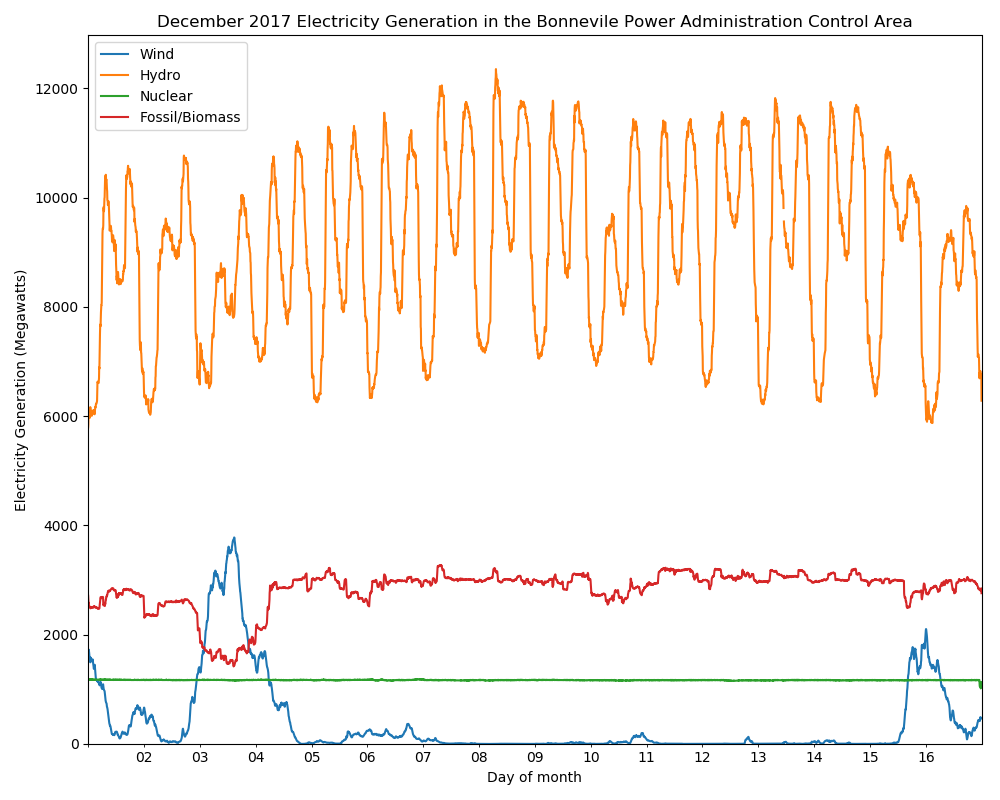
https://partofthething.com/thoughts/wp-content/uploads/decem...
https://blogs.ei.columbia.edu/2012/05/09/emissions-from-the-...
So if carbon-neutral fuels or clean electricity were substituted in the calcination process, the CO2 burden would be reduced by half without any additional downstream changes.
Seasonal storage of heat is not that difficult a problem, given that you have large enough need of low enough temperature heat. Which at least district heating offers. And converging electricity to heat is not exactly expensive or difficult...
https://en.wikipedia.org/wiki/Seasonal_thermal_energy_storag...
At least this one seems to be commercially viable:
https://www.solarthermalworld.org/content/denmark-52500-m2-a...
And here seem to be some numbers:
https://www.gsenergy.eu/central-solar-heating/
To me these numbers are a bit confusing, though, it seems like they are production and not storage numbers.
Anyway, heat storage capacity goes on third power of the size of the storage size while heat losses go only on second power. So after some point the heat losses are small enough. And as an order of magnitude, storage of tens of GWh seems to be in the commercially viable range. Today, that is.
> But these problems are distant. Renewables will start to encounter them in earnest when solar makes up >20-30% of electricity and when wind makes up >40-50% of electricity. Today, worldwide, solar is only 2% and wind is only perhaps 6% of global electricity. Cheap multi-hour storage will arrive before that (indeed, in the next few years), lowering the price of using solar to meet the evening peak, and of dealing with intermittency on the order of minutes to several hours. Only seasonal storage (and perhaps the political challenges of long-range transmission) seem to be truly difficult problems. And we have time before they begin to impair the growth of renewables.
This is where things get hard. Besides electricity, we also have to clean up all transportation, industrial, and space heating. This isn't so distant in an energy systems perspective. This is where having things like nuclear power plants with district heating will likely be important.
Until then, it's great to see wind and solar performing so excellently.
I still can't believe San Bernardino county already NIMBY-banned more large solar installations in the California deserts.