Utterly tangential, but this is why some of us still love shooting 35mm film.
http://en.leica-camera.com/Photography/Leica-M/Leica-M10-D
No screen. It has a wind lever! (I asked in the shop, it just functions as a thumb-stop. Shame it doesn’t have a true Leica fabric shutter...)
By the way, the article is at fault, as it mentions it was released in 2010. This is false - it was released around 2003/2004 I believe.
In https://www.deejayforum.de/threads/32604-djr-400-rotary-mixe... (a thread from 2006) one forum user mentions the delivery of a DJR400 in 2004.
The article made me doubt it for a little while, but I'm quite sure I ordered mine before 2010 ;)
I love the EQ section's silkscreening with Bode plot-like representations of each filter. They even indicate how the filters overlap in their transition bands.
With that said -- not going to lie, still remember the sets I've done on the Radius 4 or Rane's. The feeling creates a totally different experience and it changes the way you mix. Casual, fun - "closer" to the audience somehow.
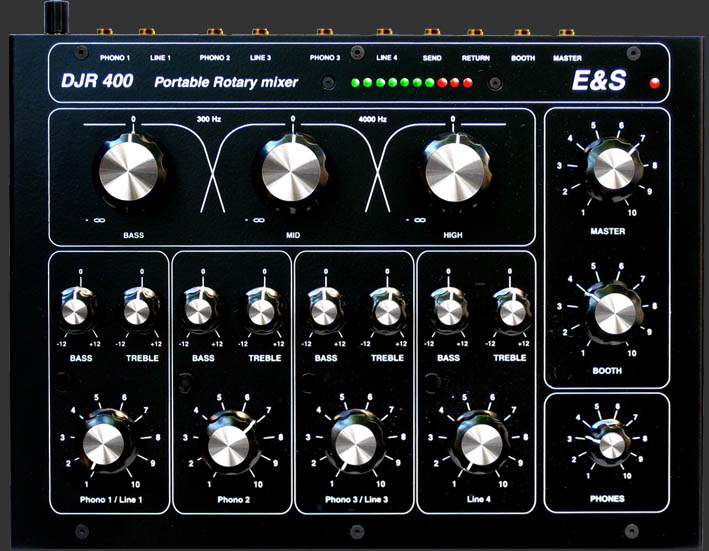
How do you choose what input is in your headphones?
You mean Honda? Bit of an odd comparison when the Mazda MX5/Miata is one of the most well-known fun drives.
I feel like neither Mazda nor Honda are appropriate here, anyway.
(not that they're bad cars)
1. The physical feel of the device is amazing. Every knob feels and looks both smooth and incredibly sturdy. It's like the difference between driving a Mazda and a Porsche. Madza might be more versatile, practical, and cost-effective. But which one of them is more fun to use?
2. Simpler design. Sometimes less is more, especially at DJ gigs. The article kind of hints at this, but part of the feel is not just the quality of the parts but how little (visible) parts the device has. Just compare how the Xone (one of the most respected lines of mixers) looks: https://i.pinimg.com/474x/35/52/dd/3552dd4fbb206be6a4425523e... to the DJR-400:http://www.electronique-spectacle.com/media/DJR400.jpg Yet the tools in DJR-400 are just fine. I definitely wouldn't want a DJR-400 for a 10-hour minimal techno set, but for blasting out house music in a packed club there might not be anything better at that price point.
3. You can do amazing tricks with the above mentioned Xone mixer (you could argue that it's almost a musical instrument of its own), but the way of operating reminds me more of a computer than an analogue device. There's a reason why so many DJs still prefer vinyl. The digital XDJ stations are even "worse" in this aspect with their LCD touchscreens and endless configuration options behind menu trees. After a long day sitting on a computer, the last thing I want is to feel like going to stand next to another computer.
4. If a problem occurs on an analogue device there are only a few things that could have gone wrong; there's some dust where there shouldn't be, some cable is loose, there's problems with electricity or some part is physically bent. But with these increasingly digital tools it's more like debugging and fixing a computer with proprietary software. There's an endless amount of error modes and although the reliability of the high-end models is still excellent, it's just another thing to keep in the back of your mind when you're trying to focus on your music and expression. The new rotary mixers are a statement against this trend of increasing digitalisation that has entered the mixer market, too.