pdkl95
Re:Diagnosing Mental Health Disorders Through AI Facial Expression Eva...
on Wednesday August 03, 2022 @02:34PM (#32335269)
> a crappy but cost-effective approach with a high margin of error may rise to prominence.
The tech startup that eventually creates that will call this "efficiency". This type of 'solution' is exactly what capitalism creates.
> I would love to have a real-time dashboard/HUD with measures of disorganized speech patterns or affective intensity
> It would be hard to make it not distracting
Not only would it be distracting, it could also bias you in unexpected ways.
> I would love to have a real-time dashboard/HUD with measures of disorganized speech patterns or affective intensity,
I already don't trust a lot of the mental health industry because of the very bad experiences[1] I've had in the past. The easiest/fastest way to guarantee I never visit a psychiatrist again is to start using that kind of "AI" tech without first showing me the source code. "Magic" hidden algorithms are already a problem in other medical situations like pacemakers[2] and CPAP[3] devices.
> make up for the trade-off of not being in the room
Maybe what you need isn't some sort of "AI" or other tech buzzword. It sounds like you need better communication technology that doesn't lose as much information.
--
On the more general topic of "AI in psychiatry", I strongly encourage you to play the visual novel Eliza[4] by Zachtronics. It's about your fear of a cheap, high error rate system with an additional twist: the same system also optimizes your role into a "gig economy" job.
[1] a brief description of one of those experiences: https://news.ycombinator.com/item?id=26035775
[2] https://www.youtube.com/watch?v=k2FNqXhr4c8
[3] https://www.vice.com/en/article/xwjd4w/im-possibly-alive-bec...
Re:The Dhall Configuration Language
on Friday July 15, 2022 @12:06AM (#32104508)
> What practical advantages are there?
The major advantage of a language that isn't Turing complete is not having the major risk inherent to Turing complete languages: asking if any non-trivial program will produce any given result or behavior is undecidable[1].
> write a program that runs until the heat death of the universe even in a Turing-incomplete language.
The Halting Problem is just a simple example of program behavior. The undecidability extends to any other behavior. Asking if a given program will behave maliciously is still undecidable even if we only consider the set of programs that do halt in a reasonable amount of time.
When you are using a regular language or deterministic pushdown automata, questions about the behavior or even asking if two implementations are equivalent is decidable. It is at lest possible8 to create software/tools to help answer the question "is this input safe." When you use a non-deterministic pushdown automata or stronger, you problem becomes provably undecidable*,
I highly recommend the talk "The Science of Insecurity"[2].
[1] https://en.wikipedia.org/wiki/Rice%27s_theorem
[2] video: https://archive.org/details/The_Science_of_Insecurity_ slides: [pdf] https://langsec.org/insecurity-theory-28c3.pdf
Re:FEMA Planning Guidance for Response to a Nuclear Detonation [pdf]
on Tuesday July 12, 2022 @09:00PM (#32077794)
Sun Ra, "Nuclear War"
    It's a motherfucker
    don't you know

    If they push that button
    Your ass got to go

    What you gonna do
    Without your ass
Re:Police CyberAlarm Uses Alarming Cryptography
on Monday July 04, 2022 @03:31PM (#31980832)
> The problem is that the people using said libraries don't know what they're doing.
I would like to suggest that the problem is that the skilled people that understand how to write crypto systems are providing libraries that are easy to misuse. Instead of providing a library that is likely to be used incorrectly without a lot of specialized knowledge, provide infrastructure that manages the crypto so the average developer doesn't need to become an expert on crypto systems.
HTTPS is a useful example. Instead of providing webapp authors a library of cypher/hash functions and warning that they shouldn't roll their own transport layer security and then acting shocked when those authors try to use that library and make a lot of mistakes, we instead separate the crypto step into a separate layer of infrastructure so the average webapp author can easily use crypto without having to learn a lot of specialized knowledge. Someone writing a Ruby on Rails app shouldn't have to write functions like pervade_encrypt($data)/pervade_decrypt($data) to move out of the plaintext world of HTTP and utilize encrypted transport. They only need to buy/LetsEncrypt a cert they can install in their webserver. They can even delegate that to their hosting provider.
"If it's possible for a human to hit the wrong button and [cause a catastrophic failure] by accident [or inexperience], then maybe the problem isn't with the human - it's with that button. [...] People make mistakes, and all of our systems need to be designed to be ready for that."
>> Tom Scott, https://www.youtube.com/watch?v=dabnx8VSdkE
Re:What will a Chromium-only Web look like?
on Wednesday June 22, 2022 @08:02AM (#31834916)
A single-browser web, like any monoculture, dramatically increases the potential damage of common mode failure. With everything - even important infrastructure and services - becoming directly or transitively dependent on the the web, we should be diversifying the browser ecosystem to limit the scope of a class break[1].
[1] https://www.schneier.com/blog/archives/2017/01/class_breaks....
Re:Bunny fonts – privacy respecting drop-in replacement for Google Fonts
on Sunday June 19, 2022 @01:51PM (#31801622)
> is relatively high entropy at <= 13-bits
That is only true if-and-only-if we pretend those 13 bits are the only identifying information being sent to Google when requesting a font. The HTTP request is almost certainly being sent to Google wrapped inside an IP protocol packet. For most[1] requests, there are at least 24 additional bits (why 24? see: [3]) of very-identifying data in the IPv4 Source Address field. More fingerprinting can be probably done on other protocol fields, and IPv6 obviously adds an additional 96 bits. Yes, IP addresses are not unique, but ~13 bits is easily sufficient to disambiguate most hosts on a private network behind a typical NAT. Correlating the tuple {IPv4 Src Addr, x-client-data} received on a font request is trivial: it only requires a user to login to any Google webpage that includes a font request.
>> re: your [1]
    A given Chrome installation may be participating in a number
    of different variations (for different features) at the
    same time. These fall into two categories:

       Low entropy variations, which are randomized based
         on a number from 0 to 7999 (13 bits) that's randomly
         generated by each Chrome installation on the first run.

       High entropy variations, which are randomized using
         the usage statistics token for Chrome installations
         that have usage statistics reporting enabled.
[1] Google reports[2] they currently see about a 60%/40% ratio of IPv4/IPv6.
[2] https://www.google.com/intl/en/ipv6/statistics.html
[3] my previous posts on this topic - re: x-client-data https://news.ycombinator.com/item?id=23562285 re: 24-bits-per-IPv4 https://news.ycombinator.com/item?id=15167059
Re:Shimano Forces Hammerhead to Remove All Di2 Related Functionality F...
on Friday June 03, 2022 @04:51AM (#31605835)
The solution to this type of intentionally incompatible product is to return to a legal and cultural environment that respects adversarial interoperability[1]. If a company doesn't want to implement the features people want[2], some other company should be able to provide their own (possibly reverse engineered) implementation.
Trying to restrict competitors from making interoperable products is admitting you don't want to participate in a well-running competitive market and instead deserve monopoly power.
[1] https://www.eff.org/deeplinks/2019/10/adversarial-interopera...
[2] including features like interoperability with a competitor's product.
Re:Welcome to the era of the hyper-surveilled office
on Tuesday May 10, 2022 @09:15AM (#31326712)
> based on their facial expression
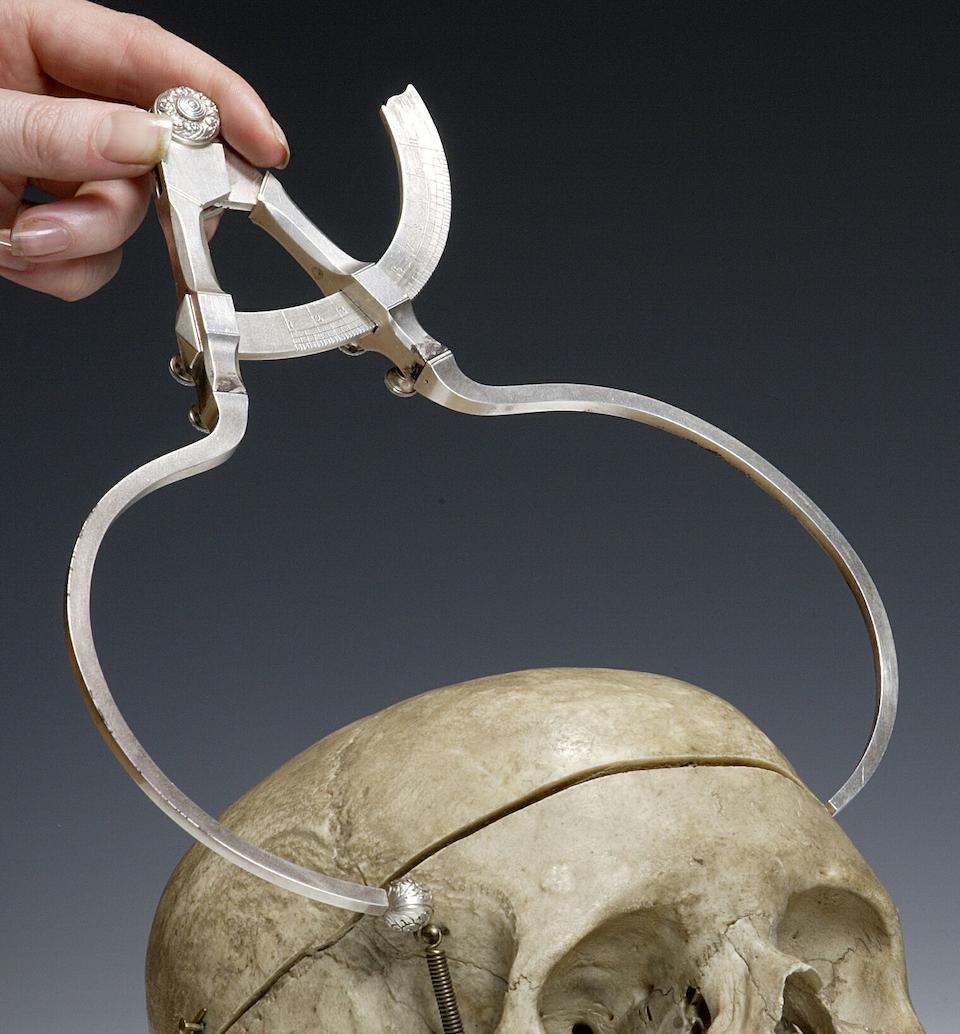
Phrenology is still pseudo=scientific bullshit even when the calipers[1] are replaced with an "AI" black box of software.
> Just need software that punishes employees who aren't happy enough at work, then we'll have a proper nightmare.
"RSA ANIMATE: Smile or Die"[2]
[1] https://images1.bonhams.com/image?src=Images/live/2006-06/16...
Re:Your phone may soon replace many of your passwords
on Saturday May 07, 2022 @11:00PM (#31300860)
Sci-fi is often a metaphorical representation of society. However, it's shocking how many episodes of Max Headroom have become literally true.
Re:Your phone may soon replace many of your passwords
on Saturday May 07, 2022 @10:56PM (#31300838)
> I could not enter my own apartment because my phone was dead
Whenever I hear about "smart" devices as a replacement for something that is safety/security critical (like a lock), the question of what happens when the internet and/or power fails is rarely even considered. Does the lock fail open or closed? Does the door open if there is a fire in the building that damages the internet/power wiring? If it fails open, does that mean someone can bypass the lock by simply cutting the network/power cables outside the building?
There might be reasonable answers to these questions at a large business building that can afford fallback options, but I'm not sure there are good answers for e.g. residential situations.
Re:Your phone may soon replace many of your passwords
on Saturday May 07, 2022 @10:33PM (#31300706)
Max Headroom, Episode ABC.1.3: "Body Banks":
    Paula: "...what's that?"
    Blank Reg: "It's a book!"
    Paula: "Well, what's that?"
    Blank Reg: "It's a non-volatile storage medium.
                It's very rare. You should have one."
Re:Why Ruby Has Symbols
on Thursday April 14, 2022 @12:03PM (#31028768)
While other comments have discussed the technical utility of symbols, I believe symbols can also be seen as useful syntactic sugar that helps communicate intent. Strings used for indexes. named args, and other structural purposes can be represented in a way that is visually distinct from strings used as text.
The technical benefits are nice, but this type of ergonomic feature is why ruby has remained my favorite language for over a decade.
Re:Automate Public Certificates Lifecycle Management via RFC 8555 (ACME)
on Tuesday April 12, 2022 @05:19AM (#31000334)
> first they become the dominant acme provider
The traditional way a big tech company becomes the dominant provider is to embrace an open interoperable protocol to minimize the friction of switching from another provider. Later, when they have captured enough of the market, they extend the protocol to gradually reduce the de facto interoperability with other providers to increase the friction of switching to any other provider.
https://en.wikipedia.org/wiki/Embrace%2C_extend%2C_and_extin...
Re:Daniel Gross: Why Energy Is the Best Predictor of Talent
on Friday April 01, 2022 @09:38PM (#30885138)
Using language like "fire fast" might presuppose a situation where someone is going to be "hired" - possibly involving a lot of work, life changes, and moving/other expenses - only to have their effort/money wasted when they are "fired fast".
What if instead of "fire fast", the idea was re-framed/restructured into the new employee initially working as some sort of consultant with a short term contract? Use telecommuting/work-from-home or other temporary workarounds to defer expensive/disruptive things like moving to live near the company until after the defined "trial" period. Instead of "firing fast", you either let the temporary consulting contract expire or you proceed with the actual hiring process and the deferred tasks.
Maybe this isn't possible in practice, but it seems like we could design a workaround to this problem if were sufficiently creative.
> think about the effects it has on others
Unfortunately, that takes proactive effort. Unless there is a mechanism to actively incentivize spending time and energy to protect others, most of the time that effort will be spent on "more important" things. ~sigh~
Re:Circumventing Deep Packet Inspection with Socat and Rot13
on Sunday February 27, 2022 @12:33PM (#30490487)
http://www.ranum.com/security/computer_security/editorials/d...
"The Six Dumbest Ideas in Computer Security"
> #1) Default Permit
> #2) Enumerating Badness
Re:Amazon Pip Horror Story
on Friday February 04, 2022 @07:34AM (#30205981)
http://web.mnstate.edu/alm/humor/ThePlan.htm
  In the beginning, there was a plan,
  And then came the assumptions,
  And the assumptions were without form,
  And the plan without substance,

  And the darkness was upon the face of the workers,
  And they spoke among themselves saying,
  "It is a crock of shit and it stinks."

  And the workers went unto their Supervisors and said,
  "It is a pile of dung, and we cannot live with the smell."

  And the Supervisors went unto their Managers saying,
  "It is a container of excrement, and it is very strong,
  Such that none may abide by it."

  And the Managers went unto their Directors saying,
  "It is a vessel of fertilizer, and none may abide by its strength."

  And the Directors spoke among themselves saying to one another,
  "It contains that which aids plants growth, and it is very strong."

  And the Directors went to the Vice Presidents saying unto them,
  "It promotes growth, and it is very powerful."

  And the Vice Presidents went to the President, saying unto him,
  "This new plan will actively promote the growth and vigor
  Of the company With very powerful effects."

  And the President looked upon the Plan
  And saw that it was good,
  And the Plan became Policy.

  And this, my friend, is how shit happens.
Re:Naomi Wu video demonetized on YouTube
on Thursday January 27, 2022 @06:55AM (#30099400)
While some people certainly seem to subscribe to "feeling their masculinity/world-view is threatened" interpretation, the fundamental problem that q lot of people don't seem to understand is that the internet changed the mechanics of fame.
The best explanation I've seen - and possibly the most important video on youtube - is "This Is Phil Fish"[1] by Innuendo Studios. It's not really about Phil Fish; it's about everyone who isn't Phil Fish acted when they decided he became "famous". In the past, being "on tv" or "in a band" or other traditional examples of fame required some amount of buying into fame. Becoming famous required media access that was controlled by gatekeepers. You had to work with those gatekeepers if you wanted to be "on tv" or whatever, and because you had to choose to participate, people often see the decision to become famous as also accepting some amount of responsibility to "act like famous people are supposed to act".
This internet fundamentally changed the mechanics of fame, because the internet IS media access. Now it is possible to become famous - to become a "celebrity" with a "responsibility" to act in a certain way - simply by being yourself in your normal everyday life.
2D projection of a 3D cube in Poly Bridge 2
Re:Show HN: A pure bash web server. No netcat, socat, etc.
on Tuesday January 04, 2022 @10:47AM (#29796002)
Regarding the creation and removal of a tempfile (line 72 & 85):
    local tmpFile="${TMPDIR:-/tmp/bash-web-server.$$}"

    # ...

    rm "$tmpFile"
    local tmpfile="$(mktemp --tmpdir="${TMPDIR:-/tmp}" bash-web-server.XXXXXX)"
    trap "rm -f \"${tmpfile}\"" RETURN EXIT

    # ...

    # Do nothing at the end of the function; trap will
    # remove the file at RETURN automatically.
Re:Yesterday the FBI signed its first public contract with Clearview AI
on Friday December 31, 2021 @04:54PM (#29752919)
If they are making false claims about you that cause serious damage to your reputation (like telling the FBI you look like a terrorist), then sue them for libel.
Re:Yesterday the FBI signed its first public contract with Clearview AI
on Friday December 31, 2021 @04:48PM (#29752876)
> "What due diligence and groundwork have you done to prove that they are in fact a terrorist?"
The solution is to make this question their (Clearview) problem. If you are offering a service that makes damaging claims about people, then you need to be liable for any related damages if that claim is later found to be slander/libel.
The risk of a potentially huge ruling/settlement will be handled the same way it is handled in other professions: by paying for liability/malpractice insurance. Eventually, the insurance companies will handle the question of due diligence.
Rebuilding the Oroville Dam Spillways
Re:Frickin' shaders with frickin' laser beams
on Monday December 13, 2021 @12:29AM (#29536939)
Also, after scrolling up, there is a 'settings' button (gear icon). Along with various options (including alternative shaders!), at the top there are 8 empty circles that are worth investigating...
I'm trying to avoid spoilers, so I'm obfuscating more specific hints:
  # A good first step (very mild spoiler)
  echo Q2hlY2sgdGhlIGNvbnNvbGUhCg== | base64 -d

  # A direct hint about where to look
  echo RmluZCB0aGUgaGlkZGVuIGFjaGlldmVtZW50cygpCg== | base64 -d

  # A very spoilery JS statement that has side effects
  echo YWNoaWV2ZW1lbnQoJ2NodHInKQo= | base64 -d
Re:Protected Content, Delete by Date, Device Management and more
on Wednesday December 08, 2021 @10:49AM (#29486174)
Tom Scott's speculative fiction about the end game of a DRM-based future:
https://www.youtube.com/watch?v=IFe9wiDfb0E
"Welcome to Life"
Re:Popular Family Safety App Life360 Selling Precise Location Data on ...
on Monday December 06, 2021 @01:15PM (#29463468)
> Everyone
Abusing technology to gather and monetize data that reveals users' "pattern of life" used to be limited to tech companies. Now that the tech industry rot has spread into other traditionally unrelated industries the abuse becomes systemic. We are now seeing the results of the spreading rot as a fundamental shift in our economic system from capitalism based on mass-production and financialization into surveillance capitalism[1].
We are already seeing entire industries shift from their traditional business models into surveillance oriented data. After a critical mass of businesses pivot to surveillance capitalism, the rest of the market becomes strongly incentivized to also become a surveillance capitalism style business or risk being left behind unable to participate in the new market.
[1] https://nymag.com/intelligencer/2019/02/shoshana-zuboff-q-an...
Re:Testing Phone-Sized Faraday Bags
on Thursday December 02, 2021 @10:38AM (#29417440)
I admit the vast majority of my experience with hotels consists of a single repeated data point: the staff[1] suite(s) we shared in the Hilton attached to the SJ convention center. They always had glasses/shaker/etc. You could probably ask for a shaker from roomservice or the hotel bar, if necessary.
[1] If you registered for FanimeCon 2000-2011, the weird software you had to use was my fault...
Re:Testing Phone-Sized Faraday Bags
on Thursday December 02, 2021 @09:49AM (#29416811)
Even better: practice defense in depth and do both.
Re:Testing Phone-Sized Faraday Bags
on Thursday December 02, 2021 @09:43AM (#29416707)
The last time I used a daylight tank was in the mid '90s so maybe newer models are different, but I believe they are made out of black/dark plastic? Several right angle turns of black plastic provides multiple opportunities for a visible-light photon to be absorbed into a black body where it should be re-radiated as infrared (heat).
A hole/leak in the metal wall of a Faraday cage is going to be a lot more reflective and can easily act like a crude waveguide[1].
[1] https://en.wikipedia.org/wiki/Waveguide_%28radio_frequency%2...
Re:Testing Phone-Sized Faraday Bags
on Thursday December 02, 2021 @06:19AM (#29414788)
I really like Snowden's recommended Faraday cage for phones or other devices of similar size: two drink-shaker cups[1].
Drink shakers are cheap and widely available. The average hotel room in any medium/large hotel chain probably includes a shaker as a standard item as part of the minibar. The simple two-cup style (as seen in [1]) is preferred over the fancier "strainer top" style because you can press the two cups together; this should cause the inner cup to slightly cut into and/or deform the outer cup along the circle where they join together. The seal between the cups should work sort of like the knife-edge seals used in vacuum chambers.
A metal box or conductive bag is only a Faraday cage if it is fully closed/sealed. Any imperfection in the seal or hole[2] might allow the radio signal to leak out. Most improvised items (freezer, random metal box, etc) have poor seals. Making a high quality cage that actually block a modern phone can be done without much trouble, but the drink shaker method is the only method I know of that will do the job using widely available (free) or very cheap ($10-ish?) parts.
[1] https://ae01.alicdn.com/kf/HLB1yRyhXZTxK1Rjy0Fgq6yovpXaZ/Win...

[2] Holes of sufficient size. How big are the waves you are trying to block?