News for hackers. Stuff that matters.
Re:Japan Shows the Way to Affordable Megacities (2014) by the_patrick on Sunday May 07, 2017 @10:17AM (#14285562)
I went to Tokyo this year and was shocked at how cheap it was compared to major North American cities. Meals like ramen were $8.00 USD including tax and tip. Asked some young people how much rent was in Tokyo, "very expensive, young people need their parents help... $1,000 USD per month". Sums it up there, much cheaper than the US and Canada but salaries are so low it's expensive for them. My take away is that Japan has a rep for being super expensive when in fact it's now very cheap for North Americans.
Re:Japan Shows the Way to Affordable Megacities (2014) by cgarrigue on Sunday May 07, 2017 @10:32AM (#14285635)
It's only cheap if you come to Japan for holidays, or if you're an expat detached by your company to Japan. If you're living in the country, receiving the same salary as any Japanese person, Tokyo is an expensive city. And I'm not even talking about language teachers, who cannot really live in Tokyo or all the Japanese people who are part-timers

Everywhere in the world salaries, rents and prices go hand in hand. Unless you're living on one side of a border and working on the other side (which is possible in EU) which allow you to game the system, rents and prices are based on supply and demand. Don't take it personally, but it does not make much sense to compare what you would get with a salary from one country while living in another country.

Re:Japan Shows the Way to Affordable Megacities (2014) by rtpg on Sunday May 07, 2017 @11:02AM (#14285772)
Yeah salaries are pretty low in Tokyo for a lot of jobs, if you're on the lower end of the skill hierarchy you're going to be in pain.

But ... it's not like low-skilled workers in SF are getting paid much either.

The average HN reader might be in a better negotiating position w.r.t. salaries in Tokyo

Some things to consider about Tokyo:

- No need for a car, insurance that comes with

- Your company will (in almost all cases) be paying for your daily transportation by car

- If you're willing to suffer in the morning with travel/take a bus to the train station, you have a range of prices for renting

- There are a lot of people living on low salaries, so there are a lot of services on the low end. 100 yen shops with high quality stuff, all things considered.

For 60,000 yen/month you can get 20m2 studio appartments (25-year-old buildings) within 15 minutes of stations like Nippori or Otsuka. If you follow the "1/3rd of salary" rule, it's reasonable if you're making a bit over minimum wage (not sure what the going rate for English teachers are)

Re:Japan Shows the Way to Affordable Megacities (2014) by autokad on Sunday May 07, 2017 @12:52PM (#14286284)
that contrasts with the reality that the average commute time in tokyo is 66 minutes (2011). I suspect the median is probably longer then that.

SF is cherry picked, the most expensive place in the US. I live in Philadelphia and the commute time and cost is substantially lower. NYC would be the most appropriate comparison, and they get to work with nearly 20 minutes less commute.

I bring up commute because many people have long commutes because they simply cant afford to live closer.

Re:Japan Shows the Way to Affordable Megacities (2014) by klodolph on Sunday May 07, 2017 @01:34PM (#14286483)
> I suspect the median is probably longer then that.

Generally when the median is greater than the mean, it's because there's a long tail to the left dragging the mean down. I expect that the opposite is true: there is a long tail to the right, with a small number of people who have exceptionally long commutes.

So I'd expect the median to be lower, like it is for salaries.

Re:Japan Shows the Way to Affordable Megacities (2014) by autokad on Sunday May 07, 2017 @11:53PM (#14289130)
yeah i bet you are right. Its probably bunched up to the left with a long right tail
Re:Japan Shows the Way to Affordable Megacities (2014) by rtpg on Sunday May 07, 2017 @07:09PM (#14288208)
Tokyo's rent is comparable to Dallas or Madison, WI (give or take some square footage because American housing is less efficient in space usage). Way cheaper than NYC for sure.

There are a lot of people who do 90 minute+ commutes for sure. Even for relatively small commutes you end up with a fixed cost of about 20 minutes for just going to the station from your home or leaving to go to the office, so 30 minutes is good.

It's possible to live close to your office if you're willing to live far from trains a lot of the time though. Living 20 minutes from any station instead of 5 easily cuts 30% off the rent

Re:Japan Shows the Way to Affordable Megacities (2014) by stcredzero on Sunday May 07, 2017 @07:39PM (#14288311)
How accepting are the authorities and people of electric bikes/scooters?
Re:Japan Shows the Way to Affordable Megacities (2014) by alphonsegaston on Sunday May 07, 2017 @09:03PM (#14288584)
People ride scooters all over the place in Japanese cities. They're pretty commonly used for delivery services as well. Biking culture is actually more aggressive than in many places in the US. For example, it's for some reason acceptable to ride your bike on crowded sidewalks, belying everything I understand about notions of Japanese civility.
Re:Japan Shows the Way to Affordable Megacities (2014) by karthikb on Sunday May 07, 2017 @09:17PM (#14288631)
One reason this works is that folks use their bells and people yield. Even in more unexpected areas:

https://www.youtube.com/watch?v=k7oGk-ozhKI

Re:Japan Shows the Way to Affordable Megacities (2014) by ghaff on Sunday May 07, 2017 @11:38PM (#14289080)
Not really my experience. I've seen people trying to ride bikes in areas where people could barely walk. And I've been on many sidewalks where not watching your six when moving right or left was an invitation to get run over on a sidewalk.
Re:Japan Shows the Way to Affordable Megacities (2014) by Dunan on Monday May 08, 2017 @05:42AM (#14290299)
Electric bikes are making headway but many employers have rules specifically forbidding employees from riding them (or any other form of personal transportation) to work. There is a major national insurance company with which employers have a contract and that company won't pay out for accidents that happen on the way to or from work while the employee is on a bicycle or in their own car, so employers ban commuting by bicycle or car.
Re:Japan Shows the Way to Affordable Megacities (2014) by candiodari on Sunday May 07, 2017 @01:06PM (#14286348)
Ah no worries. Give SF 30 years of declining revenue for all it's industries (like Japan), with several financial disasters during that time, and SF will not be expensive anymore either. Living within 66 minutes commute to SF will be positively easy.
Re:Japan Shows the Way to Affordable Megacities (2014) by seanp2k2 on Sunday May 07, 2017 @04:32PM (#14287489)
This is why I'm not buying a house in the Bay Area. I look at these properties on the market for $1.5m for a run-down house in the bad part of town just because it's "only" 15 miles from SF and I think that there's no way this is going up in value forever.
Re:Japan Shows the Way to Affordable Megacities (2014) by seanmcdirmid on Sunday May 07, 2017 @03:46PM (#14287216)
Great! I can't wait for SF to become cheap enough so I can move there.

...

Re:Japan Shows the Way to Affordable Megacities (2014) by rmah on Monday May 08, 2017 @09:26AM (#14291242)
When it gets cheap enough, you won't want to move there. That's why it'll be cheap.
Re:Japan Shows the Way to Affordable Megacities (2014) by seanmcdirmid on Monday May 08, 2017 @10:02AM (#14291501)
Good weather, nice charm, isn't that why everyone wants to live there anyways? It's like how California is just is crowded so no one goes there anymore.
Re:Japan Shows the Way to Affordable Megacities (2014) by wodenokoto on Sunday May 07, 2017 @06:16PM (#14288019)
Tinto is also the most expensive place in Japan. It's quite expe dive compared to Osaka, the second biggest city.
Re:Japan Shows the Way to Affordable Megacities (2014) by patio11 on Sunday May 07, 2017 @06:12PM (#14287994)
I assert that you can find an apartment considered appropriate for a middle-class person in Tokyo for approximately $800~$1,200 in virtually any district of the city in under one day of looking. This is not true of Manhattan or San Francisco.

If you strongly believe this is unlikely, name a neighborhood and I'll show you three apartment listings.

Re:Japan Shows the Way to Affordable Megacities (2014) by Sukotto on Sunday May 07, 2017 @08:37PM (#14288512)
If you want a 1K ~ 2DK [1] for 1 ~ 3 people I think you are right.

For larger families? I dunno. We're a family of 5 (1 in jr high, 2 in elementary) and really struggling to find a place to move up into from our current 2LDK. :(

I admit, we have a bunch of constraints, but I don't think they are too unusual. (want to be reasonably near to work, school, and in-laws)

[1] For those that don't know, apartments here are typically listed by number of rooms, plus if the space includes an "L" living room, "D" dining area, "K" kitchen. So "1K" would be a single room with a place to cook. 2DK would be 2 rooms, with an eating area and a kitchen.

Re:Japan Shows the Way to Affordable Megacities (2014) by Nadya on Monday May 08, 2017 @10:39AM (#14291839)
>If you strongly believe this is unlikely, name a neighborhood and I'll show you three apartment listings.

I don't believe it is unlikely but I'd like to take you up on your services. ;)

Got anything for the Harajuku or Akihabara districts? You seem to be more knowledgeable on how/where to search for this info and I'm a bit lost. (Still have over a year to properly research this stuff on my own, but I really want to move to near one of those two districts next year.)

Re:Japan Shows the Way to Affordable Megacities (2014) by othello on Sunday May 07, 2017 @07:16PM (#14288229)
Even in Shibuya? That's interesting, because depending on the size of the apartment you consider middle-class, this would make it cheaper than Paris. Definitely not what I remember from living in Japan 10 years ago.

Has prices softened that much since then?

Re:Japan Shows the Way to Affordable Megacities (2014) by patio11 on Sunday May 07, 2017 @08:25PM (#14288465)
Here are 45 properties within a 10 minute walk of Shibuya Station, ranging from ~$600 to ~$1,200 and 1K through 2DK.

http://suumo.jp/jj/chintai/ichiran/FR301FC001/?ar=030&bs=040...

For folks who don't have the local color here: if you're willing to live in apartments sized for middle class Japanese folks, and that is a big if for many foreigners, Tokyo can be impressively inexpensive to live in. Shibuya is a very desirable and relatively centrally located neighborhood; think "SOMA" or, hmm, I don't know Manhattan that well but somewhere in Midtown maybe?

(If you optimize for commute down to the minute, prestige of building, or living space, you can end up paying a lot of money. Though even in an apartment that scores well on all three my rent is less than the median in SF.)

Re:Japan Shows the Way to Affordable Megacities (2014) by hudibras on Sunday May 07, 2017 @11:13AM (#14285826)
Anybody who lives in Manhattan would be thrilled to get a Tokyo-sized apartment at Tokyo-sized rent.
Re:Japan Shows the Way to Affordable Megacities (2014) by brianwawok on Sunday May 07, 2017 @12:18PM (#14286139)
What is the delta between a wall-street programmer salary and Toyko programmer salary? I think it is 5x or 10x last time I checked...
Re:Japan Shows the Way to Affordable Megacities (2014) by 6t6t6t6 on Sunday May 07, 2017 @05:49PM (#14287885)
In Tokyo, the salaries for developers range from $50K to $100K. In order to get the 10K, you need to be a senior developers and bilingual.

All salaries include public Social Security.

Re:Japan Shows the Way to Affordable Megacities (2014) by hkmurakami on Sunday May 07, 2017 @12:39PM (#14286227)
Ya generally speaking a new grad programmer is doing great if he/she makes $50k/yr.

Engineers that'd get $300k comp offers from big5 tech here would make $80k--$150k, provided you go to a web/mobile company. If you go to an older industry you will make less.

Re:Japan Shows the Way to Affordable Megacities (2014) by YorkianTones on Sunday May 07, 2017 @12:43PM (#14286255)
Who gets $300k comp offers? Principal engineers?
Re:Japan Shows the Way to Affordable Megacities (2014) by vkou on Sunday May 07, 2017 @01:40PM (#14286503)
You can hit $300K (All-in) as a senior engineer at Google.

Various finance firms on the east coast can also send recruiting e-mails, touting their >400K comp. I think the key to that one is having work experience in an investment bank, as well as at AMAPGOFA.

Re:Japan Shows the Way to Affordable Megacities (2014) by ForHackernews on Sunday May 07, 2017 @02:57PM (#14286938)
> AMAPGOFA

?

Re:Japan Shows the Way to Affordable Megacities (2014) by dgemm on Sunday May 07, 2017 @03:23PM (#14287082)
Amazon Apple Google Facebook
Re:Japan Shows the Way to Affordable Megacities (2014) by vinceguidry on Sunday May 07, 2017 @08:36PM (#14288502)
I prefer AmaGooFaceSoft, rolls off the tongue better.
Re:Japan Shows the Way to Affordable Megacities (2014) by coldtea on Sunday May 07, 2017 @12:59PM (#14286308)
Well, not all Manhattan residents are "wall street programmers".
Re:Japan Shows the Way to Affordable Megacities (2014) by sandworm101 on Sunday May 07, 2017 @04:06PM (#14287316)
Really? My TV tells me they are all waitresses, songwriters and lawyers living in a magical world of coffee shops and art galleries.
Re:Japan Shows the Way to Affordable Megacities (2014) by lacampbell on Sunday May 07, 2017 @06:45PM (#14288140)
I was always impressed with the huge spacious apartments people working low paying jobs could get.

I guess Friends wouldn't have been that uplifting if it was shot in Rosses' cramped, leaky studio apartment.

Re:Japan Shows the Way to Affordable Megacities (2014) by sandworm101 on Sunday May 07, 2017 @08:11PM (#14288418)
For all it was, Friends did spell out some Manhattan realities. The main set, the girl's apartment, was an illegal sublet of an older relative and therefore subject to rent control. Even characters in decent jobs shared apartments. Several had wealthy parents who lived outside the city. A couple of the female characters made no bones about how they wanted to date/marry rich men, often significantly older men. And I got a kick out of the story arch where the Chandler character, despite a reasonable job history and a degree, had to work as an unpaid intern. The visual dimensions were certainly a total fiction, but I got the impression that some of the writing staff wrote what they knew.

That bit with the hanukkah armadillo and superman is still one of the funniest things I've seen on TV.

Re:Japan Shows the Way to Affordable Megacities (2014) by Dunan on Monday May 08, 2017 @05:44AM (#14290309)
But would they still be so thrilled on a Tokyo salary? People here (I live and work in Tokyo) have a much narrower pay band than you would see in NYC or any American city. You might make $25~30k to start, and $40~50k at age 40.

I'd love to move back to my native NYC, but I've been priced out forever, as the cliche goes. There are entry level people earning more than I earn as an 18-year veteran in Tokyo.

Re:Japan Shows the Way to Affordable Megacities (2014) by lacampbell on Sunday May 07, 2017 @06:51PM (#14288153)
Everywhere in the world salaries, rents and prices go hand in hand.

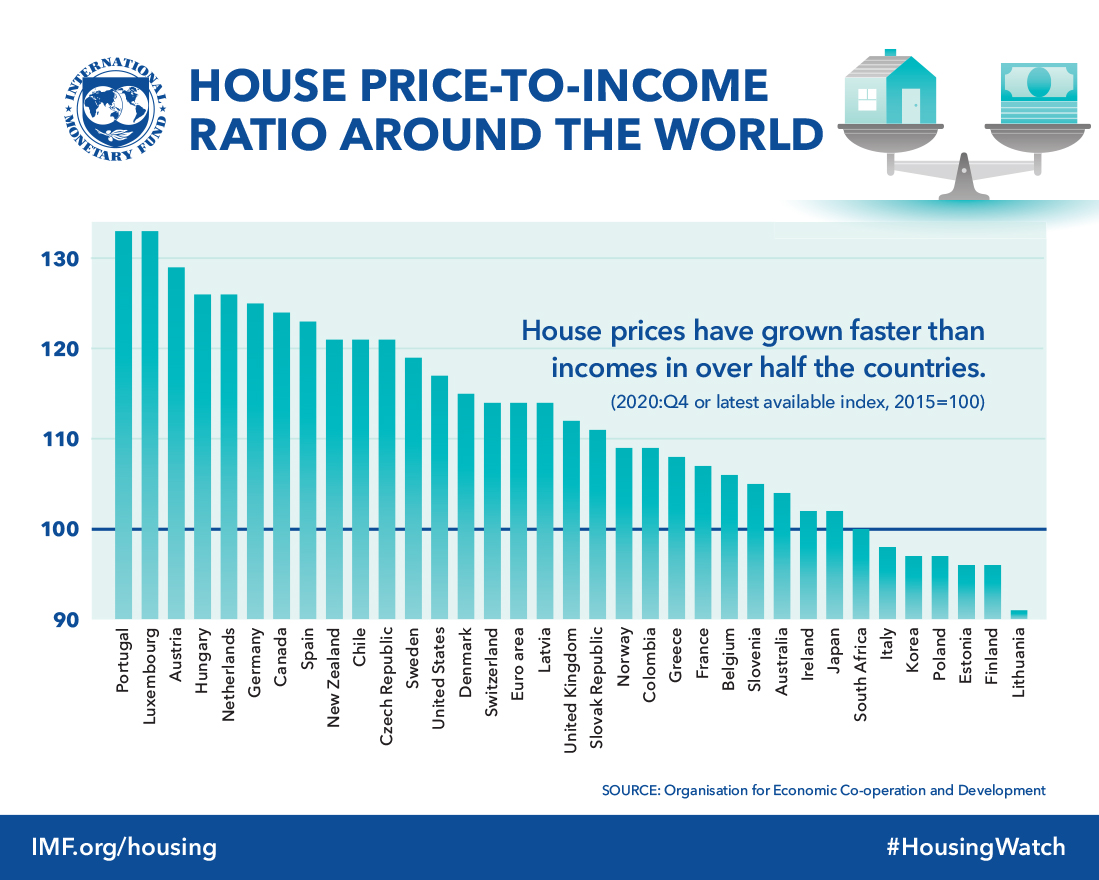
Not true. There's huge variations in OECD countries. Here's a graph showing house price to income ratio. I know this intimately because I live on the far left :'(

https://www.imf.org/external/research/housing/images/priceto...
Re:Japan Shows the Way to Affordable Megacities (2014) by billforsternz on Sunday May 07, 2017 @09:52PM (#14288744)
That's a rather weird graph - it doesn't show house price to income ratio at all, even though that's its title. It shows change in that ratio since 2010. Tells you essentially nothing about the actual house price to income ratio.
Re:Japan Shows the Way to Affordable Megacities (2014) by baby on Sunday May 07, 2017 @04:28PM (#14287456)
> Everywhere in the world salaries, rents and prices go hand in hand

Check r/London and look for topics like "how much of your salary are you paying on your rent?". I've seen a lot of people spending 50% up to 70% of their salary on rent.

Re:Japan Shows the Way to Affordable Megacities (2014) by vinceguidry on Sunday May 07, 2017 @08:40PM (#14288521)
I pay 50%, used to be 35% before I went full time and shifted part of my salary to an end-of-year bonus.

It will move up to close to 70% if my roommate moves out in August. It's a little shocking to consider that I would actually consider paying that much to stay here. I seem to really like Midtown Atlanta that much.

Once you get used to it, it's not that bad. Out of all the things you could spend your money on, having an utterly sweet pad in the dead middle of town isn't the worst thing.

Re:Japan Shows the Way to Affordable Megacities (2014) by droidist2 on Monday May 08, 2017 @10:10AM (#14291572)
The old rule of thumb used to be not to spend more than 30%, but I imagine that's changed greatly in recent times.
Re:Japan Shows the Way to Affordable Megacities (2014) by etherael on Monday May 08, 2017 @02:29AM (#14289656)
I recently started a full time job after getting recruited to a company in Tokyo, the wages are pretty damned good, and the cost of living is very low. By comparison I've worked in Sydney where the wages were comparable, potentially a little higher (less than 10%), and the cost of living was about three to four times higher. And done the digital nomad thing where cost of living was slightly cheaper still than Tokyo, but not by a lot, and average income was (variable, admittedly, but generally speaking) enormously smaller.

It does appear to be an optimal combination for both good wages and low cost of living in my experience having traveled and lived extensively all over the world.

The single caveat I'd make on saying this is that the way that I prefer to live might be uniquely suited to Tokyo, and uniquely unsuited to Sydney. That being; I hate commuting, I want somewhere small and comfortable but otherwise as cheap as possible to live, but as close to work as possible so I can just walk to and from every day. In Sydney working in the CBD this means you'll be stuck with some status signalling lifestyle apartment coupled with the already significant premium on rentals in general which is applicable to all Sydney real estate, and it's stupidly expensive (average 2250 - 2500. You could probably get away with a rundown roach palace for a little cheaper, but the floor on Sydney rentals in my experience is just absurdly high.

By comparison I got a no frills apartment that is perfectly useful, comfortable and serviceable within 300 meters walk to my office in Shibuya no problem at all, 1100 USD per month, and everything else on top of that with the bountiful microwave dinners, amazon, and roadside eating joints by the dozen, extremely fast and cheap internet (gigabit for < 40 USD pm) doesn't increase the price by much at all.

Re:Japan Shows the Way to Affordable Megacities (2014) by baursak on Monday May 08, 2017 @10:35AM (#14291807)
I'm curious to find out more about looking for and getting a tech job in Japan, as well as the overall working environment. Did you look at specific jobsites? Do you speak Japanese? Are tech companies in Japan similar in culture to your usual stereotypical long hours salaryman jobs in mainstream corporate Japan?
Re:Japan Shows the Way to Affordable Megacities (2014) by etherael on Monday May 08, 2017 @12:44PM (#14293254)
Regarding jobsites, no, I was contacted on LinkedIn for a specialised project that I happened to be uniquely suited for. I was not in the country at the time, and my employer handled immigration and the relocation and everything associated on my behalf.

I did not speak any Japanese at all at the time I started, and I am slowly learning it now but don't have a lot of time to dedicate to the project. I intend to gain fluency in it eventually. Unlike many of the places in the world I've lived, I would say if you intend to comfortably exist here long term, you will need to learn the language both spoken and written. It's not like a lot of places these days where English is almost an official second language or there's extensive proficiency amongst the local population.

This is my first and only time working in Japan so I have no basis for comparison to other companies here. My impression of the culture is there can be an overemphasis on hours worked rather than output produced and the quality thereof, but they're conscious that is an issue at least where I work and they're mindful of it and try to address it. They also have things that seem strange to me as a foreigner but I am more prone to just accepting and trying to do things their way (when in rome).

All in all, I'm finding it pretty good, it definitely helps that this particular field has pretty much devoured all my energy, life and thinking since I really immersed myself in it a few years ago, so working in a global hub central location where it's really having an explosive impact on a core related piece of infrastructure is pretty much a dream job for me.

Re:Japan Shows the Way to Affordable Megacities (2014) by ekianjo on Sunday May 07, 2017 @10:58AM (#14285756)
> Meals like ramen were $8.00 USD including tax and tip

There is no tip in Japan. And 8 USD for Ramen is super expensive, in Kansai you can get ramen for 5 USD or even less. Ramen should not cost that much anyway, it's super fast to make and ingredients are super cheap too.

Re:Japan Shows the Way to Affordable Megacities (2014) by ubercow13 on Sunday May 07, 2017 @06:30PM (#14288085)
But ramen takes notoriously long to make

See http://www.seriouseats.com/2012/02/how-to-make-tonkotsu-rame...

Re:Japan Shows the Way to Affordable Megacities (2014) by kinkrtyavimoodh on Monday May 08, 2017 @02:07AM (#14289582)
They are not going to make the broth from scratch separately for each customer, so it's not different from all the different kinds of preparation any restaurant needs to do to ready itself for the day.
Re:Japan Shows the Way to Affordable Megacities (2014) by cylinder on Sunday May 07, 2017 @12:31PM (#14286194)
It's $20.50 here in Brooklyn at a small neighborhood place (including tax and tip)! Ridiculous. I bought a premium instant ramen on Amazon, add my own meat/egg and it's as good or better.
Re:Japan Shows the Way to Affordable Megacities (2014) by wahnfrieden on Sunday May 07, 2017 @01:32PM (#14286473)
Ramen in NYC is mostly an exoticized item served at comparatively fancier places than the typically utilitarian presentation you'll find all over Japan. It's no wonder that you can find it at $20+ in Brooklyn.
Re:Japan Shows the Way to Affordable Megacities (2014) by mc32 on Sunday May 07, 2017 @04:03PM (#14287299)
It's interesting to see how foods become either premium (ala Japanese in the US) or commoditized like Vietnamese or Thai in the US. On the other hand, In Japan Thai or Indian can be premium cuisines.

On the other hand, most of it is presentation and perception. You can get a $5 burger as well as find a $20 burger --if you search hard enough you can find a $5 with the same quality as the $20 version --so it's not always exoticism that does the trick.

Re:Japan Shows the Way to Affordable Megacities (2014) by contingencies on Sunday May 07, 2017 @05:28PM (#14287782)
Pricing strategies for restaurants are not driven by whole-market perceptions but many combining factors such as local competition, available space, labor and rental costs, hours of available custom, etc.

To put it another way, you can do a high end anything restaurant, but takeaway makes far more sense in a high traffic location with massive rush hours, high rents and little available space, no foot traffic after 5PM and no access after 8PM.

Re:Japan Shows the Way to Affordable Megacities (2014) by pm90 on Sunday May 07, 2017 @06:34PM (#14288102)
As other commenters have said, its not specific to any cuisine. You can have "premium" any cuisine that you like. The difference seems mostly to be the people starting these businesses. If its easy for people from other countries to get a visa/start a business in the US, that will attract more "premium chefs". But if its not that easy, and the people running the restaurants are first-timers or relatives of immigrants just trying to make money, it would be hard for them to open a "premium restaurant".
Re:Japan Shows the Way to Affordable Megacities (2014) by mc32 on Sunday May 07, 2017 @06:52PM (#14288164)
I understand some of those aspects -- the curious part is that one cuisine from a third country might be seen as cheap food in an adopting country and premium in another adopting country -generally speaking.
Re:Japan Shows the Way to Affordable Megacities (2014) by vinceguidry on Sunday May 07, 2017 @08:46PM (#14288538)
I recently ate at a Chinese restaurant. My Korean roommate took me there with his family and told me that it was run by Korean people. I learned that Chinese food in Korea is fine dining, not the cheap shlock they dish out here.

Enough Korean people have come to Atlanta that there is a restaurant there aimed specifically at giving Koreans a taste of home, that taste involved a completely different cuisine from both American Chinese food and Chinese Chinese food.

Re:Japan Shows the Way to Affordable Megacities (2014) by mc32 on Sunday May 07, 2017 @10:04PM (#14288789)
Something to be tucked in the back of one's mind is that in France most French eat normal French food --not fine dining French food, some people do take their time to cook somewhat complicated dinners. In China people eat regular Chinese food, not fine dining Chinese food --based mostly on: fried noodles, rice or soup stock. Each will have some kind of meat and wilted veggies --not many people cook at home. It's greasy, it's tasty (in the way salty greasy things are tasty) --but it's not by any means great food. For fine dining they will go to a banquet dinner, or some foreign fare --even tacos are exotic, if you can find them.
Re:Japan Shows the Way to Affordable Megacities (2014) by devonkim on Monday May 08, 2017 @08:27AM (#14290938)
I never got the impression that Chinese food is upscale as a Korean. 짜장면 may as well be pizza and hot dogs for Koreans, for example. However, the Chinese cuisine meal I had for well over $300 / head in Choson hotel years ago was certainly nice. 12 year old me still asked for 짜장면 and they brought it over from across the street probably.

It wasn't Golden Buddha I hope? That place is what celebrity chef David Chang probably would charmingly refer to as "bad" Chinese food that is addictive, and it's decided not nice by any stretch of the imagination. As an out of town Atlanta Korean I'm still clueless about what most Koreans know here ITP and what's around Duluth.

Re:Japan Shows the Way to Affordable Megacities (2014) by vinceguidry on Monday May 08, 2017 @09:05AM (#14291122)
Had to go look it up, it was Fung Mei off of Pleasant Hill.

Yes, they absolutely loved the Jajangmyeon. (짜장면 for those curious) I couldn't eat it.

Now that I'm thinking about it, they didn't really describe Chinese food as upscale. But more as like a treat. We're super spoiled here in America with all these different kinds of cuisines.

ITP the best Chinese restaurant IMO is Chong Qing Hot Pot in Chamblee. We had good meals at Northern China Eatery on Buford Highway, but Chong Qing is way better.

I'll edit this with the best Korean restaurant when I can get back with my roomie on where it moved to. -- edit, sorry he doesn't know himself. But the original restaurant we used to go to is called Yet Tuh. The owner got fed up with the small space and moved the staff out to the sticks.

Re:Japan Shows the Way to Affordable Megacities (2014) by ekianjo on Wednesday May 10, 2017 @11:58PM (#14313749)
> In Japan Thai or Indian can be premium cuisines.

Actually you find both: really cheap and really expensive ones. It's not about the country of origin that much.

Re:Japan Shows the Way to Affordable Megacities (2014) by dragonwriter on Sunday May 07, 2017 @05:35PM (#14287818)
> It's interesting to see how foods become either premium (ala Japanese in the US) or commoditized like Vietnamese or Thai in the US.

There's commoditized Japanese in the US, and there is probably premium Thai and Vietnamese.

Re:Japan Shows the Way to Affordable Megacities (2014) by mc32 on Sunday May 07, 2017 @06:13PM (#14288003)
There of course are exceptions to all sorts of things, but generally speaking these things hold. There are also high-end restaurants which serve mexican cuisine, but by and large, most establishments selling Mexican food sell what poor Mexicans understand as fast food in Mexico --but one can also find these to be expensive in far away places like Japan or China where reproductions using more local flavors can go for relatively high prices.
Re:Japan Shows the Way to Affordable Megacities (2014) by ghaff on Sunday May 07, 2017 @08:08PM (#14288409)
Part of it with Japanese food in the US is that word associates with "sushi" for most Americans and Sushi/Sashimi is decidedly not inexpensive in Japan for the most part. Some of the conveyor belt places are pretty reasonable but a lot of sushi is pricey.

Ramen's becoming more popular now but it seems as if there isn't a lot of demand between 50 cent package of Ramen noodles and $15-20 quality Ramen place.

Re:Japan Shows the Way to Affordable Megacities (2014) by xor1 on Sunday May 07, 2017 @12:53PM (#14286289)
Uhh what kind of places are you going to? And what kind of ramen did you buy? I consider Shinsengumi to be my minimum acceptable standard for restaurant ramen here in SoCal (I think there's plenty of better places here, but it's still good), and I don't even know how you could prepare instant ramen that was comparable even if you had comparable noodles, since the broth takes hours to prepare.
Re:Japan Shows the Way to Affordable Megacities (2014) by coldtea on Sunday May 07, 2017 @01:01PM (#14286323)
>and I don't even know how you could prepare instant ramen that was comparable even if you had comparable noodles, since the broth takes hours to prepare.

Well, some people find Olive Garden as good as a high end restaurant in Rome, so for them it's "comparable".

Re:Japan Shows the Way to Affordable Megacities (2014) by cylinder on Sunday May 07, 2017 @03:43PM (#14287198)
I'm not a ramen connoisseur but to have this kind of ramen at home is a treat. I sometimes add mushrooms, garlic, chilis to broth.

Nongshim Shin Black Noodle Soup, Spicy, 4.58 (Pack of 10) https://www.amazon.com/dp/B017IRZLKQ/ref=cm_sw_r_cp_apap_nz6...

Theoretically there's no reason why a quality broth can't be reduced to powder form and used with instant ramen.

Re:Japan Shows the Way to Affordable Megacities (2014) by CydeWeys on Sunday May 07, 2017 @05:06PM (#14287674)
That's my favorite store-bought brand too, but it still pales in comparison to fresh ramen at a good shop.

> Theoretically there's no reason why a quality broth can't be reduced to powder form and used with instant ramen.

I mean .. there really are. There are all sorts of aromatics and fats that can't be properly powderized. Note that, e.g., coffee is way better in fresh form than powder form, as are a huge multitude of foods.

Re:Japan Shows the Way to Affordable Megacities (2014) by panzer_wyrm on Sunday May 07, 2017 @09:37PM (#14288693)
Press it in osmosis membrane and ship it in a can.
Re:Japan Shows the Way to Affordable Megacities (2014) by CydeWeys on Tuesday May 09, 2017 @04:59AM (#14298589)
Food doesn't work like that. There are plenty of foods that taste substantially different after sitting for just 15 minutes, let alone packaged and let sit at room temperature for months. Ramen is a very aromatic broth; it will not taste the same after months.
Re:Japan Shows the Way to Affordable Megacities (2014) by xor1 on Sunday May 07, 2017 @08:33PM (#14288491)
>Theoretically there's no reason why a quality broth can't be reduced to powder form and used with instant ramen.

I think the biggest issue is that dried animal fats will significantly reduce the shelf life.

I've tried a bunch of Nongshim stuff (including that one). I think it's the best instant ramen I've tried (although I've heard there's better stuff available in Asia), but it doesn't compare to the real stuff, even if you add things to it.

Re:Japan Shows the Way to Affordable Megacities (2014) by mathperson on Sunday May 07, 2017 @01:01PM (#14286321)
I'm not a ramen expect but I love shin seen gumi
Re:Japan Shows the Way to Affordable Megacities (2014) by lr4444lr on Sunday May 07, 2017 @01:13PM (#14286370)
You're paying that largely to cover the establishment's rent, insurance and NYC regulations compliance of course, not the ingredients.
Re:Japan Shows the Way to Affordable Megacities (2014) by brut on Sunday May 07, 2017 @02:18PM (#14286690)
But you can get a $2.50 burger at a fast food joint. This is what you should compare the ramen to :)
Re:Japan Shows the Way to Affordable Megacities (2014) by drewblaisdell on Sunday May 07, 2017 @02:32PM (#14286789)
That isn't a fair comparison, as there is a massive difference in the quality of hole-in-the-wall ramen in Tokyo and a $2 fast food chain hamburger in the US.
Re:Japan Shows the Way to Affordable Megacities (2014) by ghaff on Sunday May 07, 2017 @03:03PM (#14286967)
I guess the issue is that fast food in the US is pretty protein-centric, which is fairly expensive for good quality. I'd probably take the hole-in-the-wall ramen personally but I can't think of any typical US "fast food" that lends itself well to inexpensive quality.

Good ramen isn't that cheap or easy to prepare but the time and ingredients required to make the broth can be spread over a lot of servings.

Re:Japan Shows the Way to Affordable Megacities (2014) by baby on Sunday May 07, 2017 @04:30PM (#14287472)
oO. Totto in Manhattan is one of the most famous Ramen and it's 12$ for a ramen. I don't know how much you tip but it's pretty far from 20$
Re:Japan Shows the Way to Affordable Megacities (2014) by ghaff on Sunday May 07, 2017 @08:13PM (#14288428)
I think you're quibbling. Add ~9% tax and ~18% tip and you're approaching $16 which isn't all that far from $20. Santouka Ramen is a similar price although there are various add-ons that get you up to $20 pretty quickly.
Re:Japan Shows the Way to Affordable Megacities (2014) by contingencies on Sunday May 07, 2017 @05:17PM (#14287729)
Leaving costs aside for a moment, I am very interested in what both Japanese people and expats consider to be the key differences between good and bad ramen for our startup http://8-food.com/ ... eg. personally I can't stand seafood flavors and get totally sick of that curry one.

In Sydney Australia ramen can be AUD$8-20 which is about USD$6-15. In China it's about 25-60CNY or USD$3.6-9.

Re:Japan Shows the Way to Affordable Megacities (2014) by wodenokoto on Monday May 08, 2017 @02:40AM (#14289700)
The key differentiator of good ramen is the broth, followed by the meat.

For some reason ramen shops outside Japan likes to advertise about their noodles.

As for your comment about China you have to differentiate between Japanese ramen and Chinese.

Re:Japan Shows the Way to Affordable Megacities (2014) by contingencies on Monday May 08, 2017 @01:27PM (#14293662)
Broth is the same differentiator common in Vietnamese pho. About the Chinese, yes I was differentiating... Chinese 拉面 is a broader and different beast. Generally much cheaper in China, eg. easy to find under USD$2-3.
Re:Japan Shows the Way to Affordable Megacities (2014) by ashark on Sunday May 07, 2017 @09:24PM (#14288650)
Good ramen—not the stuff from a packet, the real thing—is more like $10-15 here in the low-cost-of-living Midwest.
Re:Japan Shows the Way to Affordable Megacities (2014) by coldtea on Sunday May 07, 2017 @01:00PM (#14286317)
>Ramen should not cost that much anyway, it's super fast to make and ingredients are super cheap too.

Not when it's good ramen. I've bought far more expensive ramen in the US, Europe, Singapore, and other places...

Re:Japan Shows the Way to Affordable Megacities (2014) by pkaye on Sunday May 07, 2017 @02:26PM (#14286753)
What drives the cost of good ramen other than location costs and popularity of the restaurant?
Re:Japan Shows the Way to Affordable Megacities (2014) by e12e on Sunday May 07, 2017 @02:52PM (#14286909)
Have a look at: https://youtu.be/gmIwxqdwgrI

"What owning a ramen restaurant in Japan is like"

Re:Japan Shows the Way to Affordable Megacities (2014) by baby on Sunday May 07, 2017 @04:42PM (#14287540)
Thanks for posting that!
Re:Japan Shows the Way to Affordable Megacities (2014) by discordance on Sunday May 07, 2017 @11:23AM (#14285870)
And a bit less than 500 Yen for a bowl of soba or udon with a topping.
Re:Japan Shows the Way to Affordable Megacities (2014) by dilemma on Sunday May 07, 2017 @11:09AM (#14285800)
800 yen for ramen is standard and has been for years.
Re:Japan Shows the Way to Affordable Megacities (2014) by chrischen on Sunday May 07, 2017 @11:59AM (#14286060)
The 1-michelin star ramen place is 1500 yen all in.
Re:Japan Shows the Way to Affordable Megacities (2014) by 6t6t6t6 on Sunday May 07, 2017 @05:54PM (#14287911)
There's a 1-michelin star ramen next to my house that serves ramen for 800 yen.

http://gm.gnavi.co.jp/shop/0117018901/

Re:Japan Shows the Way to Affordable Megacities (2014) by merb on Sunday May 07, 2017 @06:29PM (#14288079)
damn that is cheap. consider their a la carte ranges from 700-1000. I live in germany near freiburg and all michelin star rated restaurants here start at like ~3200 yen per meal. (well there is prolly an exception an japanese restaurant in freiburg which serves from 600-~3200 yen per meal)
Re:Japan Shows the Way to Affordable Megacities (2014) by qarioz on Monday May 08, 2017 @12:27AM (#14289244)
It's not Michelin but Bib Gourmand
Re:Japan Shows the Way to Affordable Megacities (2014) by EliRivers on Sunday May 07, 2017 @11:41AM (#14285959)
You must be going to the fancy places. Yoshinoya's a lot cheaper, and that's for a beef bowl rather than just ramen.
Re:Japan Shows the Way to Affordable Megacities (2014) by ekianjo on Sunday May 07, 2017 @06:44PM (#14288138)
In Tokyo maybe. In Kansai certainly not.
Re:Japan Shows the Way to Affordable Megacities (2014) by hkmurakami on Sunday May 07, 2017 @03:34PM (#14287151)
Well... rent...
Re:Japan Shows the Way to Affordable Megacities (2014) by ekianjo on Sunday May 07, 2017 @06:48PM (#14288147)
Not sure rent explains everything. Ramen is very high a high volume business, and the additional customers you get in a very dense city like Tokyo should make up for the rent difference.
Re:Japan Shows the Way to Affordable Megacities (2014) by duality on Sunday May 07, 2017 @10:36AM (#14285659)
On a recent trip to Tokyo I was under the same impression about the low rents until I noticed that many apartments are a single room roughly 200-300 square feet in size.
Re:Japan Shows the Way to Affordable Megacities (2014) by hkmurakami on Sunday May 07, 2017 @12:41PM (#14286237)
You make 1/2-1/3 as much as in big US cities. So that's the catch. It's all about arbitrage.

Peogrammers can work remotely and make western wages in Tokyo for western companies though, and some friends have very high leverage this way.

Re:Japan Shows the Way to Affordable Megacities (2014) by codesuki on Sunday May 07, 2017 @08:35PM (#14288498)
Yes, you can eat cheap ramen. But do you want to eat cheap ramen every day? Most supermarkets in Tokyo are expensive. Want some Zucchini? Pay 200 yen for a tiny one. Want an apple? Pay up to 350 yen for one. Want a beer? Pay 300 yen for 0.3l. Restaurants? Want pizza? Pay 20$. Maybe that's normal in the US, I don't know but in my experience, a pizza is 6$ tops.

Of course, there are things that are cheaper. If you live as Japanese as you can, you can save some money. But rent prices are very high for a normal Japanese worker. As some people here already said salaries are very low.

Average income per age range[1]: 20s:348万円 (~34k) 30s:458万円 (~45k) 40s:586万円 (~58k) 50s:721万円 (~71k)

My ~55m2 room costs about ~1800$ without electricity etc. Since the owner recently changed for new people the price went up to ~2000$ Given it's a modern 'mansion' (apartment) with nice extras, in a very good location it's still cheap (wondering why every day.) I heard SF is crazy expensive, but that's a different problem. Most people here, even in IT jobs get about 2000 dollar per month. So where can they live? They can live in some 30 years old very tiny apartment or live outside of Tokyo and drive in 1 hour or more every day. Even if you live 30 minutes away by train, most trains coming from affordable areas are packed and you have to queue up to get into one, which can extend the commute time to an hour or more[2]. If you want to go to work by car be ready to pay around 300$ per month for a parking space.

Then, say you start a family. 55m2 won't cut it anymore. 80-100m2? Very few places. Very expensive. Most rooms here are between 20-35m2 made for singles.

Anyway, this maybe sounded negative but I love this city. All things considered, it's awesome and comfortable to live here.

[1] https://doda.jp/guide/heikin/2014/syokusyu/it/ [2] Source: co-worker

Re:Japan Shows the Way to Affordable Megacities (2014) by aikinai on Sunday May 07, 2017 @09:00PM (#14288577)
None of the facts you listed are untrue, but did you notice how skewed your post is towards western-style living? None of the food you mentioned are everyday items for Japan (except beer, which is still cheap in Tokyo compared to western cities). And you definitely do not need 80–100m² to raise a family; most natives in central Tokyo raise their families in 55m² or less.

You're right, it's crazy how low professional salaries are, but the city is so affordable with such a wide range of housing options that you can be a nail stylist and still live in the most central neighborhoods (granted, that stylist would probably have to move farther out to raise a family).

Re:Japan Shows the Way to Affordable Megacities (2014) by codesuki on Sunday May 07, 2017 @09:16PM (#14288628)
Yes, I noticed that that's why I said if you live the Japanese way you can save some money. So I am aware. Maybe I should rephrase that?

The beer is almost 8-10x more expensive compared to where I come from though.

You are right that most people here live and raise kids in smaller apartments. But just because this is the status quo and you don't 'need' more I wouldn't say it's good. Why should your kid have to live in a 5sqm room? I wouldn't be able to justify that for myself and would have to move outside. I think it's the mentality here, singles, for example, spend most time at work or similar so they don't mind having a tiny, affordable home. Also most Japanese (there are exceptions) normally don't invite many people to their home etc.

Re:Japan Shows the Way to Affordable Megacities (2014) by bruxis on Sunday May 07, 2017 @01:35PM (#14286487)
So, this is a total anecdote, but I recently moved to Tokyo from SF, and while I don't think it's necessarily more expensive to live here, I wouldn't say it's a bargain by any measure.

My rent is comparable to what I paid in USD in various areas of the SF peninsula. However, move-in costs were outrageous. I have a pet, so that increases it some, but everything here for rent is a multiplier, ie.:

  - I had to put 3x monthly rent down up front for security deposits (due to pet, average is 2 months)
  - Pay the first two months rent up front
  - Pay the real estate agency that helps you find an apartment (pretty much required) one month rent
  - Pay a "guarantor" company half a month's rent for some kind of renter's insurance I guess
I'm lucky that I didn't have to pay "key money" for this apartment, which is effectively a bribe to the owner that you'll never see back. I also won't ever see my real estate fee or guarantor money again, and it's common to lose at least 1 month deposit due to "move out cleaning fees" (regardless if you keep the place spotless).

If you know prices in the bay area, paying 6.5X that rent up front is pretty painful, and not being able to recoup 2.5X your rent is also kind of rough.

I'm lucky that my salary didn't shift too much (aside from currency exchange) when I moved here, but generally salaries are much lower across the board in Japan, even Tokyo.

Food is similarly priced here as SF, depending on what you choose to eat. Some meals can be considered cheap (gyudon, ramen, etc) but you have to remember portion sizes tend to be different and meals don't typically include drinks here. It's also really nice that tipping is not part of Japanese culture, since I personally find it adds a lot to the total cost when you eat out a lot (like my fat ass).

Now, to add a huge caveat to all this, you can live cheaper in Tokyo if you choose to. When I moved here, I chose to keep my lifestyle roughly the same (though I didn't buy another car or motorcycle, so there's some savings). First, if you want to live more cheaply, don't bring a pet. You can also downgrade your lifestyle a fair bit which is an interesting difference from SF. In SF, even a small studio can go for a lot of $$$, but here, you can find small studios for $500-$1500USD relatively easily (whether they accept foreigners or not is a different issue).

TL;DR: Can definitely be cheaper depending on what sacrifices you're willing to make. With no sacrifices, about the same as SF, except up front costs.

Re:Japan Shows the Way to Affordable Megacities (2014) by RulingWalnut on Sunday May 07, 2017 @05:51PM (#14287895)
Not to really counter anything you're saying here but for my current NYC studio (with a cat) I had to give 3.5x the monthly rent the day I signed the lease.

- first month's rent

- security deposit worth a month's rent

- 15% brokers fee

Admittedly, NYC is terrible with its broker stuff but switching over to Tokyo wouldn't have been that dramatic if you were coming from this coast instead.

Re:Japan Shows the Way to Affordable Megacities (2014) by hkmurakami on Sunday May 07, 2017 @03:37PM (#14287173)
Ugh PTSD coming back regarding Shikikin and Reikin. Such BS.
Re:Japan Shows the Way to Affordable Megacities (2014) by chrisseaton on Sunday May 07, 2017 @10:24AM (#14285593)
> Meals like ramen were $8.00 USD including tax and tip.

I thought Japan was a non-tipping culture?

Re:Japan Shows the Way to Affordable Megacities (2014) by cgarrigue on Sunday May 07, 2017 @10:33AM (#14285644)
There is indeed not tip. But he was comparing with the prices in USA, where you need to include tipping.
Re:Japan Shows the Way to Affordable Megacities (2014) by ue_ on Sunday May 07, 2017 @10:30AM (#14285622)
Me too, I was advised by my host family in 2014 and 2015 not to tip, either. Though we may have all been wrong :)
Re:Japan Shows the Way to Affordable Megacities (2014) by lr4444lr on Sunday May 07, 2017 @01:10PM (#14286361)
But like your quote alludes to, the salient metric is internal purchasing power. If job salaries typically make $1000 a month out of reach, what does it matter to affordability unless you get something like remote work at the host country's pay rate?
Re:Japan Shows the Way to Affordable Megacities (2014) by digi_owl on Sunday May 07, 2017 @12:05PM (#14286087)
Housing will always be nasty. Because everyone wants/needs it, and there is only so much land to build on (land that may or may not be needed for other things, like growing food).

Then you toss banks on top and things really spiral out of control.

Re:Japan Shows the Way to Affordable Megacities (2014) by mafribe on Sunday May 07, 2017 @05:42PM (#14287844)

    there is only so much land
There is way more land than needed, if only we build cities dense enough. Have a look at e.g. Hong Kong's density: The Kwun Tong district in HK has 57250 persons per square kilometre [1] which, assuming the world is 7*10^9, means we could house them on a mere 122270 m^2 (about 1/5th of Texas).

[1] https://www.gov.hk/en/about/abouthk/factsheets/docs/populati...

Re:Japan Shows the Way to Affordable Megacities (2014) by Gatsky on Sunday May 07, 2017 @06:26PM (#14288068)
But HK has some of the most expensive housing in the world...
Re:Japan Shows the Way to Affordable Megacities (2014) by mafribe on Monday May 08, 2017 @04:15AM (#14290011)
Demand exceeds supply
Re:Japan Shows the Way to Affordable Megacities (2014) by cylinder on Sunday May 07, 2017 @12:29PM (#14286185)
People are going to be in for a shock when it becomes normal to spend 70% of your gross income on housing (ownership). The amount of things people value these days other than living in an "important" city with jobs is declining. House in a nice neighborhood with good schools, near transportation, cell phone, broadband, Netflix account, food, healthcare. Everything else is "disposable," pun intended.
Re:Japan Shows the Way to Affordable Megacities (2014) by lukeschlather on Sunday May 07, 2017 @01:15PM (#14286377)
It would be interesting to look at land value vs. labor requirements to build an additional floor.

In the absence of regulations limiting building height, I think 70% is unlikely to become the norm. Just physically it seems likely that you could add 1000 square feet on top of a building for something that works out to less than 10 years worth of full-time labor. Assuming you amortize that over a 30 year mortgage, that's well under 50%.

I could see a future in which land use regulations drive up the cost of housing to 70% of income. Also a future in which people work half the number of hours they do today and spend 70% of their income on housing, which is less of a nightmare scenario.

There is a point where an additional floor becomes too expensive for the math to ever work out, but it seems to me the population of the Earth would have to more than triple for it to become as bad as you suggest.

Re:Japan Shows the Way to Affordable Megacities (2014) by anonymoushn on Sunday May 07, 2017 @02:37PM (#14286813)
First we'll have to have our net income be at least 70% of our gross income...
Re:Japan Shows the Way to Affordable Megacities (2014) by user5994461 on Sunday May 07, 2017 @01:23PM (#14286415)
It's already common to spend around 50% after taxes.

70% is unlikely considering you still have to pay utilities, bills and food on top. That would leave nothing at the end of the month.

P.S. You'll note that expenses can be a massive percentage of "lower" rents. For instance, a studio in a small city can be $500 a month, as much as the car expenses you need to go to work.

Re:Japan Shows the Way to Affordable Megacities (2014) by user5994461 on Sunday May 07, 2017 @01:20PM (#14286401)
Wow. Japan is crazy expensive.

You'd get the same thing for around €500 in European cities, and it's so much that you already need your parents to help you.

/s

Re:Japan Shows the Way to Affordable Megacities (2014) by branchless on Sunday May 07, 2017 @11:41AM (#14285962)
This doesn't make any sense. Why would you compare prices without using local wages?