News for hackers. Stuff that matters.
Re:DNA analysis reveals there are four distinct giraffe spec... by Retric on Friday September 09, 2016 @08:04AM (#12461369)
Humans have not really had enough time as independent populations to diverge much. The north american land bridge disappeared ~14,500 years ago so only ~14,000 years as separate populations. African > Eurasia had regular exchanges as they where within relatively short walking distances.
Re:DNA analysis reveals there are four distinct giraffe spec... by MustardTiger on Friday September 09, 2016 @08:18AM (#12461435)
>Humans have not really had enough time as independent populations to diverge much

There is no scientific basis for that claim. Many other animals have diverged less, in less time and are still separate subspecies.

>African > Eurasia had regular exchanges as they where within relatively short walking distances.

Interbreeding does not mean subspecies don't exist. Coyotes and wolves are totally separate species and they interbreed. This does not make them the same species, much less the same subspecies. Or the very example given in the article: polar bears and brown bears. Separate species, overlapping geographical regions, crossbreeding occurs in the overlap. Or again from the article example: giraffes.

Also note they talk about the genetic distance, but the genetic distance between a west african and an australian aboriginal is greater than the difference between wolves and dogs, which are subspecies. Again, by all measures we use for wild animals, humans consist of several subspecies at least.

Re:DNA analysis reveals there are four distinct giraffe spec... by Retric on Friday September 09, 2016 @08:38AM (#12461553)
Genetically Brown and polar bears are subspecies not separate species. They have also had 3+X as many generations since the last ice age vs people.
Re:DNA analysis reveals there are four distinct giraffe spec... by dalke on Friday September 09, 2016 @08:51AM (#12461649)
They are "generally classified as separate species", says https://en.wikipedia.org/wiki/Polar_bear#Taxonomy_and_evolut... :

> A comparison of the nuclear genome of polar bears with that of brown bears revealed a different pattern, the two forming genetically distinct clades that diverged approximately 603,000 years ago,[25] although the latest research is based on analysis of the complete genomes (rather than just the mitochondria or partial nuclear genomes) of polar and brown bears, and establishes the divergence of polar and brown bears at 400,000 years ago.

> ... However, because neither species can survive long in the other's ecological niche, and because they have different morphology, metabolism, social and feeding behaviours, and other phenotypic characteristics, the two bears are generally classified as separate species.[29]

Re:DNA analysis reveals there are four distinct giraffe spec... by Retric on Friday September 09, 2016 @09:02AM (#12461723)
Most brown bears have about 2 percent genetic material from polar bears, but one population, the ABC Islands bears has between 5 percent and 10 percent polar bear genes, indicating more frequent and recent mating.

Ed: I don't disagree with what you're saying, I just don't think it's relevant to discussions of DNA. We can call Pluto a potato, does not change anything. As to classification the trend is clearly to call them the same species we just need to let the old scientists die off ;)

Re:DNA analysis reveals there are four distinct giraffe spec... by MustardTiger on Friday September 09, 2016 @11:00AM (#12462829)
What you quoted supports his rebuttal, not your claim. You are completely backwards, the trend is away from that. The myth that interbreeding makes them the same species was never accurate, but it is completely unused in modern times. For example, the very article that started this discussion saying that giraffes are 4 species not one. We classify them as such based on DNA evidence. The fact that all 4 species can produce fertile offspring when cross breeding is not relevant at all.
Re:DNA analysis reveals there are four distinct giraffe spec... by Retric on Friday September 09, 2016 @12:24PM (#12463663)
The long term definition was more or less 'A group of living organisms consisting of similar individuals capable of exchanging genes or interbreeding.' This brings up the arguably semantic idea that physical separation is enough even if they are still genetically compatible.

So, in theory you can have genetically compatible separate species as soon as they are no longer capable of interbreeding. However, as Humans and Brown bares are both biologically capable of interbreeding and live in such a manner that the do interbreed they don't fit that definition. Temporary barriers are not necessarily enough as they may exchange DNA in the future.

PS: Ring species are considered a single species because a mutation can start at one end and given time make it's way around the ring. Thus they are a single pool that can and will exchange DNA.

Re:DNA analysis reveals there are four distinct giraffe spec... by MustardTiger on Friday September 09, 2016 @12:44PM (#12463873)
>The long term definition was more or less 'A group of living organisms consisting of similar individuals capable of exchanging genes or interbreeding.'

No, that was one long discredited idea of species. It has not been used in decades. Why are you so insistent on pushing this false claim that brown bears and polar bears are the same species? Look it up, they are not. One is Ursus arctos and the other is Ursus maritimus. There is no ambiguity or dispute.

Re:DNA analysis reveals there are four distinct giraffe spec... by MustardTiger on Friday September 09, 2016 @08:46AM (#12461623)
People have been separated far longer than just since the ice age. And no, some people think brown bears and polar bears should be reclassified, others do not. As it stands, they are separate species. Take the 2 seconds to google basic information before posting incorrect things that are so easy to verify. Even if you reclassify them, it still supports my point: humans consist of several subspecies.
Re:DNA analysis reveals there are four distinct giraffe spec... by Retric on Friday September 09, 2016 @08:57AM (#12461695)
People also talk about Europe and Asia as separate despite being a contiguous landmass on the same plate. Genetically brown and polar bears can and in reality often do interbreed producing viable offspring and exchanging genetic information between populations.
Re:DNA analysis reveals there are four distinct giraffe spec... by MustardTiger on Friday September 09, 2016 @12:45PM (#12463890)
>People also talk about Europe and Asia as separate despite being a contiguous landmass on the same plate

That analogy is not useful at all. Continents are not biological organisms.

>Genetically brown and polar bears can and in reality often do interbreed producing viable offspring and exchanging genetic information between populations

And yet they are separate species. Just like the 4 separate species of giraffe the article is about, which can and do all interbreed. The concept of species is in no way reliant on an inability to produce fertile offspring.

Re:DNA analysis reveals there are four distinct giraffe spec... by Retric on Friday September 09, 2016 @01:47PM (#12464482)
The point which is very clear that people stick with old definitions despite new evidence even in the sciences. The great thing is different countries use different definitions yet people seem to assume whatever they grew up with is correct. https://en.wikipedia.org/wiki/Continent#/media/File:Continen...

At most you can say brown and polar bears are "generally classified as separate species" But, there really is debate on this topic.

Re:DNA analysis reveals there are four distinct giraffe spec... by MustardTiger on Friday September 09, 2016 @05:12PM (#12466089)
So all those posts were just to say nothing?
Re:DNA analysis reveals there are four distinct giraffe spec... by louhike on Friday September 09, 2016 @08:36AM (#12461537)
The thing is we're talking about species here, not subspecies.
Re:DNA analysis reveals there are four distinct giraffe spec... by adekok on Friday September 09, 2016 @09:34AM (#12462005)
> ~14,000 years as separate populations.

Perhaps even less.

http://www.andrewcollins.com/page/articles/romanbust.htm

There was at least some contact between North America and Europe, close to 2K years ago.

Re:DNA analysis reveals there are four distinct giraffe spec... by Retric on Friday September 09, 2016 @09:53AM (#12462181)
The baring strait is also only 51 miles so there was likely quite a bit of accidental crossings if nothing else. For comparison Australia was populated around 65,000 to 75,000 years ago and that takes more than 200 miles by sea.
Re:DNA analysis reveals there are four distinct giraffe spec... by dredmorbius on Friday September 09, 2016 @03:35PM (#12465416)
You're assuming that sea distance is a constant.

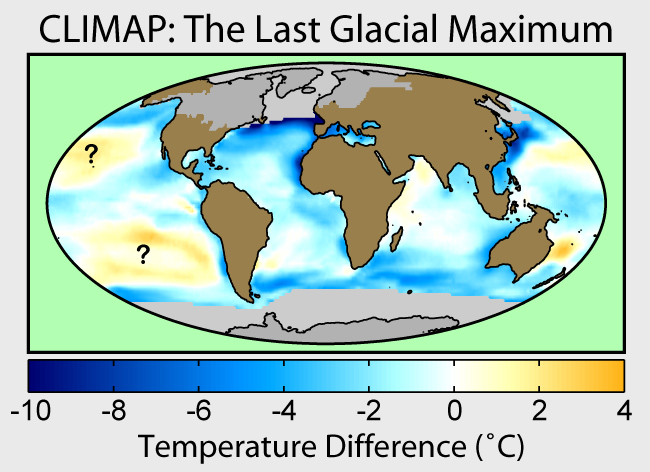
For substantial periods of the past 50k years, Australia, Indonesia, and the South Indian subcontinent were joined or nearly so, due to lower sea levels. Much of the area remains quite shallow. At about 15-20kya:

http://www.global-greenhouse-warming.com/ice-ages-and-sea-le...

https://upload.wikimedia.org/wikipedia/commons/1/19/CLIMAP.j...
Australasia[edit] The Australian mainland, New Guinea, Tasmania and many smaller islands comprised a single land mass. This continent is now referred to sometimes as Sahul. Between Sahul and Sundaland – a peninsula of South East Asia that comprised present-day Malaysia and western and northern Indonesia – there remained an archipelago of islands known as Wallacea. The water gaps between these islands, Sahul and Sundaland were considerably narrower and fewer in number.
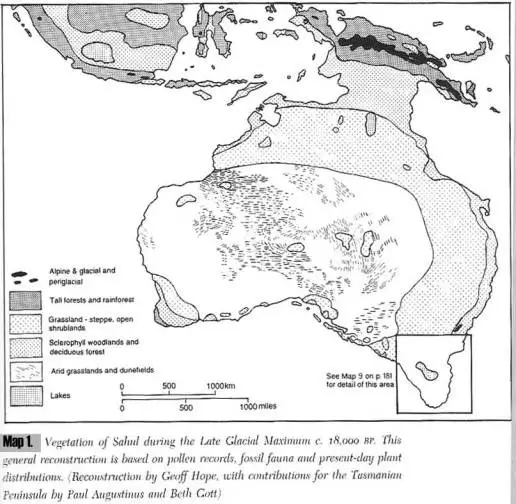
https://en.wikipedia.org/wiki/Last_Glacial_Maximum

Re:DNA analysis reveals there are four distinct giraffe spec... by Retric on Friday September 09, 2016 @06:38PM (#12466537)
http://www.global-greenhouse-warming.com/images/SahulLGM.jpg... shows a fairly wide gap between Australasia and Europe. "However, Sahul and Sundaland even at the height of the LGM were separated by at least 80 kilometres (50 miles)." Last thing I read suggested the gap was ~100 miles though this may have been a more recent period.

Thus, a 50 mile gap between Asia and the United states was likely crossed a few times.

Re:DNA analysis reveals there are four distinct giraffe spec... by danieltillett on Friday September 09, 2016 @12:47PM (#12463903)
I don't think there is any good evidence for Australia being populated before 45,000 years ago. Modern humans hadn't even left Africa 75,000 years ago.
Re:DNA analysis reveals there are four distinct giraffe spec... by Retric on Friday September 09, 2016 @01:42PM (#12464422)
Your dates for leaving Africa seem to be off base. Homo sapiens ventured out of Africa around 100,000 years ago https://en.wikipedia.org/wiki/Early_human_migrations

There where early tool across Afro-Eurasia as far back as 1.7 to 2.6 million years. Early human ancestors may have maintained separate populations spreading genetic mutations between them with occasional waves of migration displacing existing populations. Supporting the first idea is the wide range of habitat giving advantages to prior populations who are better able to cope with existing conditions. http://www.nature.com/news/teeth-from-china-reveal-early-hum...

There really does not seem to be much evidence to tell one way or another.

Re:DNA analysis reveals there are four distinct giraffe spec... by danieltillett on Friday September 09, 2016 @02:34PM (#12464881)
The data regarding the early venturing out of Africa is not good, but even the wiki article says humans reached Australia 46,000 years ago.
Re:DNA analysis reveals there are four distinct giraffe spec... by Retric on Friday September 09, 2016 @06:32PM (#12466512)
There are several sites that are dated to ~46,000 years which is somewhat suspicious as it's approximately the limit for radiocarbon dating. https://en.wikipedia.org/wiki/History_of_Indigenous_Australi... Lists a lot of dates prior to 46,000 years including as much as 200,000 (which is not generally accepted) but again not a lot of evidence for that.

However, if you accept the first habitation probably did not leave a lot of clear evidence some date prior to 46,000 years seems likely.

Re:DNA analysis reveals there are four distinct giraffe spec... by empath75 on Friday September 09, 2016 @11:25AM (#12463057)
Man that's a pretty strong statement to make based on a tiny sculpture that looks vaguely roman.
Re:DNA analysis reveals there are four distinct giraffe spec... by dogma1138 on Friday September 09, 2016 @08:19AM (#12461444)
That's not true we've seen speciation happening in front of our eyes with some species.

While time is a factor 14,000 is more than enough for humans to speciate, the reason why this hasn't happened to humans is something that is actually a subject of research today.

Re:DNA analysis reveals there are four distinct giraffe spec... by Retric on Friday September 09, 2016 @08:36AM (#12461541)
Humans have a long reproductive cycle, so that's under 1,000 generations. For comparison bacteria can reach 1,000 generations in ideal conditions in less than 1 year.
Re:DNA analysis reveals there are four distinct giraffe spec... by dogma1138 on Friday September 09, 2016 @10:31AM (#12462556)
We've had documented cases of speciation of various types of animals within only a few generations, birds for example tend to do that rather quickly as well as rapidly form ring species.

And this isn't because birds are special but because they tend to migrate, in other cases natural or manmade barriers that split a species into distinct groups have also causes speciation after only a handful of generations. Besides birds where it's common due to migration patterns "man caused" rapid speciation has also been observed in rodents (squirrels/mice) and various types of fish.

http://evolution.berkeley.edu/evolibrary/news/100201_speciat...

You do not need a 1000 generations to speciate.

Re:DNA analysis reveals there are four distinct giraffe spec... by dalke on Friday September 09, 2016 @12:09PM (#12463519)
The first description in what you pointed to says "could signify the beginning of a speciation event". It doesn't say the result is a new species.

The second description concerns a pairing between two hybrids which started a new lineage. It uses the term "lineage" instead of saying there is a new species.

> These two examples make it clear that the division between species is not a black-and-white issue. Rather, speciation occurs as many different sorts of traits (physical, behavioral, and genetic) diverge from one another along a continuum. Because of this, biologists sometimes disagree about where to draw the line between incipient species — about when a division has become deep enough to warrant a new species name. Whatever we choose to call them, these two cases clearly illustrate how a lineage can split and begin to make its way down two separate evolutionary paths.

Regarding ring species, https://en.wikipedia.org/wiki/Ring_species says "Currently, there are four known forms of life that appear to match the definition of a ring species". Frankly, I thought there were more. It would suggest that birds don't tend to rapidly form ring species.

> You do not need a 1000 generations to speciate.

Are either of those two cases described in the literature as a new species, or are they given as a subspecies, or variant, or fertile hybrid, or some other term?

Re:DNA analysis reveals there are four distinct giraffe spec... by dogma1138 on Friday September 09, 2016 @12:12PM (#12463555)
Yes they are a species, i think you are working on a different definition of a species than the accepted common one.

Also don't rely on wikipedia for accurate information about many subjects, it's ok but it's far from perfect or being technically correct.

As for the rest of your argument that's semantics and it clearly misses the conclusion of that article:

"While we can't know the fates of these lineages, directly observing such divergences in real time highlights the fact that we don't always need to look into the distant past or far off future to find examples of speciation in action. Evolution is occurring all around us. We just need to learn where and how to look for it."

We have examples of speciation and divergence in real time over a handful of generations, a species at the end is a group which is capable and practices interbreeding amongst its members but does not breed with others.

Re:DNA analysis reveals there are four distinct giraffe spec... by dalke on Friday September 09, 2016 @01:38PM (#12464393)
My definition is: has it been assigned a binomial name? I'll also accept if the process has started.

The PNAS paper for the first event does not give a binomial. It says:

> We treat the endogamous group as an incipient species because it has been reproductively isolated from sympatric G. fortis for three generations and possibly longer.

I was not aware that this was the accepted common definition of a species.

The second also does not give a binomial. It describes a method to "initiate evolution of reproductive isolation among sympatric populations".

Is that enough to say that there is a new species? If so, I was not aware that the threshold for a species definition was so sensitive.