In fact, you're arguing that she should 1) be able to quantify happiness, 2) consider life-expectancy as a proxy for life quality, and 3) pursue optimizing life by quantifying and measuring it. I think you're missing many points.
The whole idea—the wisdom, if you will—is that you lose an extremely precious thing by focusing on measurement and optimization and increasing quantity and productivity. She has an extremely clear and valid point, which lucidly carries so much truth in it, and is not particularly hindered by slight rhetorical mistakes or lack of clarity. It's that true.
In fact, the clarity and style and beauty of this piece remarkably matches almost exactly how it feels. It's so confusing and seemingly contradictory and paradoxical, yet we know it's true. Even so, no one knows what, exactly, to do with it; so we call it unproductive and go on trying to live our highly productive lives. It's so much bigger than we are, this thing, and resistance seems futile.
And this is when you begin looking into Zen, and things become clearer and muddier at the same time, but you have a fleeting chance, at least, of converging on the ability to hold a thing in your head that's both true and false at the same time, and come just a bit closer, thereby, to the reality of things.
Clearly it is hindered by bad writing and rhetoric, because here we are not agreeing with it.
>It's so confusing and seemingly contradictory and paradoxical, yet we know it's true.
Speak for yourself.
>converging on the ability to hold a thing in your head that's both true and false at the same time
That's not impressive. It's called "being inconsistent" and sometimes "being an idiot". A more impressive ability is being able to simulate multiple outcomes in your head without necessarily believing in them, and that has nothing to do with whatever religious dogma you're preaching.
Do you reject the Principle of Excluded Middle?
Absolutely, with prejudice, I reject the principle of excluded middle—if not based on mathematics, then for its societal impact on the way we think about the world and ourselves. I think a three- or four-valued logic (yes/no/maybe or yes/no/both/neither) applies to reality better and helps humans understand complexity as it really is, while a two-valued logic nearly always oversimplifies and causes direct harm to ideas and how they spread and are discussed.
In general I have no patience for those who think in binary.
I never made this claim. I reject your claim that "we know [the author's claims to be] true". I don't know them to be true. In fact, I think them to be false.
>A thing does not need to be argued successfully to be true
This is true, of course. But neither your nor the author have proven the truth of what you are saying. You've just flung dogma at us, sans evidence.
>I reject the principle of excluded middle—if not based on mathematics, then for its societal impact on the way we think about the world and ourselves.
Just because you wish something to be true does not make it true.
You may be uncomfortable with the consequences of the truth of the PEM, but that is not an argument against its truth.
Do you have any evidence contradicting the PEM? I'd love to hear it.
>In general I have no patience for those who think in binary.
Why? Because the truth of the PEM would mean you're wrong?
What I mean is, the high complexity of most systems in nature and society and humanity about which we argue necessarily dictate that a statement cannot be absolutely false without variance, or absolutely true without variance. There are too many inputs and variables, for a logician let alone a layperson to make sense of. Yet the dichotomy of the PEM (or thinking akin to that) is applied even in those cases. It has become not only a logical statement, but a way of life and a way of thinking, and it far overreaches its definition.
Thus, I don't care if the PEM is an irrefutable mathematical truth or not. That is irrelevant, and it is not what I'm arguing. I argue that it does not apply to most situations of the real world, and following it when it should not be followed leads to mistaken conclusions. We see this played out presently in politics, society, and in our own lives; as this article describes.
The real question is not whether the mathematics of the PEM hold true (they do), but whether the type of thinking they lead to is beneficial to humanity. And about that I am allowed to have opinions and make an argument. My opinion is that it is detrimental to humanity, and my argument is that most places where a binary or dichotomous argument is used are too complex for it to apply cleanly, yet we ignore that major problem and continue anyway. This leads to false conclusions and actions within complex systems.
I continue to have no patience for those who think in binary, because it is inhuman, selfish, and irritating; not because it is untrue, but because it is an incredibly poor way to interact with other human beings, and an unproductive way to approach complexity.
I hope you take this the right way, but this position is very California-ized pseudo-Zen. Many of the most well-regarded Zen practitioners and teachers very much would have savaged it, EX:
http://en.wikipedia.org/wiki/Hakuin_Ekaku
http://en.wikipedia.org/wiki/Hakuin_Ekaku#Opposition_to_.22D...
> "One of Hakuin's major concerns was the danger of what he called "Do-nothing Zen" teachers, who upon reaching some small experience of enlightenment devoted the rest of their life to, as he puts it, "passing day after day in a state of seated sleep". Quietist practices seeking simply to empty the mind, or teachers who taught that a tranquil "emptiness" was enlightenment, were Hakuin's constant targets. In this regard he was especially critical of followers of the maverick Zen master Bankei. He stressed a never-ending and severe training to deepen the insight of enlightenment and forge one's ability to manifest it in all activities. He urged his students to never be satisfied with shallow attainments, and truly believed that enlightenment was possible for anyone if they exerted themselves and approached their practice with real energy."
Hakuin, who is pretty damn amazing and certainly lived an amazing life by almost anyone's standards, wrote that after achieving some basic glimpses enlightenment, you ought to be out helping people and doing good things.
You'll see that in non-priest Zen practitioners, too. Miyamoto Musashi's ink paintings show such a depth of clarity and a sort of both sad and beautiful aliveness:
http://upload.wikimedia.org/wikipedia/commons/0/00/Kobokumei...
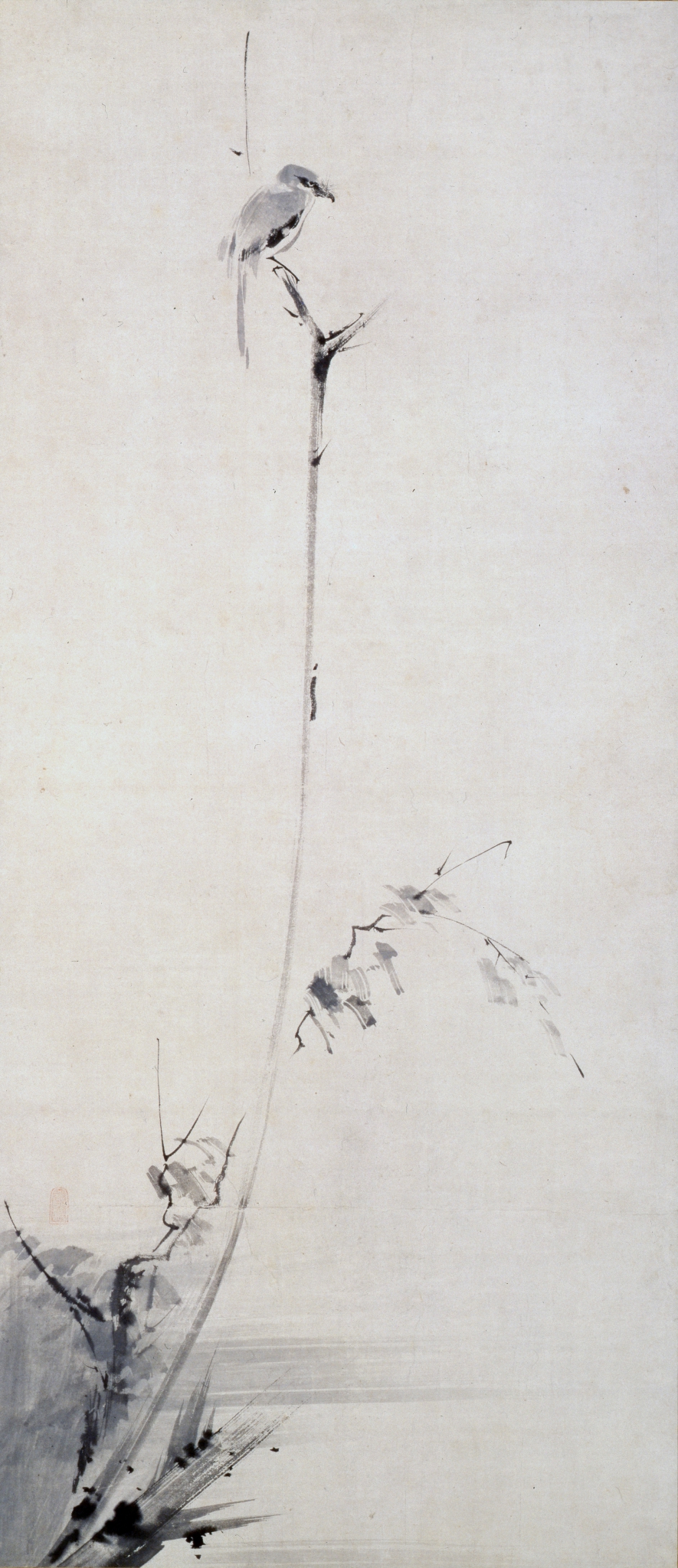
In any event -- I think Hakuin, Musashi, Dogen, etc all would reject "clearer and muddier" intellectualism in favor of actually practicing and doing worthwhile things:
Dogen: "To practice the Way singleheartedly is, in itself, enlightenment. There is no gap between practice and enlightenment or zazen and daily life."
http://en.wikipedia.org/wiki/D%C5%8Dgen
Anyway, I mean this with all the most respect. The Zen practitioners that really stand the test of time and made a difference in their communities are ones that saw it less as an intellectual orientation, and much moreso as a very actionable way of life.
In other terms, it is very difficult to sell a way of life, but people readily accept one small idea in that direction. I very much respect what you have written and know it to be true, but I also believe that the intellectual part of zen, while surely not complete at all, has so many useful and real benefits that it can't be ignored, and it makes a fine introduction. Whatever the destination, the western mind needs some convincing.
However, I have taken to heart what you have said and I will further my learning by going and doing.
Edit: After some thought, I do want to re-iterate that I think there are two realizations (not close to enlightenment, or to Zen, per se, but related) that I think are relevant to this discussion: that reality is paradoxical, and that one of those paradoxes is that often effort in a certain direction is inversely proportional to success. We often find what we're looking for when we're not looking for it, and we often hit the target when we're least trying to.
The major realization is that these are not just silly anecdotes or trivialities, but a core part of life itself and what it means to be human. They are very important, and the original article shows a manifestation of those ideas in a very clear and human way without identifying them exactly.
    Before enlightenment: chop wood, carry water.
    After enlightenment: chop wood, carry water.
The author also argues that time she had previously considered wasted ended up being more fruitful than the prevailing culture would have us believe possible. This is, I think, the important message. The mind is often working when we are not consciously aware of it, and to discount leisure time not spent checking tasks off a todo list as having been wasted is not only tediously anal but also simply false.
I was reminded of Peter Higgs' statements from around when he was awarded the nobel peace prize: http://www.theguardian.com/science/2013/dec/06/peter-higgs-b...
> Of course per-capita GDP doesn't fully capture quality of life, but it's easy to measure and hard to fake.
It's extremely easy to fake. I sell you a backrub for 10.000 dollars and after that I buy one from you for 10.000 dollars and we've now in 10 minutes boosted our GDP with 20.000 dollars.
> Measuring and quantifying something is a prerequisite to optimizing it.
Which is what he is talking against. We are too focused on optimizing, when a lot of what it means to be a human are things that shouldn't be optimized. And secondly, long periods without productivity may actually be the foundation of later quality. And you can't optimize these unproductive periods.
I didn't want to sidetrack my comment by getting into PPP and other adjustments[1], but suffice it to say that economists have been aware of these issues for over a century.
We are too focused on optimizing, when a lot of what it means to be a human are things that shouldn't be optimized. And secondly, long periods without productivity may actually be the foundation of later quality. And you can't optimize these unproductive periods.
Even if your hypothesis is true (which I doubt), it still makes sense to measure and improve leisure. I think the old quote from Steven Levy's Hackers[2] is worth remembering:
At one point in the discussion, Sussman told Minsky that he was using a certain randomizing technique in his program because he didn't want the machine to have any preconceived notions. Minsky said, "Well, it has them, it's just that you don't know what they are." It was the most profound thing Gerry Sussman had ever heard. And Minsky continued, telling him that the world is built a certain way, and the most important thing we can do with the world is avoid randomness, and figure out ways by which things can be planned. Wisdom like this has its effect on seventeen-year-old freshmen, and from then on Sussman was hooked.
Our time on this planet is short, and there are no do-overs. There are certainly diminishing returns to improving aspects of one's life, but giving little thought to them or leaving things to chance is a great way to ensure we don't make the most of it.
1. http://en.wikipedia.org/wiki/Purchasing_power_parity
2. http://en.wikipedia.org/wiki/Hackers:_Heroes_of_the_Computer...
Let's say all deers get sick and the price of deer meet rises substantially. Is the living standards of the swedes now falling compared to the danes who do not consume deer meet? Or do the swedes just switch the deer meet for some other kind and enjoy the same standard of living as always?
My iphone has many many times the computing power of my old (but back then high-end) Nokia phone, but cost me twice as much. Am I now poorer in PPP because a good cellphone is more expensive or am I richer because my cellphone is faster?
PPP is extremely easy to fake.
The point of the post is that (A) the obsession with optimizing will harm us and (B) most optimization is done for the sake of optimization.
Therefore, optimisation isn't bad, but you should always keep in mind what you're optimizing for, as you usually can't optimize everything at the same time.
If you have two qualities that are mutually exclusive but both important to you, you obviously wouldn't want to optimize either of them - you'd try to find a balance between them instead.
In Notes from Underground the hero attains his own measure of happiness through spite, i.e. self harm, i.e. misery. Any measure of human happiness is contradictory, or it wouldn't be human. Try to imagine the most perfect utopia you can, where any measure you come up with is maximized, or optimized (to use the SV parlance). Then think if people would really be happy in such a place. Even if your measure includes just the "right amount" of misery, it would still be wrong, because, by virtue of its reality, it will no longer be optimal.
If I were pressed to come up with one ultimate measure for human happiness, it is this: people are happy when they have what they don't have. Now optimize this. Of course, under this measure, people's happiness is constant at zero, but there are other (smaller) terms in this formula that basically amount to compromise :)
I am sure you can appreciate the constant inner conflict of the human condition. Apparently you can't measure soul.
Bloody hell, give me three months of vacation time to spend at the beach and I can make a solid start on coming up with an ideal way to spend the rest of my life. It's just a matter of resources.
> if you know you're not going to enjoy it when you get it, you can simply stop wanting it.
Actually, Daniel Kahneman has spent the last few decades showing that that's exactly what people do: they want something that they know will make them happy, but once they get it, it doesn't make them as happy as they thought, and they want something else[1]. It is called the focusing illusion and Kahneman summarizes it as "nothing in life is as important as you think it is when you are thinking about it." Stupid, I know, but that's how our particular species of apes actually behaves, and this is a lot more rooted in reality than optimizing happiness.
Aside from the focusing illusion, Kahneman demonstrates that people's tastes change over time, and you might not even want what you want now by the time you get it.
Again, this all simply shows that human happiness is complicated; not that anyone knows exactly how it works.
[1]: http://www.psychologytoday.com/blog/ambigamy/201204/nobel-pr...
You might say changing the way our minds work is very difficult, but surely it's easier than attempting to create an impossible utopia.
People are inherently irrational just like the nature itself. It is possible to predict the probable outcome using mathematical models here and there, but the solution is always local and temporary.
I'll just throw the whole institution of "education" out there as an example.
Other than that, it is well accepted that some societies have built large, faceless institutions, and evolved from a face-to-face society to a society of strangers. It is a profound change, but no one claims that such a society is more rational than a face-to-face, let alone its members. The behavioral state you're referring to is largely accepted to be nothing more than social norms in a society of strangers.
Applied to programming, it seems to me the author is against measuring lines of code per day, and in favor of going for long walks and letting solutions pop into your head that don't require so much code. Or longer walks that cause you to realize the whole program is bunk and you ought to be building something different. It's pretty difficult to measure the productivity of this sort of thing (except perhaps after a lot of hindsight), but it can have a huge effect on your long-term results.
Richard Feynmann wrote about this. He got burned out trying to be scientifically productive, started screwing around, got curious about the physics of something trivial, and ended up figuring out something important.
> First, the author made a huge mistake when talking about GDP.
A common theme of the article is measurement, value, and the measurement of value. Does Canada create the same 'value' as India? The notion seems preposterous, as how can a country 1/35th the size of another produce the same value - the author directly questions what 'value' is, as a measurement of something called 'productivity'. The entire article is a critique of what productivity is.
> The nation with the longest life expectancy is the workaholic Japanese culture so disparaged by the author!
It is not disparaged, quite the opposite. The author highlights that Japan measures (again, a theme of measurement) the number of deaths by overwork, and pretty explicitly and bluntly states that some other countries do not (and sarcastically concludes it must therefore not exist in those countries).
> Measuring and quantifying something is a prerequisite to optimizing it. Maybe a lot of people are measuring the wrong things.
I agree. I believe the author is questioning what needs to be optimised and what is optimal. Before that, measurement has no scope, and what is currently optimised for 'productivity' may not be productive (excuse my pun).
I do, however, agree with you that the article is poorly organized, rambles in random directions, and fails to present any actual argument.
I am pretty sure that the agricultural, traditional type lifestyle of Okinawa(which is the region which has the famed life expectancy) is nowhere near the same as the lifestyle in Japan's urban cities where that workaholic ethic is.
I had seen as many workaholics in the USA as in Japan. For different reasons, and in different ways.
In the US you are supposed to do it because of ambition, in Japan you do it because of social pressure or constriction of the environment.
Oh, never mind, in the US they have this beautiful two words that describe everybody: Loser or Successful, that does wonders to social pressure people to work more, but thinking "they actually want it", like in Japan, anyway.
But food is much better in Japan. They also eat a lot of fish that before Fukusima, was the less toxic or industrialized food you could eat. No artificial feed(until recently), no genetically modified, no antibiotics, no hormones like US loves so much.
But, off topic.
There is a huge unbalance between men and women (which traditionnaly don't get the same chances to work in high pressure environments, and are less subjected to karoshi) and as someone else point Okinawa people won't have the same life expectancy as Tokyo area people.
This is a factor in the juxtaposition of workaholism and high quality of life in the same country.
First, the author made a huge mistake when talking about GDP. Her comparison used absolute instead of per-capita values. India and Canada may produce the same amount of wealth, but India has 35 times more people. Of course per-capita GDP doesn't fully capture quality of life, but it's easy to measure and hard to fake. That's why it's used.
Most people make mistakes when it comes to balancing work and leisure, but to claim such mistakes are killing us is preposterous. People in developed countries live the longest, healthiest lives in the history of humanity. The nation with the longest life expectancy is the workaholic Japanese culture so disparaged by the author!
Many people, especially in technology, say their productivity is changing the world, and this is irrefutable. But no one seems to know what they’re changing it into, because no one can measure the world. When no one can measure the world, how much can it really exist?
This really irks me. Measuring and quantifying something is a prerequisite to optimizing it. Maybe a lot of people are measuring the wrong things. Maybe they're missing or underweighting a factor. Maybe they just have different preferences than the author. But to suggest that the entire enterprise is bunk is to disregard centuries of progress across a dozen fields of study.
If money doesn't make you happy, then you probably aren't spending it right.[1]
1. http://www.wjh.harvard.edu/~dtg/DUNN%20GILBERT%20&%20WILSON%...
Edit: Pronouns fixed. Apologies, I thought Quinn was a male name.