Clearly it is hindered by bad writing and rhetoric, because here we are not agreeing with it.
>It's so confusing and seemingly contradictory and paradoxical, yet we know it's true.
Speak for yourself.
>converging on the ability to hold a thing in your head that's both true and false at the same time
That's not impressive. It's called "being inconsistent" and sometimes "being an idiot". A more impressive ability is being able to simulate multiple outcomes in your head without necessarily believing in them, and that has nothing to do with whatever religious dogma you're preaching.
Do you reject the Principle of Excluded Middle?
Absolutely, with prejudice, I reject the principle of excluded middle—if not based on mathematics, then for its societal impact on the way we think about the world and ourselves. I think a three- or four-valued logic (yes/no/maybe or yes/no/both/neither) applies to reality better and helps humans understand complexity as it really is, while a two-valued logic nearly always oversimplifies and causes direct harm to ideas and how they spread and are discussed.
In general I have no patience for those who think in binary.
I never made this claim. I reject your claim that "we know [the author's claims to be] true". I don't know them to be true. In fact, I think them to be false.
>A thing does not need to be argued successfully to be true
This is true, of course. But neither your nor the author have proven the truth of what you are saying. You've just flung dogma at us, sans evidence.
>I reject the principle of excluded middle—if not based on mathematics, then for its societal impact on the way we think about the world and ourselves.
Just because you wish something to be true does not make it true.
You may be uncomfortable with the consequences of the truth of the PEM, but that is not an argument against its truth.
Do you have any evidence contradicting the PEM? I'd love to hear it.
>In general I have no patience for those who think in binary.
Why? Because the truth of the PEM would mean you're wrong?
What I mean is, the high complexity of most systems in nature and society and humanity about which we argue necessarily dictate that a statement cannot be absolutely false without variance, or absolutely true without variance. There are too many inputs and variables, for a logician let alone a layperson to make sense of. Yet the dichotomy of the PEM (or thinking akin to that) is applied even in those cases. It has become not only a logical statement, but a way of life and a way of thinking, and it far overreaches its definition.
Thus, I don't care if the PEM is an irrefutable mathematical truth or not. That is irrelevant, and it is not what I'm arguing. I argue that it does not apply to most situations of the real world, and following it when it should not be followed leads to mistaken conclusions. We see this played out presently in politics, society, and in our own lives; as this article describes.
The real question is not whether the mathematics of the PEM hold true (they do), but whether the type of thinking they lead to is beneficial to humanity. And about that I am allowed to have opinions and make an argument. My opinion is that it is detrimental to humanity, and my argument is that most places where a binary or dichotomous argument is used are too complex for it to apply cleanly, yet we ignore that major problem and continue anyway. This leads to false conclusions and actions within complex systems.
I continue to have no patience for those who think in binary, because it is inhuman, selfish, and irritating; not because it is untrue, but because it is an incredibly poor way to interact with other human beings, and an unproductive way to approach complexity.
I hope you take this the right way, but this position is very California-ized pseudo-Zen. Many of the most well-regarded Zen practitioners and teachers very much would have savaged it, EX:
http://en.wikipedia.org/wiki/Hakuin_Ekaku
http://en.wikipedia.org/wiki/Hakuin_Ekaku#Opposition_to_.22D...
> "One of Hakuin's major concerns was the danger of what he called "Do-nothing Zen" teachers, who upon reaching some small experience of enlightenment devoted the rest of their life to, as he puts it, "passing day after day in a state of seated sleep". Quietist practices seeking simply to empty the mind, or teachers who taught that a tranquil "emptiness" was enlightenment, were Hakuin's constant targets. In this regard he was especially critical of followers of the maverick Zen master Bankei. He stressed a never-ending and severe training to deepen the insight of enlightenment and forge one's ability to manifest it in all activities. He urged his students to never be satisfied with shallow attainments, and truly believed that enlightenment was possible for anyone if they exerted themselves and approached their practice with real energy."
Hakuin, who is pretty damn amazing and certainly lived an amazing life by almost anyone's standards, wrote that after achieving some basic glimpses enlightenment, you ought to be out helping people and doing good things.
You'll see that in non-priest Zen practitioners, too. Miyamoto Musashi's ink paintings show such a depth of clarity and a sort of both sad and beautiful aliveness:
http://upload.wikimedia.org/wikipedia/commons/0/00/Kobokumei...
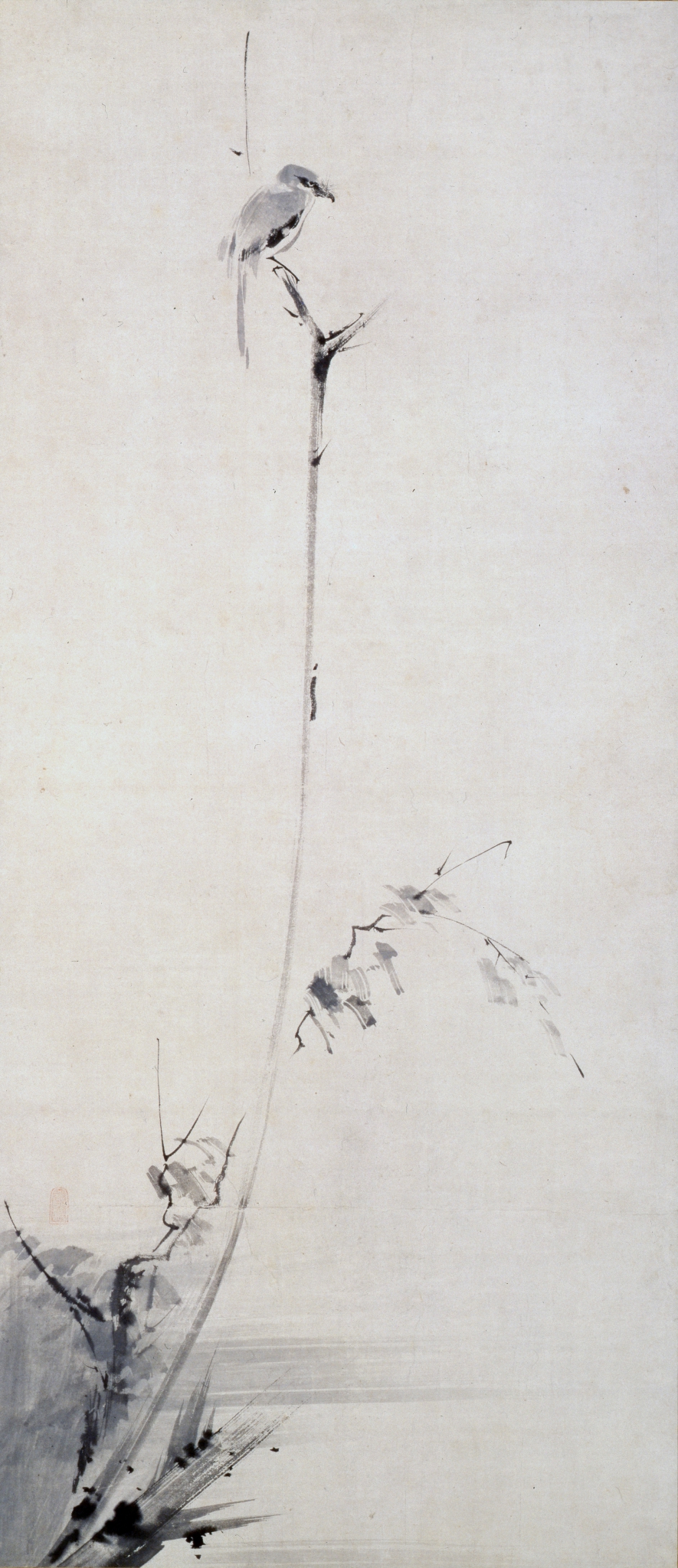
In any event -- I think Hakuin, Musashi, Dogen, etc all would reject "clearer and muddier" intellectualism in favor of actually practicing and doing worthwhile things:
Dogen: "To practice the Way singleheartedly is, in itself, enlightenment. There is no gap between practice and enlightenment or zazen and daily life."
http://en.wikipedia.org/wiki/D%C5%8Dgen
Anyway, I mean this with all the most respect. The Zen practitioners that really stand the test of time and made a difference in their communities are ones that saw it less as an intellectual orientation, and much moreso as a very actionable way of life.
In other terms, it is very difficult to sell a way of life, but people readily accept one small idea in that direction. I very much respect what you have written and know it to be true, but I also believe that the intellectual part of zen, while surely not complete at all, has so many useful and real benefits that it can't be ignored, and it makes a fine introduction. Whatever the destination, the western mind needs some convincing.
However, I have taken to heart what you have said and I will further my learning by going and doing.
Edit: After some thought, I do want to re-iterate that I think there are two realizations (not close to enlightenment, or to Zen, per se, but related) that I think are relevant to this discussion: that reality is paradoxical, and that one of those paradoxes is that often effort in a certain direction is inversely proportional to success. We often find what we're looking for when we're not looking for it, and we often hit the target when we're least trying to.
The major realization is that these are not just silly anecdotes or trivialities, but a core part of life itself and what it means to be human. They are very important, and the original article shows a manifestation of those ideas in a very clear and human way without identifying them exactly.
    Before enlightenment: chop wood, carry water.
    After enlightenment: chop wood, carry water.
In fact, you're arguing that she should 1) be able to quantify happiness, 2) consider life-expectancy as a proxy for life quality, and 3) pursue optimizing life by quantifying and measuring it. I think you're missing many points.
The whole idea—the wisdom, if you will—is that you lose an extremely precious thing by focusing on measurement and optimization and increasing quantity and productivity. She has an extremely clear and valid point, which lucidly carries so much truth in it, and is not particularly hindered by slight rhetorical mistakes or lack of clarity. It's that true.
In fact, the clarity and style and beauty of this piece remarkably matches almost exactly how it feels. It's so confusing and seemingly contradictory and paradoxical, yet we know it's true. Even so, no one knows what, exactly, to do with it; so we call it unproductive and go on trying to live our highly productive lives. It's so much bigger than we are, this thing, and resistance seems futile.
And this is when you begin looking into Zen, and things become clearer and muddier at the same time, but you have a fleeting chance, at least, of converging on the ability to hold a thing in your head that's both true and false at the same time, and come just a bit closer, thereby, to the reality of things.