Did he say that?
Setting aside the fact that the post above is obviously not quote from Armstrong, we can't say for certainty what he said because all we have is a reported quote in the press with the sources cited as an unnamed AOL employee's transcript of the call.
The alleged quote from the transcript is:
>“Two things that happened in 2012,” he said, according to a transcript provided by an AOL employee. “We had two AOL-ers that had distressed babies that were born that we paid a million dollars each to make sure those babies were OK in general. And those are the things that add up into our benefits cost. So when we had the final decision about what benefits to cut because of the increased healthcare costs, we made the decision, and I made the decision, to basically change the 401(k) plan.”
If you believe the quote is accurate, Armstrong is clearly singling out these two babies as contributing to the reason why the 401k plan was changed.
But we lack all of the surrounding context, and the quote above wasn't even continuous. It does, however, fit the mold of televised arguments he gave on the subject. Obamacare and rising health care costs were cited and a decision to not completely absorb those and pass some of the increase to employees in the form of other benefit reductions was the argument he made in a few different places.
A poor comment to make considering the whole point of insurance and how it works, as well as the size of AOL's insurance risk pool IMHO, but then, I don't know if he even made that comment or qualified it with something like "But this is exactly the kind of worthy benefit and cost we believe should be prioritized above certain other existing benefits."
Given his response, it gives me the impression that he made a comment to this effect, and that it was a poor one to make, but that's just an impression. And it's even harder to say where his heart is on the matter. At the very least he has mentioned in interviews that they actively prioritized their benefits package in light of costs, and clearly healthcare was a higher priority than the 401k benefits that were cut. So for the poster to conclude that Armstrong deems covering the costs of these sick babies "unacceptable", I don't see it. The opposite, if anything. Whether or not he used the sick babies to rhetorically deflect from the fact that AOL is choosing not to absorb all of the rising costs and is passing them on to employees...well that is another story in my mind.
Whether or not it's absolutely unacceptable to him is debatable, but it is clearly acceptable to use the cost of preserving the lives of his employees' children as a scapegoat, when many other expenses (large engineering salaries, "digital prophets" [1]) could have been noted as examples of excessive expenditures. What ekidd is mad about, and I think reasonably so, is that the attitude of "oh, our employee's child almost died which was costly, so let's cut some benefits" as an acceptable mindset to Armstrong is very troubling. In so doing, he is passing on the price of expensive healthcare costs from AOL to his employees, in the form of a slashed 401k. Now that seems to be pretty close to ekidd's paraphrase -- Armstrong does consider it unacceptable for AOL to pay for his employee's child's healthcare, because he wants to pass on that cost to his employees vis-a-vis 401k cuts.
Now at least in my view, I'd hope my employer would place employees' wellbeing first, and consider cutting benefits as a last possible option, but maybe you have a different view.
[1] http://www.businessinsider.com/shingy-aol-digital-prophet-20...
I still have deep problems with his statement, and I haven't figured out how to articulate them better yet. But for now, my apologies to Tim Armstrong—whatever he said does not justify my hasty and unacceptably uncharitable reading.
http://www.capitalnewyork.com/article/media/2014/02/8539961/...
He shouldn't have mentioned specific cases. If he felt the company had to cut elsewhere to compensate for high medical costs, he should have left it at that level of detail. But I don't see how you get from what he actually said to
  I'm utterly appalled at Tim Armstrong's attitudes towards
  the lives of his employee's children. Apparently it's possible
  to pay a programmer $100K/year, but spending ten times that to
  save the life of one of his employee's children is absolutely
  unacceptable.
And people should certainly be allowed to react when those in positions of power say appalling things. Whether he thinks that is absolutely unacceptable is doubtful, but he clearly thinks that the $7.1M in healthcare spending is something that should have to come out of the workers' 401k. The OP wasn't quoting Armstrong, but what Armstrong actually said/did clearly mirrors OP's paraphrasing -- that health spending shouldn't be the duty of AOL, because it should be passed on to the employees through the form of a 401k cut.
[1] http://online.wsj.com/news/articles/SB1000142405270230454950...
Getting universally criticized for a statement is not a qualification for assuming "lynch mob" victim status.
> I meant the forces that drive lynch mobs are driving people here.
This particular statement can be interpreted in so many different ways that it remains meaningless as it stands.
> Did he say that?
Did anyone lynch him?
Which is utterly reasonable. AOL has allocated $X for employee compensation. The law mandates health care go up by $7.1M, so something else must be cut by $7.1M.
This is certainly bad for workers who prefer the 401k benefits to whatever Obamacare benefits are costing $7.1M (and it seems like this is many workers). But that's a problem with the ACA - blaming TA for that is silly.
Have you been reading the comments on the many political articles that now cross the front page of this site? The quoted comment is fairly tame stuff compared to some of the opinions expressed in those threads.
We don't like to think about the reality that life or death situations we have no control over are being weighed on a balance sheet by people who's primary goal is making profits for shareholders.
Posting a photograph of a victim of a lynch mob http://upload.wikimedia.org/wikipedia/commons/d/d5/Lynching2...
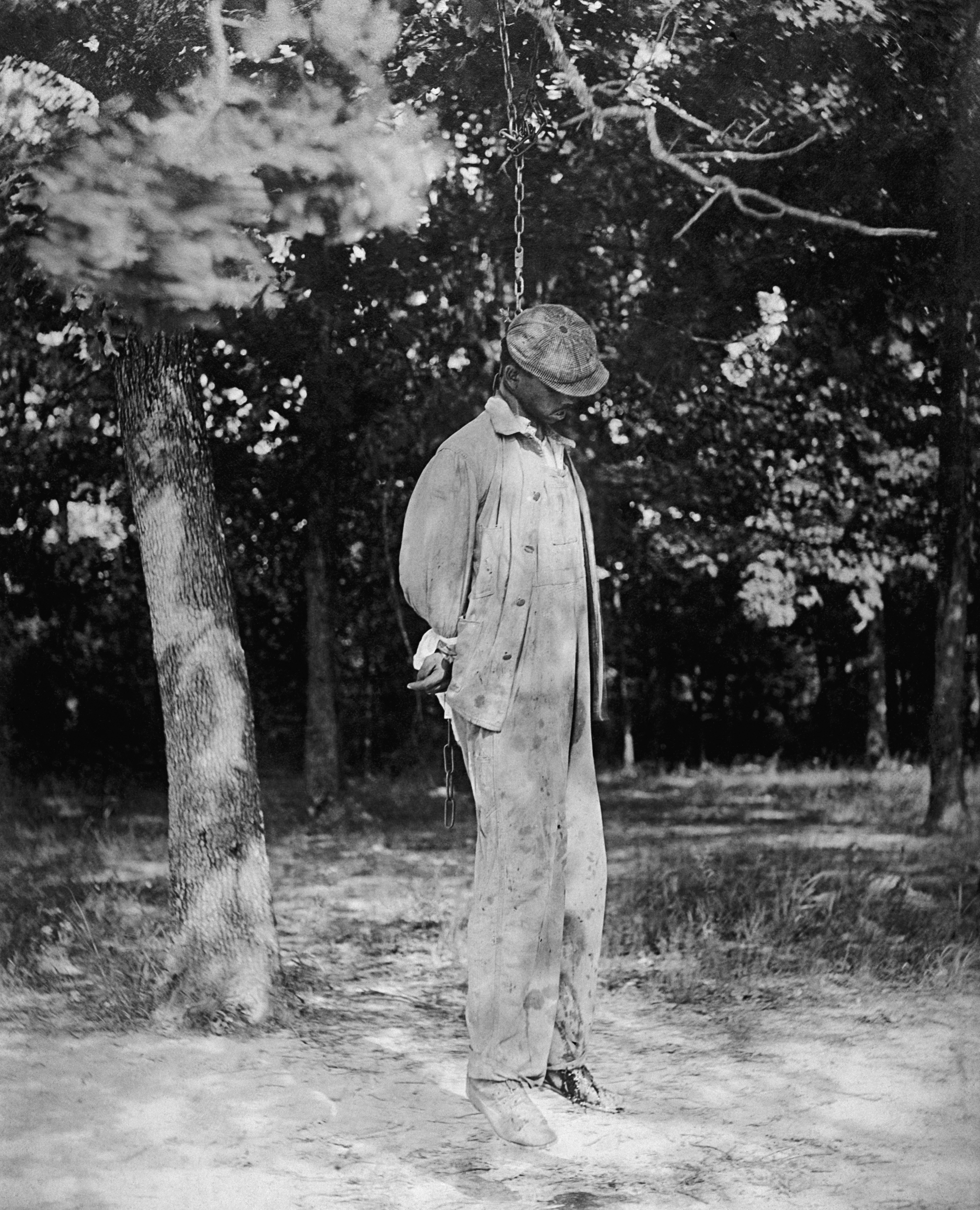
I think Armstrong might be discomfited by the well deserved online education in social etiquette and the priority of life (of poorer people) over money. He sorely needs it and he will be the better for it, though a complete cure for him seems impossible.
> Did he say that?
Did I call you an ignorant money peddler, who thinks he is very smart because he can micro analyze statements and completely ignore the context in which the statement was made, as per his convenience?
Of course, I did not!
I call you no such thing.
This may be a good thing for the company's bottom line, but the optics are horrible. Even if the policy was sound (and I'm not sure it is), the delivery ruined it. It will be hard to say how he can be an effective leader at this point.
Regardless of what benefits were cut, citing specific instances of medical care as a cause for the cuts is such a horrendous mistake that it will be difficult for him to effectively lead. That was my addition. When your employees turn against you, and you have made such a blunder publicly so as to make potential employees not want to join AOL, it will be hard to lead. And the worst part is, it's not necessarily the cut itself that is the issue, but how it was presented and rationalized. Had he just said that healthcare costs are increasing, so to avoid cutting health benefits we are reducing (marginally) your retirement benefits, he might have been okay.
I mean, look at the way this sounds: Why is my 401k contribution lower this year? Because your coworkers had babies.
That may not be what he said, but that's where the story went.
1. People often attack you for some belief they mistakenly attribute to you.
or
2. What you actually say or believe doesn't matter. If people want to make up some belief to attribute to you in order to attack it, that's fine.
If you mean 1, I agree. But I would hope that here, at least, we wouldn't sink to that sort of mob behavior.
Seems, if nothing else, a poor way of handling things. Even if you're a "tight-fisted homo-economomicus shareholder" the end result is bad, because in the end his gaffe and the subsequent publicity meant that he reversed the cuts, so the company won't get to keep that money.
I'm not against high pay for executives or that kind of thing, so I'm fine with him making oodles of money if he's doing a good job. Part of doing a good job in that position, though, is not sticking one's foot in one's mouth.
Also: I think there are certainly times when people just try and twist words to score political points, whatever the actual facts. This case doesn't strike me as one of those, really.
He announced the company would be giving the same money to employees but the distribution would change: more healthcare (as mandated by Obamacare), less 401k.
If I brought political biases to my reading, they had more to do with a pre-modern conception of loyalty: true authority is built on loyalty towards those who are led. And I looked at this from the perspective of a parent, and from that perspective, the lives of children often weigh heavier than things like self-survival.
AOL absolutely did not desert these parents, and that's where my post was is undeniably in the wrong—and where I wanted to revise it shortly after posting, before I got caught by noprocrast.
Now, I've said things in my life which were dumb and out-of-place. (In this thread, even.) And upon re-reading, I'm willing to extend Tim Armstrong the benefit of the doubt: he may have hit upon a spectacularly poor way to explain why employees were losing benefits, despite having the best of intentions. But his remarks could be easily and predictably de-anonymized, with obvious consequences:
On Thursday, within minutes of Armstrong’s utterance, my husband began fielding questions from colleagues: Wasn’t the CEO talking about his baby?
And not did these remarks effectively single out a specific employee, they also singled out a specific 1-year-old girl—who already has significant problems—and they linked her to the company-wide benefit reductions (at least for those coworkers who knew the parents). And this is where I got too angry to read Tim Armstrong's actual words accurately. Which I regret.
Where exactly did he do that?
"We had two AOL-ers that had distressed babies that were born that we paid a million dollars each to make sure those babies were OK in general. And those are the things that add up into our benefits cost. So when we had the final decision about what benefits to cut because of the increased healthcare costs, we made the decision, and I made the decision, to basically change the 401(k) plan."
It's not unacceptable according to TA. AOL insurance (pre-Obamacare) did pay for it:
"Two things that happened in 2012. We had two AOL-ers that had distressed babies that were born that we paid a million dollars each to make sure those babies were OK in general. And those are the things that add up into our benefits cost. So when we had the final decision about what benefits to cut because of the increased healthcare costs..."
http://www.businessweek.com/articles/2014-02-07/aol-ceo-blam...
Its not AOL's or his responsibility. If anything you can put the cost onto society as a whole. This is the type of insurance the ACA should have been instead of the crap we got. It should have covered catastrophic care, which means million dollar babies provided they can be saved.
No company should feel guilty not keeping up benefits because one or two cases blew the bank. They are not there to fix everything. Insurance is a benefit and benefits can be exhausted or become so costly that the cost of doing business means not being in business.
So yeah, it sucks. Welcome to the world. The solution is to put catastrophic care into the hands of government and let them decide who gets the care. Let employers and everyday people shop for the best care for non catastrophic care and do it across state lines. Put them all on equal footing.
So summary. 1) Government takes care of catastrophic care. They set the limits, the decide who. If you want more you buy it on the secondary market. 2) Individuals and business buy insurance from any/all provides regardless of state. The only rule is, preexisting conditions do not disqualify you. They can however put you into rule #1
Edit: couldn't find data for premies at 25 weeks, but at 37 weeks and below, survival rate in the US is higher than European countries. http://www.cdc.gov/nchs/data/databriefs/db23.htm
In fact, France still does not allow withholding of nutrition and fluids from an infant not on a ventilator, a practice that is permissible in the US when care is deemed futile.
If you want an example of a state that practices more aggressive withholding of care in the NICU, look at the Netherlands, which has a private insurance model more akin to the US. According to the Nuffield report on neonatal medicine, "In the Netherlands, a consensus had been reached by 2003 that ... Dutch perinatal centers should not normally resuscitate and treat extremely premature babies born before 25 weeks of gestation, because of poor outcomes."
According to the report, the difference between the US model and the Netherlands could be seen in that twice as many premature infants born in the US survived to the age of two, but in the US five times as many premature infants had disabling cerebral palsy.
France: 3.34 US: 5.90 (Per 1000 live births)
Source: https://www.cia.gov/library/publications/the-world-factbook/...
UPDATE: And as we see from this paper from the WHO, live birth in the US is not what it means in France, for example. In the US it's any sign of life, in France and Belgium it's living for some period of time: "it has also been common practice in several countries (e.g. Belgium, France, Spain) to register as live births only those infants who survived for a specified period beyond birth"
For instance, some countries (like France) ignore births before x weeks whereas most countries (including the U.S.) include all births.
Beyond that, the U.S. leads the world in premature birth survival despite also leading the world in assisting people with fertility problems to become pregnant and add to the statistics that on the surface seem problematic for the U.S.
Go back to Fox News where people don't actually care about facts if you want to make sensational arguments with zero evidence.
Can't go back to watching Fox News because I don't have a TV. Nice, red herring, though.
Do you have a cite for the French system, specifically that withdrawal of care in NICU? English or French will be fine.
I cannot fathom that people accept "12 to 18 $K" as a reasonable amount of money for health care.
Do you have any source for these claims?
http://pediatrics.aappublications.org/content/120/3/519.full...
It sounds like 23 weeks and 500 grams are (were in 2007?) important benchmarks.
All he said is they changed the 401k plan because of unexpectedly high medical expenses. He didn't say or imply he wished they didn't save the baby. I can give the kid's mother a pass on two pages of disjointed emoting, but I don't understand why a disinterested observer would write something like you've written.
Do you really think it's possible to have a comprehensive understanding of "Tim Armstrong's attitudes towards the lives of his employee's children" based on this one little blurb? I mean, seriously... I can't help but think people are constructing a caricature of the man, based on a very limited understanding, and heavily influenced by their own preconceived biases and generic "Robber Barrons, evil, muwahahahaha" stereotypes.
I'm not saying that Tim Armstrong is a good person, as I don't know him. But I am very suspicious of this rush to judgment that seems to be going on here.
I'm saying we shouldn't be rushing to judgment, and creating this caricatured images of Armstrong (or anybody else) and basically screaming "off with his head", without sufficient information.
Again, I don't know him... never met the guy in my life. He may be a complete douchebag and a total jackass for all I know. But it would be premature to conclude any of that from this story.
I do not see how the logic follows there.
That it's reported in the news or published on his blog or written in a memoir or whatever is not the relevant fact here. The relevant fact is that it is something that he carefully planned to say and said, and that is sufficient information to have high confidence that it is what he meant to say and therefore what he thinks.
I do not see how the logic follows there.
Then there really isn't anything more to say. If you really think a person's attitude (which was the original issue under discussion in this sub-thread) can be thoroughly identified and analyzed and dissected based on one example of their speech, then so be it.
I happen to think human beings are far more complex than that, that context matters, that there are huge issues of subjective interpretation and nuance in play, and that it's a mistake for anybody to assume that they have some kind of deep insight into this guy, based just on this.
That it's reported in the news or published on his blog or written in a memoir or whatever is not the relevant fact here.
Nobody is claiming that. What I'm claiming is "insufficient data".
The relevant fact is that it is something that he carefully planned to say and said, and that is sufficient information to have high confidence that it is what he meant to say and therefore what he thinks.
The problem is going from "what he said" to "what you think he thinks". He said something very specific, and I see a lot of people making radical inferences and generalizations based off of that. What he said is what he said yes, but people aren't just talking about that, they're talking about their own interpretation of what he said, which is colored by their own biases and preconceptions... and, in this case, probably just a little bit of mob psychology.
Rmember : Slate opinion blogs != journalism
The next Question is are the employees 401k's safe and accounted for or is Aol like Maxwell?
The whole point of insurance is that a middle-class family can afford to pay $12,000 or $18,000 in premiums per year, but they can't easily afford a $1M black swan medical event. So the insurance company spreads the risk out over a large pool. The system breaks down, of course, if the pool is too small. A company with 10 employees probably can't absorb a $1M expense either. But AOL has 5,600 employees and it had $1.05B in net income in 2012. They can afford it to cover expenses, even if they decide to self-insure.
Of course, another solution is to make the risk pool as big as humanly possible and to get employers out of the insurance business completely, so that no startup needs to worry about medical expenses. The AMA is a messy political compromise to do exactly that. But Tim Armstrong is also upset about the AMA. So I'm not quite sure what his ideal outcome is here.