I can confirm this, it's the reason we stopped having a download altogether even though it offered features that were hard to do without a download.
Using software I wrote as a vector to spread malware is really beyond the pale.
Even worse to realize that reputable companies such as Google, Ask and McAfee compensate them for doing it. [2][3]
[1] http://i.imgur.com/3zWPK.jpg


If Linux on the desktop were to get popular, I'd hate to imagine what might happen to the open source Fedora and Debian/Ubuntu repositories.
Nothing. In case you haven't been paying attention, Debian repositories were "app stores" before there were app stores. The software goes through extensive vetting and rigorous testing; no, I'm not saying every line of code is inspected, but to claim that a Debian maintainer would just blithely let crapware in is ignorant.
As for the walled gardens of Google and Apple, people are objecting to precisely that: the locked in, tinker-hostile way that the platform (not the app store) is managed. It's great that Google and Apple have finally seen the light and started curating software and making it easy to install, like it's been in Debian for nearly two decades. What's not great is telling people what they are and are not allowed to do with their property by anti-competitively denying the right the to install third party apps.
...through extensive vetting and rigorous testing...
Same goes for Debian; some of the more "fringe packages" (those of upstream projects that haven't been updated in a while) tended to rot (compilation option changes to dependencies that silently broke parts of the program), and packages from upstream projects that changed rapidly tended to have dependency issues.
I'd also like to point out that while Debian may have had "app stores" before anyone else so to speak. The implementation left much to be desired compared to today.
Today a user simply selects an application and it gets installed. There's no prompts about whether I want the 37 additional dependencies, no text-based prompts about the configuration of some obscure package, and certainly the presentation was sorely lacking.
So yes, Debian may have had the concept early on, but as usual, Apple made something only a geek could love into something usable by everyone.
But in the past, even the packages in the "first tier" were often pretty busted. But even for that tier, Linux distributions are not performing "extensive vetting and rigorous testing". They don't generally test beyond relying that other components that use it work as expected, and for many components, those are only as well tested as the tests that are included with the component.
Yes, some distributions do run security analysis tools or other things on the components they integrate, but that still doesn't count as "extensive vetting and rigorous testing".
Debian has the unstable, testing and stable distros, that move on different speeds and are subject to different amounts of testing.
I had hoped the addition of "not every line of code" would have made clear that I make no claim that every package in Debian is bug free. But I still insist, Debian extensively tests packages, mostly for compatibility and dependencies, not to mention bug squashing parties. They are also very careful about what's allowed in (due to being license sticklers).
Of course, all of this strays from my main point: the Debian maintainers are highly unlikely to let in crapware, as opposed to some stores that have had viruses. And that's just the stuff they (eventually) got rid of; don't start me on all the officially approved software that tracks users.
As for your opinion of the ease of use, well, you're entitled to it but it doesn't make it true. What's so hard about using apt-get or, if you can't use a keyboard, one of the graphical managers? So it asks you if you really want to install dependencies instead of just filling up your hard drive, and that's a bad thing? Does the Apple or Google way of "managing" packages even track dependencies, or are they still forcing every vender to include their own (possibly filled with security holes) copy of a library with their apps? I haven't had to answer a configuration question for years, and I've never had a dependency issue with Debian. I say this as a daily user of, developer on, and administrator of machines running Debian for the past twelve years.
You would get plenty of shady sites encouraging you to add another line to /etc/apt/sources.list for cool free screensavers, but it would be a lot more practical than it is in windows to tell people to ignore them and never install anything that doesn't come with the system.
That way you are not tied to one gatekeeper but it is in your interest to get your app into at least one good repo that has a reputation to uphold.
There are a ton of good people who work to keep those repos clean. Lets not trivialize their contribution by acting like anyone and their mother can make changes to the repo for a popular distro. Sure, a black[/grey] hat can make their own repository, but who in their right mind will use it?
What on earth are you talking about? Linux on the desktop is just above line noise. If hackers don't bother targeting Mac's ~10% desktop share, why would they bother targeting Linux' ~1%?
AFAIK, 0 QC or checking is done on the contents of a repo. additionally, there have been enough times in the past where someone has just straight up rooted the servers that the repo lives on ...
Are you talking about debian/fedora repos? Because if so, that is simply false. Both have heavy QC, and the packages are all signed by the developers keys, and the OS checks those keys.
It's not third-party ads, it's first-party ads, which is slightly better.
Like OP, I have a lot of sympathy for software developers trying to sell in a world full of people who don't think they should pay any dollars for software. They are still gonna pay, just in terms of their privacy and computer security.
Ad Network Detector
Addons Detector
AirPush Detector
However, it's still preferrable to Apple's draconian policies.
If you want, you can install security tools which scan apps prior to being installed, like Lookout, which will alert you to various issues.
Yes there's a lot of spammy apps, but if you're even halfway aware of what you're doing, you'll have to be very unlucky to be caught out by one.
You must've forgotten Path fiasco, with its quiet uploading of user's full address book to company's servers, which turned out to be - SUR-PRI-SE - a "standard industry practice". Wall garden sanctuary my ass. Same rotten ethics, except far less visible.
This is definitely not true. The following scenario seems to be quite possible: Due to the various problems of Windows 8, developers massively revolt and most applications are either written to older API's, or use cross-platform environments like C#, Python or Java. This essentially changes the Windows API from a moving target to a stationary target; as a result, Wine catches up -- it reaches near-100% app compatibility, perhaps with the aid of a donation from a philanthropist, Google, or some other player. OEM's recognize the cost savings possible from avoiding the Microsoft tax, and with good software compatibility now possible, they start selling discount models with Linux instead. Microsoft stops issuing new licenses for Windows less than 8 to try to pressure developers to port their stuff to Windows 8 by forcing customers to upgrade. But the move is too little, too late: The customers revolt, and since the alternative is already out of the bottle, people jump ship en masse due to lower prices and Windows 8's shortcomings.
Is this a particularly likely scenario? No. But it seems plausible, and it's not due to crapware, or consumer awareness about anything other than price tags.
A risk might be drive-by malware that adds stuff to /etc/apt/sources.list though, however to do this you would need drive-by malware that can bust into the root account, or to get the user to enter the admin password.
When I was reading the original TC article, I was thinking that there is actually an incredible opportunity here to create a legitimate ad network that would allow desktop developers to monetize similarly to how it's done on the web - to basically become the DoubleClick of the desktop world.
Why should ad supported desktop apps be any different than ad supported mobile or web apps?
Edit: These downvotes are pretty surprising, I didn't realize I was even being controversial. Can someone explain why creating a legitimate, privacy-respecting ad platform which allows desktop developers to monetize their applications in a manner that's almost exactly the same as ad supported web and mobile apps is that awful?
I'm not even saying that's necessarily what they're up to, I can just see where there's a tremendous opportunity to try and clean up the industry, and how, based on the people involved, the author and the commenter above could very easily be jumping to the wrong conclusions.
One of the key words here is "toolbar." It's in the same class as "HIV," "ebola," "herpes simplex virus," etc. Saying you're bundling third-party adware such as toolbars and "browser helpers" and similar is like saying you're purposefully giving someone a disease.
IT professionals managing Windows networks spend god-awful amounts of time removing such junk from Windows PCs. Not only do things like this invade privacy, they often slow down and break peoples' computers.
Providing you with such a thing required a certain level of "access" which can be used for evil.
As it is it's just slightly bad taste.
Tracking IP and even MAC addresses? Hello? Spyware is spyware.
Also: ads are ads. If your product does nothing respectable (as opposed to selling eyeballs to advertisers under false pretenses) that is worth paying for it to anyone, that's bad luck. It doesn't justify deliberately and systematically messing with the rational decision making process of people, and that others are already doing that is no justification either, nor that they have been doing it for so long.
Worse yet, even the low level of sandboxing that desktops posses are almost always defeated by installers: "This installer requires administrator privileges to run"
... aka. yes, you will take our spyware-crapware-rubbish, and you'll love it, or you wont use our app. Capish?
You don't get that with websites. That's why it's ok.
(Incidentally, this is the same reason why its not ok on mobile platforms, where your options of permission are to read your contacts and make phone calls and 'services that cost money' or no, you can't play this game of Cat Pong your friends are talking about...)
Here, you are coming off as a sycophant who is blindly supporting PG and YC without checking your facts which could be the reason for your downvotes.
So now I specifically instruct them to go to videolan.org.
Ads may distort this for some users, though...
I told my Dad's wife to download VLC and she ended up with the crapware version too. I didn't even realize they existed until then. I was shocked =(
You have my sympathies.
http://www.appup.com/app-details/vlc?edgSrcID=398114176
It's the first thing I see for "VLC" when I turned off Ad Block.
I really didn't think it was ever a Google product though. Correct me if I'm wrong.
Fuck, people, don't you get this already? There is no n-th result on Google. Don't act like there is.
Hopefully some google algo tweaks are working to help.
"You have installed VLC, it should have come without any additional software such as tool bars or file compressors. If this was not your case, you probably installed it from a third party that arbitrarily and without our consent added external programs. We recommend you to install VLC from videolan.org, etc."
That way, casual users will at least be aware of the external installs problem.
And the really unfortunate thing is that a few big bad apples can and did ruin it for everyone else. I don't have time to figure out who is going to install shit on my system vs who isn't, so I just assume everything is bad and avoid it all, with the exception of a handful of known-good products (like VLC) from known-good sources (the author's own websites).
The end result is an ecosystem in which new useful tools (even ones that aren't malware peddlers) now have a near-impossible time creating a critical mass of users, so any money to be made in that market can only come from these terrible spammy practices, which is just sad.
http://blog.l0cal.com/2011/07/07/these-companies-that-mislea...
The problem here is that those sites still rank very high in search results.
http://tothepc.com/img/2010/02/movie-subtitles-media-player-...
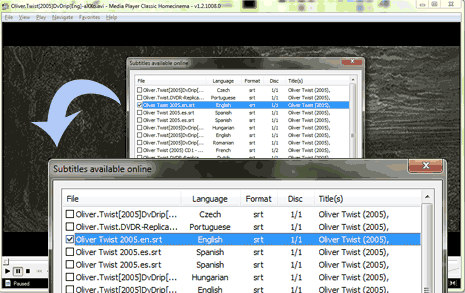
Also, good luck with your Windows 8 project!
This is completely prejudice! You've never met Install Monetizer, and don't know if they participate in the same activities as the companies that you're referring to.
"I believe OP is very polite: There are no good reasons to not shame them publicly."
This is childish, and I'd expect better from any contributing member of VLC.
I never mentionned IM.
Also, see the comment from patio11 http://news.ycombinator.com/item?id=5060399
They are liars, shady business, IP violators and are downright dangerous.
They have all those great offers for you, but they refuse to give any details as soon as you ask any question. More than half of them are "the biggest in the world" (sic). They lie about download numbers, about download size, about number of software actually installed and about their connexions. They even lie on the actual payback price.
If you refuse, they build special websites, copying yours, with your IP and trademark and register adwords with your name, in every way possible.
They also resell their solutions/websites to other people, using "Affiliate networks", so that once you take one down, 20 appear. And the guy who you took down had no idea who you were or what the software was...
They also have deals with download.com/softopedia/softonic to change/rewrap your installer, without your agreement, often violating your license; or they give back money to those websites, so they are ranked higher than normal other downloads.
And of course, open source software are never respected.
I believe OP is very polite: There are no good reasons to not shame them publicly.