7200 years ago the Neolithic revolution was still in full swing and many of the most famous megaliths like Stonehenge hadn’t even been built yet. The first real state, the Sumerian civilization, hadn’t formed yet in Mesopotamia.
Personally, I’m very comfortable making this someone else’s problems 7200 years from now. If they’re still having basic coordination issues then it’s their own damn problem.
Older folks at Göbekli Tepe grumbled that climate change wasn't real. As far as they were concerned, the Sumer and Indus Valley kids were playing with fire and didn't know squat. The older generation just couldn't understand the crazy architecture over in Egypt and the slangy "new wave" movement at Salisbury Plain. It always seemed that the shiftless youth there just loitered and smoked and invented new expressions to frustrate communication. And everyone could agree that no one liked their so-called music!
https://en.wikipedia.org/wiki/G%C3%B6bekli_Tepe
https://en.wikipedia.org/wiki/8.2-kiloyear_event
https://en.wikipedia.org/wiki/Sumer
https://en.wikipedia.org/wiki/Indus_Valley_Civilisation
The dinosaurs had days with fewer hours than us.
Now we have locked in second extremely hard underpinning all of our measurements. But you could consider that you have same number of hours in a day and length of those hours has changed...
You mean 09226, I believe. [1]
[1] https://hn.algolia.com/?dateRange=all&page=0&prefix=false&qu...
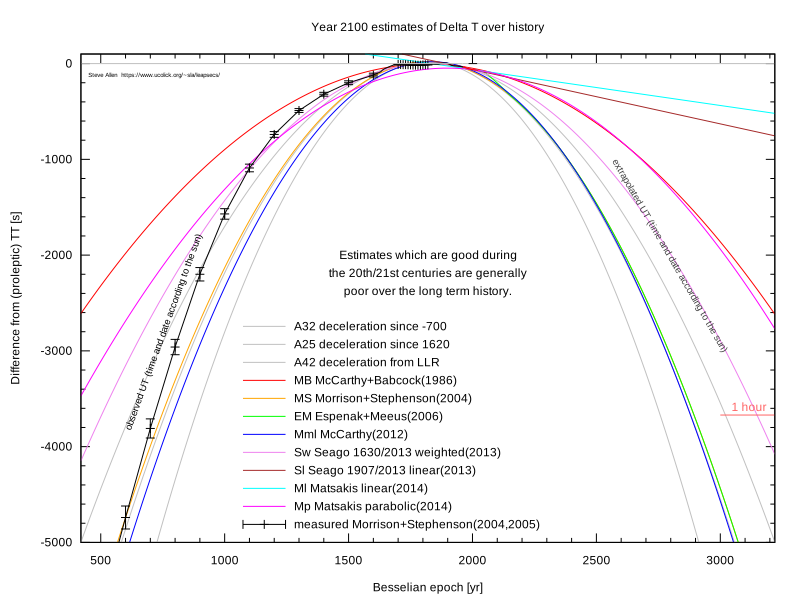
We've had 27 leapseconds in the last 54 years [1] - an average of 0.5 seconds per year.
At that rate, solar time will drift by 60 seconds over the course of 120 years. Drifting by 10 minutes will take 1200 years.
The leap hour will be in 7200 years, around year 9226.
[1] https://en.wikipedia.org/wiki/Leap_second