In fact, with Bitwarden, the cached password is exposed to the browser that has a large attack surface (including interacting with random remote servers). There was just a vulnerability in most browser based password managers including Bitwarden that would allow a remote attacker trick a user send out their passwords.
I use Bitwarden but mostly for non-critical passwords.
Modern operating systems isolate individual apps such that a malicous app can not access the RAM of another app. There is a difference between not making an effort to protect passwords and requiring an OS exploit to do so.
- capture keyboard input - capture your screen - silently install browser extensions to capture your credentials - modify your shell config, .desktop files, $PATH, … to have you e.g. call a backdoored version of your password manager, or put a modified version of sudo on your $PATH that logs your password (=> root access => full memory access) - …
I think that in general it is game over the moment you have malicious processes running. I use firejail for most applications, which I believe is the bare minimum, or bubblewrap.
  <qyliss> I have embarked on the ultimate yak shave
  <qyliss> it started with "I wish I could securely store passwords on my computer"
  <qyliss> And now I am at the "I have funding to build my own operating system" level
Also what do you think about Subgraph OS[1]? Although I think it is not maintained anymore, or is it?
[1] https://subgraph.com/img/sgos.png (old image which I remembered it by) (https://web.archive.org/web/20241206072718/https://subgraph....)
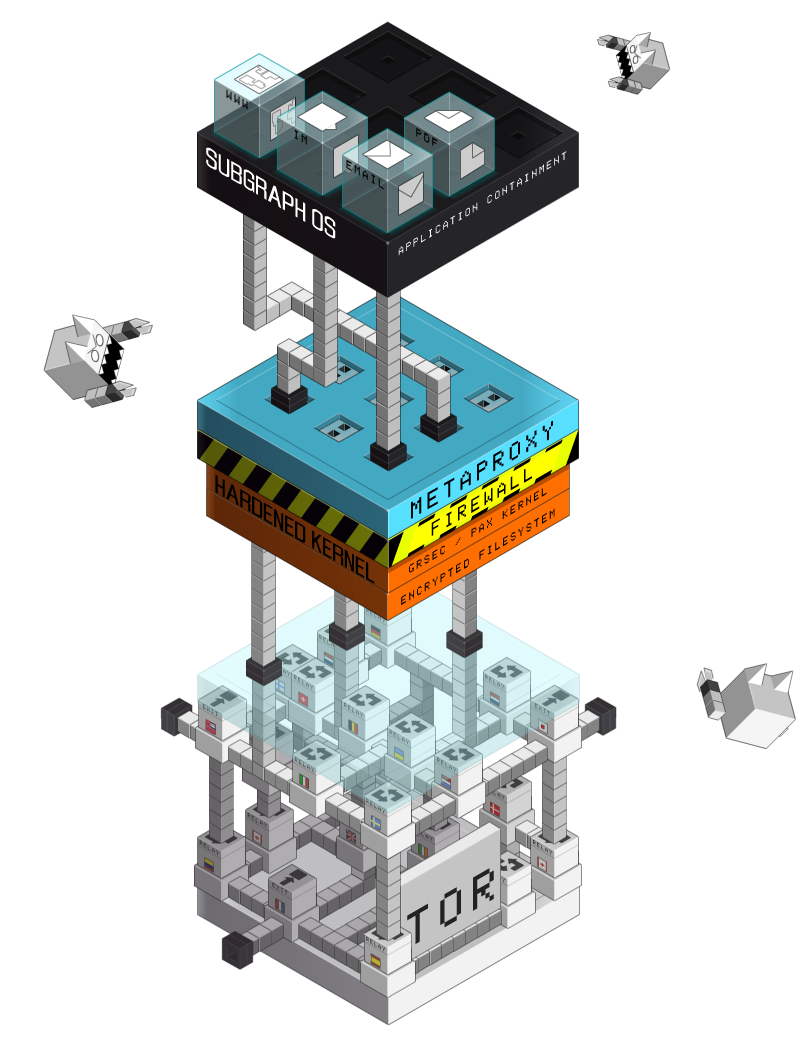
As for how it compares to Qubes, I don't think I'll be able to tell you more than https://spectrum-os.org/design.html & friends. I suppose the upshot is:
- KVM instead of Xen
- One VM per application
- Single file system for user data (to which users can grant VMs access on a folder-by-folder basis)
- Package system from NixOS (nixpkgs) for reproducibility & immutability
@dang People keep running into this. (See e.g. this comment[0] from a few days ago.) It also makes it rather awkward to write lists IMO. What's the reason for removing line breaks and could this be changed?
Unlike browser-based password managers, the agents don’t continuously interact with the browser code and remote elements (probably don’t have network access at all).
One area that matters that I forgot to mention in my comment below is that, as a result of all above, Pass doesn’t check the domains and doesn’t protect against phishing. There might be extensions, but at that point, you might as well use keepassxc.
I like the idea of storing password data in individual encrypted files and using git to store changes, but I wonder if it creates more friction to retrive the information. I havent tried this solution yet. I will when I get more time. It seems like this solution would benefit from a more standardized specification for storing and retrieving information. I known its not every persons cup of tea, but maybe some kind of separated add-on for streamlining this process could be beneficial.
You might already be aware of this, but Bitwarden also has a CLI client that can be used for this purpose, at least casually.
You can also just encrypt your passwords into individual encrypted files (one for each password) and have your script clear the gpg agent after a passfile is decrypted.
My main issue with pass is that it doesn’t work great on iOS with yubikeys.
I really do not want to give Apple any more leverage over me, I'm looking to minimize it.
Even if someone/malware was to steal my yubikey pin they'd still need to convince me to tap the thing over 1,000 times to steal all my passwords.
The good thing also is that unlike with fido2 you only have to enter the pin once for OpenPGP. Then it stays unlocked while it's plugged in. But still needs the physical touch for every password. Perfect and convenient for me.
It also works great on mobile with openkeychain and password store. Both are not really maintained now but I don't really care because the encryption is in hardware anyway (yubikey over nfc)
I used pass for a while but couldn’t see what threat model it actually solves:
If you let GPG agent cache your key, any script (e.g. an npm post-install) can just run `pass ls` or `pass my/secrets` and dump all your credentials. At that point it’s basically just full-disk encryption with extra steps—might as well keep everything in ~/passwords.txt.
If you don’t cache the key, you’re forced to type your long GPG password every single time you need a secret.
I tried a YubiKey for on-demand unlocking, but the integration is clunky and plugging it in constantly is a pain if you need passwords multiple times per hour.
I eventually switched to Bitwarden.